Discodoris boholiensis
A mottled brown reef crawler found on Bali's slopes and Luzon's muck sites, active year-round in warm Indo-Pacific water.
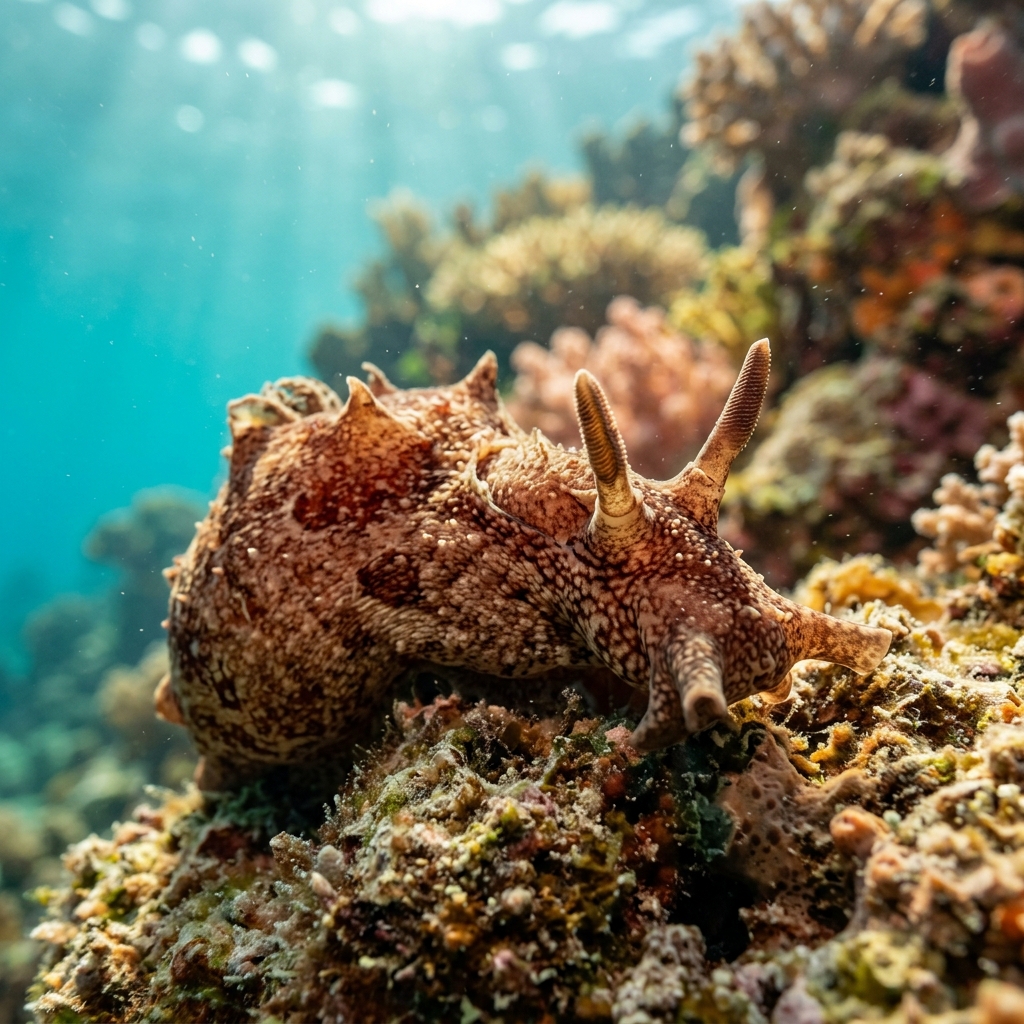
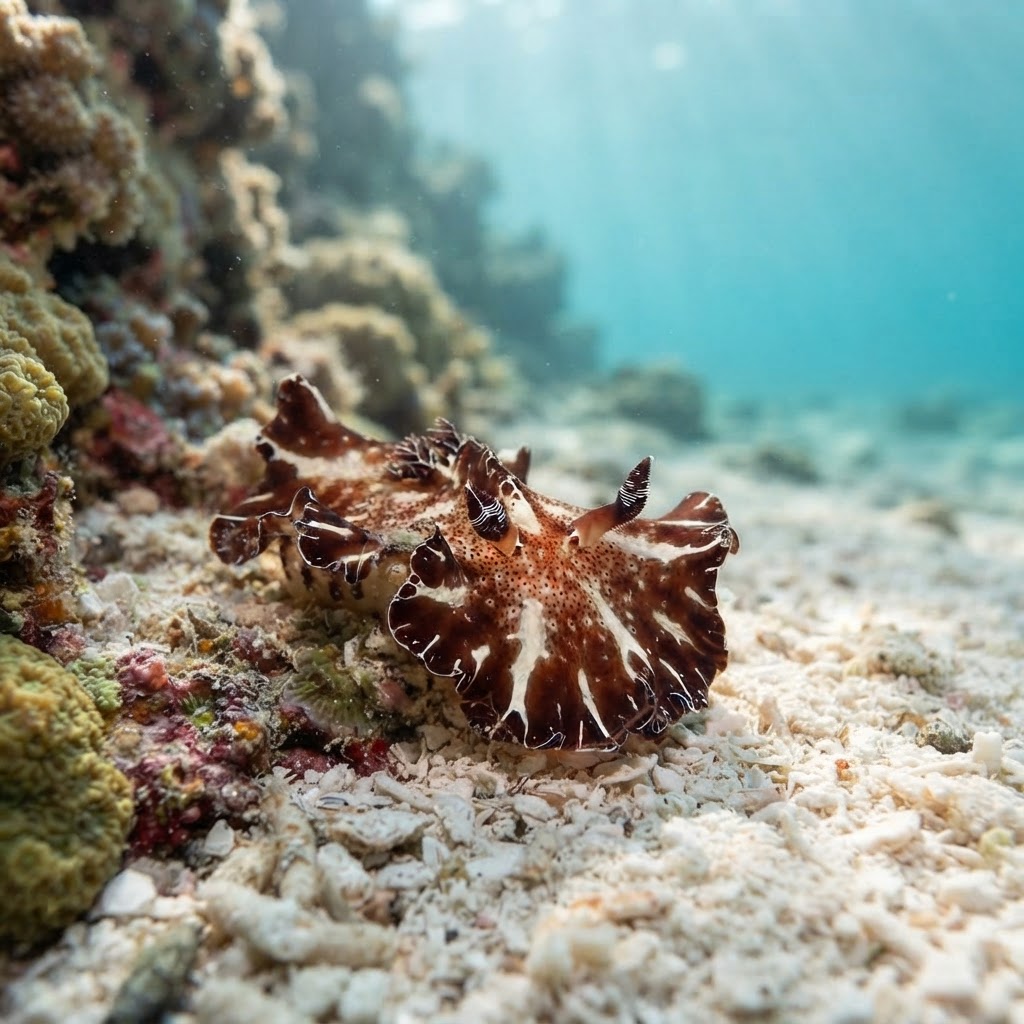
A flattened, warty body about 4 cm long, coloured in mottled brown and cream with darker blotches that break up its outline against sand and rubble. Look for the soft, velvety texture of the mantle and the small rhinophores (sensory tentacles) poking up near the front. It moves slowly and stays low, often half-hidden against similarly coloured substrate, so divers usually spot it only once their eyes adjust to the pattern.
Expect to find it grazing slowly across sand, rubble, or sponge-covered rock, usually during the day on relatively shallow reef flats. It doesn't flee or react much to divers, since its main defence is simply blending into the mottled seafloor, so a slow, careful look at any dun-coloured patch of rubble is often the way to notice one.
Like other dorid nudibranchs, it likely feeds on sponges, and its mottled colouring is a camouflage strategy rather than the warning colours seen in the brighter Chromodoris species divers often photograph nearby.
No clear seasonal pattern shows up in the sightings, and with water in the 25.5 to 31.5 C range across its range, it's a year-round find on tropical reefs rather than a seasonal target.
Most reliably found on Indo-Pacific muck and reef sites, with Bali in Indonesia and Luzon in the Philippines standing out as strongholds, plus regular sightings around Maluku and Sulawesi. Singapore's Southern Islands and the Visayas in the Philippines turn up occasional records too, so it's worth scanning rubble patches on any regional dive.
Mapping where Bohol Nudibranch is logged…
It's most commonly logged on reef and muck sites in Bali, Indonesia, and around Luzon in the Philippines, with further sightings in Maluku, Sulawesi, and Singapore's Southern Islands.
There's no strong season in the sightings data, and it tolerates a wide warm-water range of 25.5 to 31.5 C, so it can turn up on tropical reefs at any time of year.
Look for a flattened, warty body around 4 cm long in mottled brown and cream tones, blending into sandy or rubble-strewn seafloor. It moves slowly and lacks the bright contrasting colours of many reef nudibranchs.
They typically reach around 4 cm in length, making them a small, easy-to-overlook find that rewards a slow, close look at rubble patches.
No, they pose no threat to divers. They're slow-moving bottom dwellers with no venomous stings or defensive behaviour aimed at people.
Site and sighting data is aggregated from diver logs, iNaturalist and GBIF. For taxonomy and conservation status:
Light-spotted Aegires
3,168 sites