Neoglyphidodon oxyodon
Deep blue body with a bold white stripe, most reliably found on reefs in Palawan and Sabah in warm 27-29C water year-round.
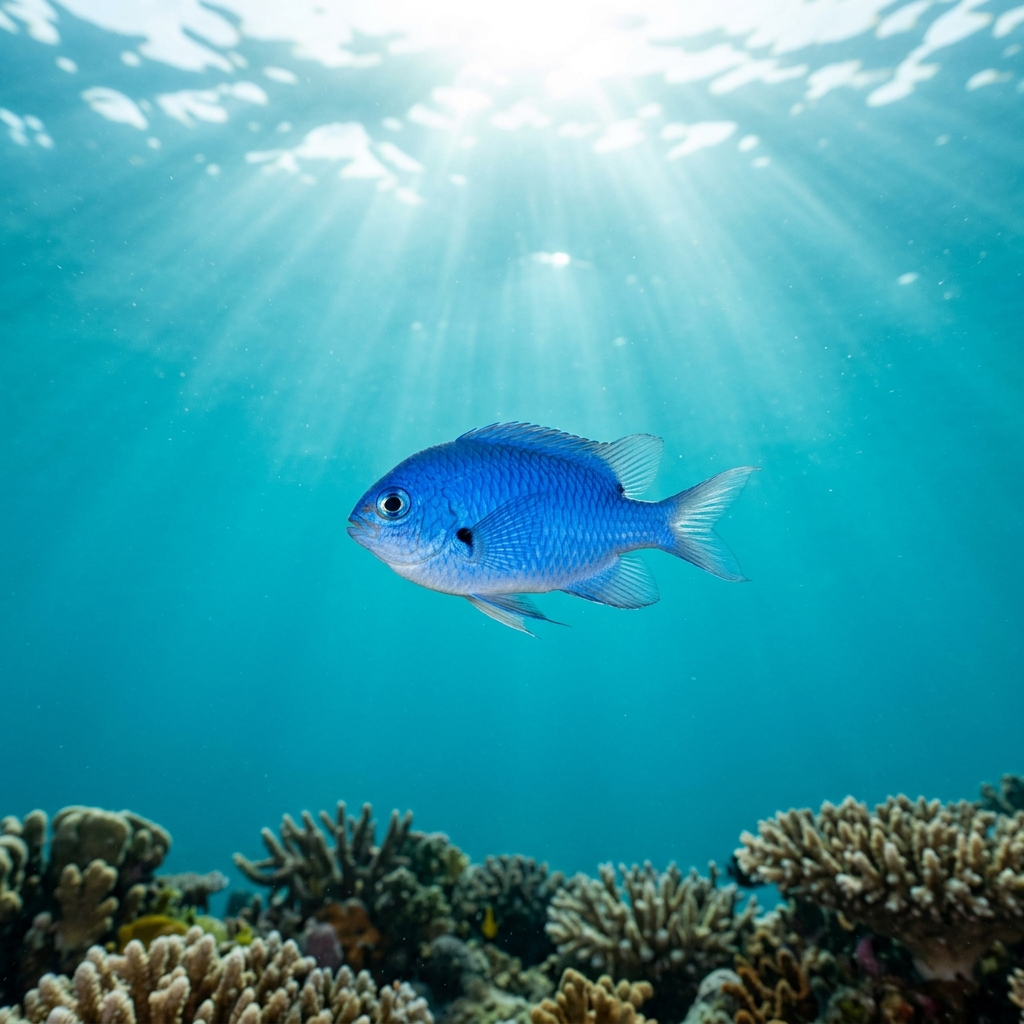
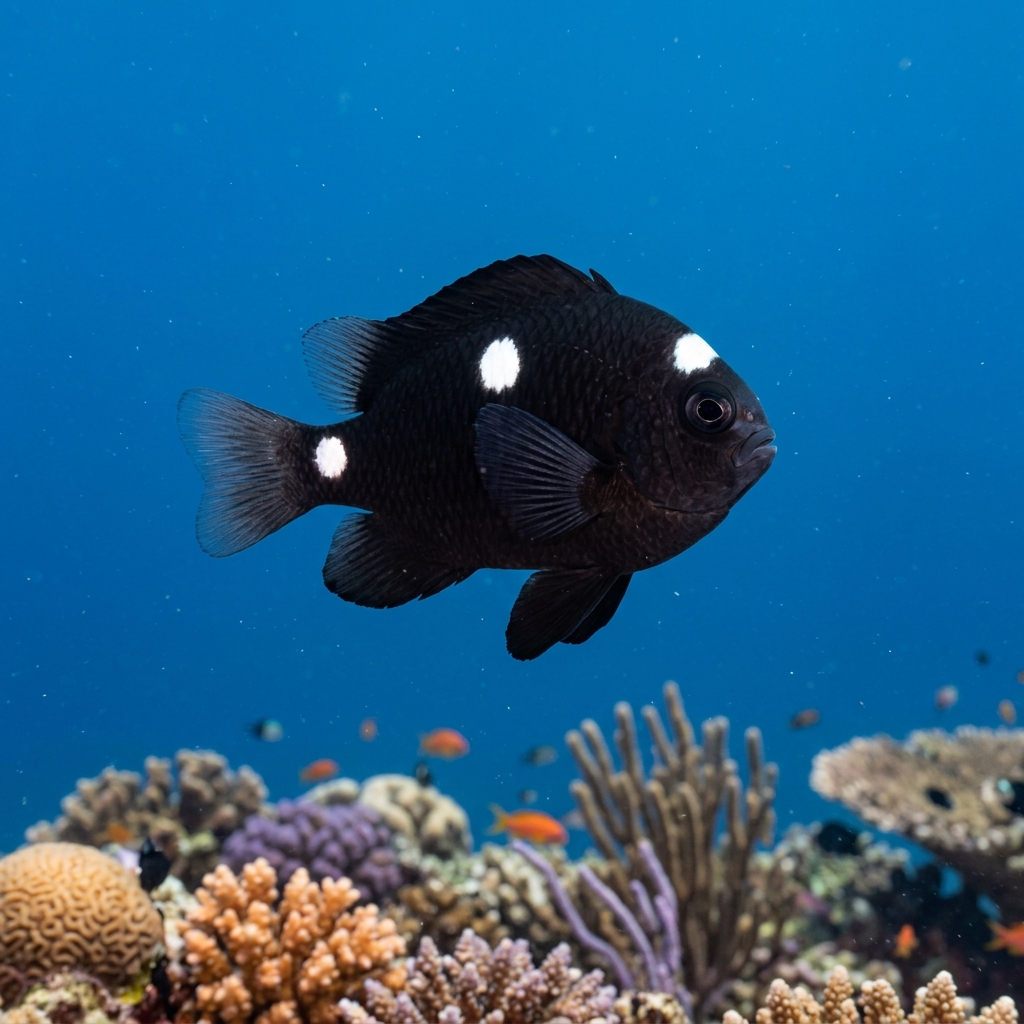
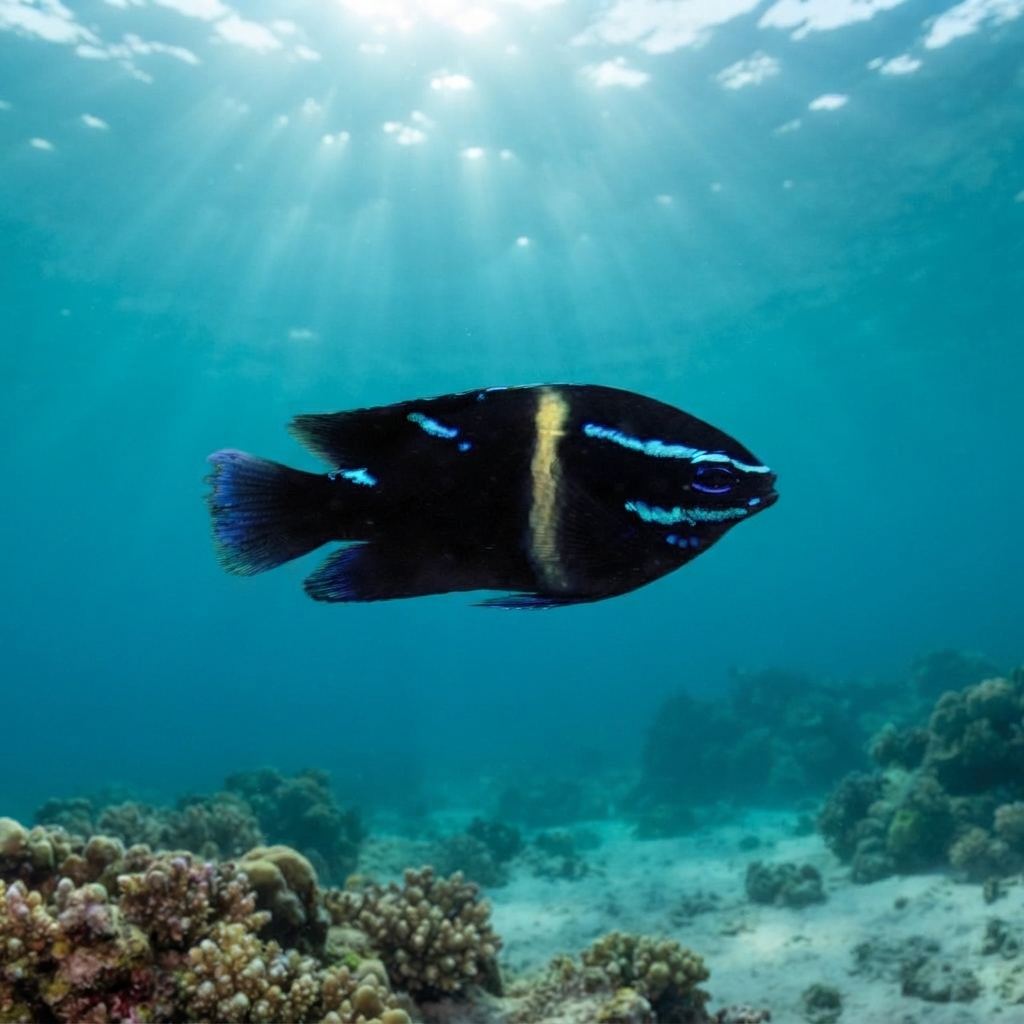
A small, deep-bodied damselfish with a velvety dark blue to near-black body cut by a single bold white or pale blue vertical band just behind the head. It grows to about 10cm, so look for a compact, disc-shaped fish rather than anything elongated. Juveniles are more strikingly patterned than adults, often showing a brighter, more electric blue tone with the white band standing out sharply against the dark ground colour, fading slightly as the fish matures.
Expect to find it hovering close to rubble, coral heads and reef structure rather than out in open water, sticking near cover it can dart into if approached too fast. It is not a fish that will follow divers or beg for attention, and logs describe it as uncommon even at the sites where it does turn up, so patient reef scanning close to the substrate pays off more than mid-water searching. Like many damselfish it likely holds a small patch of reef and defends it against other small fish rather than roaming widely.
Many damselfish, including this genus, guard small territories on the reef and will chase off intruders many times their own size, so the calm look of a 10cm fish can be deceptive if you get too close to its patch.
No clear seasonal pattern shows up in the sightings, and with a comfortable range of 26.5 to 29.3C it sits happily on tropical reefs all year, so any month diving Palawan, Sabah or Raja Ampat gives a fair shot at finding one.
Most reliably logged in the Philippines, especially around Palawan, and a strong second stronghold in Sabah, Malaysia. Smaller but consistent numbers turn up in Raja Ampat, Indonesia, making this a Coral Triangle fish through and through.
Mapping where Bluevelvet Damselfish is logged…
The strongest sightings come from the Philippines, particularly Palawan, and Sabah in Malaysia, with a smaller but reliable presence in Raja Ampat, Indonesia. It is a Coral Triangle species tied to warm reef habitats in these regions.
There is no detected seasonal pattern, and the fish tolerates a warm 26.5 to 29.3C range typical of tropical reefs year-round. Any month is reasonable for diving Palawan, Sabah or Raja Ampat with a chance of finding one.
Look for a small, deep-bodied fish around 10cm with a dark blue to near-black body and a single bold white or pale blue vertical stripe behind the head. It stays close to rubble and coral structure rather than swimming in open water.
They reach around 10cm, a typical size for damselfish, so on the reef they read as a small, compact fish rather than anything large or conspicuous.
Logs describe it as uncommon even at the 60 or so sites where it has been recorded, so it is not a guaranteed sighting even in its strongholds like Palawan and Sabah. Patient, close-in reef scanning improves your odds more than open-water searching.
Site and sighting data is aggregated from diver logs, iNaturalist and GBIF. For taxonomy and conservation status:
Dascyllus
3,697 sites