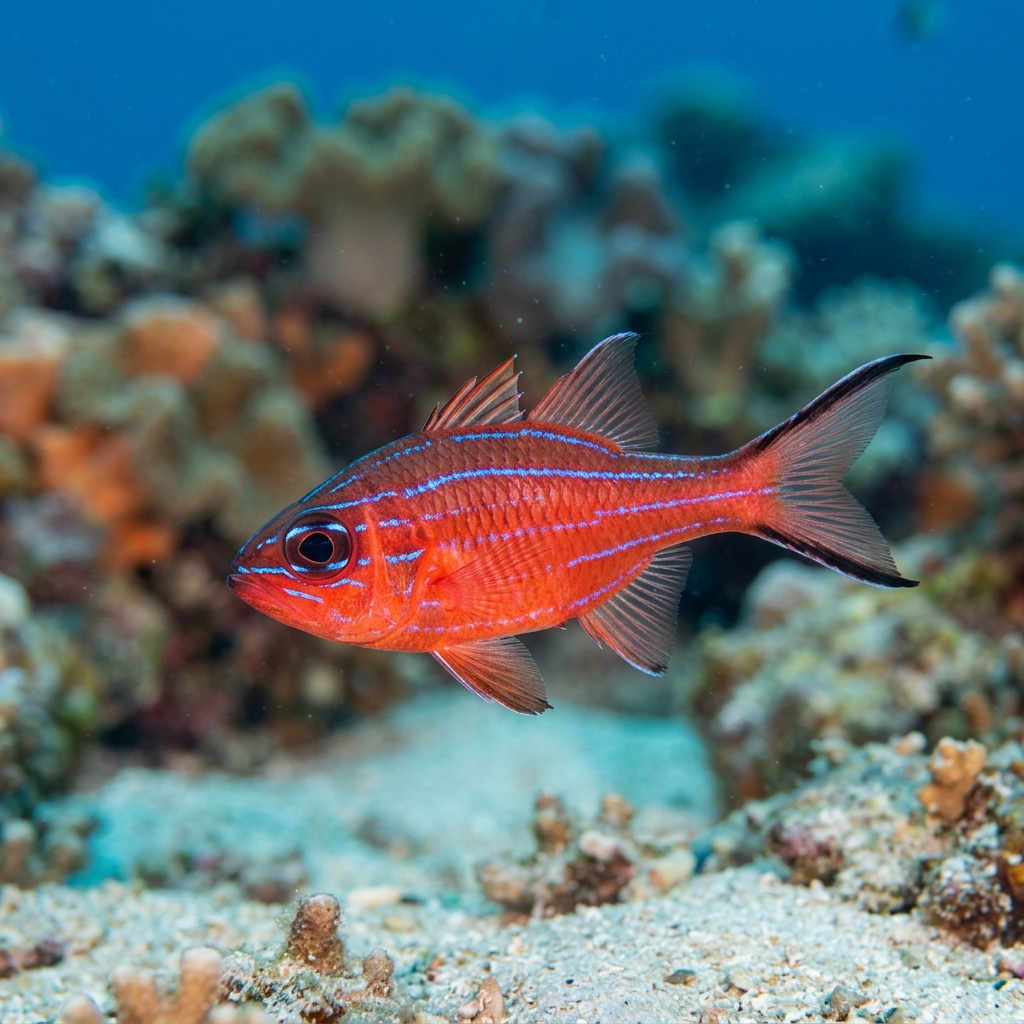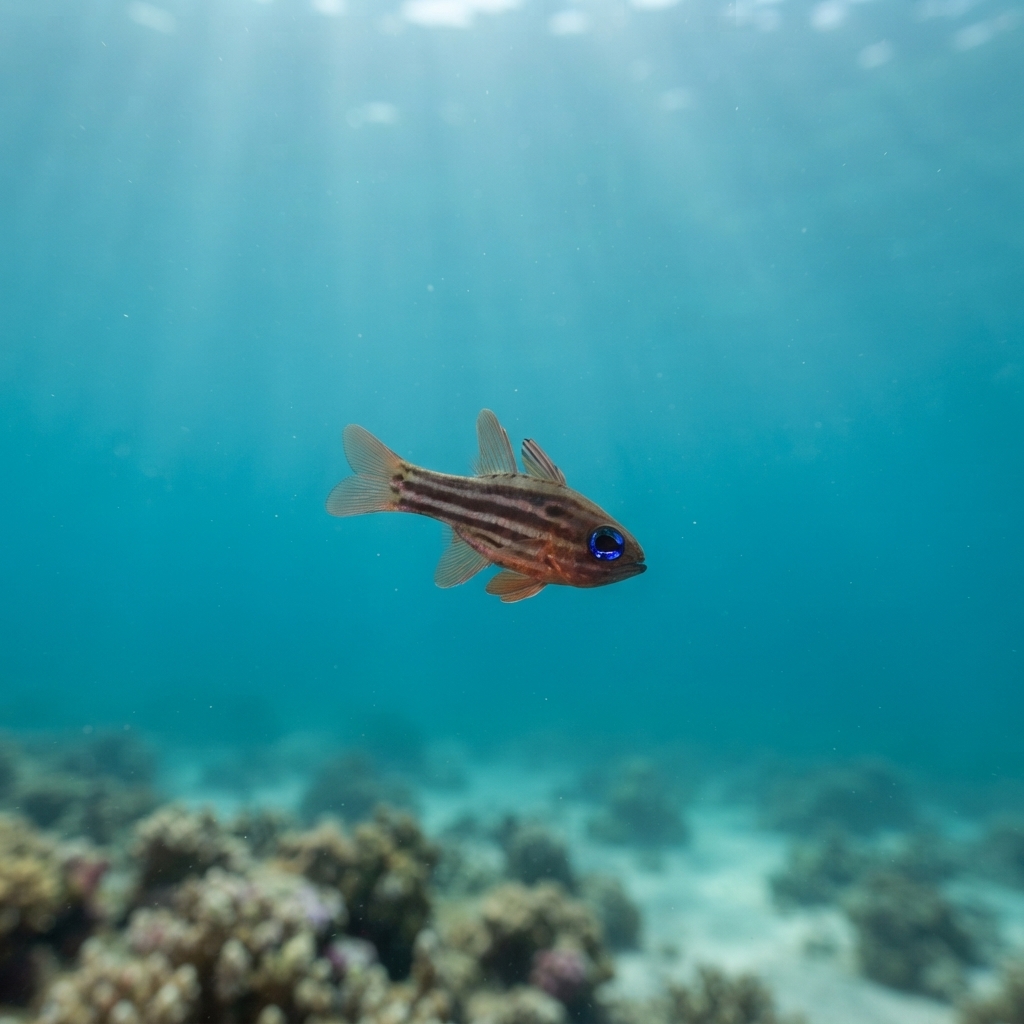
Ostorhinchus compressus
Small reef cardinalfish logged across Palawan and Sulawesi in 26.6-29.3C water, uncommon but present year-round on shallow reefs.
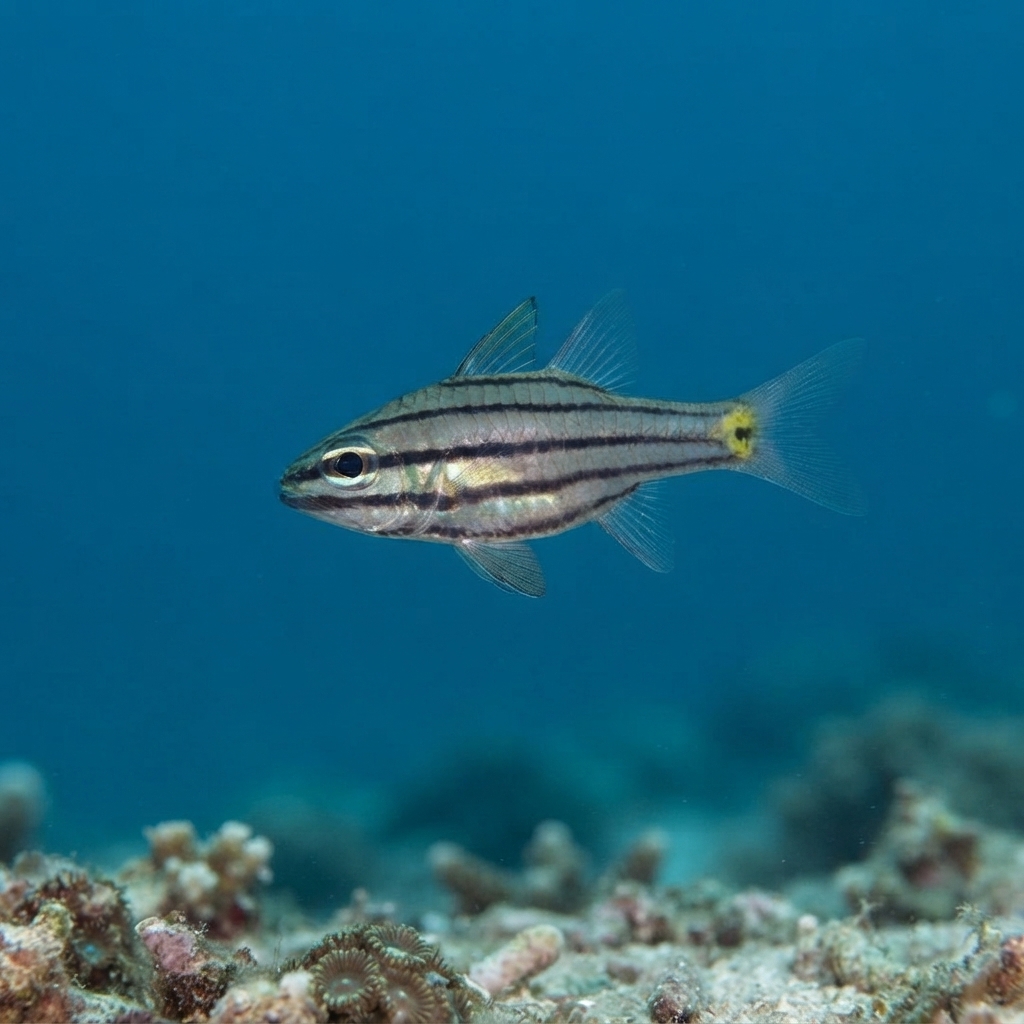
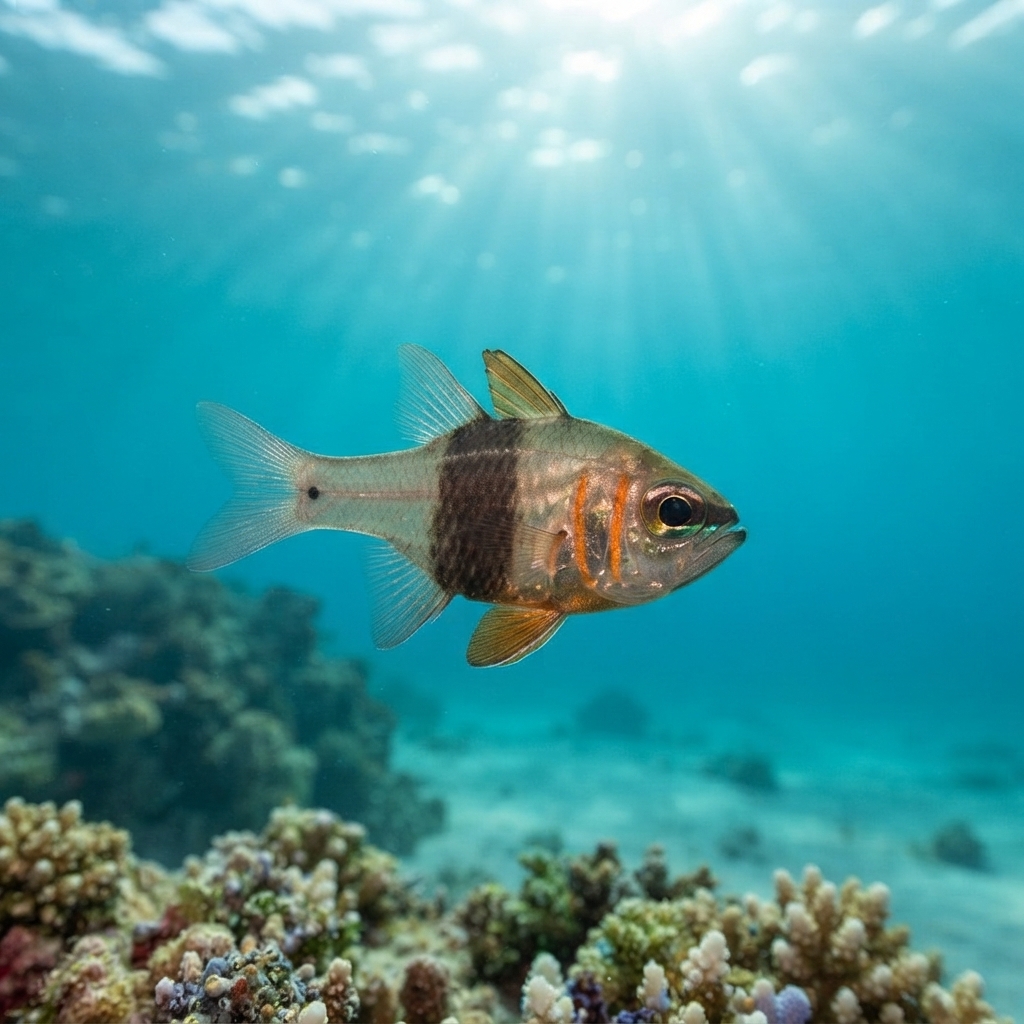
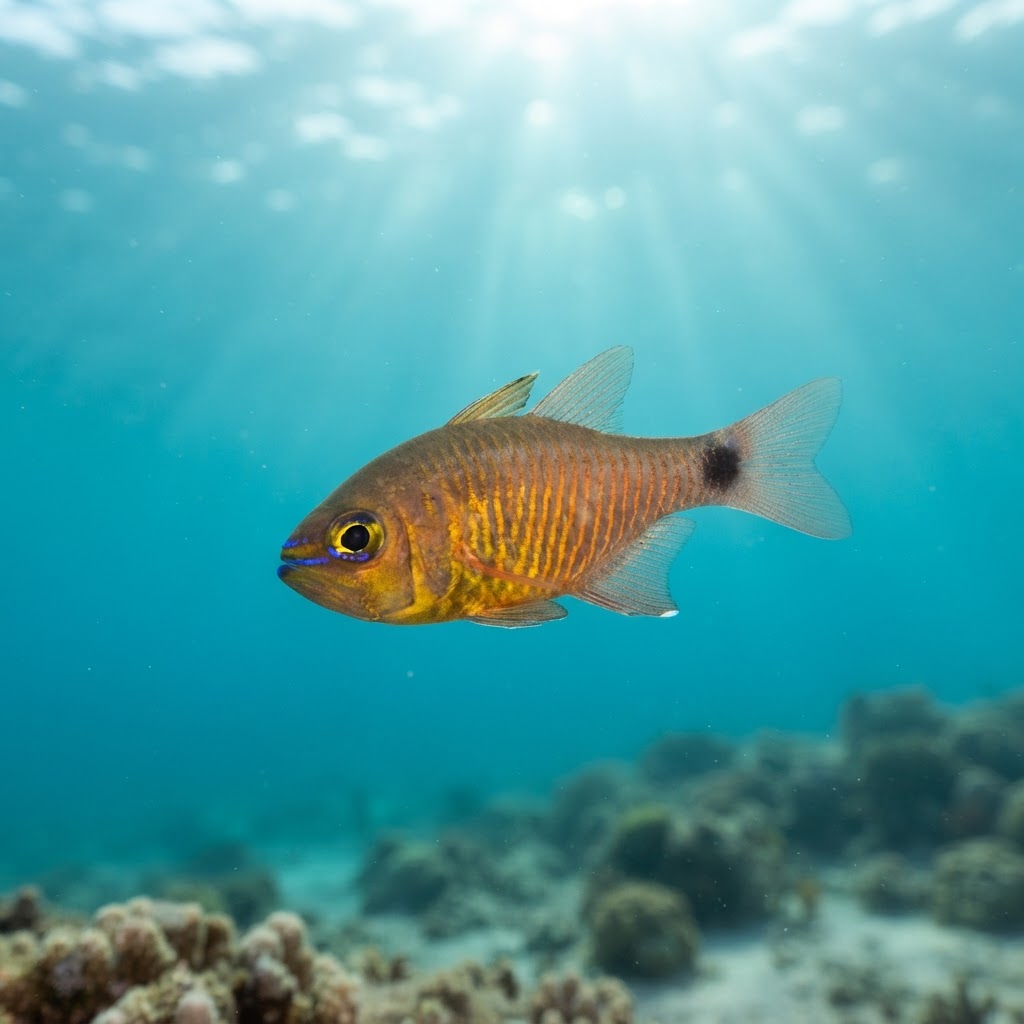
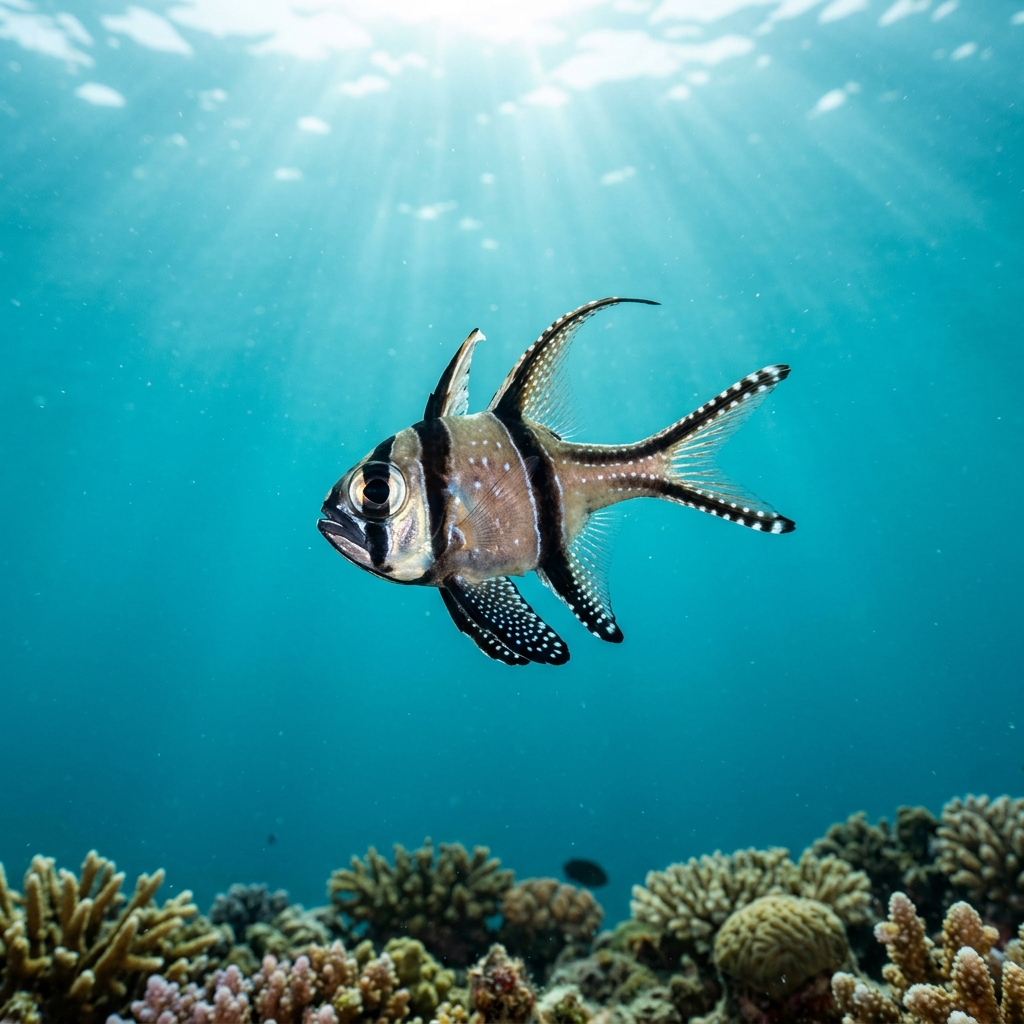
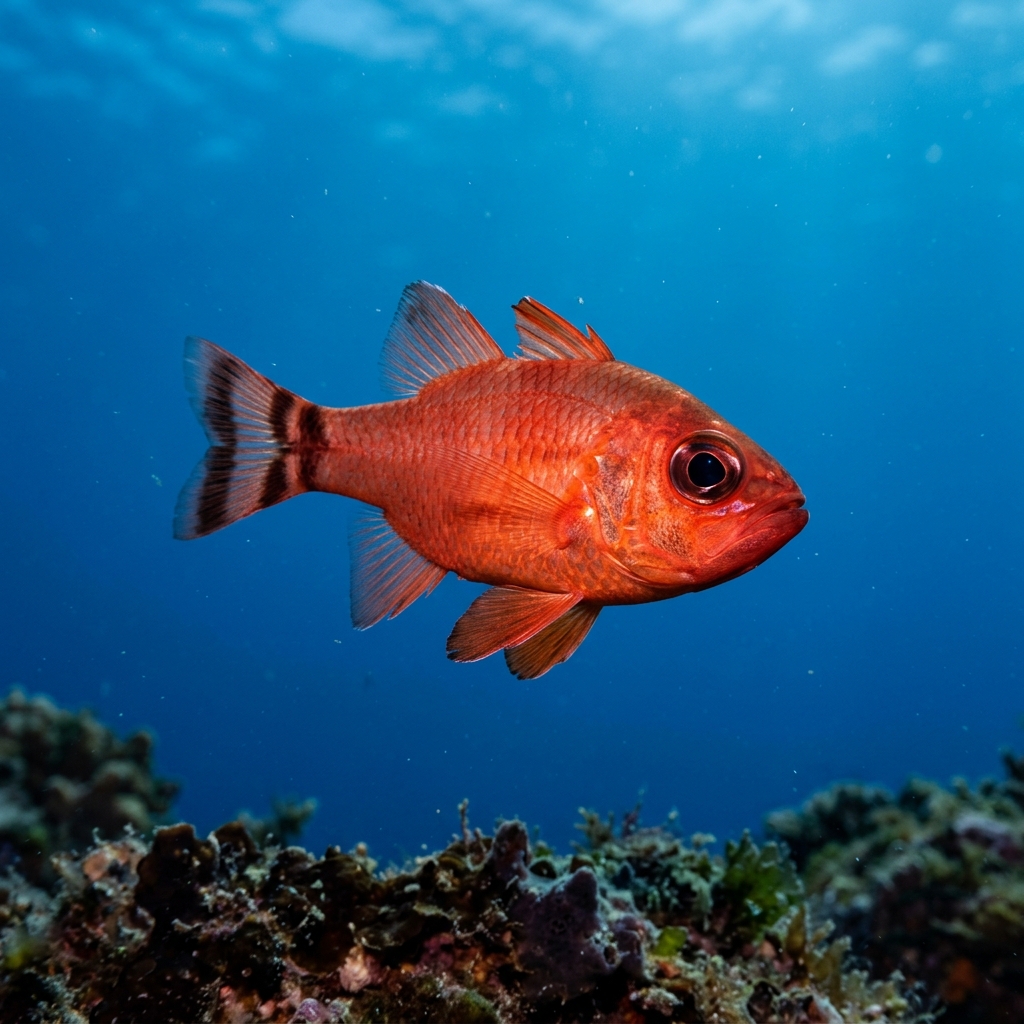
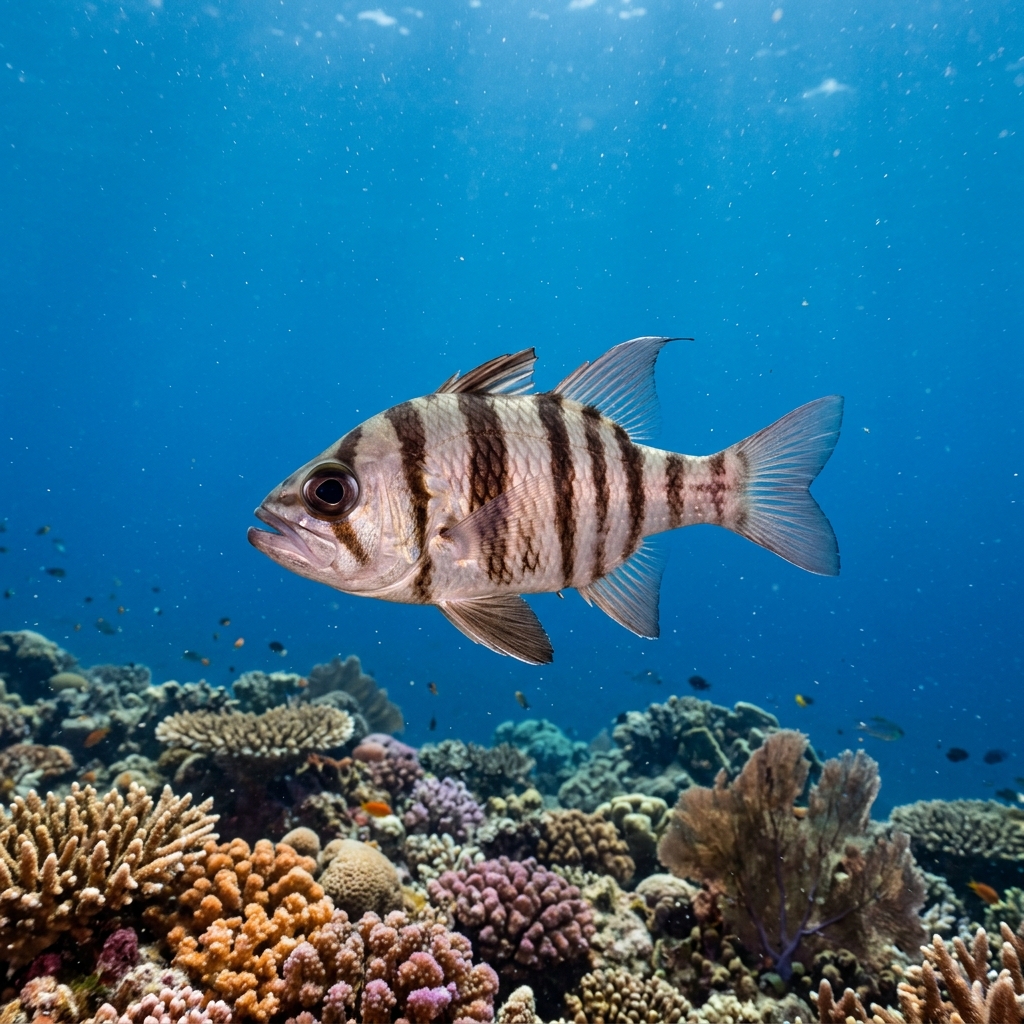
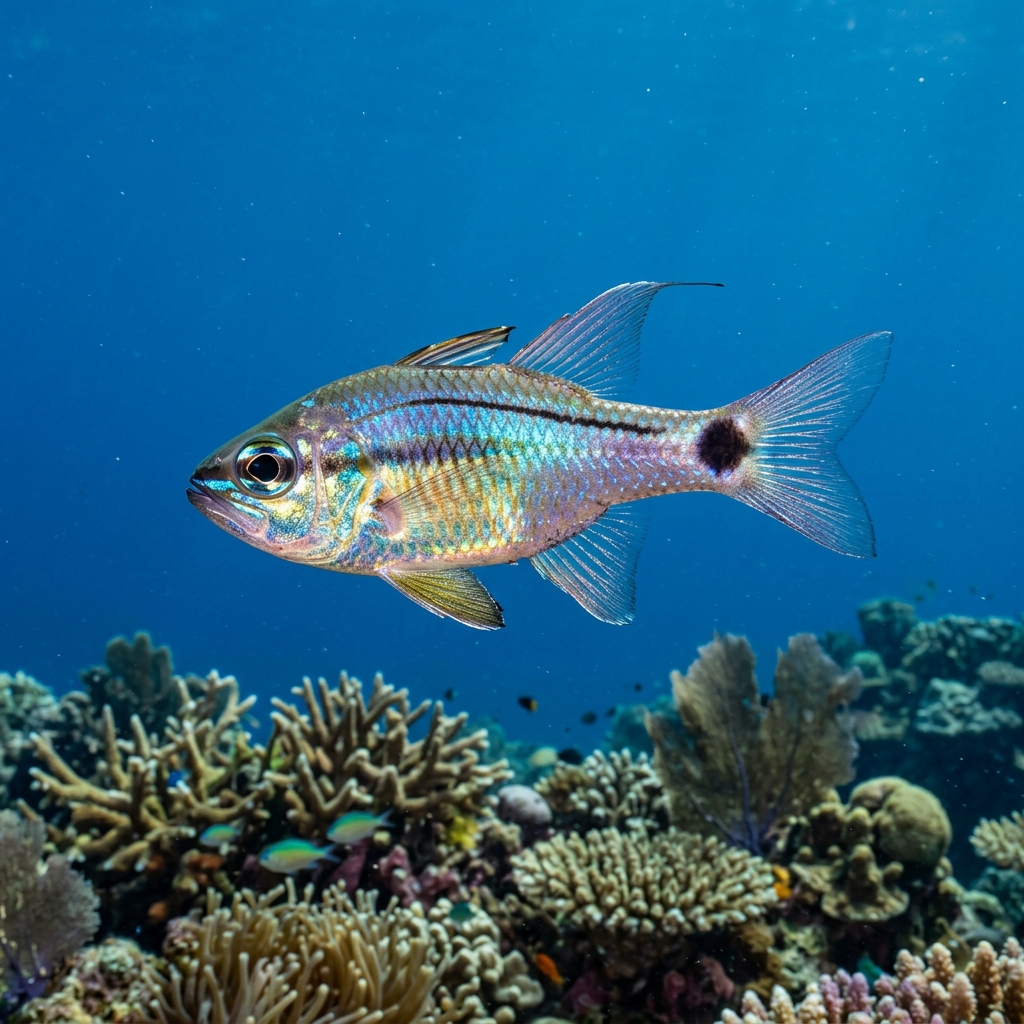
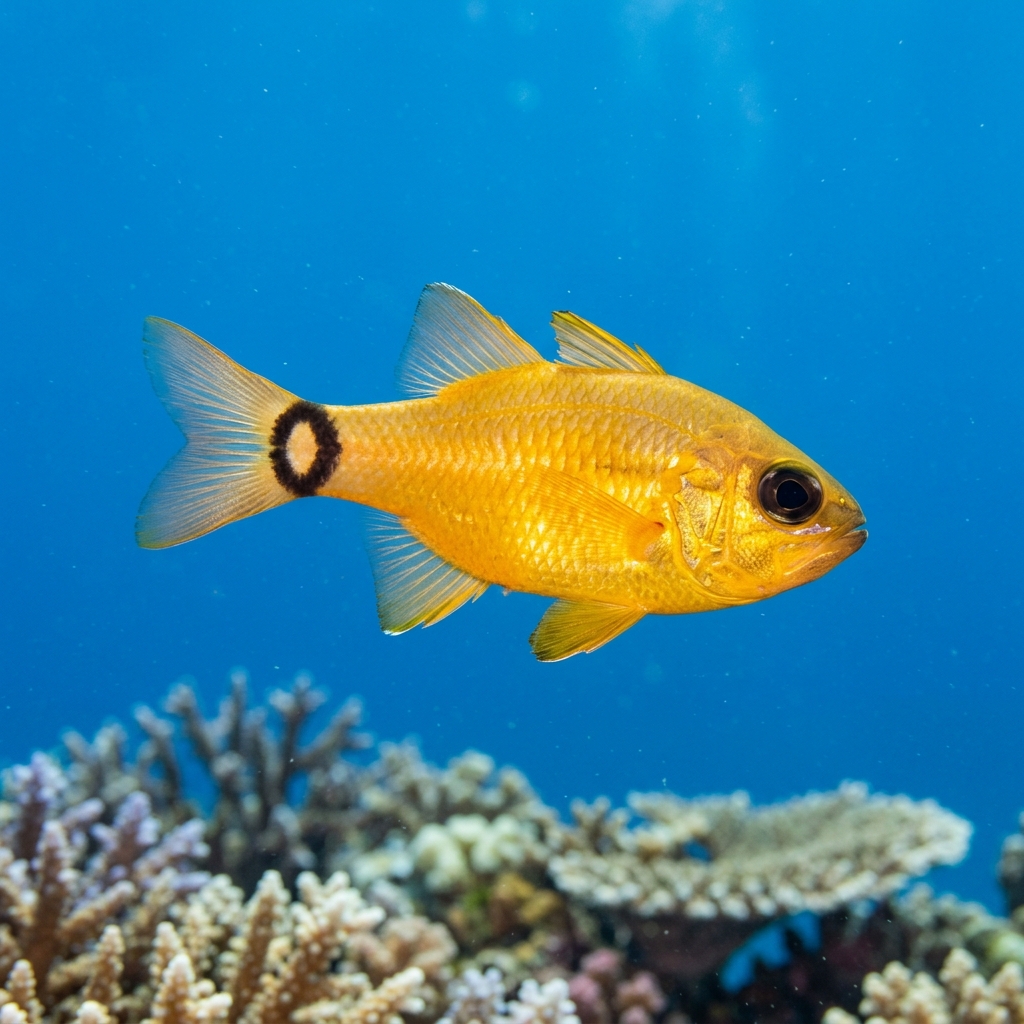
A compact, deep-bodied cardinalfish around 8 cm, with a flattened, almost coin-shaped side profile that separates it from more elongated cardinalfish. Look for a pale golden to translucent body with a dark stripe running through the eye, and large eyes that give the species its common name. It typically hovers head-down or at an angle just above the reef rather than swimming level.
Usually seen hovering solo or in loose small groups close to coral rubble, ledges, or under overhangs during the day, staying near cover rather than out in the open water. It reacts to divers by drifting slightly deeper into a crevice rather than bolting, and becomes more active and visible feeding in open water around dusk, in line with typical cardinalfish behaviour.
Like other cardinalfish, this species is a mouthbrooder: the male carries fertilised eggs in his mouth until they hatch, a common but easy-to-miss cardinalfish trait worth looking for at close range.
Comfortable in warm water between roughly 26.6 and 29.3C, so it turns up on tropical reefs across its range all year with no clear seasonal peak in the data.
Reef neighbours a diver could mistake it for. Use the identification notes above to tell them apart.
Most reliably logged in the Philippines, especially Palawan, and a strong second population across Indonesia, particularly Sulawesi, Bali, and Raja Ampat. Divers also find it on reefs in Sabah, Malaysia, with a smaller number of records from Queensland, Australia.
Mapping where Blue-eyed Cardinalfish is logged…
Palawan in the Philippines is the strongest area for this species, followed by Sulawesi, Bali, and Raja Ampat in Indonesia. It also appears on reefs in Sabah, Malaysia, and in smaller numbers in Queensland, Australia.
There is no strong seasonal pattern in the sightings, and it lives in consistently warm reef water year-round, so any time of year works for spotting it in its core range.
Check for a small, deep-bodied fish around 8 cm with a flattened side profile, a pale golden body, and a dark stripe through the eye. It usually hovers near reef structure rather than swimming openly.
They stay small, typically reaching around 8 cm in length, which is standard for reef-associated cardinalfish.
No, they pose no threat to divers and simply retreat into reef cover if approached too closely.
Males of this species carry fertilised eggs in their mouths until the young hatch, a mouthbrooding strategy shared with most cardinalfish species.
Site and sighting data is aggregated from diver logs, iNaturalist and GBIF. For taxonomy and conservation status:
Iridescent Cardinalfish
1,781 sites