Doriopsis pecten
A rare, pinhead-sized find logged at Saint-Paul, Reunion and New South Wales in warm 20.5-26.9C water year-round.
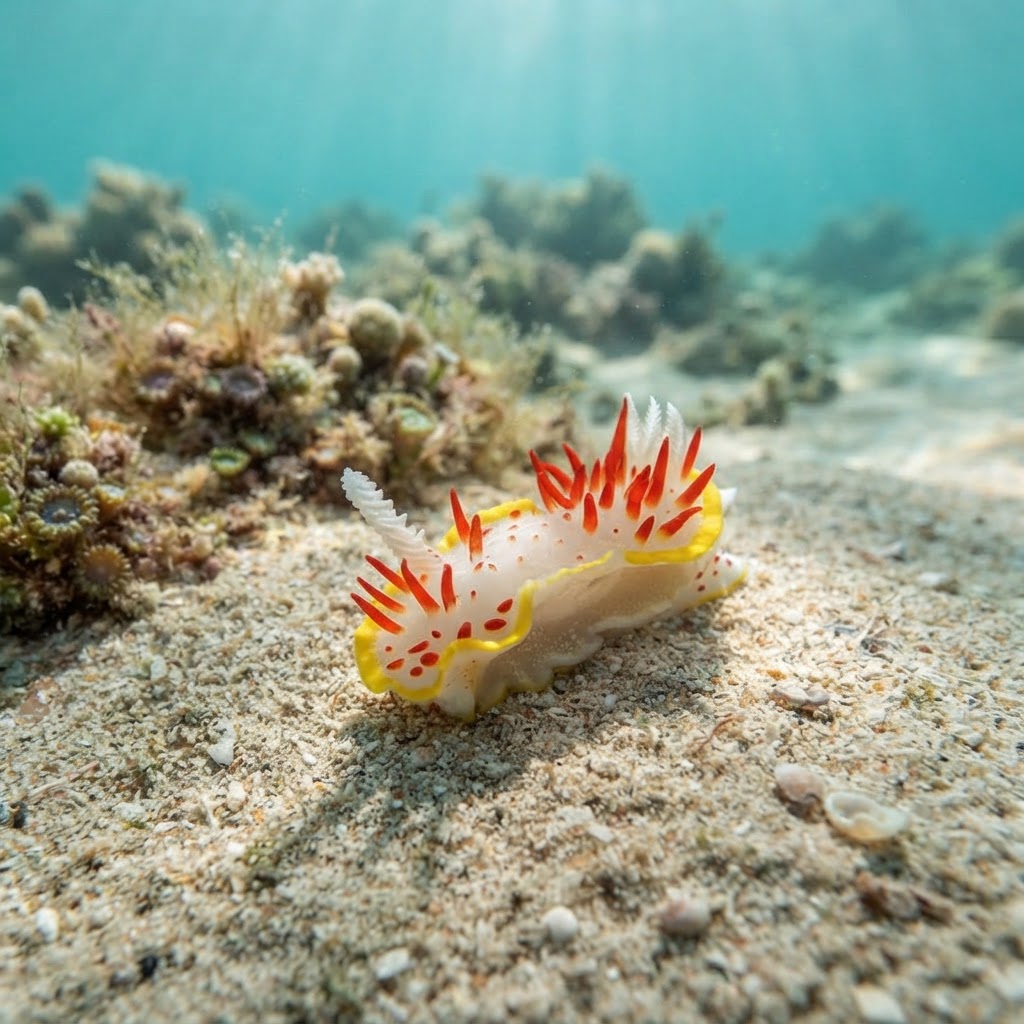
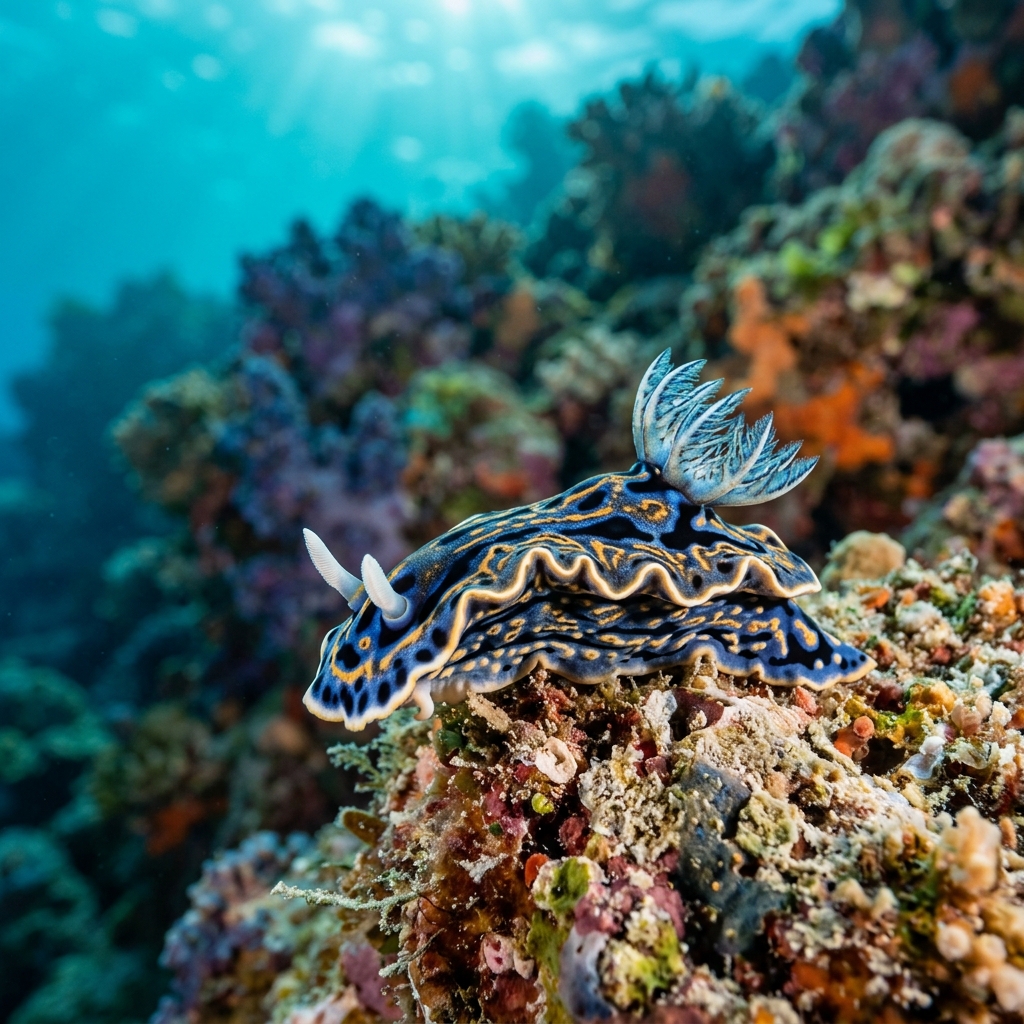
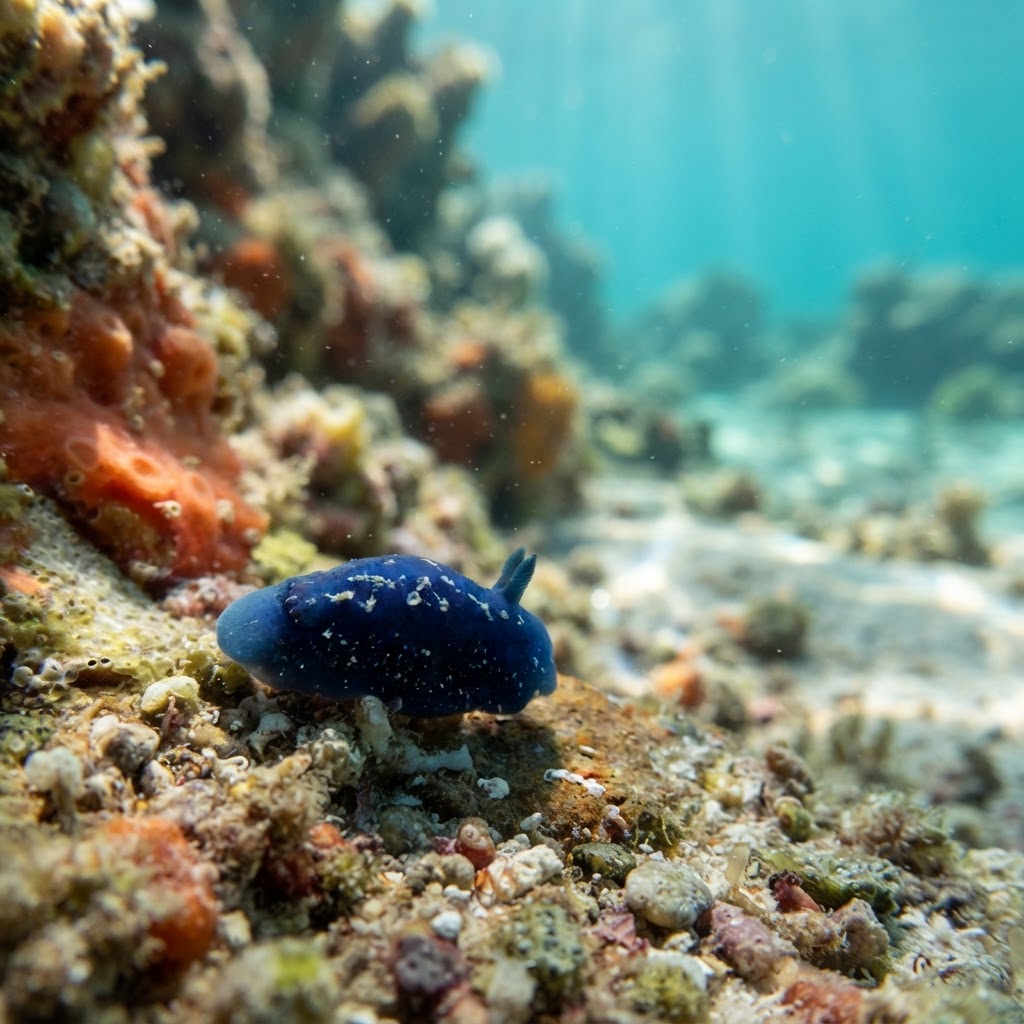
Barely a centimetre long, so you'll need a slow eye or a macro lens to pick it out against the reef floor. Body is a soft, low oval typical of dorid nudibranchs, with a bluish cast to the mantle and a fringe of feathery gills visible near the rear if you get close. There's no bold pattern to key on here, this is a species you identify by shape, size and habitat rather than flashy colour.
Like most small dorids, expect it sitting motionless on rock or rubble surfaces, grazing slowly rather than moving with any urgency. It shows no reaction to divers beyond simply being easy to miss, so sightings come down to careful scanning of the substrate rather than the animal coming to you.
Dorid nudibranchs like this one breathe through the exposed gill tuft on their back rather than gills hidden inside a shell, a trait you can actually see if you get close enough with a macro lens.
No clear seasonal pattern shows up in the data, and the observed water temperature range of 20.5 to 26.9C spans both cooler and warmer reef conditions, so it's best treated as a year-round possibility rather than a seasonal target.
Reef neighbours a diver could mistake it for. Use the identification notes above to tell them apart.
Logged sightings cluster around Saint-Paul in Reunion, with a further record from New South Wales, Australia, making Reunion the more reliable of the two for a dedicated search. Both are real, if sparse, records rather than a wide range, so treat any sighting outside these regions as a bonus rather than an expectation.
Mapping where Blue Doriopsis is logged…
Confirmed sightings come from Saint-Paul in Reunion and from New South Wales, Australia. Reunion currently has the stronger record, though this is a rare find at any site.
There isn't enough data to point to a season, and its observed temperature range of 20.5 to 26.9C covers most of the year on the reefs where it's been found, so it's a year-round possibility rather than a seasonal target.
About 1 centimetre long, making it one of the smaller nudibranchs a diver might try to spot. You'll want a keen eye or a macro lens rather than relying on size to give it away.
Look for a tiny, low-bodied dorid nudibranch with a bluish-toned mantle and a feathery gill tuft near the tail. It lacks bold markings, so size and habitat matter more than pattern for a confident ID.
No, it poses no danger to divers. It's a tiny, stationary grazer that can simply be observed and photographed without any risk.
Site and sighting data is aggregated from diver logs, iNaturalist and GBIF. For taxonomy and conservation status:
Blue Dragon
3,163 sites