Trapania palmula
A small, uncommon nudibranch turning up on macro dives in Bali and Sulawesi, in warm 25.6-31.6C reef water year-round.
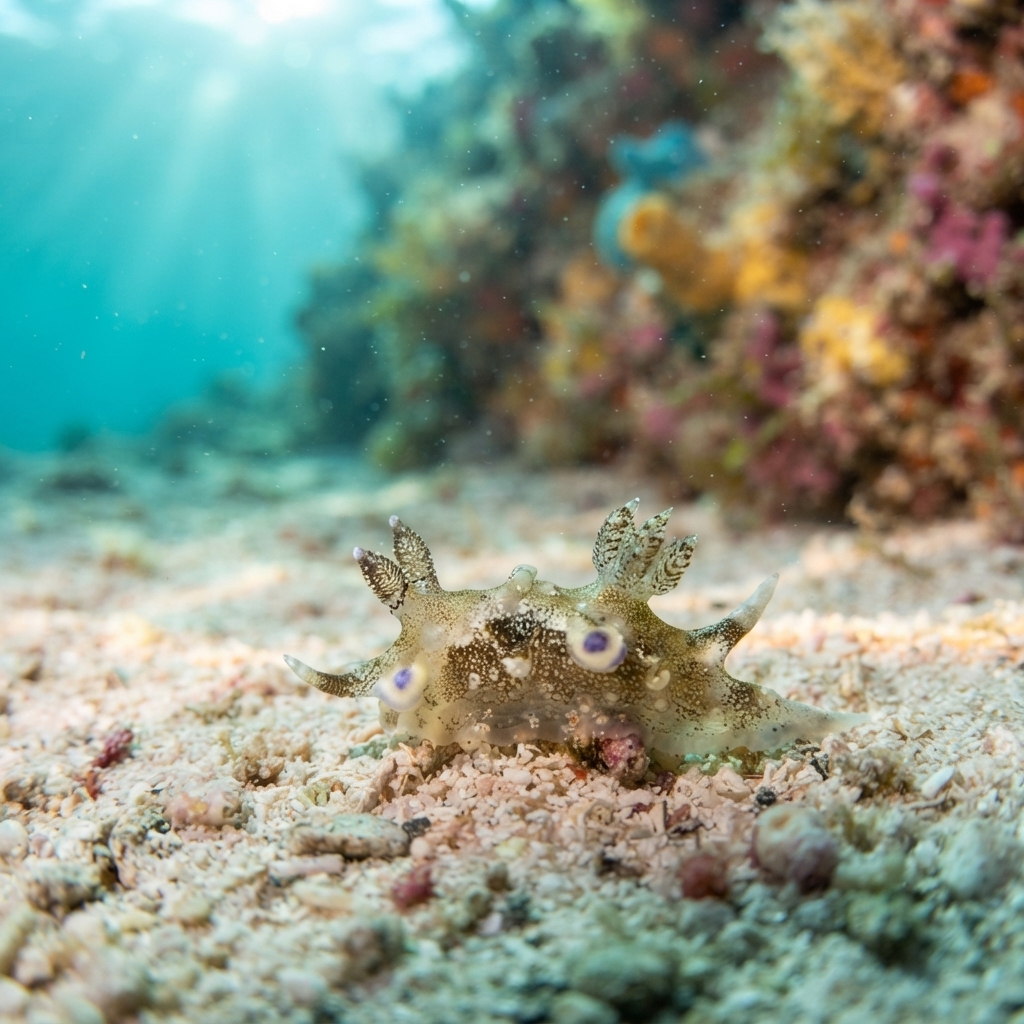
A tiny slug, easily overlooked, with a translucent white to pale body edged in vivid blue-tipped tubercles running along its sides. Look for the long, whip-like blue-tipped extra appendages (called caruncles) trailing near the head, alongside the feathery gill tuft on the back. Most sightings are on rubble or sponge-covered substrate where its small size and pale colour make it easy to miss without a careful eye or a guide pointing it out.
Divers find this one slow-moving and stationary on rubble or sponge patches, grazing rather than swimming, which makes it a patient subject for macro photography once spotted. It shows no reaction to divers beyond retracting its gills slightly if disturbed, and sightings are logged as uncommon even at the sites where it does turn up, so expect to hunt for it rather than stumble across it.
Like other Trapania species, it feeds on bryozoans and entoprocts (tiny colonial filter-feeding animals) picked directly off the reef surface, and lacks the bright warning colours many other nudibranchs use to signal toxicity.
No clear seasonal pattern shows up in the data, and warm water in the 25.6 to 31.6C range sits comfortably within tropical reef conditions all year, so it is a year-round find rather than a seasonal one.
Most consistently logged on Bali's dive sites, with additional sightings in Sulawesi, Indonesia, and a single confirmed record in Sabah, Malaysia. Indonesia dominates the known range for this species, so muck and reef sites across Bali and Sulawesi are the strongest bet for a macro-focused search.
Mapping where Blue-banded Pump Dorid is logged…
Bali is the most reliable region, with further sightings in Sulawesi, Indonesia, and one confirmed record in Sabah, Malaysia. It is an uncommon find even within these areas, so a sharp-eyed guide helps.
There is no detected season for this species. It lives in warm water between roughly 25.6 and 31.6C, conditions found on Indo-Pacific reefs throughout the year.
Look for a small, pale translucent body lined with blue-tipped tubercles, plus long blue-tipped trailing appendages near the head and a feathery gill tuft on the back. Its tiny size and rubble habitat mean it is easy to swim past.
Exact size data is not confirmed for this species, but like other Trapania nudibranchs it stays small, typically only reaching a centimetre or two, which is why it is classed as a macro subject.
They graze on bryozoans and entoprocts, tiny colonial filter-feeding animals living on rubble and sponge surfaces, rather than hunting anything larger.
Site and sighting data is aggregated from diver logs, iNaturalist and GBIF. For taxonomy and conservation status:
Light-spotted Aegires
3,168 sites