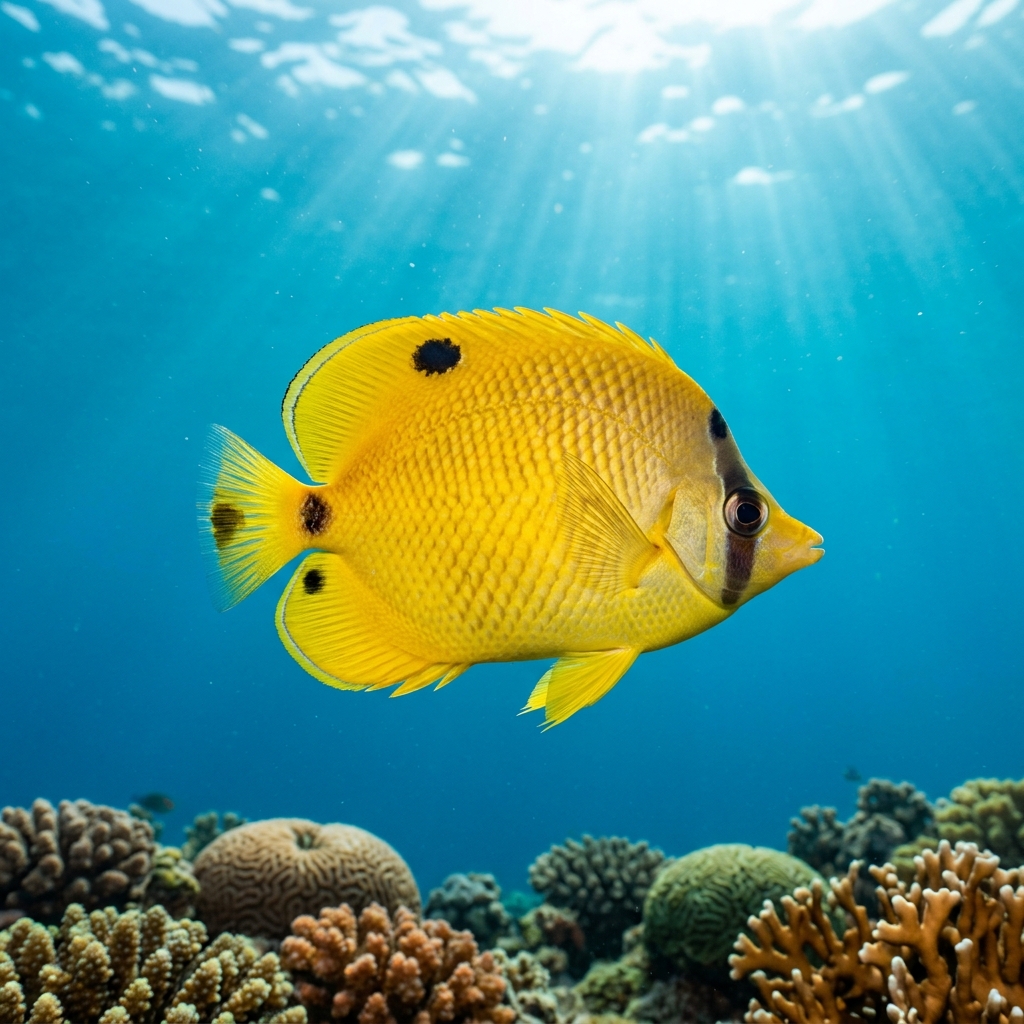
Chaetodon falcula
Two black saddle wedges on a white flank give this butterflyfish away on Maldives reefs, seen year-round in 26.6 to 29.6 C water.
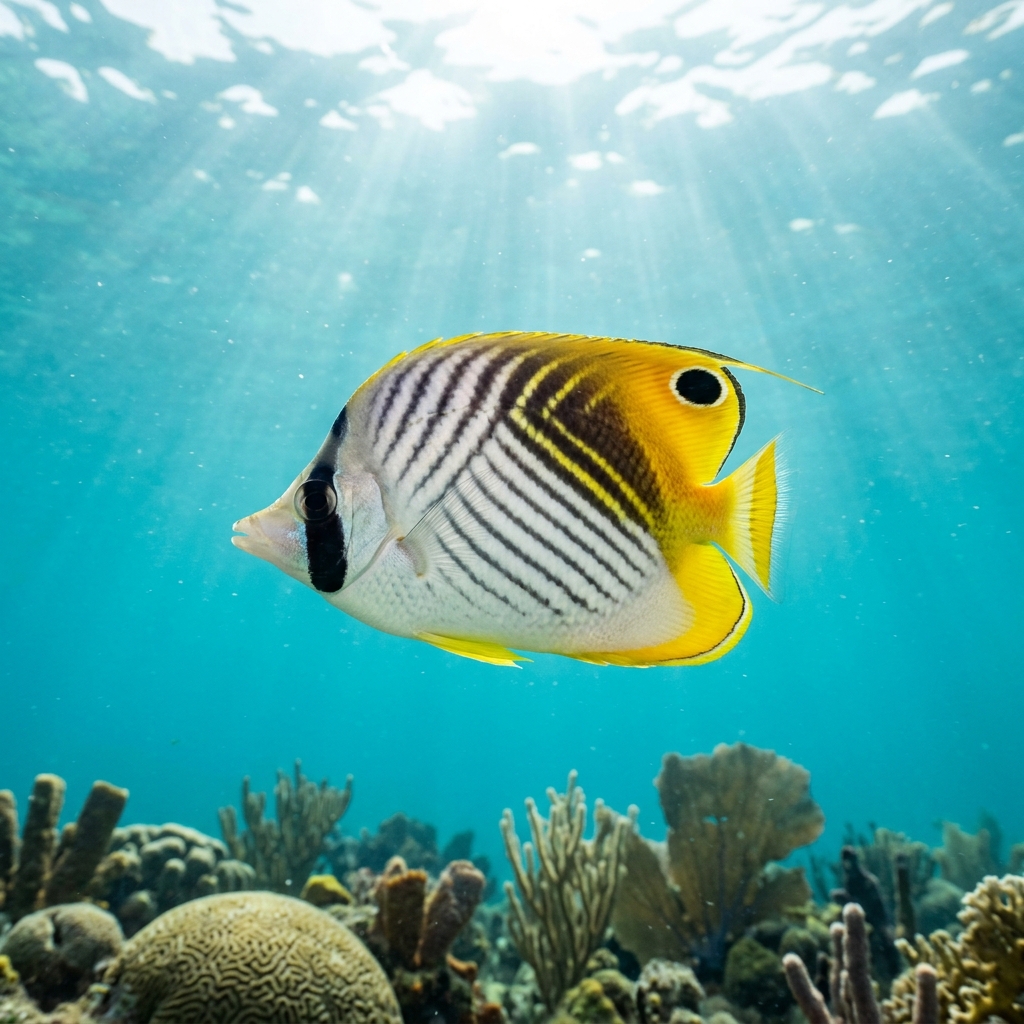
Look for a white to pale grey body marked with two bold black wedge-shaped saddles angled down the back, one behind the head and one near the tail, which is the single clearest ID mark. A black band runs through the eye, and fine yellow-orange lines cross the flanks. It sits around 14 cm as an adult, with a typical compressed, disc-shaped butterflyfish body.
Usually spotted picking at coral polyps and reef invertebrates on shallow to mid-depth reef flats and slopes, often in pairs rather than large groups. It keeps a cautious distance from divers, drifting off along the reef face rather than approaching, so a slow fin kick and a bit of patience gets you closer. Most sightings sit between 1 and 15 m, well within recreational and snorkel range.
Like many butterflyfish it tends to pair up with the same partner and hold a patch of reef, so seeing two together in the same spot on a return dive is often the same couple.
No clear seasonal pattern shows up in the sightings, and with a comfortable range of 26.6 to 29.6 C it stays on the reef year-round, so any month works for a dive trip built around it.
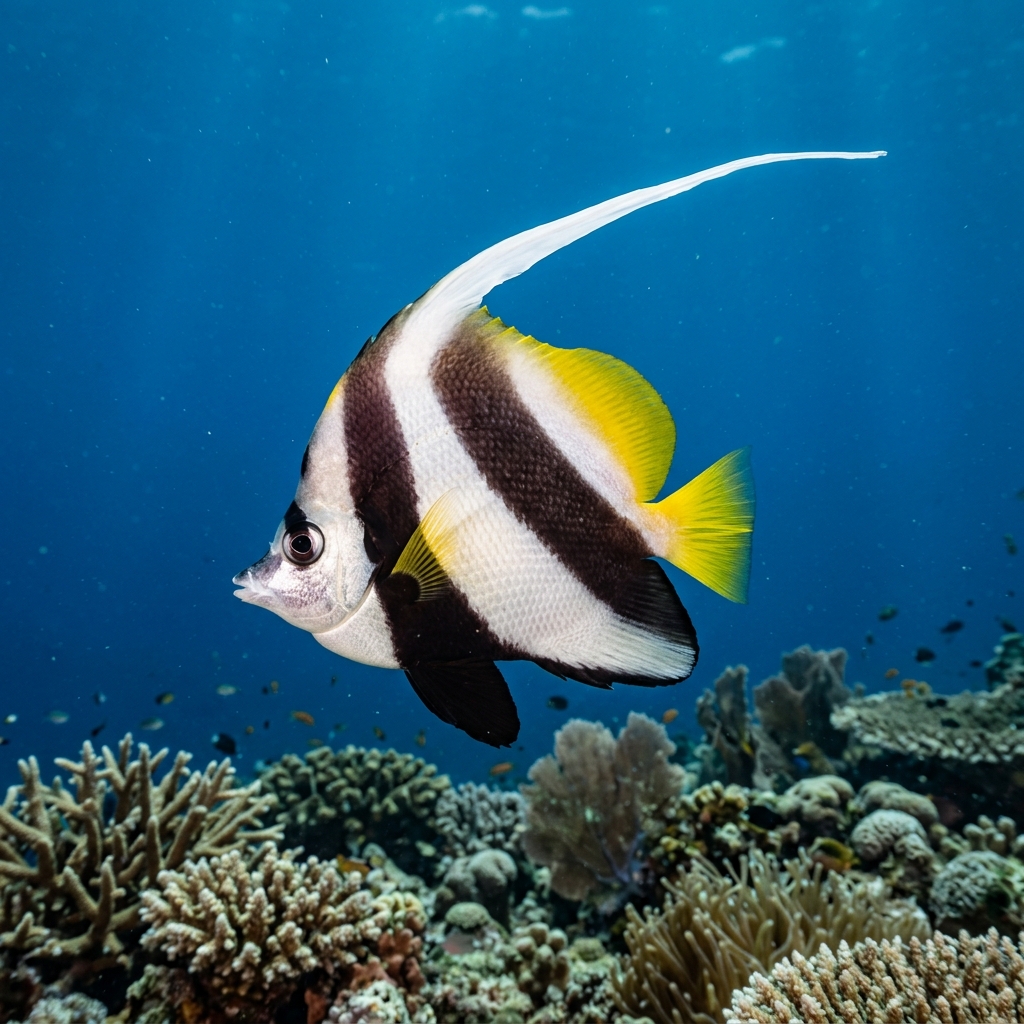
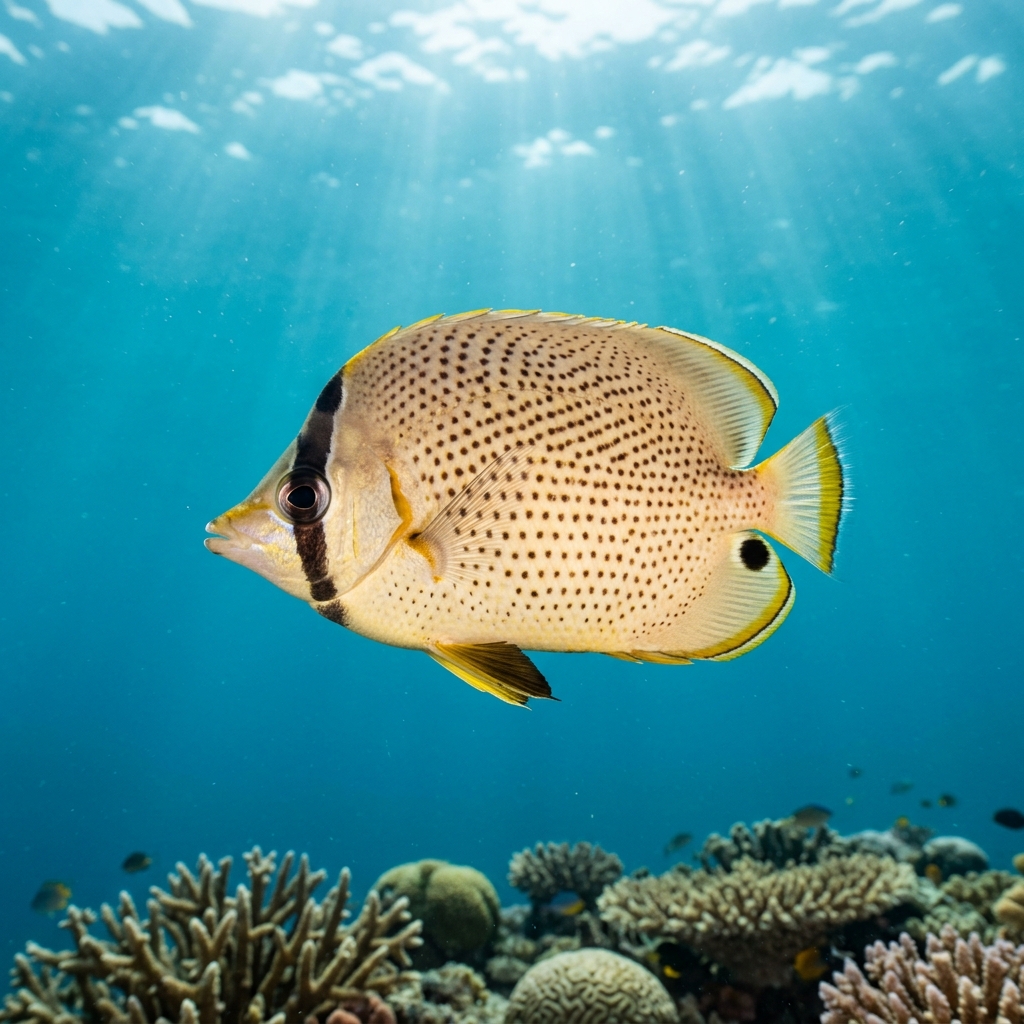
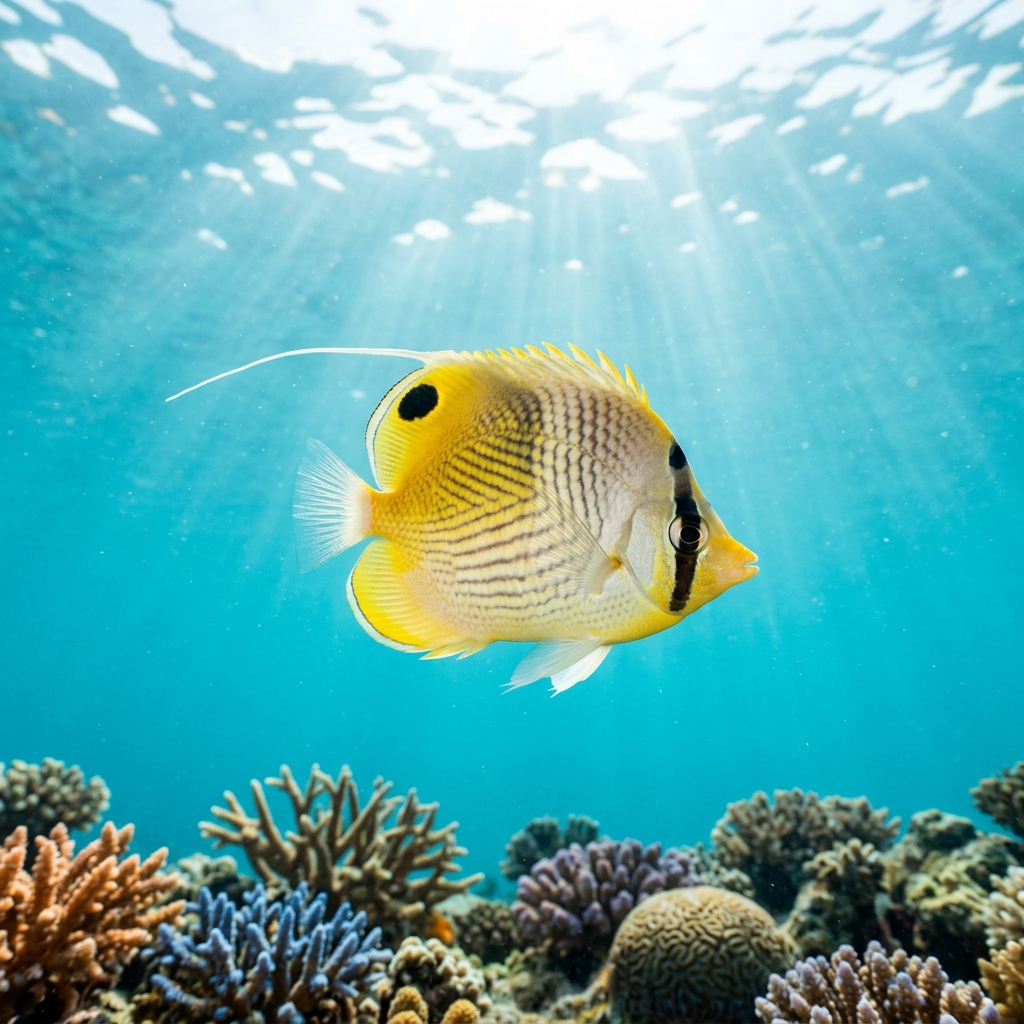
Reef neighbours a diver could mistake it for. Use the identification notes above to tell them apart.
Most reliably logged across the Maldives, especially the Central, Northern and Southern Atolls, where it turns up on reef flats and slopes in good numbers. Beyond the Maldives it is a steady find in Thailand around Khao Lak, in the Mergui Archipelago in Myanmar, off Sumatra in Indonesia, and along the Andaman Islands in India, with further sightings logged in Sri Lanka, Madagascar and Mozambique.
Mapping where Blackwedged Butterflyfish is logged…
The Maldives is by far the strongest area, particularly the Central, Northern and Southern Atolls. It also shows up reliably in Thailand's Khao Lak, Myanmar's Mergui Archipelago, Sumatra in Indonesia, and the Andaman Islands in India.
There is no strong seasonal pattern in the data, and it tolerates a warm 26.6 to 29.6 C range year-round, so it is a fair bet on any dive trip to its range.
Check for a white body crossed by two black wedge-shaped saddles angled along the back, plus a black band through the eye. The double black saddle pattern is the giveaway that separates it from most other butterflyfish.
Around 14 cm as an adult, a typical size for a reef butterflyfish and easy to overlook against larger reef fish.
No, they pose no threat to divers and simply move off along the reef if approached too closely.
Site and sighting data is aggregated from diver logs, iNaturalist and GBIF. For taxonomy and conservation status: