Apogon atradorsatus
Small reef fish tucked in crevices across the Galápagos and Cocos Island, seen year-round in 23 to 29°C water. Here's how to spot one.
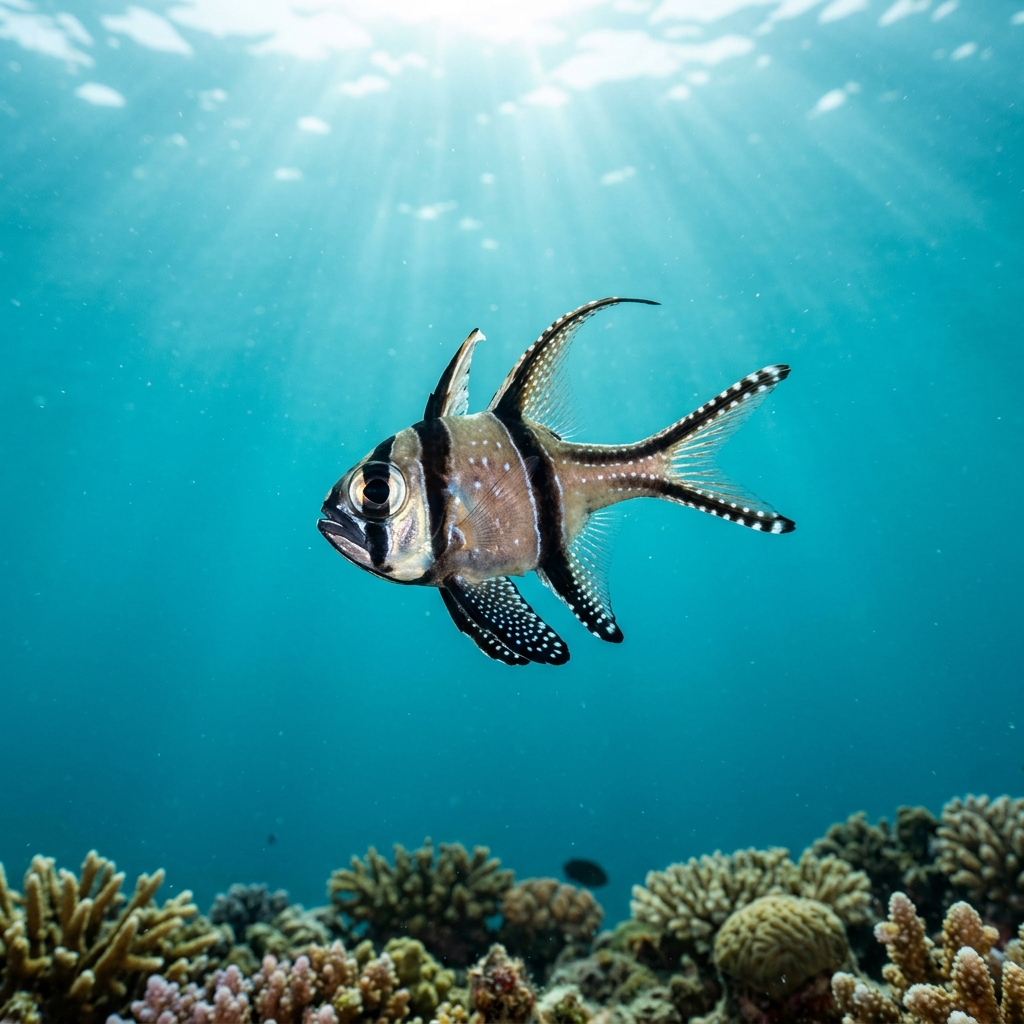
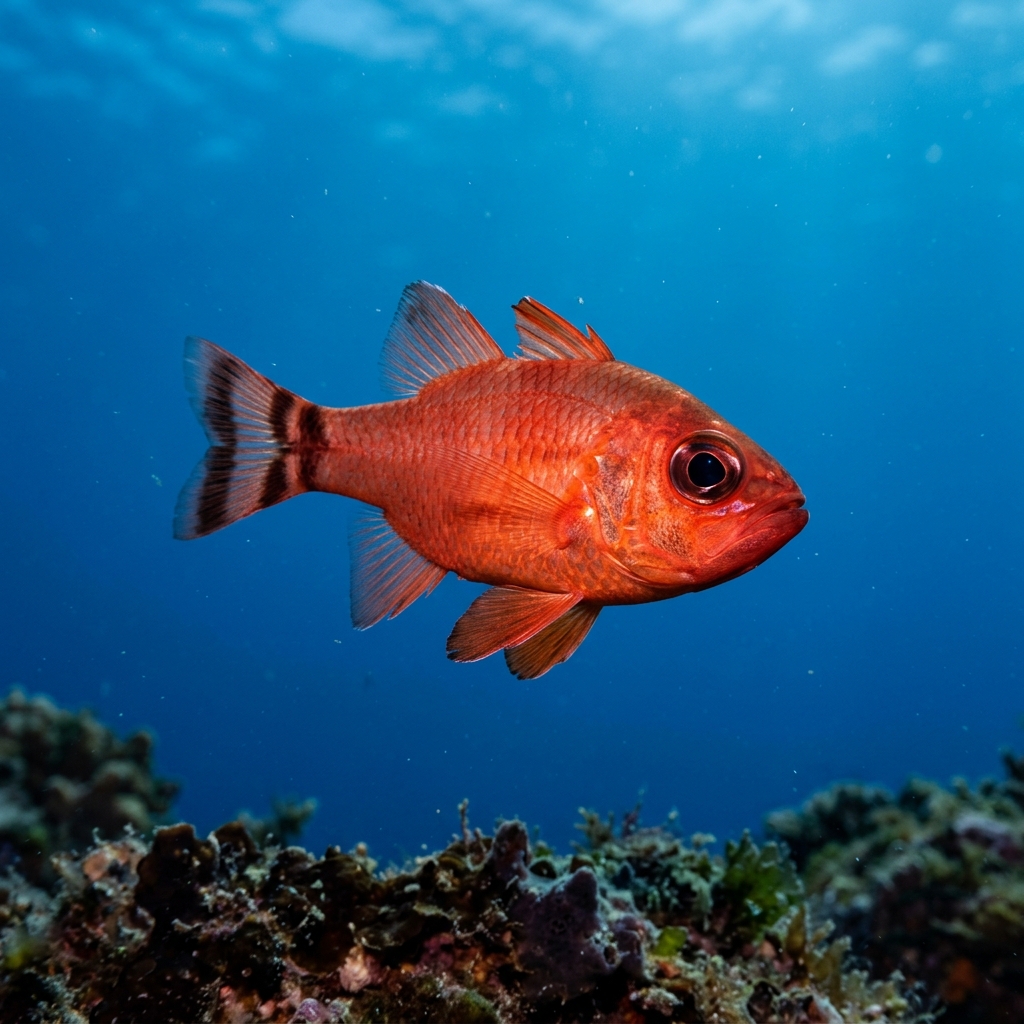
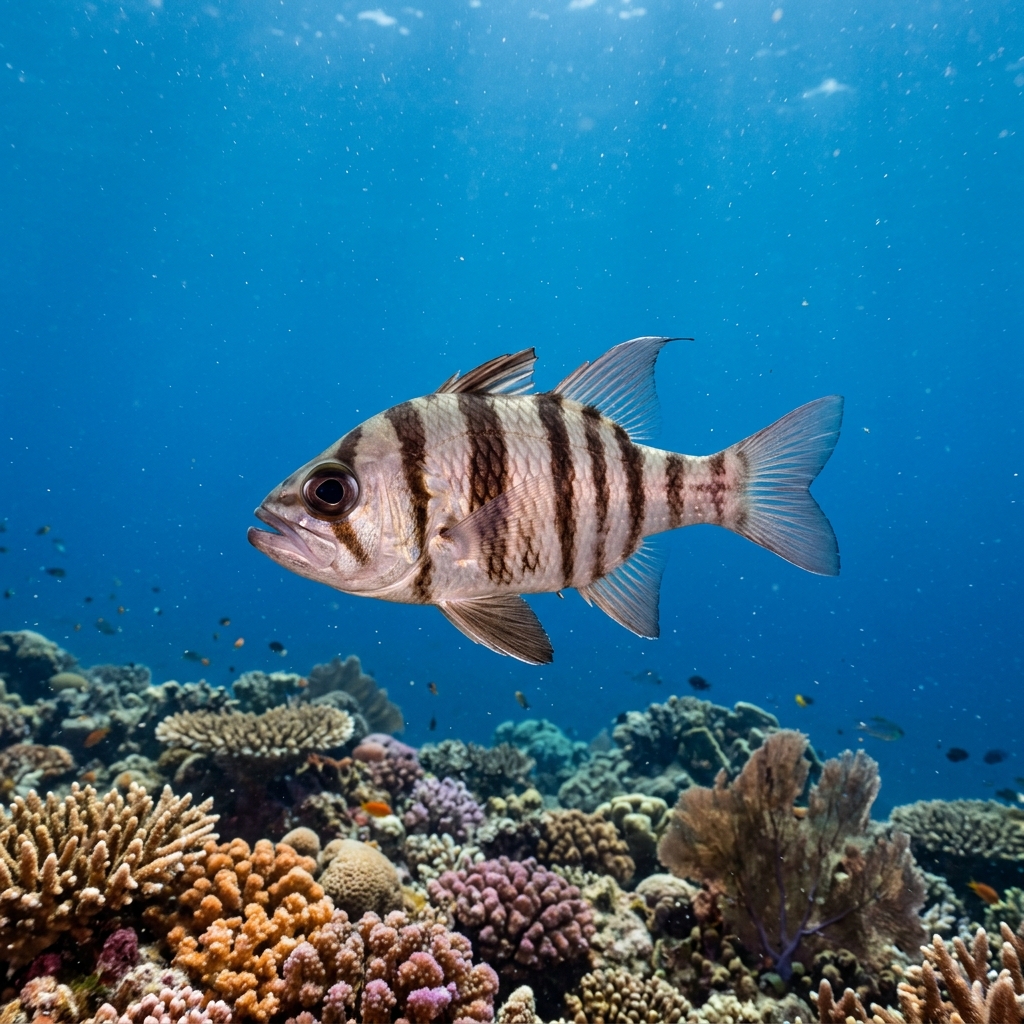
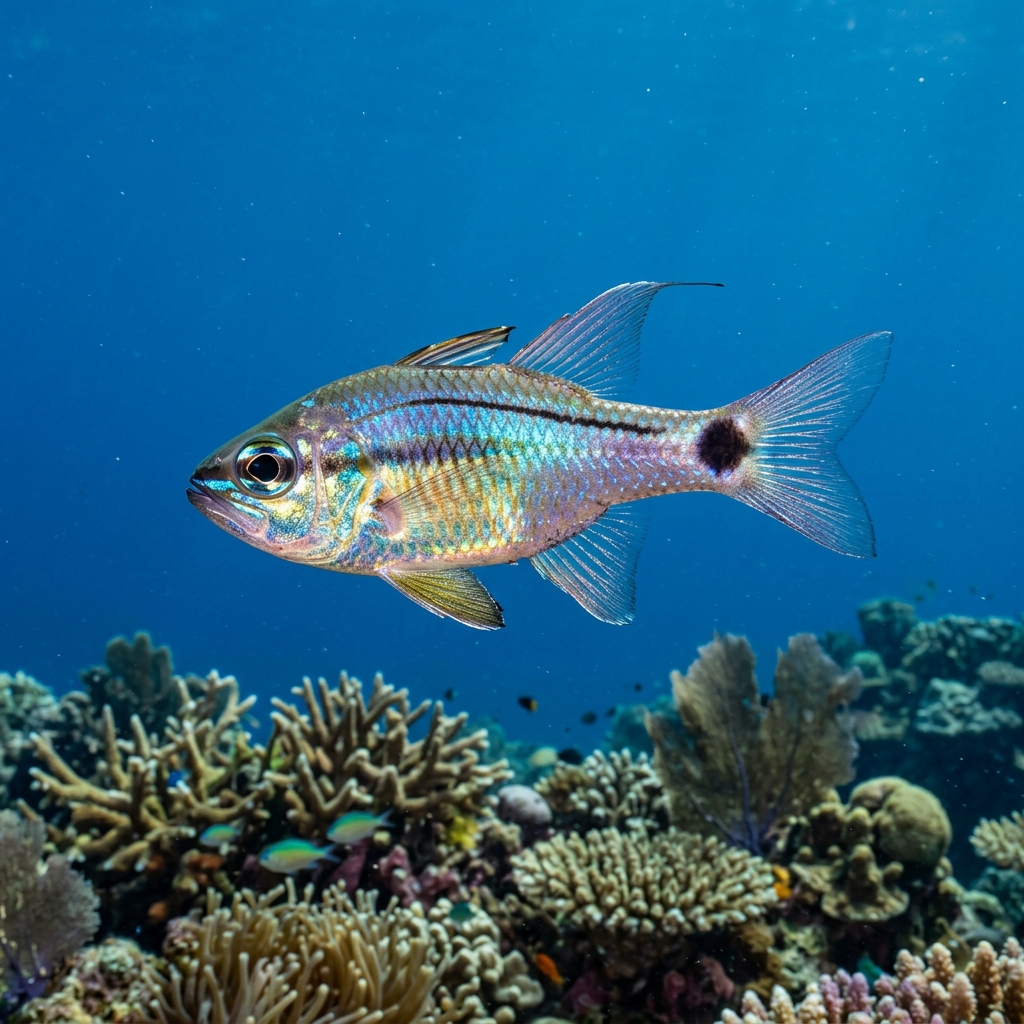
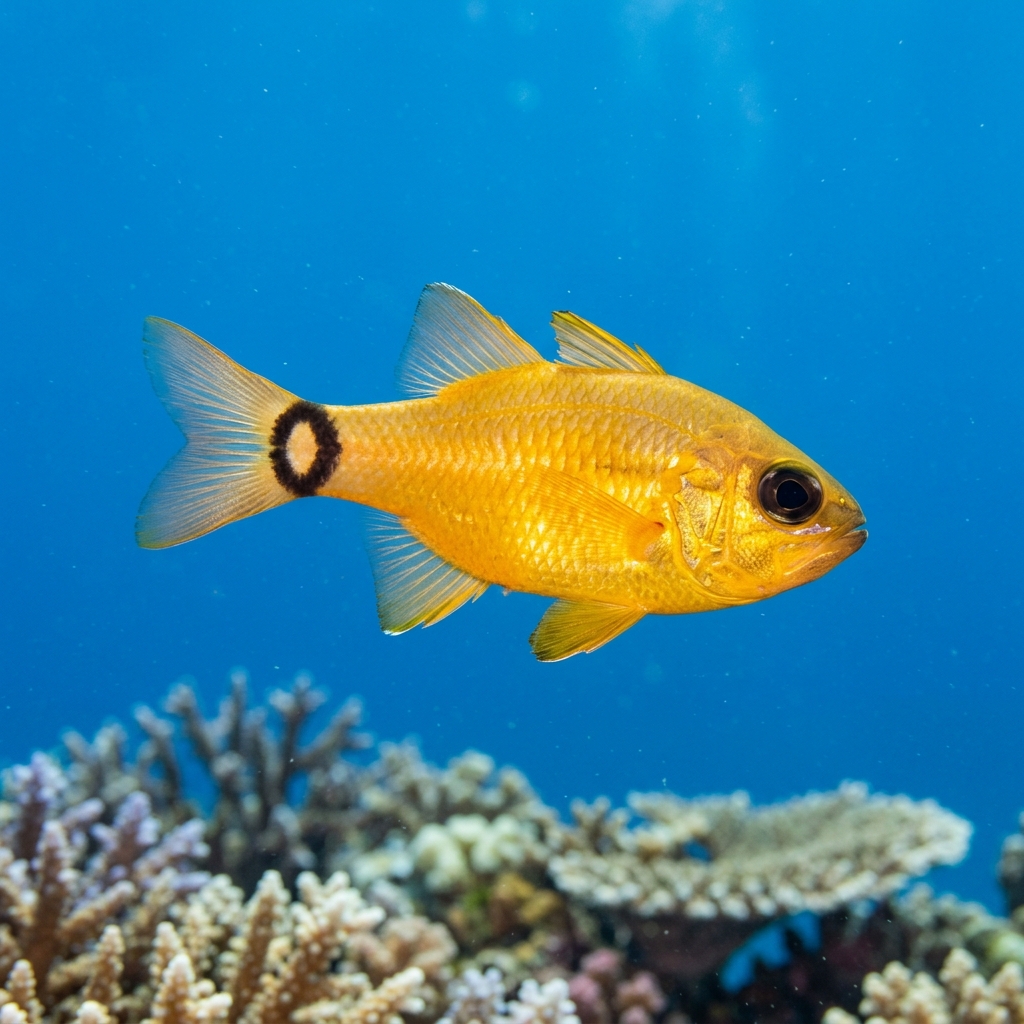
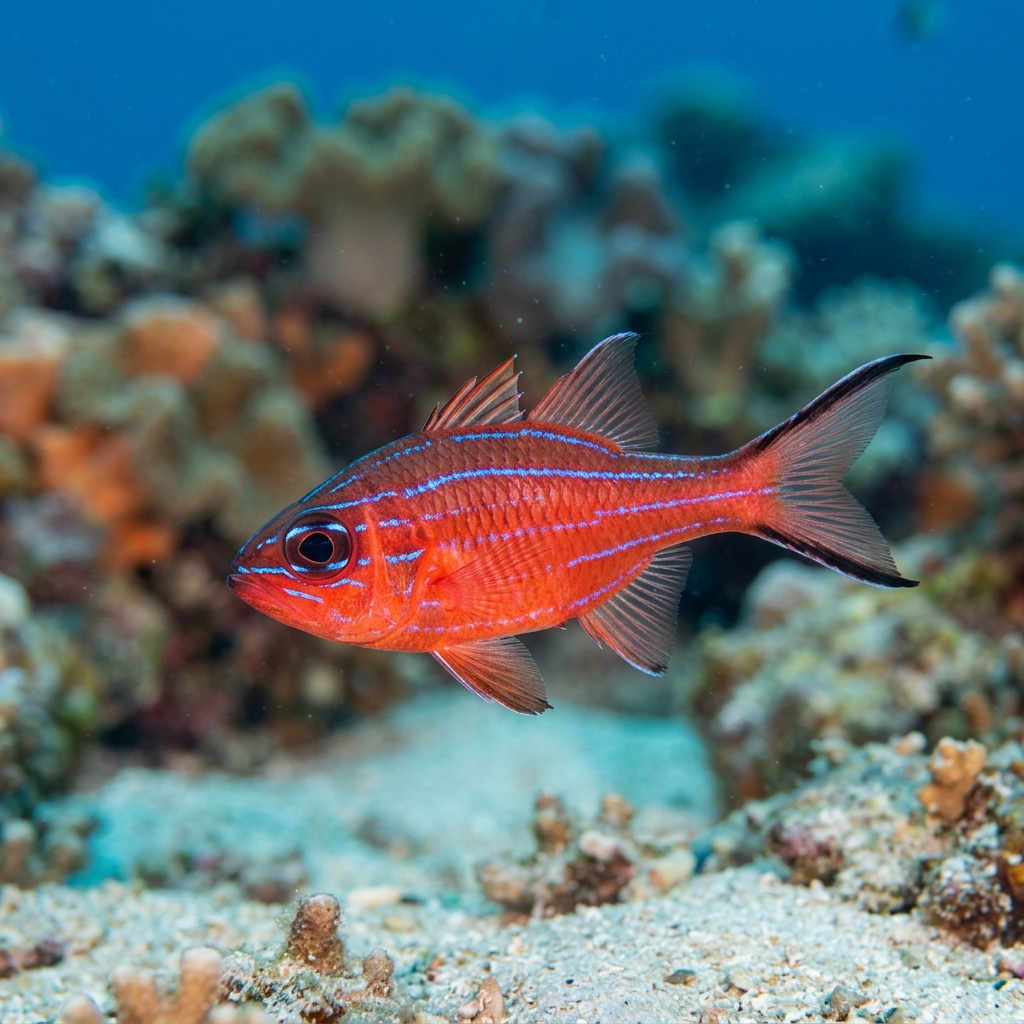
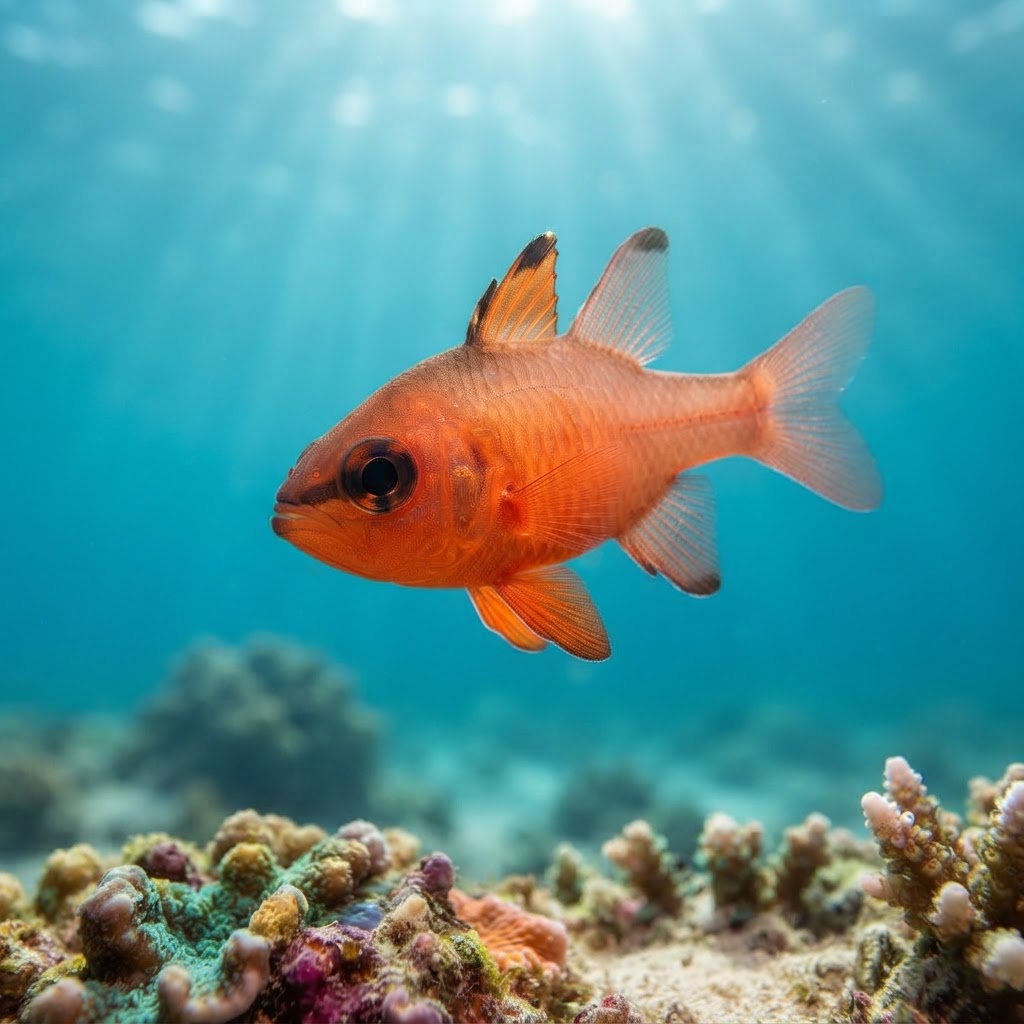
A small, big-eyed fish at just 6 cm, with a dark, almost blackish saddle across the upper back and head that fades to a paler belly. The body is compact and deep for its length, typical of cardinalfish, and it tends to hang nearly motionless with its large eyes catching the light. Look for it hovering in small groups near ledges rather than out on open sand.
Divers usually find it holding station in small loose groups tight to rocky overhangs, crevices, and reef ledges rather than swimming in the open. It reacts to divers by staying put or drifting slightly back into cover rather than bolting, and it is most often picked out with a careful scan of shaded nooks rather than a glance across open reef.
Like other cardinalfish, this species almost certainly practises mouthbrooding, with the male carrying the fertilised eggs in his mouth until they hatch, a trait shared across the whole Apogonidae family.
No clear seasonal pattern shows up in the sighting data, so treat it as a year-round find. It sits comfortably in 23.3 to 28.6°C water, which covers the typical range divers experience at both Galápagos and Cocos through the year.
Most reliably logged around the Galápagos Islands, Ecuador, where it turns up at dozens of sites, with a secondary stronghold at Cocos Island, Costa Rica. Outside these two eastern Pacific hotspots it is rarely reported, so divers chasing this one should plan a trip built around Galápagos or Cocos itself.
Mapping where Blacktip Cardinalfish is logged…
Galápagos Islands, Ecuador is by far the strongest area, with Cocos Island, Costa Rica as the other reliable spot. Sightings outside these two eastern Pacific locations are scarce.
There's no strong seasonal signal in the data, so it's considered a year-round sighting. Water temperatures at its known sites run from about 23 to 29°C across the year.
Look for a tiny, 6 cm fish with a dark upper body and head fading to a lighter belly, hovering near crevices and ledges. Its large eyes and habit of staying close to shaded reef structure help separate it from open-water fish of similar size.
They stay small, reaching around 6 cm, which is typical for cardinalfish in general.
No. They are a small, harmless reef fish that poses no risk to divers.
Almost certainly yes, as this is standard behaviour across the cardinalfish family, with males typically holding fertilised eggs in their mouth until hatching.
Site and sighting data is aggregated from diver logs, iNaturalist and GBIF. For taxonomy and conservation status:
Iridescent Cardinalfish
1,781 sites