Acanthodoris rhodoceras
A rare 2cm nudibranch tucked into California's cold kelp reefs, often overlooked in the 12-19C water off the Pacific coast.
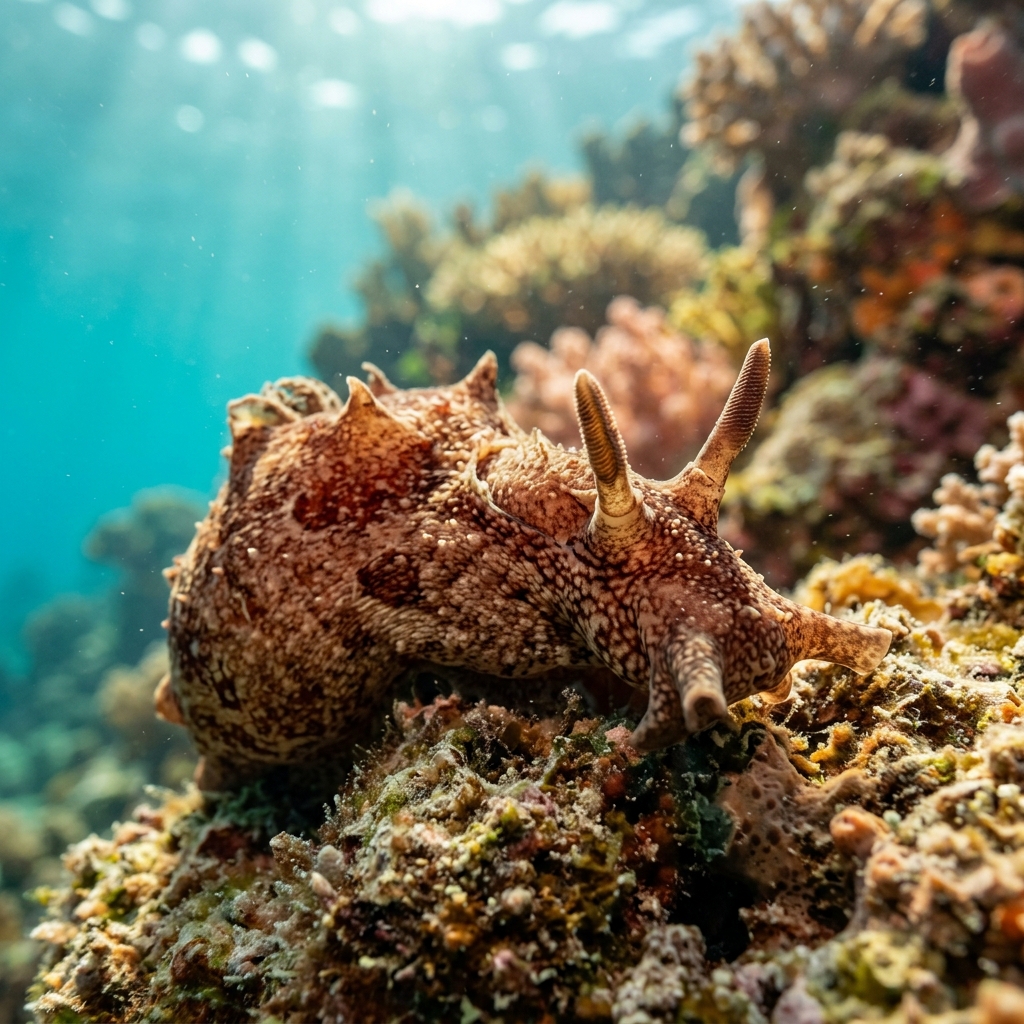
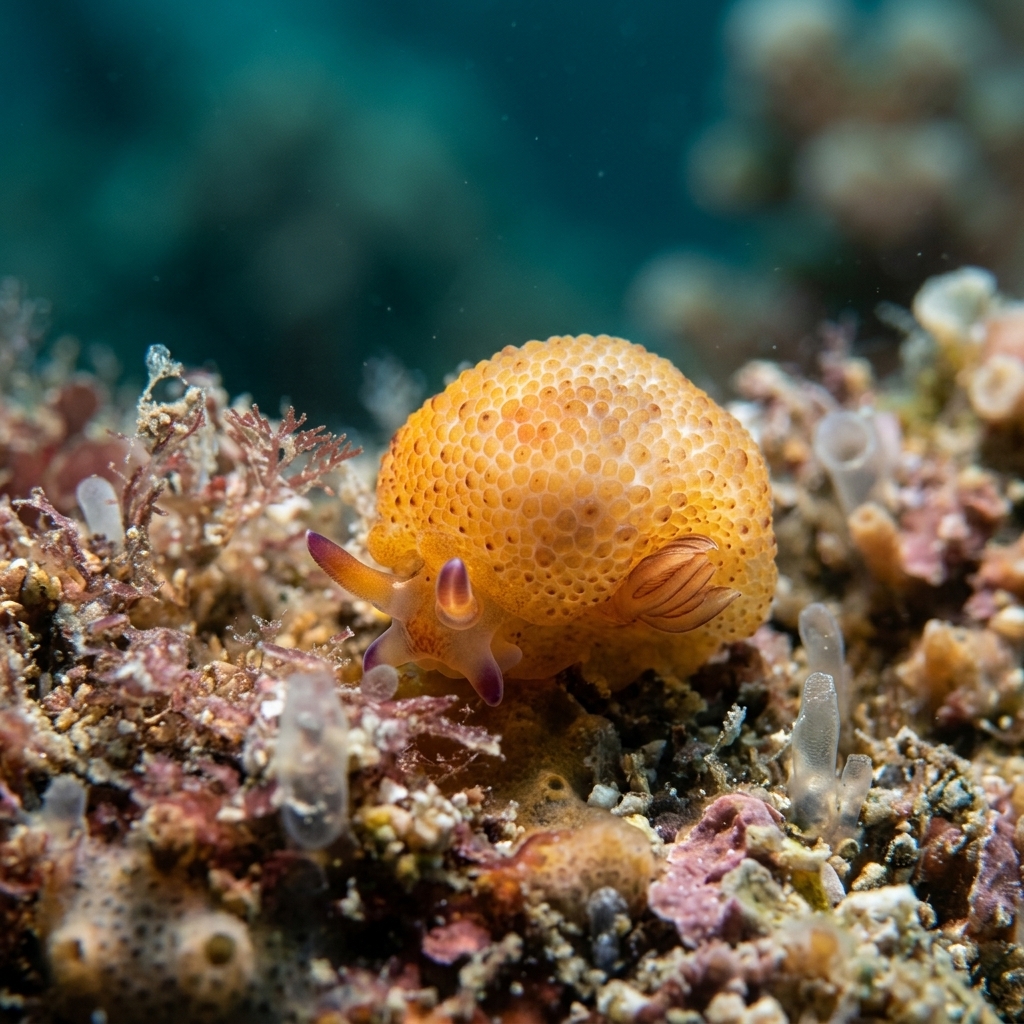
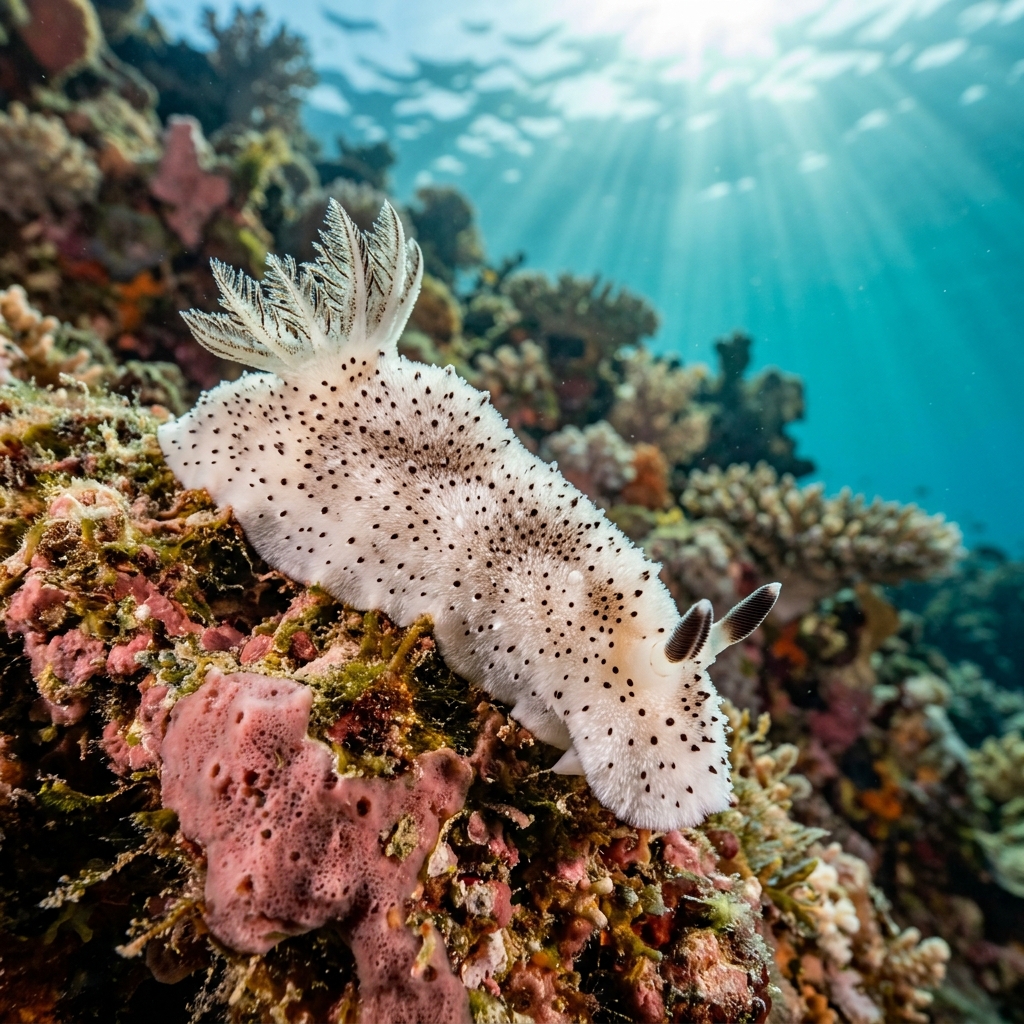
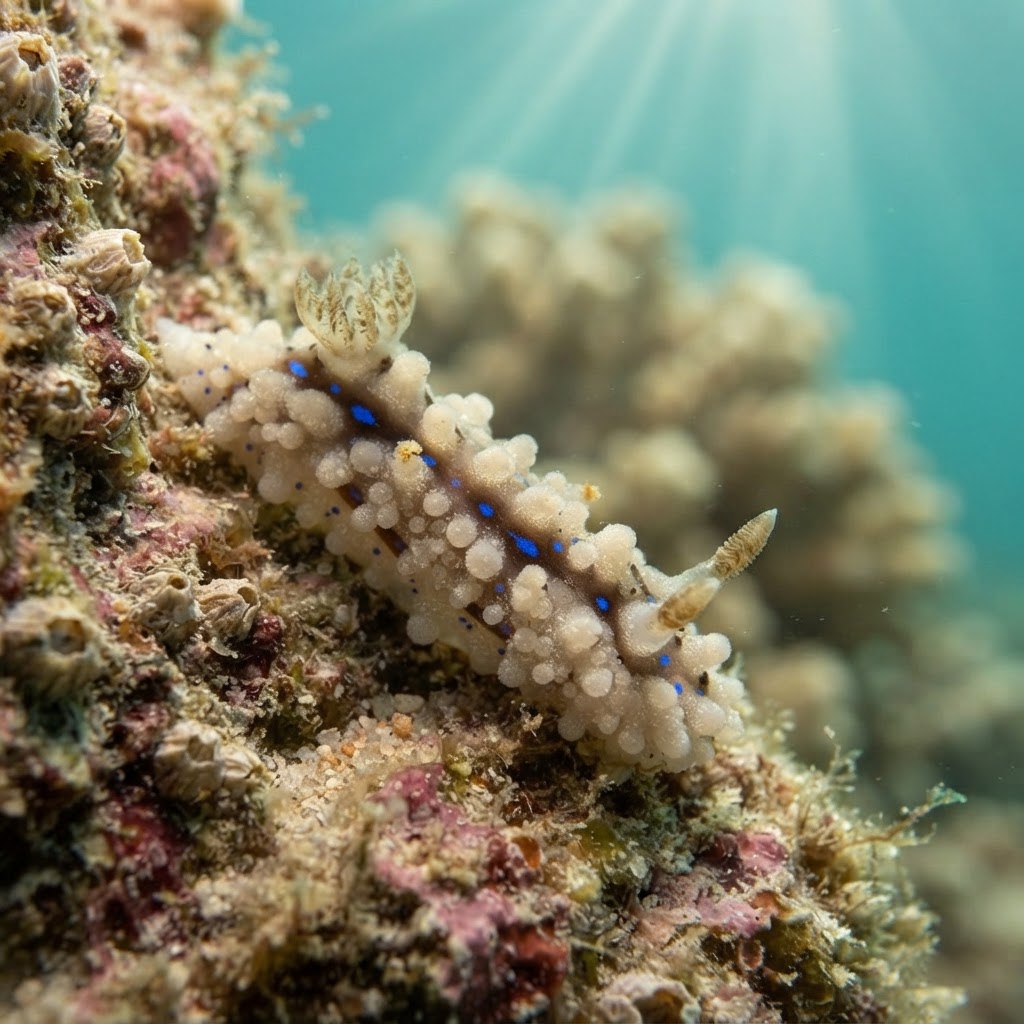
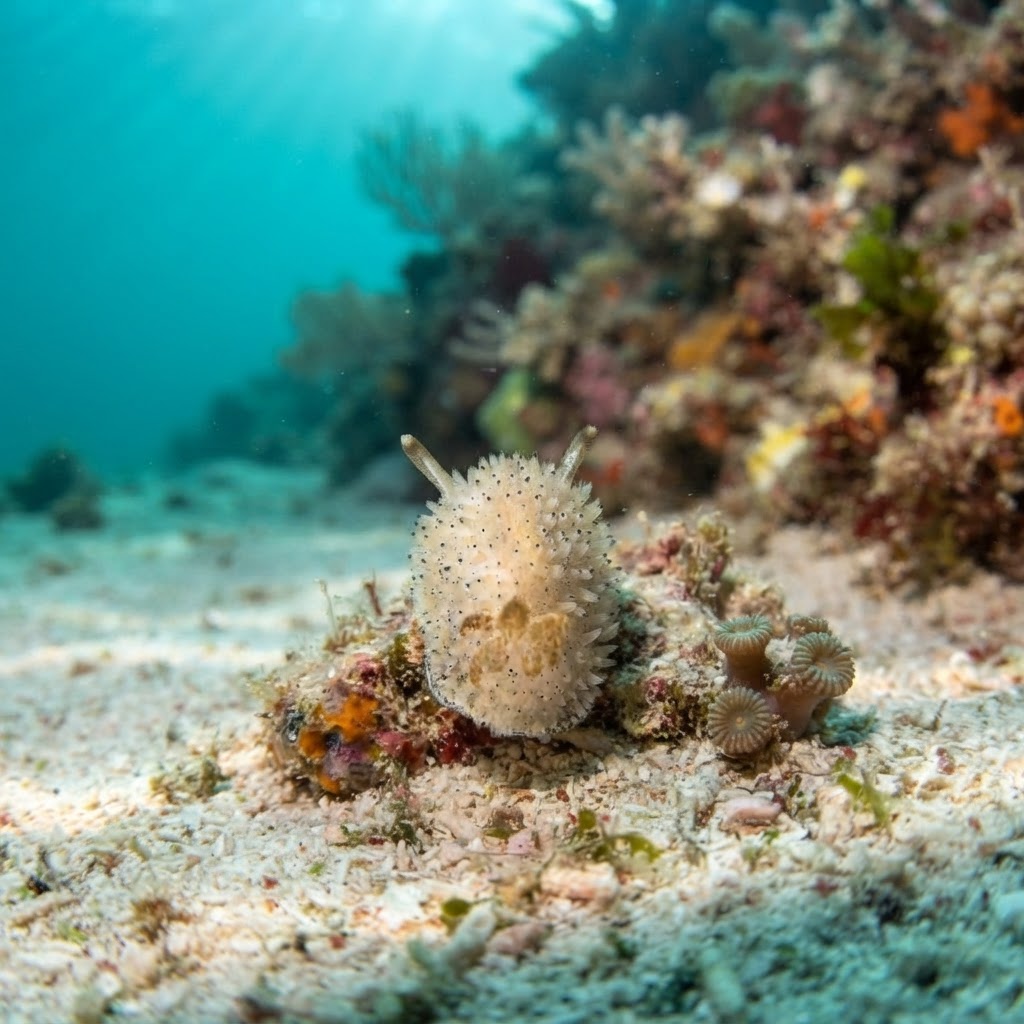
Tops out at about 2cm, so this is a slow, deliberate search on the reef rather than a chance encounter. The body is covered in soft, bumpy tubercles (small raised projections) that carry dark tips, giving a speckled look against a pale grey or cream background. Look for the two rhinophores (the sensory horns on the head) and the feathery gill cluster near the rear, both of which can also show the same dark tipping. It sits low and flat on rock or algae, easy to mistake for reef debris until you get close.
Divers find it moving slowly over rock and encrusting growth, doing what most dorid nudibranchs do: grazing quietly on sponges or similar prey with no particular reaction to a diver's presence. It shows no flight response and will simply keep crawling at its own pace if you hover nearby with a light. Most sightings are on cold-water reef and rocky substrate rather than sand or open water.
Like other dorid nudibranchs, it breathes through the exposed feathery gill tuft on its back, which it can retract if disturbed, so a slightly withdrawn gill cluster is often the first sign a diver has gotten close enough to bother it.
There is no clear seasonal pattern in the sightings logged so far, so treat it as a year-round possibility rather than a seasonal target. It has been observed in water from about 12 to 19C, which matches California's cooler coastal conditions across most of the year.
Every logged sighting so far comes from California, making the Pacific coast of the United States the place to look for this one. Divers searching cold-water reefs and kelp-associated rock in California have the best documented shot at finding it, though it is a scarce find even there.
Mapping where Black-tipped Spiny Doris is logged…
All confirmed sightings so far are from California, along the Pacific coast of the United States. It has not yet been documented outside that region.
There is no strong season in the data, so it is best treated as a year-round find in California's cooler coastal water, which typically runs in the 12 to 19C range it has been observed in.
Look for a tiny, roughly 2cm nudibranch covered in soft bumps tipped in dark colour, with two rhinophores and a feathery gill cluster near the tail also showing dark tips against a pale body.
It is a small species, reaching only about 2cm in length, so finding one on the reef takes a slow, close look at rock and algae surfaces.
No. It poses no threat to divers and has no means of stinging or biting; it simply crawls over the reef feeding.
Site and sighting data is aggregated from diver logs, iNaturalist and GBIF. For taxonomy and conservation status:
Light-spotted Aegires
3,168 sites