Helcogramma decurrens
A 3cm reef perch specialist found almost entirely around Western Australia, sitting still in 15-23C water year-round.
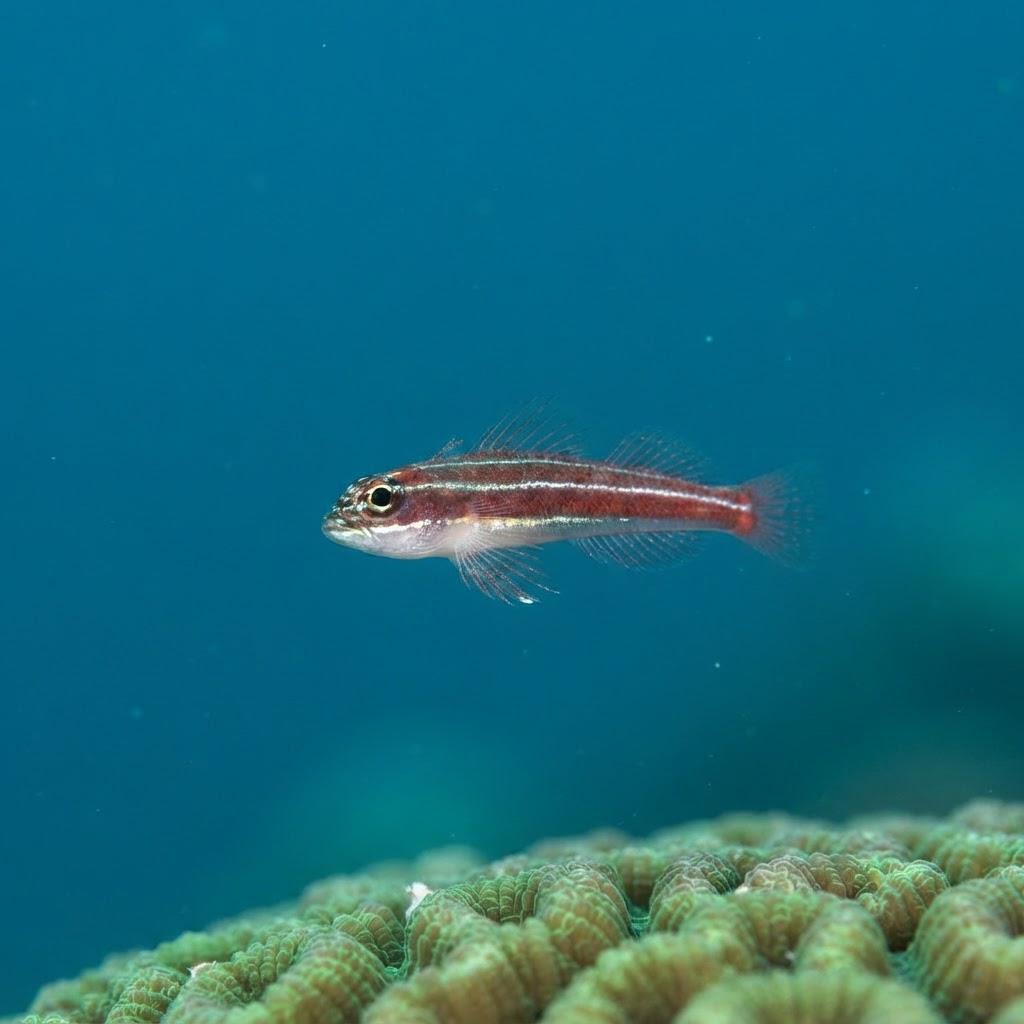
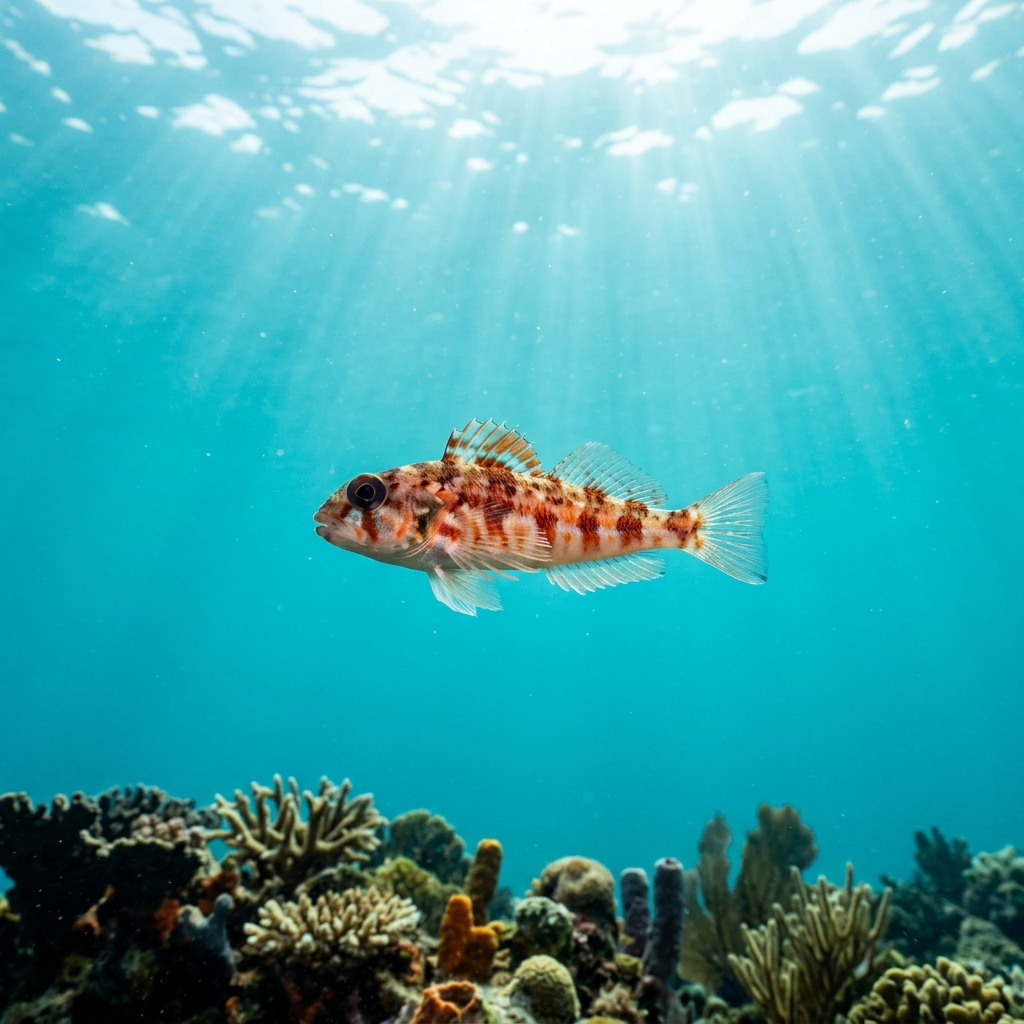
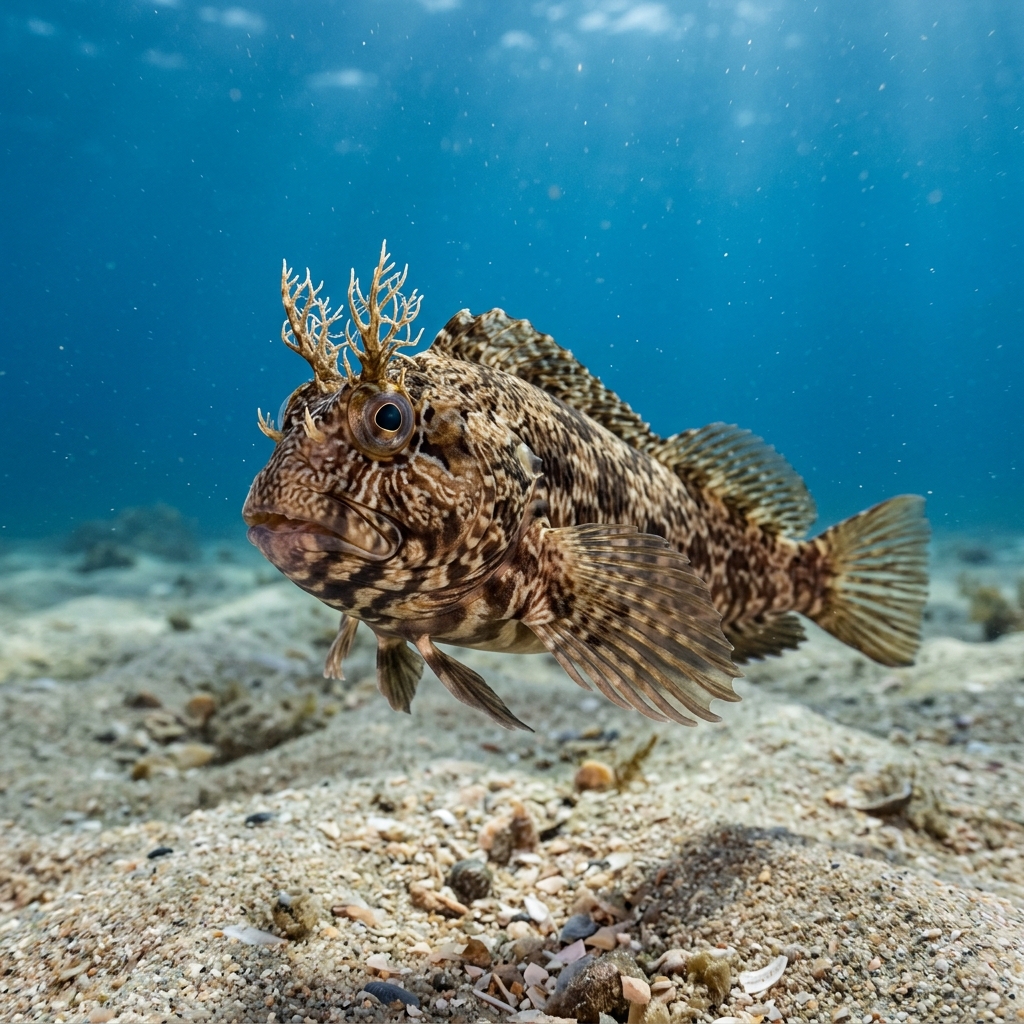
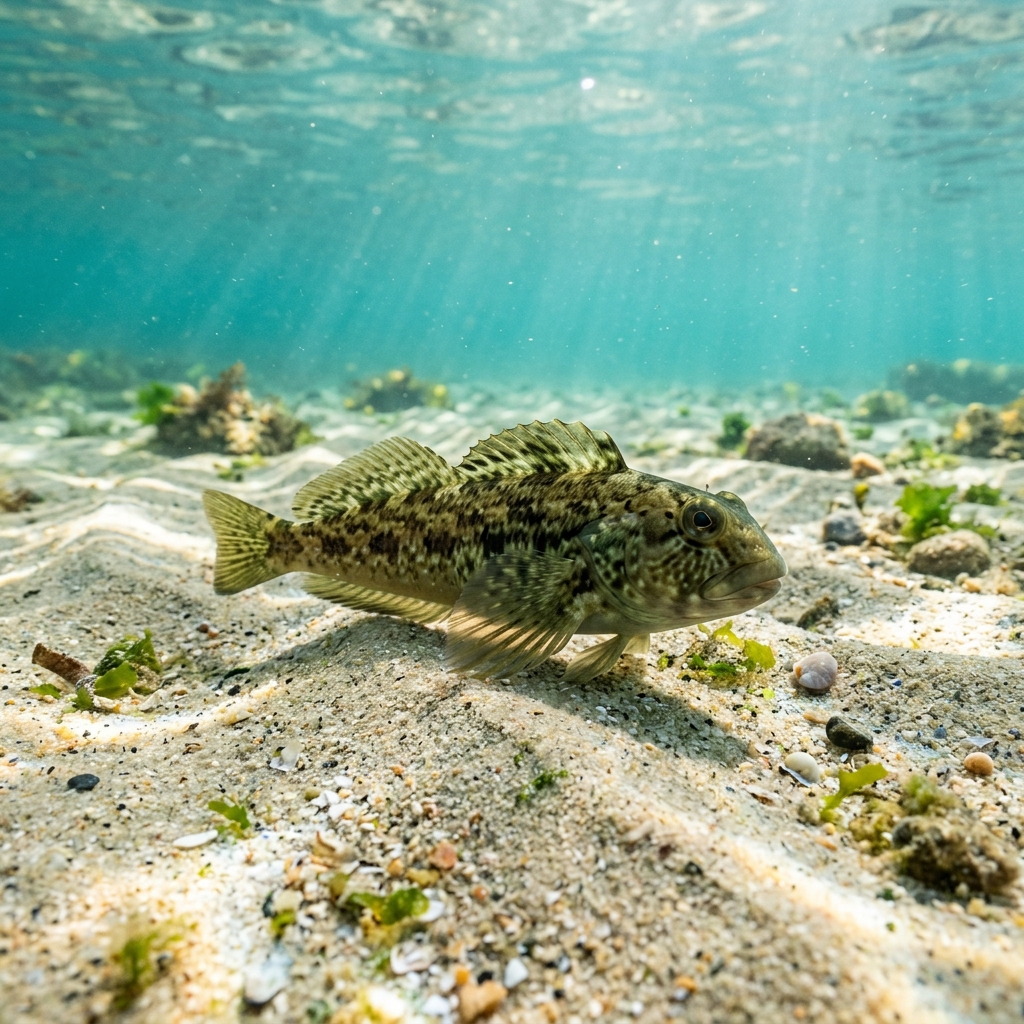
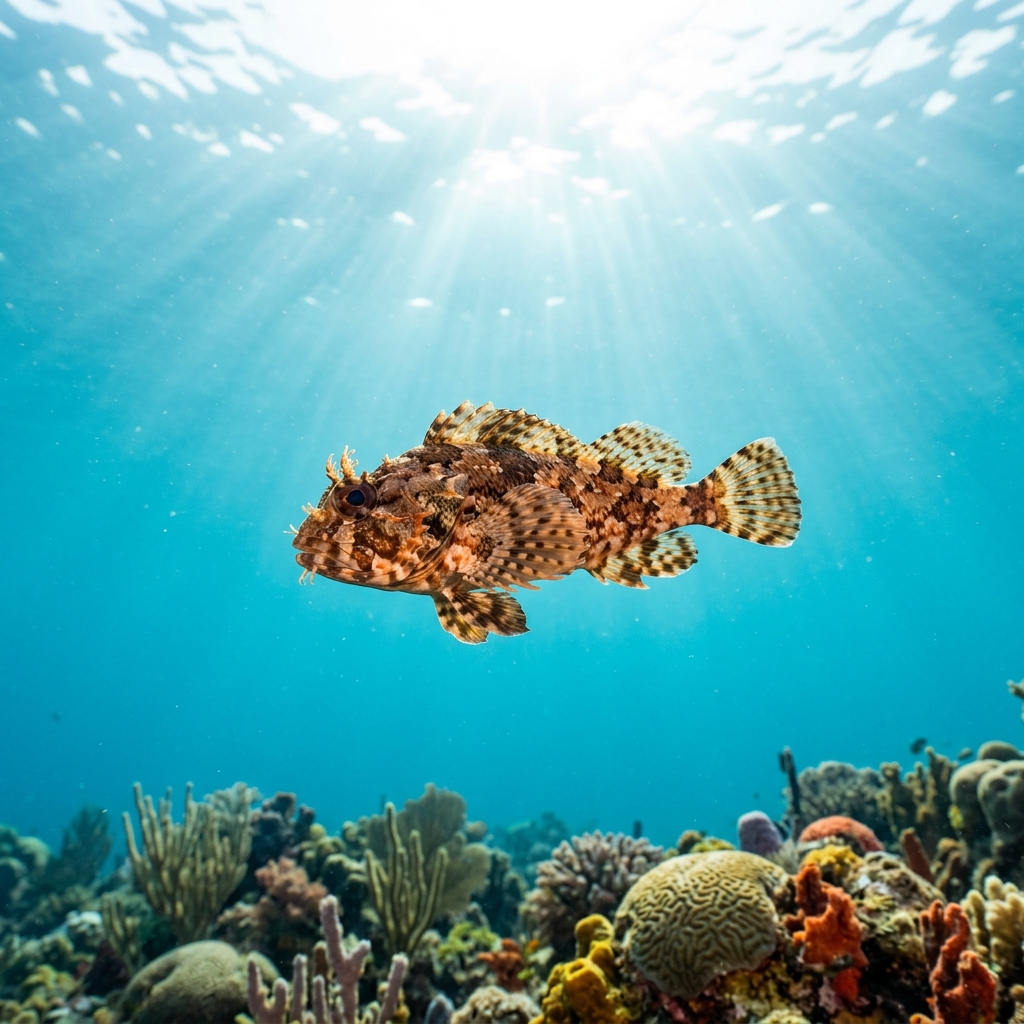
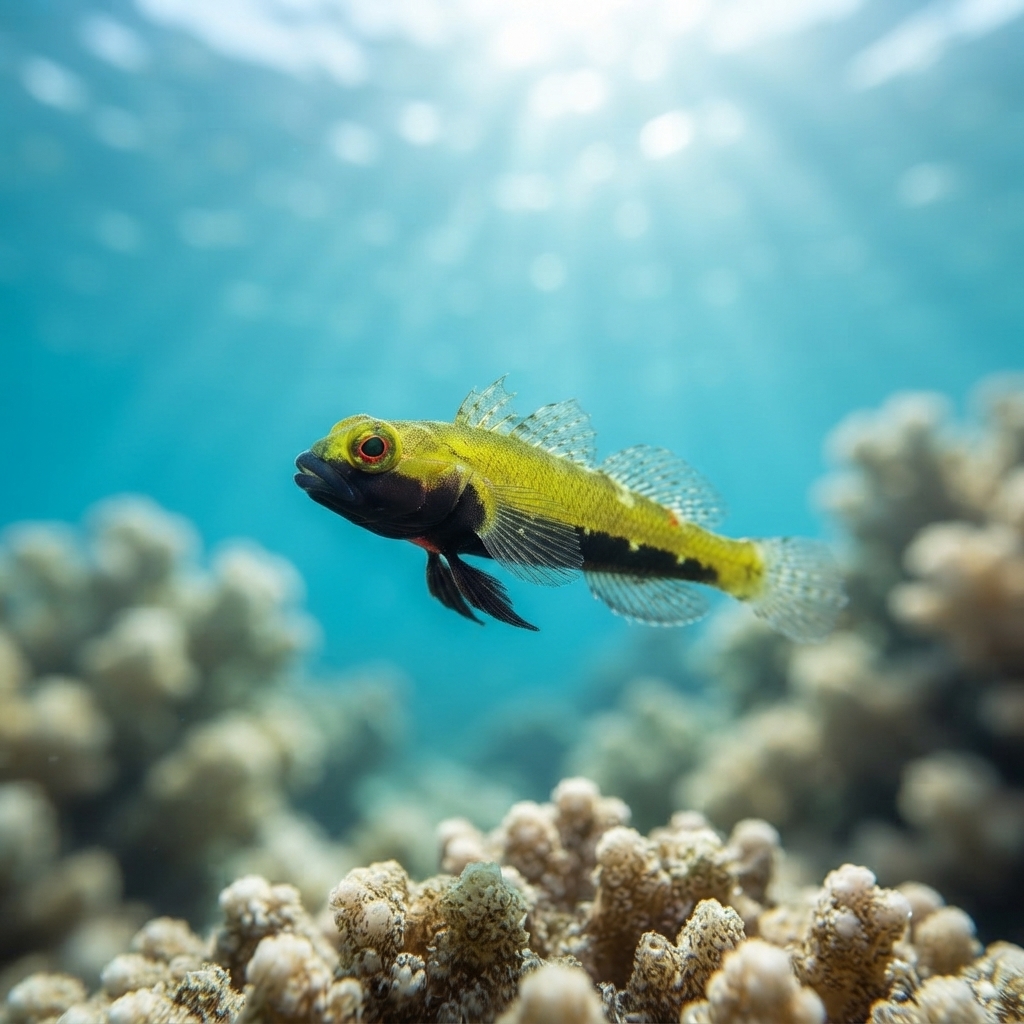
Barely 3cm long, so you have to be looking down at the reef rather than out into the water to spot one at all. Look for a mottled brown-grey body propped up on pelvic fins, three separate dorsal fin segments (the family trait that gives triplefins their name), and a dark smudge at the throat that gives this species its name. It perches motionless on rock and rubble rather than swimming in open water, which is often the giveaway before the markings are.
Expect it perched motionless on rock, rubble or low reef structure, propped up on its pelvic fins rather than swimming freely, which is typical triplefin posture. It tends to sit tight when divers approach rather than bolt for cover, rewarding a slow, close look rather than a chase. Most sightings are logged as uncommon rather than common, so it rewards divers who scan the substrate carefully instead of just cruising past.
Triplefins like this one have no swim bladder, which is exactly why they're bottom-perchers rather than mid-water swimmers, using their pelvic fins almost like a tripod to hold position on the reef.
No clear seasonal pattern shows up in the sightings, and its temperature niche of roughly 15 to 23C spans WA's diveable range through most of the year, so it's a fair year-round target rather than a seasonal one.
Reef neighbours a diver could mistake it for. Use the identification notes above to tell them apart.
This is essentially a Western Australia speciality, logged far more often there than anywhere else, with Western Australia itself the dominant region and a smaller but reliable presence in South Australia. Divers looking specifically for this fish should plan a WA reef or macro-focused dive rather than expecting it elsewhere.
Mapping where Black-throated Triplefin is logged…
It's overwhelmingly a Western Australia find, with most logged sightings coming from WA reef sites and a smaller number from South Australia. Outside Australia it isn't a species divers should expect to encounter.
There's no strong seasonal signal in the data, and its 15-23C temperature range covers most of the diveable year in WA, so it's reasonable to look for it on any dive rather than planning around a particular month.
Look for a tiny, roughly 3cm fish perched still on rock or rubble, with a mottled brown body, three-part dorsal fin, and a dark patch at the throat. It won't be swimming in open water, so scan the substrate closely.
They stay tiny, topping out at around 3cm, which makes them a macro subject rather than something you'll spot from a distance.
No. They're harmless, tiny reef fish that pose no risk to divers and simply sit still on the substrate as you pass.
Site and sighting data is aggregated from diver logs, iNaturalist and GBIF. For taxonomy and conservation status:
Rusty Blenny
2,605 sites