Phyllidiella nigra
Small black nudibranch with warty tubercles, logged as a reliable find on reefs around Sihanoukville, Cambodia and the Visayas, Philippines.
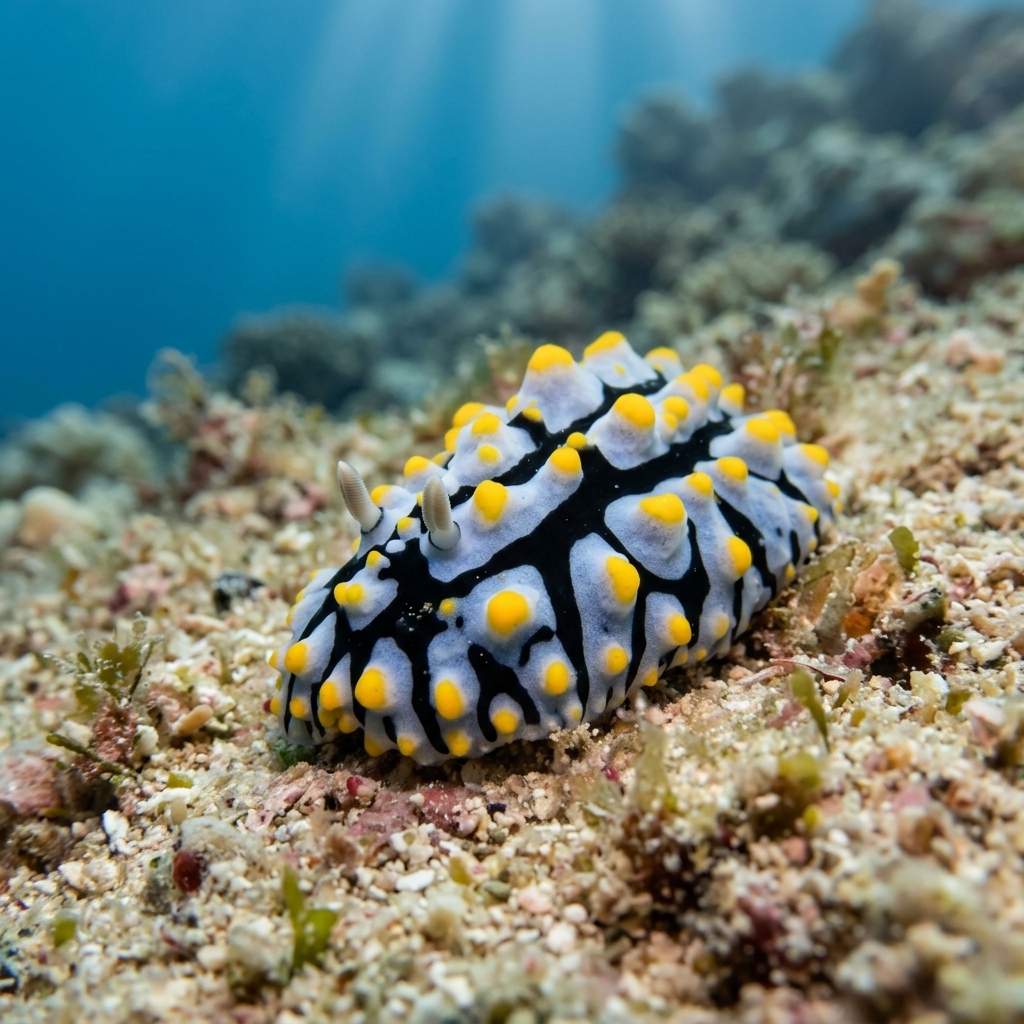
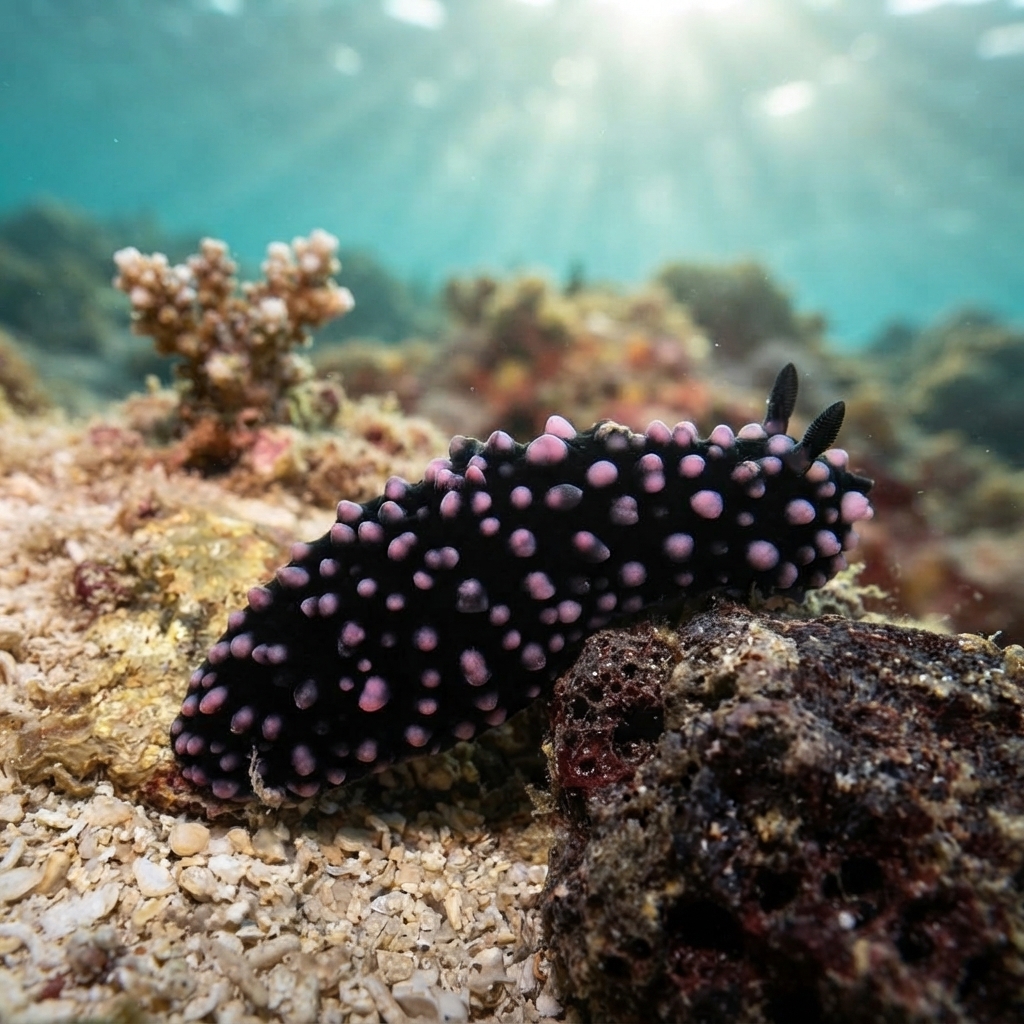
Look for a small, dark, almost black body covered in rounded, wart-like tubercles that give it a rough, bumpy texture rather than a smooth back. The tubercles are often tipped or edged with a lighter grey or pale colour, breaking up the otherwise solid black tone. It moves slowly across hard substrate and rubble, and its low, oval, slug-like profile makes it easy to miss unless you're already scanning close to the reef.
Divers typically find it parked on rubble, dead coral, or low reef structure, moving at the unhurried pace typical of nudibranchs as it grazes. It shows no reaction to divers beyond simply continuing on its way, and its dark, textured body blends into shaded crevices, so most sightings come from divers running a slow macro-focused search rather than spotting it from a distance.
Like other Phyllidiella species, it likely gets its toxin-based defence from the sponges it feeds on, storing chemical compounds in its tissue that make it unpalatable to predators, a strategy shared across the phyllidiid family.
No clear seasonal pattern shows up in the sighting data, and it turns up in water from about 24.6 to 30.6 C, so it's a year-round find on the tropical reefs where it occurs.
Sihanoukville in Cambodia is the strongest area for this species by a wide margin, with the Visayas in the Philippines and Bali in Indonesia also producing steady sightings. Divers also log it around Sabah in Malaysia, the Southern Islands of Singapore, and occasionally at Khao Lak in Thailand, generally as an uncommon find worth a slow, close look at the substrate.
Mapping where Black Phyllidiella is logged…
Sihanoukville in Cambodia has by far the most logged sightings, with the Visayas in the Philippines and Bali in Indonesia also reliable spots. It's also found around Sabah in Malaysia and Singapore's Southern Islands.
There's no strong seasonal pattern in the sighting data, and it's found across a wide temperature range from roughly 24.6 to 30.6 C, so it can be spotted year-round on the reefs where it lives.
Check for a small, dark to black body covered in rounded, wart-like tubercles, often with paler tips. It moves slowly over rubble and hard reef substrate, keeping a low, oval profile.
No. They pose no threat to divers and simply carry chemical defences in their tissue to deter predators, not to bother passing divers.
Like related phyllidiid nudibranchs, it's thought to absorb toxic compounds from the sponges it eats and store them in its own tissue as a defence against predators.
Site and sighting data is aggregated from diver logs, iNaturalist and GBIF. For taxonomy and conservation status:
Light-spotted Aegires
3,168 sites