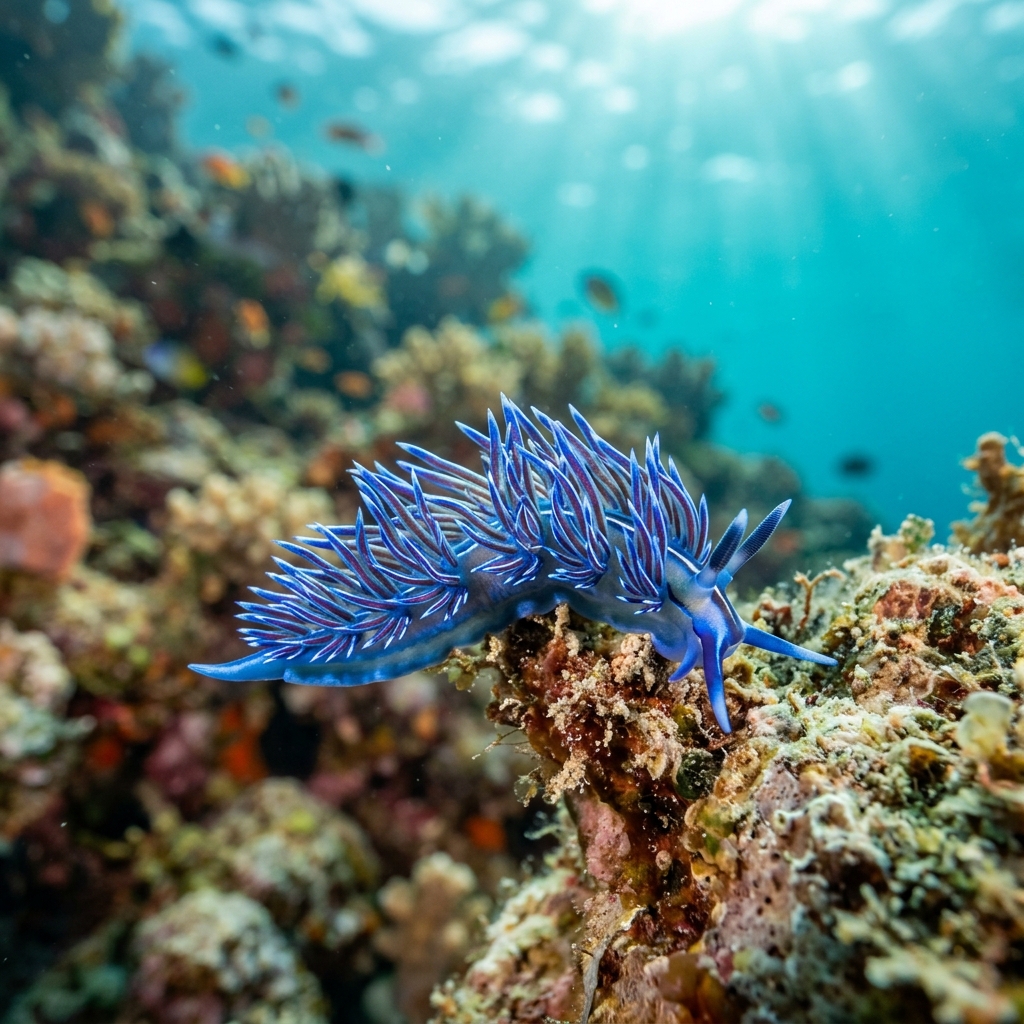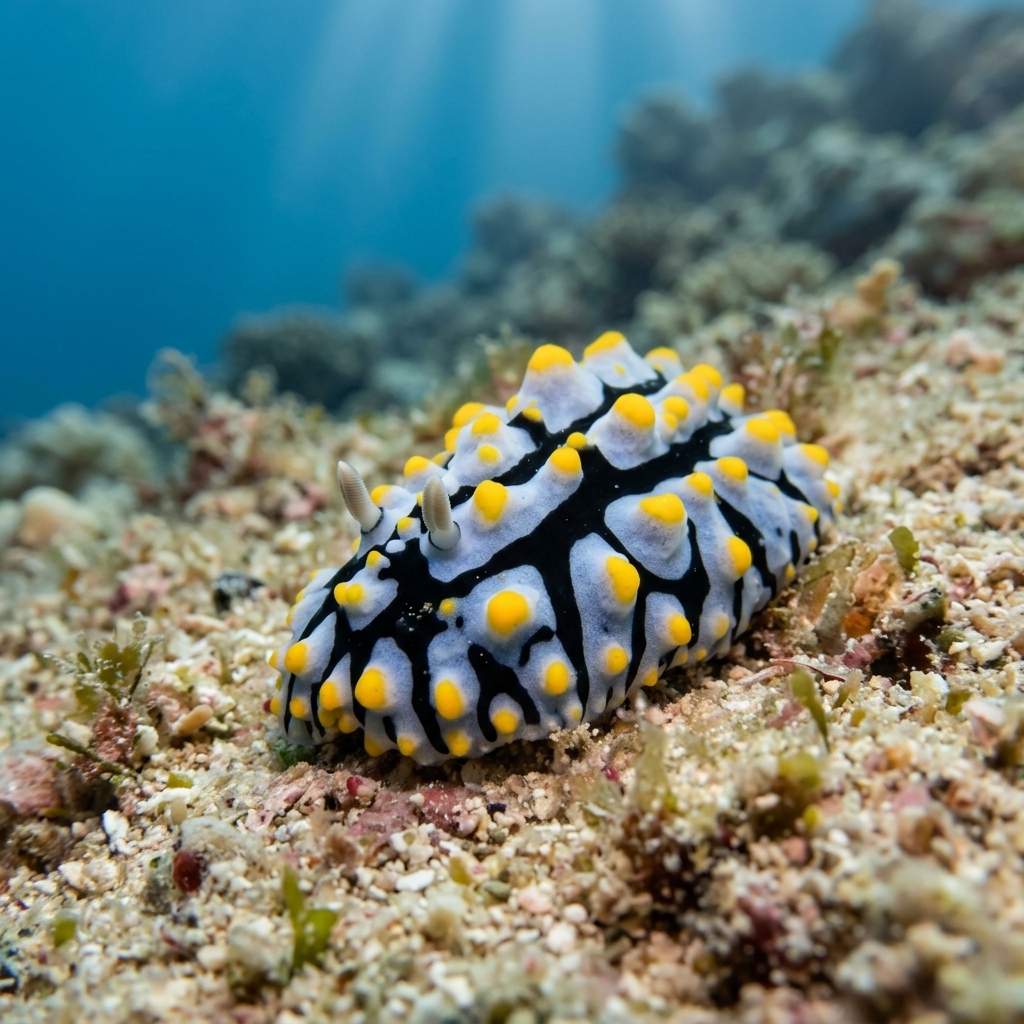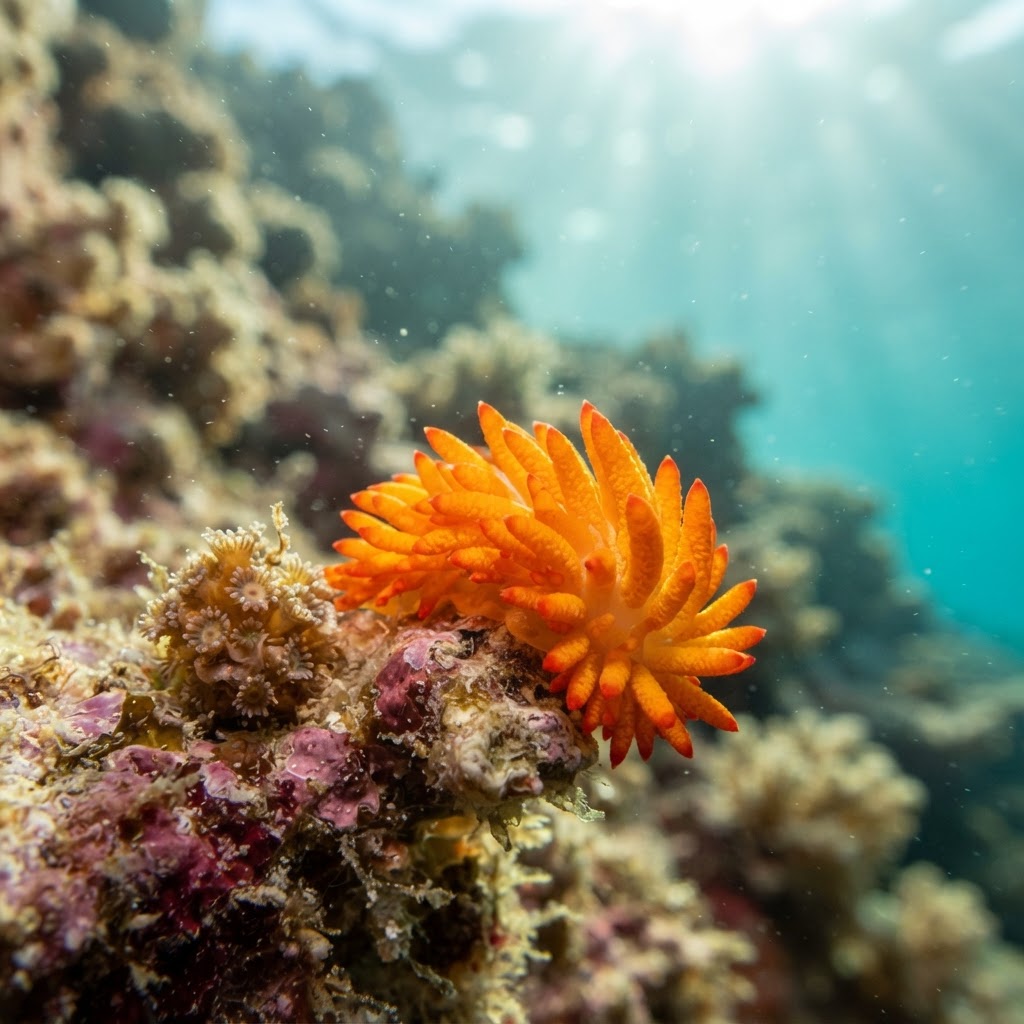
Phestilla melanobrachia
A branching, coral-eating slug found on Tubastraea polyps across Luzon and the UAE's East Coast, in water near 24 to 30C.
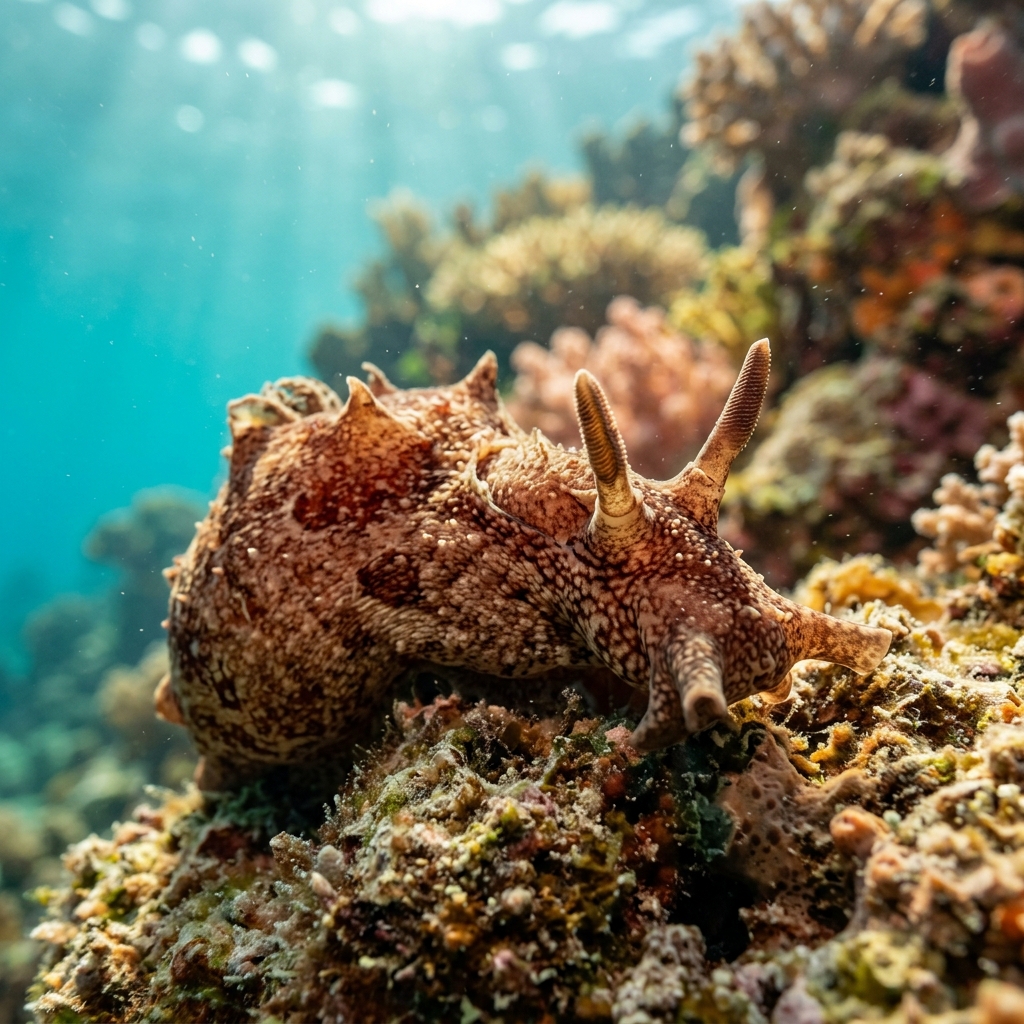
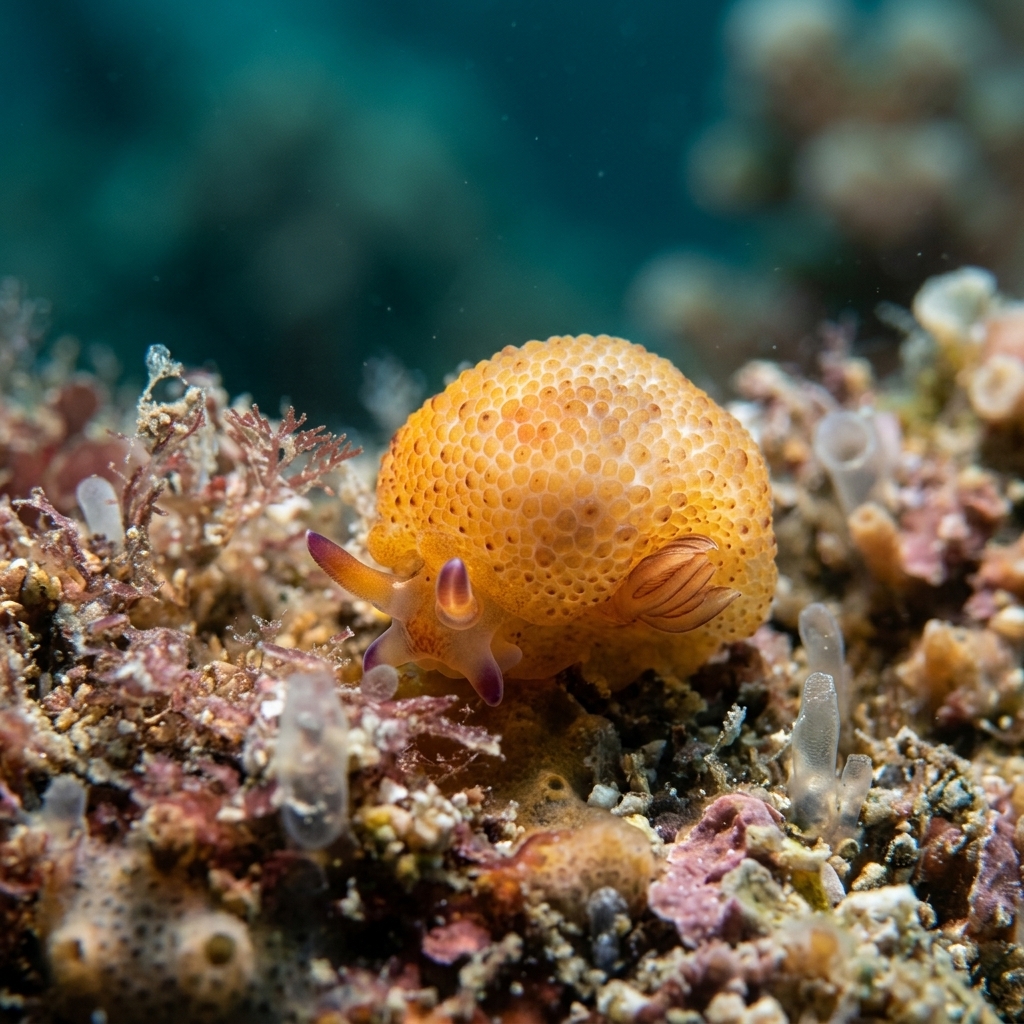
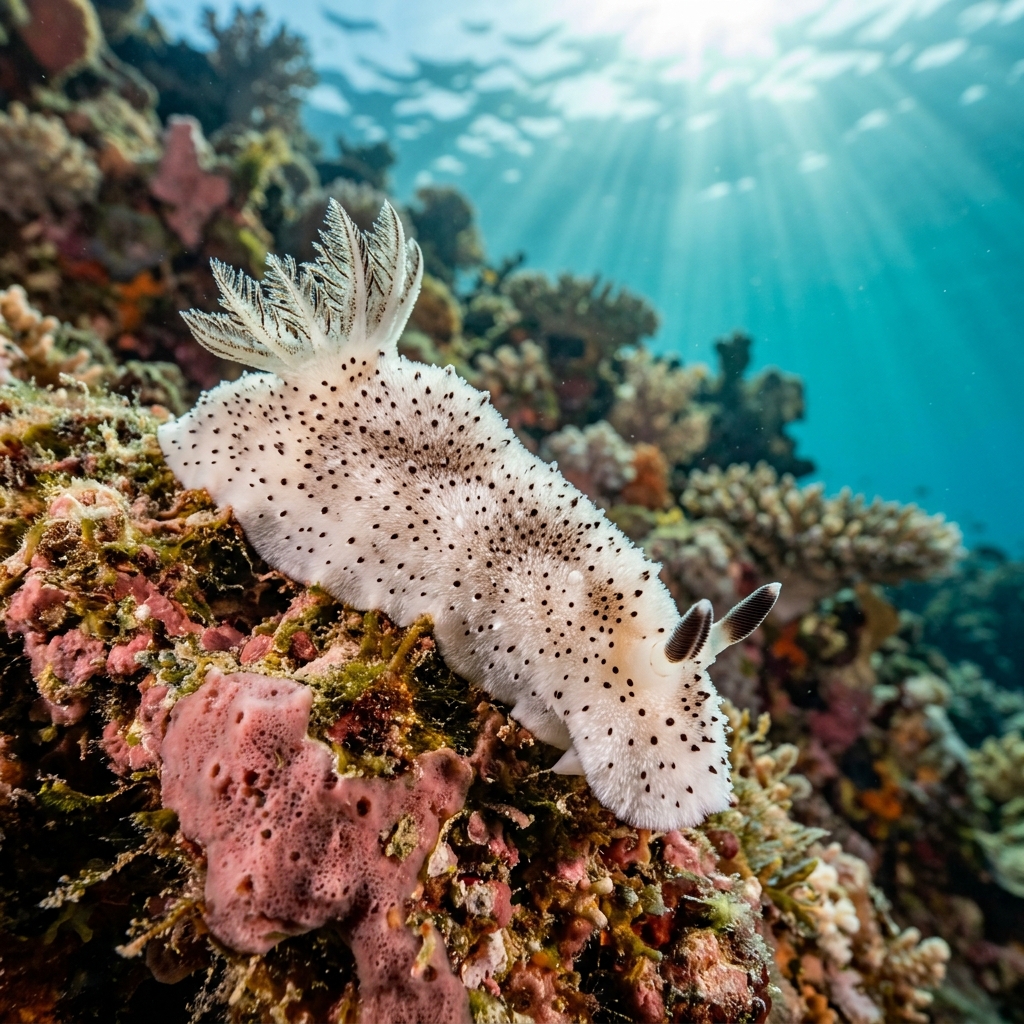
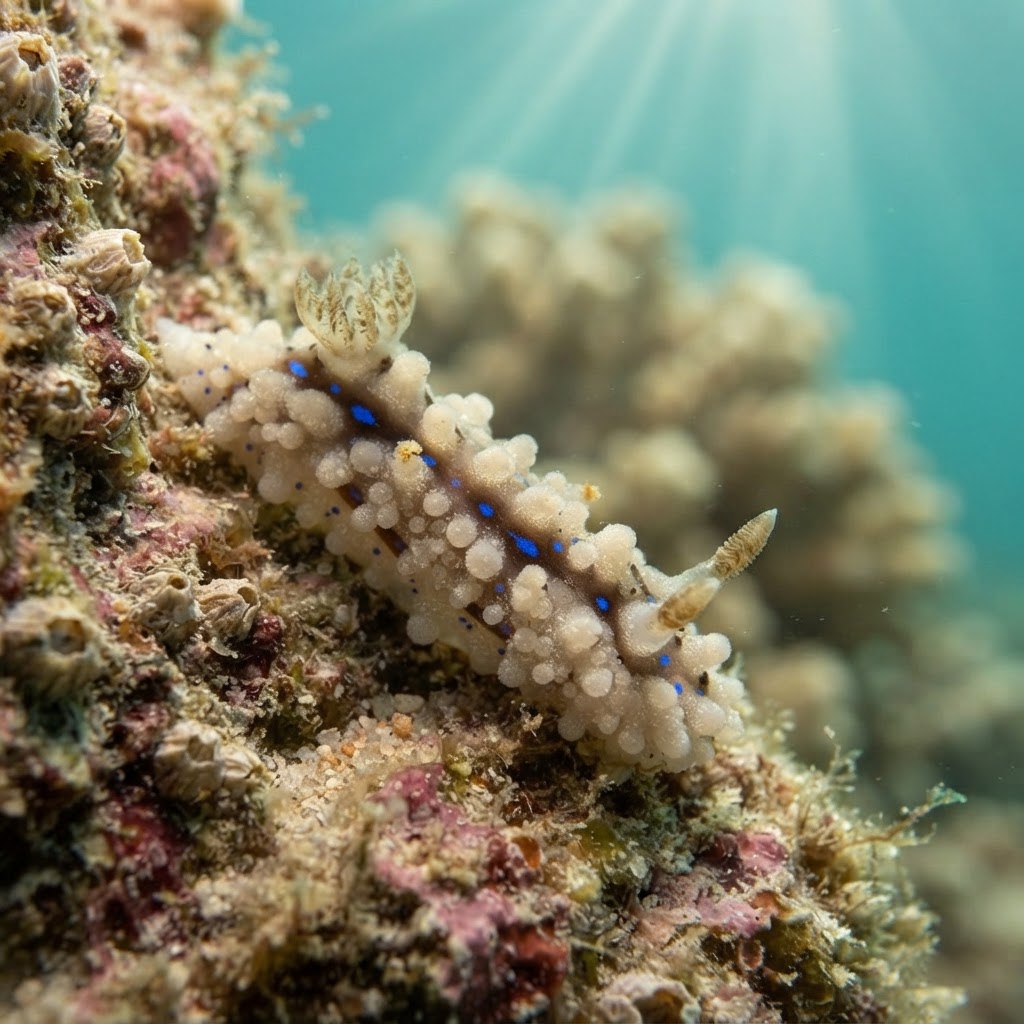
Look for a slender 3 cm body covered in branching, tree-like projections (cerata) that are usually dark brown to black, giving it the name. The mottled body blends almost perfectly with the orange or brown cup coral (Tubastraea) it feeds on, so divers often spot the coral polyps retracting before they spot the slug itself. Its shape is narrower and more elongated than the rounder dorid nudibranchs most divers know, with no obvious rhinophores standing out from the busy cerata.
Divers find it parked directly on the polyps of its host coral, usually orange cup coral, where it feeds slowly and barely moves during a dive. It relies almost entirely on camouflage rather than fleeing, so a slow scan of Tubastraea colonies at night or in shaded overhangs is the best way to spot one. It shows no reaction to divers beyond withdrawing slightly if touched.
It feeds exclusively on Tubastraea (cup coral) polyps, and its dark, branching cerata are thought to mimic the coral's own retracted tentacles, which helps it stay hidden in plain sight on the colony it is eating.
There is no clear seasonal pattern in the sightings, and the water temperature range recorded (23.6 to 29.7C) covers most of the year on these reefs, so it is best treated as a year-round find rather than tied to a season.
Most reliably found in the Philippines, especially around Luzon, where sightings are strongest across the sibling data. It also turns up along the East Coast of the United Arab Emirates, and shows up in smaller numbers around Sai Kung in Hong Kong, Koh Tao in Thailand, and Green Island and Longdong in Taiwan.
Mapping where Black Gilled Phestilla is logged…
It is most commonly logged in the Philippines, particularly around Luzon, and along the East Coast of the United Arab Emirates. Smaller numbers of sightings come from Sai Kung in Hong Kong, Koh Tao in Thailand, and Green Island and Longdong in Taiwan.
There is no strong seasonal pattern in the sightings, so it can be found year-round. It has been recorded in water temperatures from about 23.6 to 29.7C, a range that persists on these reefs for most of the year.
Look for a slim, 3 cm slug covered in dark, branching cerata rather than smooth spots or gills, usually sitting directly on orange or brown cup coral polyps. Its colour and shape mimic the coral it feeds on, so it is often easier to spot by looking for retracted polyps first.
It stays small, reaching around 3 cm as an adult, which is typical for this group of coral-feeding nudibranchs.
It feeds exclusively on Tubastraea cup coral polyps, and its dark, tree-like cerata appear to mimic the coral's own retracted tentacles, giving it camouflage while it eats.
No, it poses no danger to divers. It is a small, slow-moving slug that stays on its host coral and has no means of harming anyone nearby.
Site and sighting data is aggregated from diver logs, iNaturalist and GBIF. For taxonomy and conservation status:
Light-spotted Aegires
3,168 sites