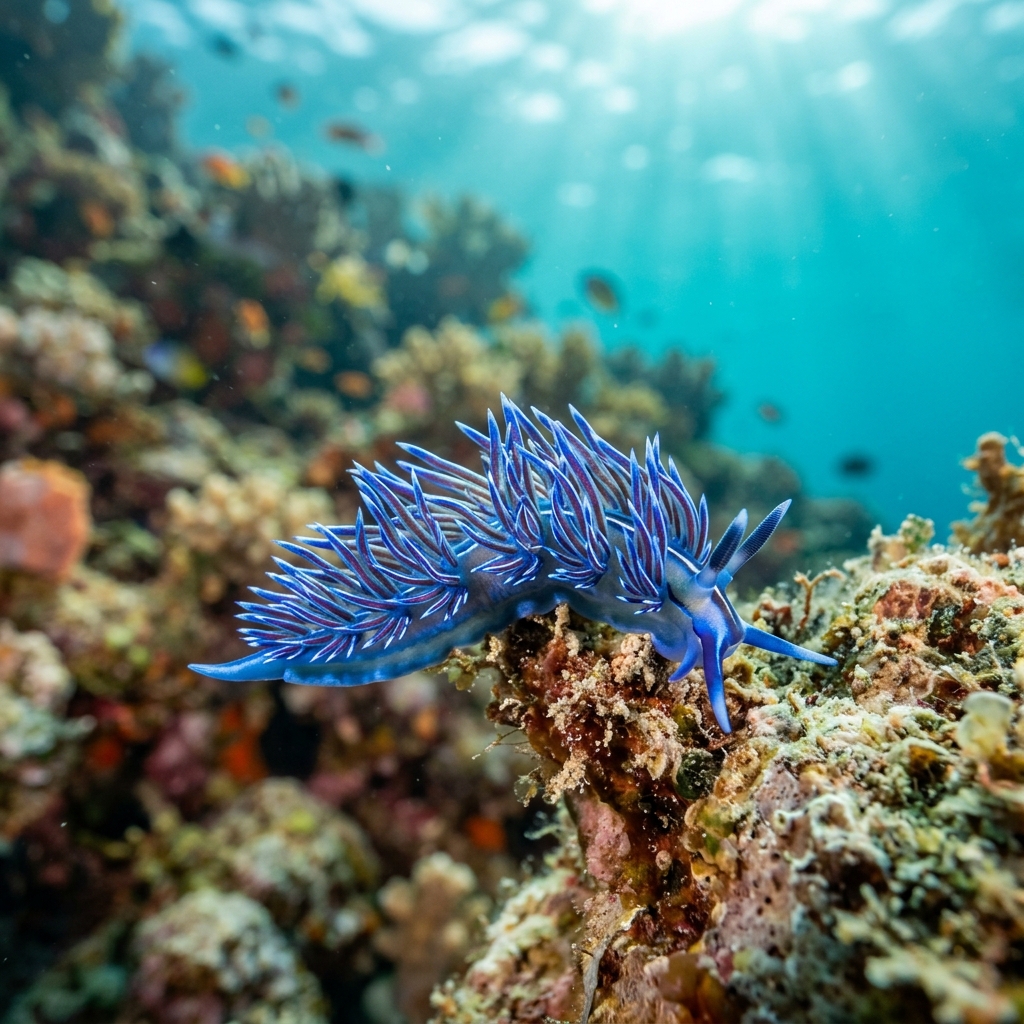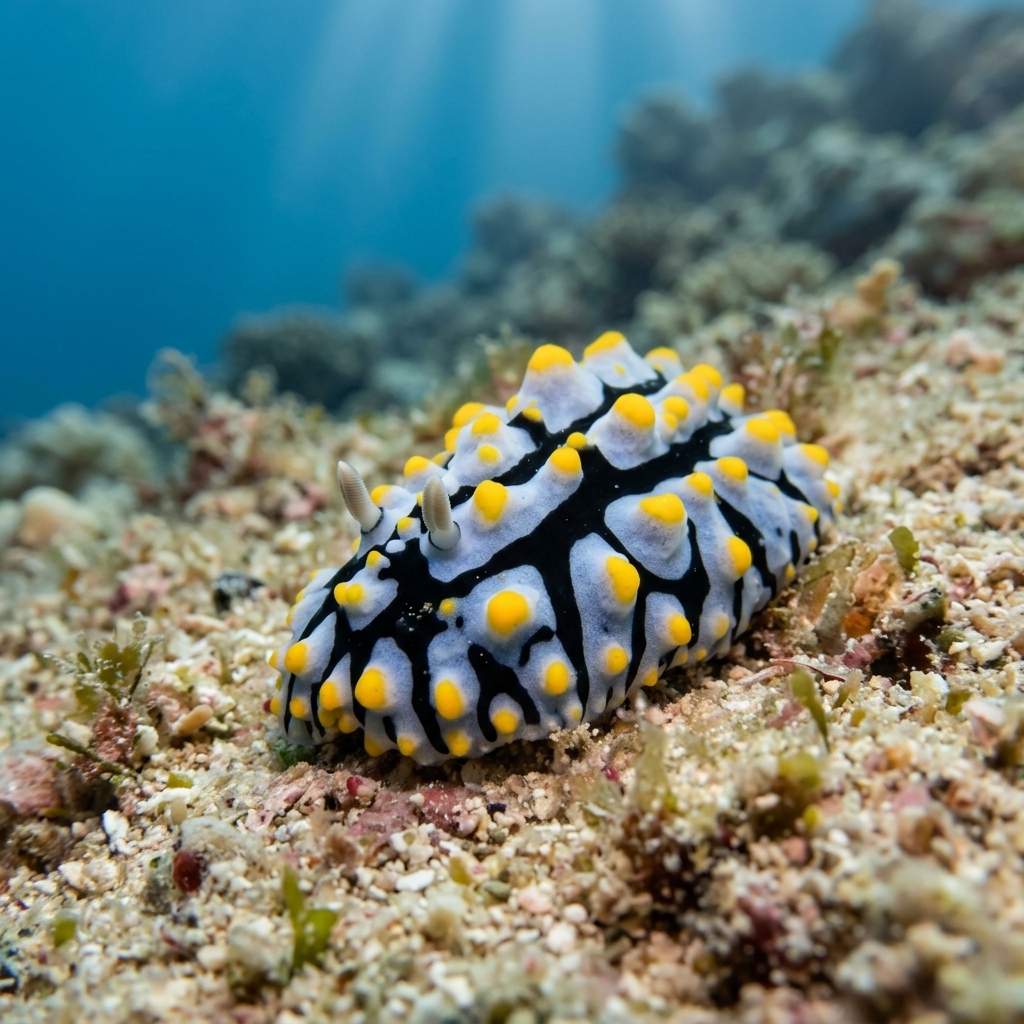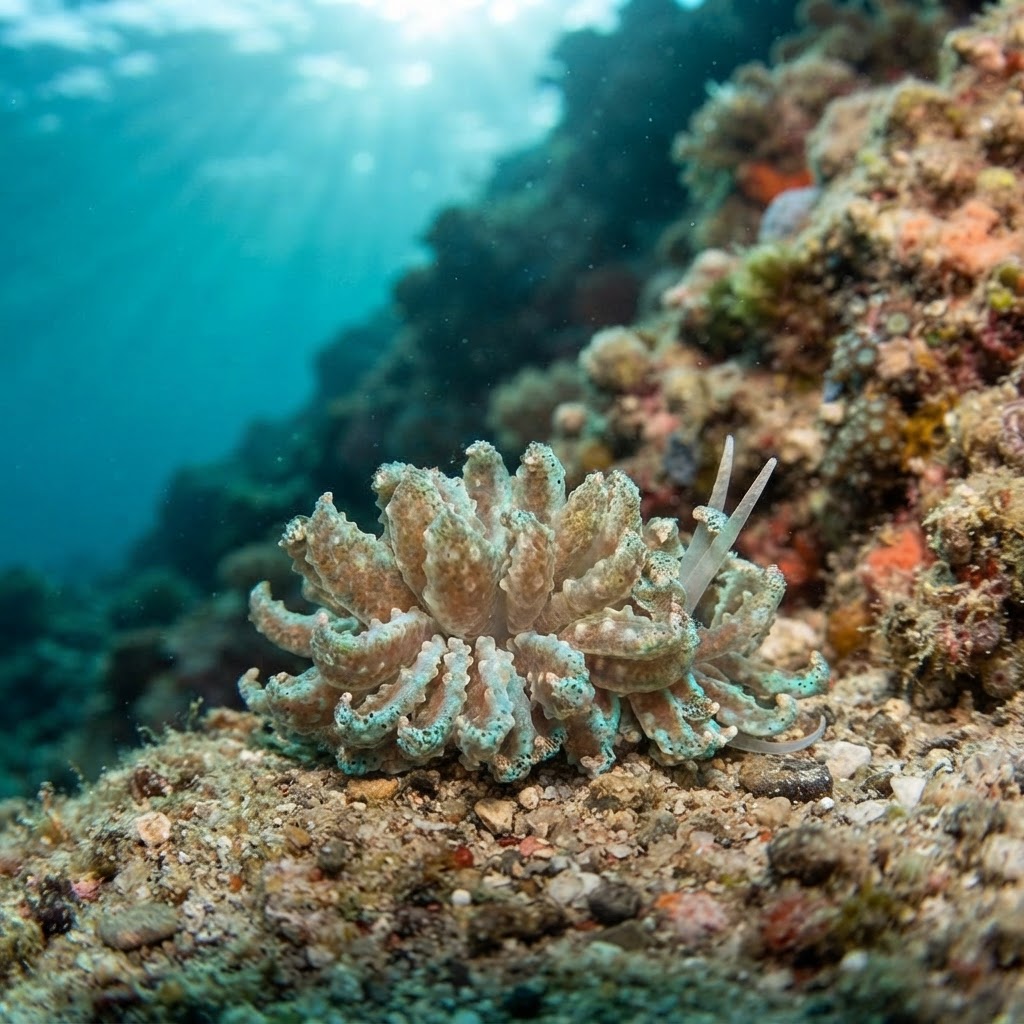
Phyllodesmium crypticum
An uncommon find on reefs in Luzon and Kenting, this soft coral-grazing sea slug turns up in warm water year-round.
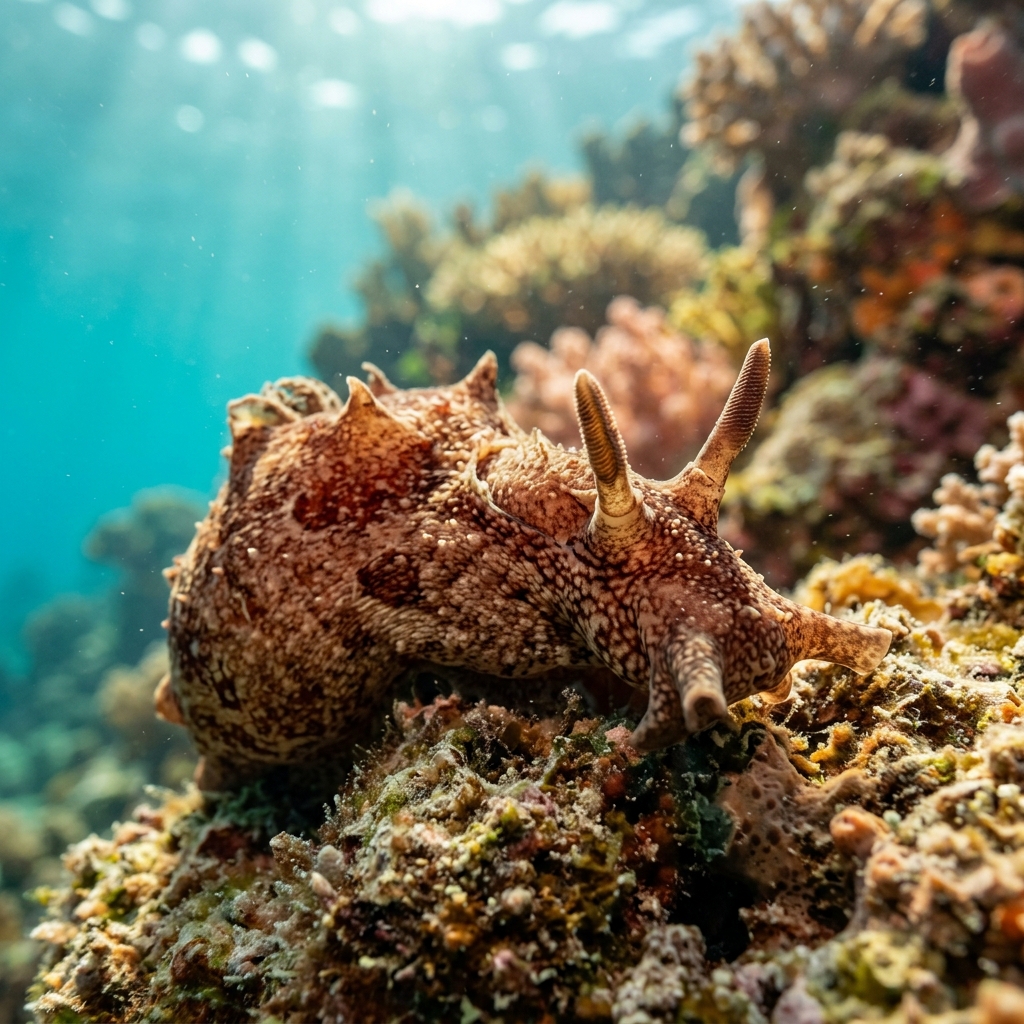
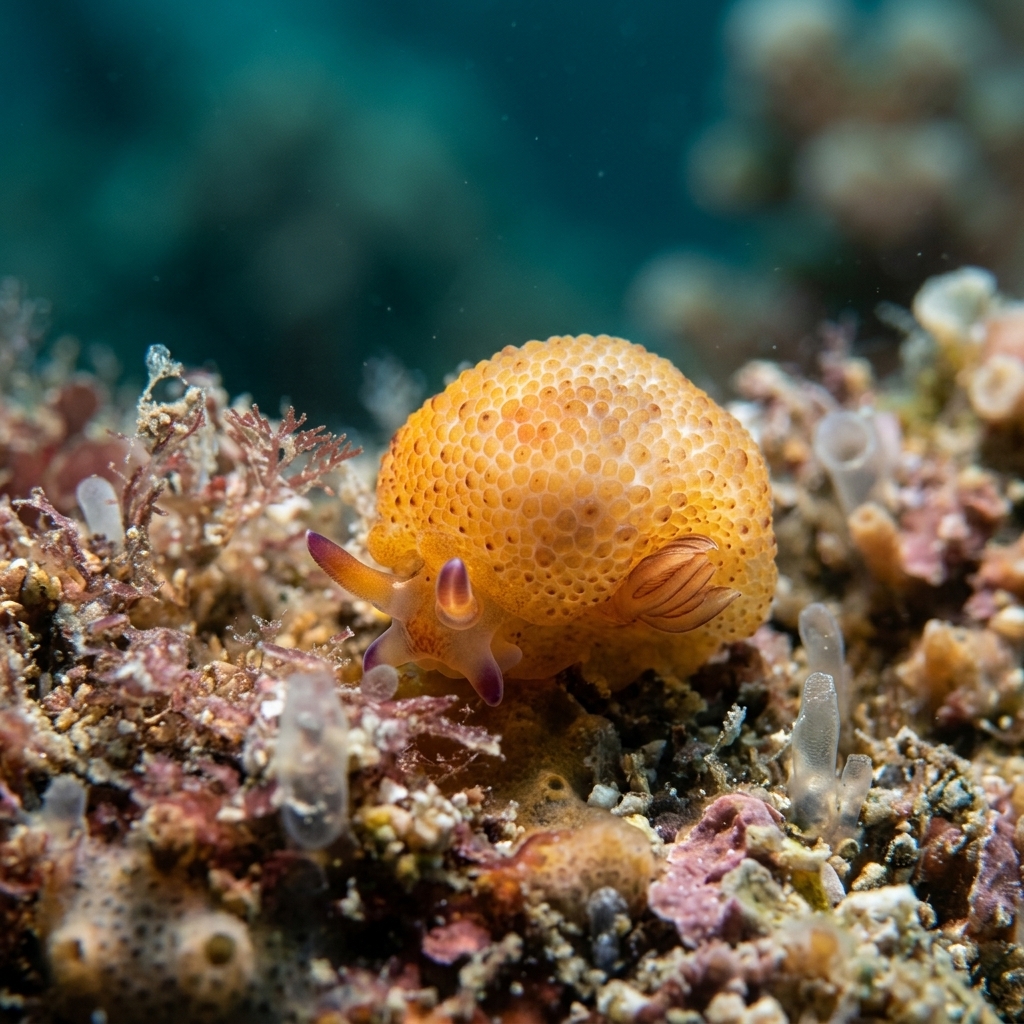
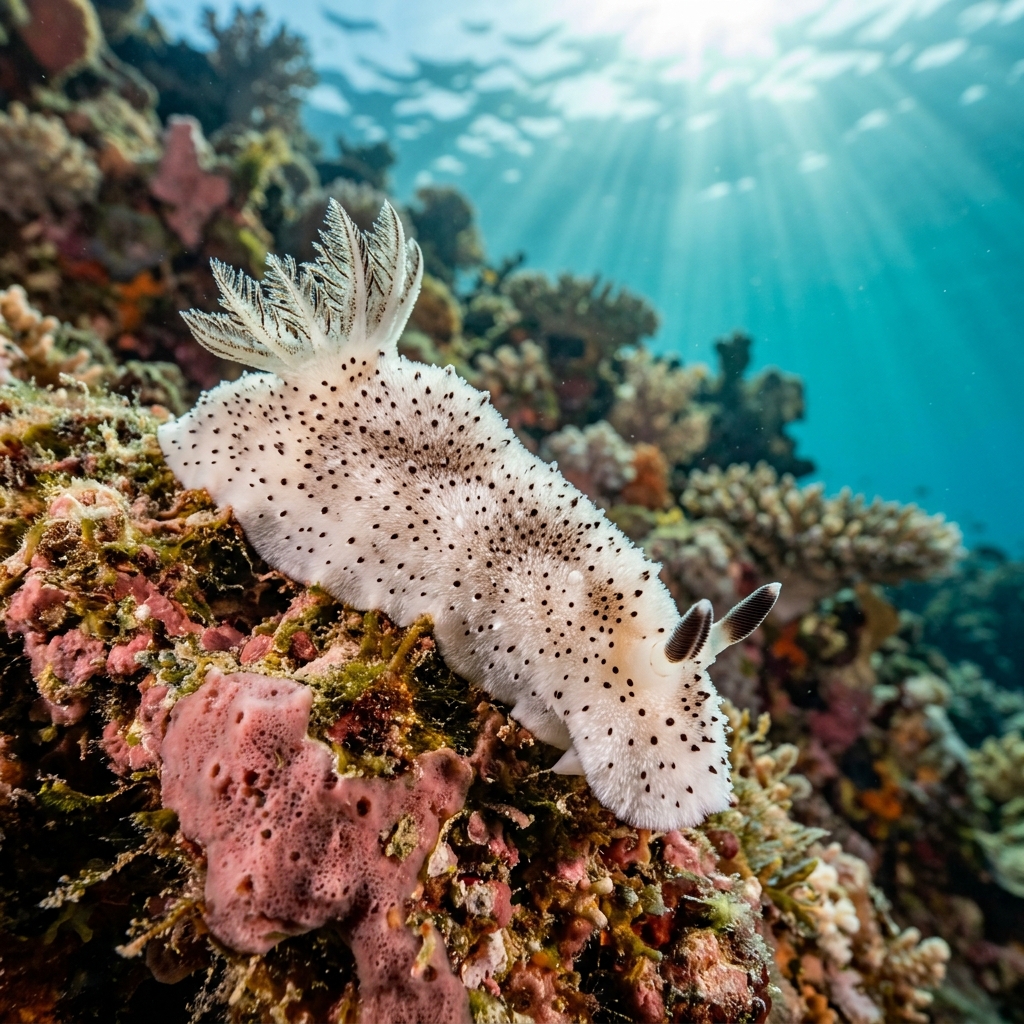
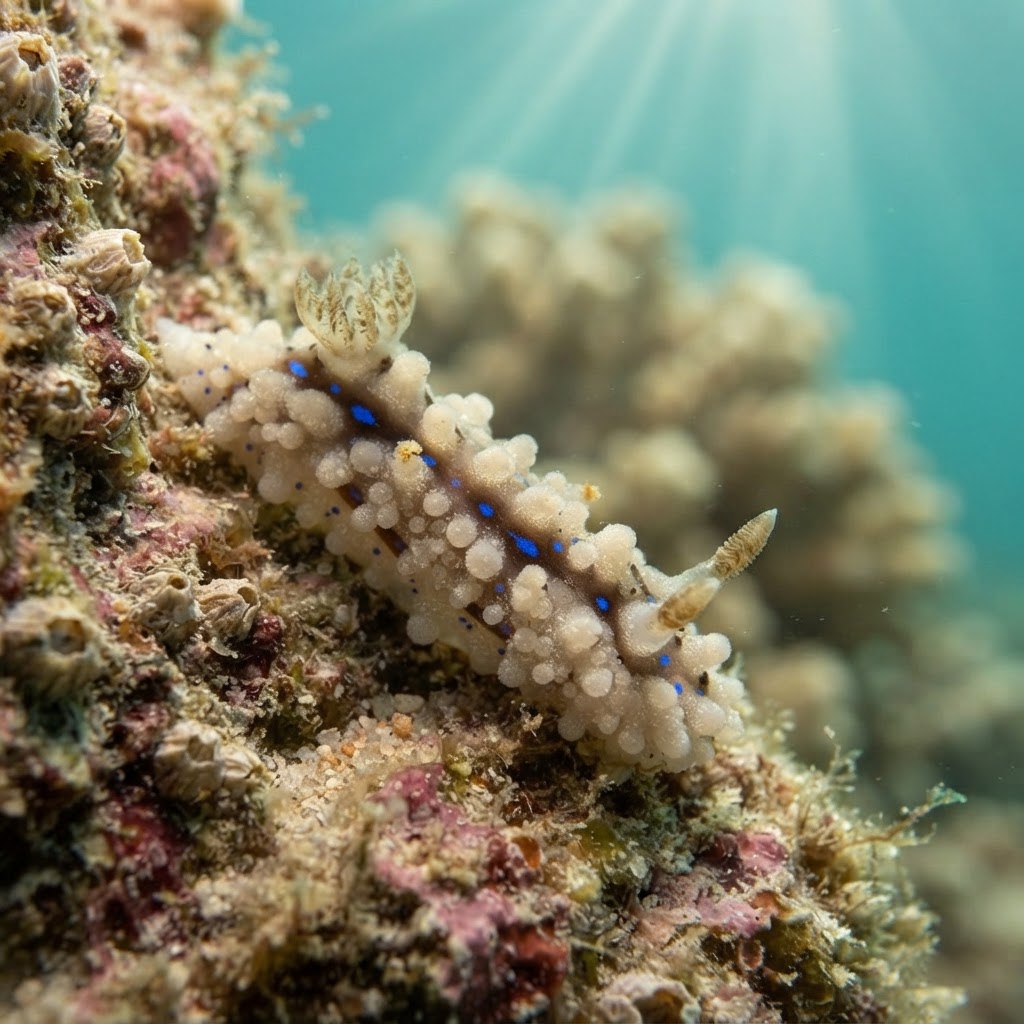
This sea slug carries rows of finger-like projections called cerata along its back, each one beaded and often matching the colour of the soft coral it feeds on, which is the main reason it is so easy to swim past. Bodies stay small and slender, blending into branching soft coral colonies rather than sitting exposed on open substrate. Look closely at the cerata tips for a slightly swollen, translucent bead rather than a plain tapering point, since that beading is the clearest field mark separating it from plainer soft coral eaters.
Divers find it parked directly on the branches of the soft coral colonies it feeds on, moving slowly enough that a careful look along the branches is usually needed to pick it out from the coral tissue itself. It shows no reaction to divers beyond the usual slow nudibranch crawl, so a steady light and a slower fin pace over soft coral heads is the best way to spot one rather than expecting it to swim into view.
Like other members of its family, it likely feeds directly on soft coral polyps and can retain pigments or even stinging cells from that coral in its cerata, which helps explain why its colour so often matches its host colony.
No clear seasonal pattern shows up in the sightings, and with observed water temperatures running from about 25 to 31 C, conditions stay suitable on these reefs across the year. Treat it as a year-round find rather than something tied to a particular month.
Most consistently logged in the Philippines, especially around Luzon, with a second reliable cluster of sightings at Kenting in Taiwan. Indonesia also produces sightings, spread across Bali and Nusa Tenggara, with smaller but confirmed records from Sabah in Malaysia and Dili in Timor-Leste.
Mapping where Beaded Soft Coral Eater is logged…
It shows up most reliably around Luzon in the Philippines and at Kenting in Taiwan, with additional sightings in Bali and Nusa Tenggara in Indonesia, Sabah in Malaysia, and Dili in Timor-Leste.
There is no strong seasonal pattern in the sightings, and it tolerates a wide warm-water range, so it can turn up on these reefs at any time of year.
Check soft coral branches for a small slug with rows of beaded, finger-like cerata that often match the coral's own colour, making it blend in rather than stand out.
Exact size figures are not well documented for this species, but like most members of its family it stays small enough to be easily overlooked against the soft coral it lives on.
It feeds on soft coral polyps and appears to pick up pigment, and possibly defensive cells, from its coral host, which is a big part of why its colour so closely matches the colony it sits on.
Site and sighting data is aggregated from diver logs, iNaturalist and GBIF. For taxonomy and conservation status:
Light-spotted Aegires
3,168 sites