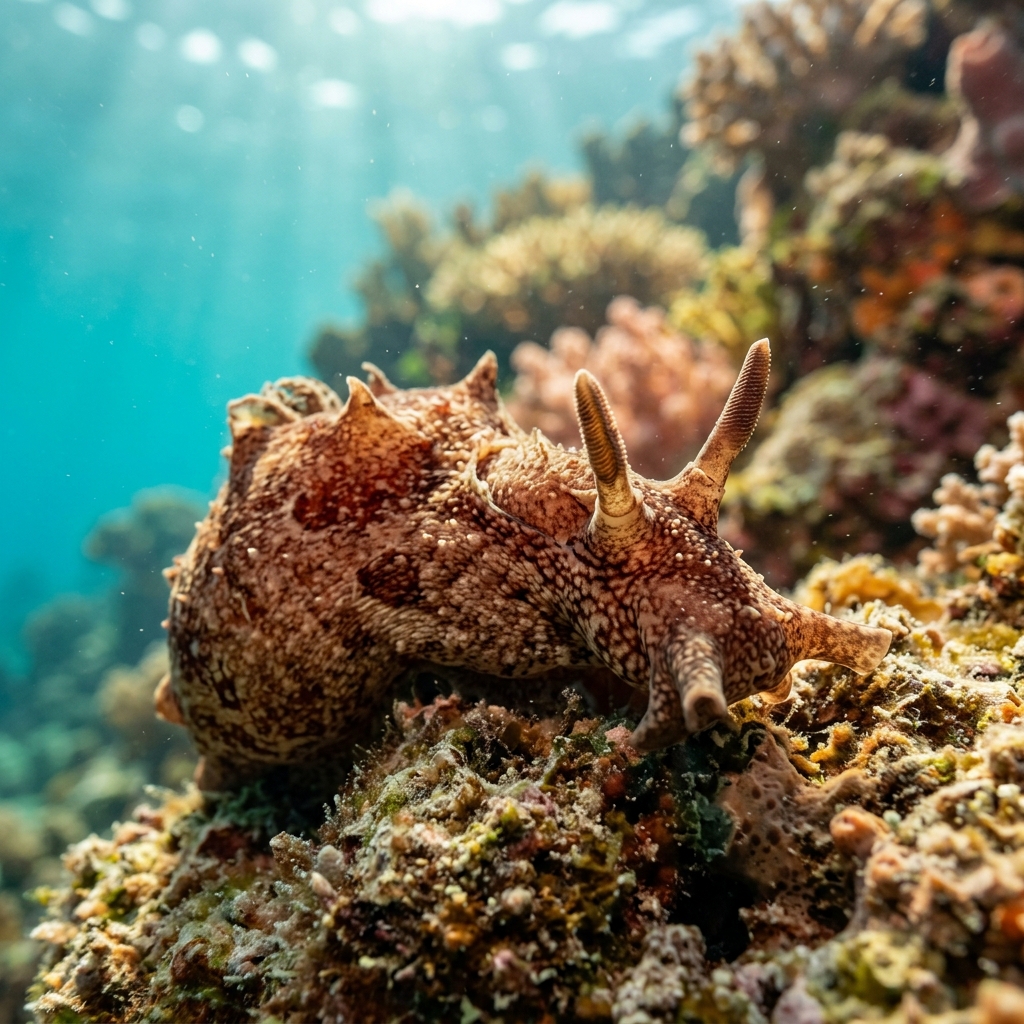
Limenandra confusa
A rare aeolid nudibranch logged in Saipan and Bali, active in warm 25.5-31.5C reef water year-round.
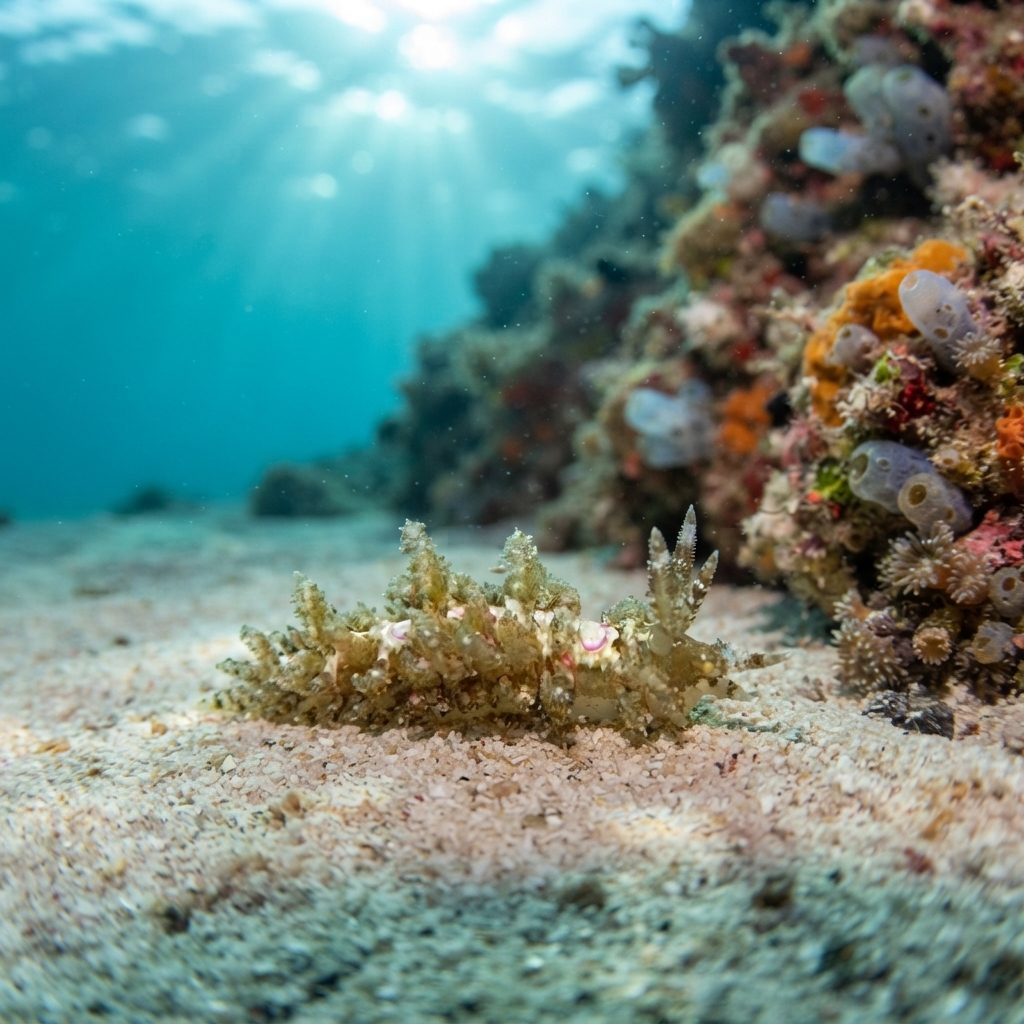
A small aeolid nudibranch (a group of nudibranchs that carries finger-like projections called cerata on its back) recognised by the dense, beaded rows of cerata covering its body, giving it a textured, almost bristly silhouette rather than a smooth dorsal ridge. Body colour and cerata tips typically pick up tones from its anemone prey, so it can look subtly different from one sighting to the next. Look closely at the reef substrate near anemones rather than in open water, since this is a small, slow-moving animal easy to swim past.
Divers find it moving slowly over rubble and reef structure close to its anemone prey, tucked into the kind of low-profile terrain that is easy to overlook on a drift past. It shows no reaction to divers beyond its usual unhurried crawl, and sightings so far have been logged as isolated, one-off finds rather than reliable clusters.
Like other members of the Aeolidiidae family, it almost certainly feeds on anemones and can incorporate their stinging cells into its own cerata for defence, a trait well documented across the group even though this species' specific biology has not been closely studied.
No clear seasonal pattern shows up in the sightings, and its 25.5 to 31.5C temperature niche matches warm tropical reef water year-round, so there is no known best month to target it.
Logged sightings cluster around Saipan in the Northern Mariana Islands, with an additional record from Bali, Indonesia. It is not a species you plan a trip around yet, but divers working reef slopes and rubble patches in these regions have the best documented shot at it.
Mapping where Beaded Anemone Eater is logged…
Confirmed sightings come from Saipan in the Northern Mariana Islands and from Bali, Indonesia. It is logged as rare to uncommon at these sites, so treat any sighting as a bonus rather than a guaranteed find.
There is no detected season in the sighting data. It lives in water between 25.5 and 31.5C, which holds year-round on the tropical reefs where it has been recorded.
Check for a small nudibranch with dense, beaded rows of cerata covering its back, crawling slowly near anemones on rubble or reef structure. Colour varies with its recent prey, so the beaded cerata texture is the more reliable cue.
No. It poses no threat to divers and is harmless to observe or photograph up close.
As a member of the anemone-eating aeolid family, it feeds on anemones and likely repurposes their stinging cells for its own defence, a common trait in this group.
Site and sighting data is aggregated from diver logs, iNaturalist and GBIF. For taxonomy and conservation status:
Light-spotted Aegires
3,168 sites