Pristiapogon taeniopterus
Rare, reef-crevice cardinalfish found off Hawaii in 25-29C water. Here's how to spot one and what makes it tricky to find.
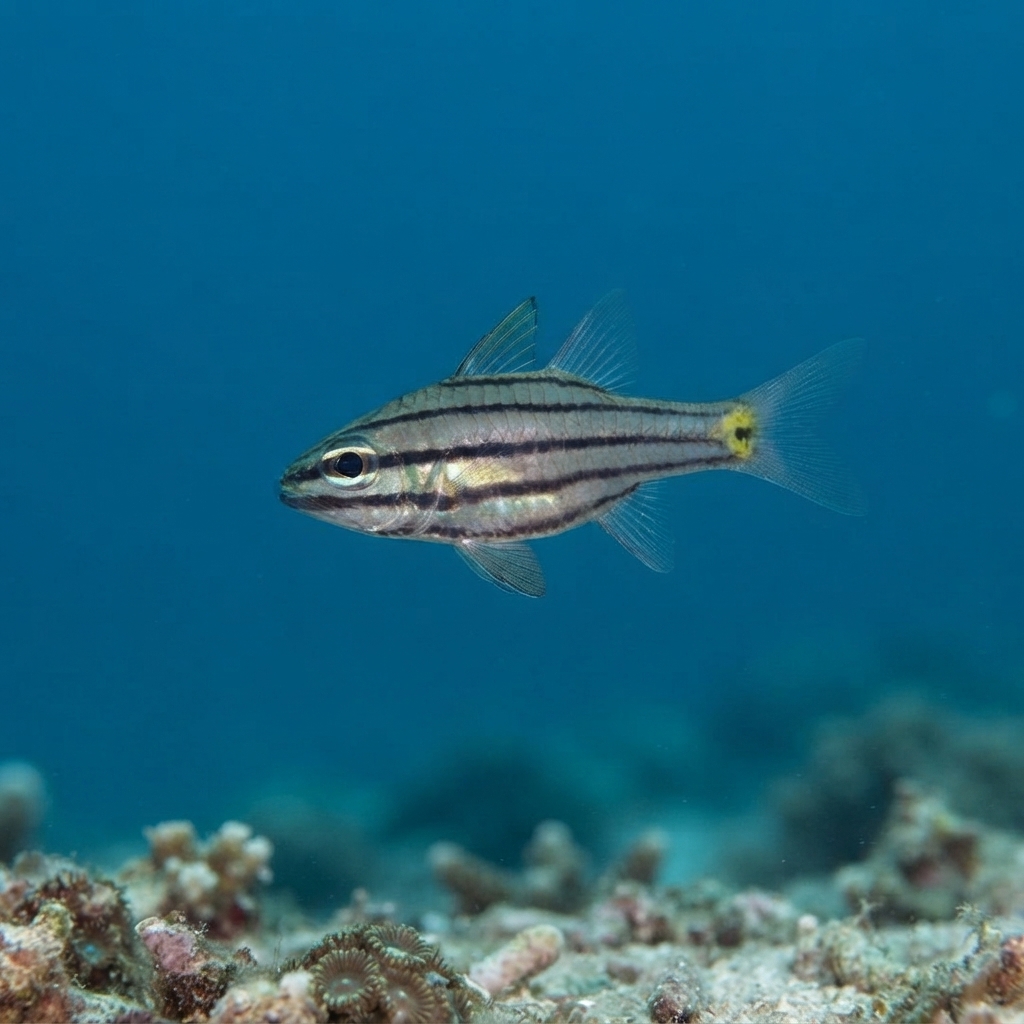
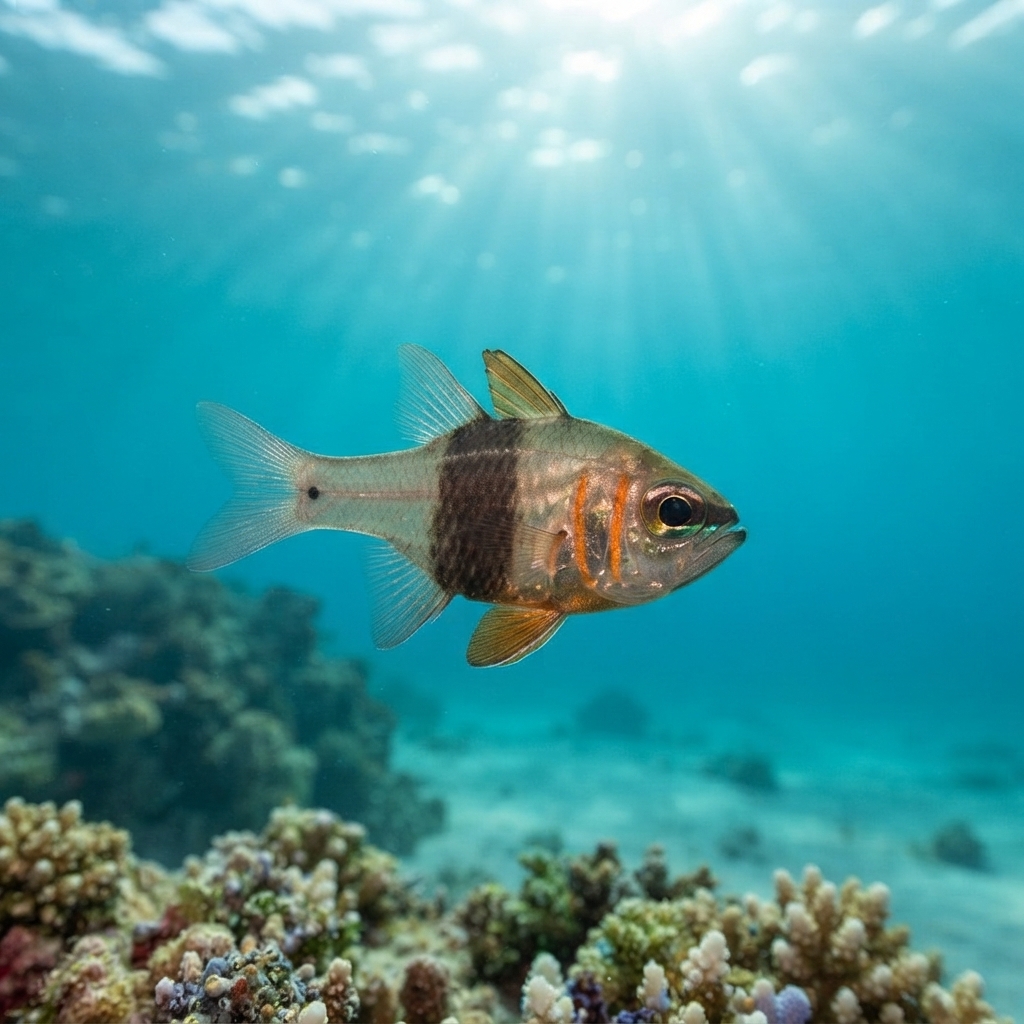
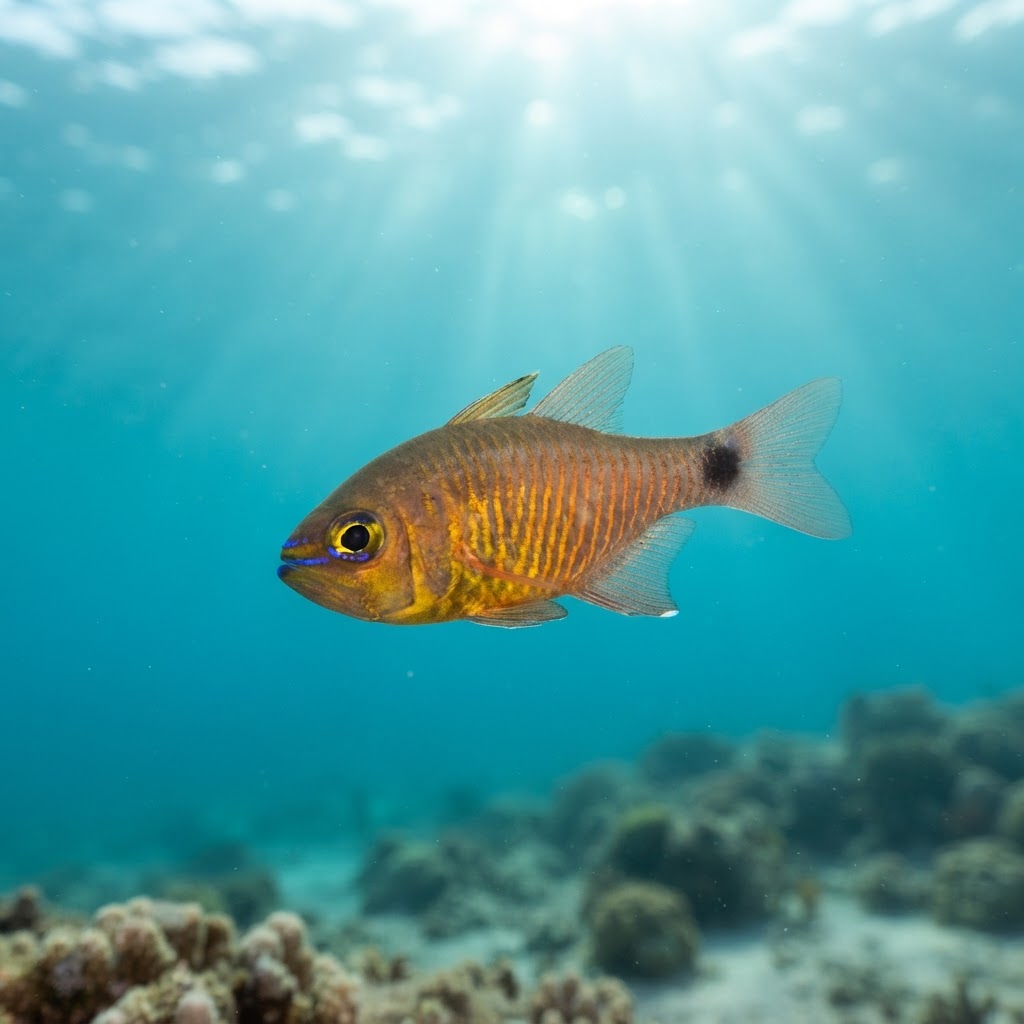
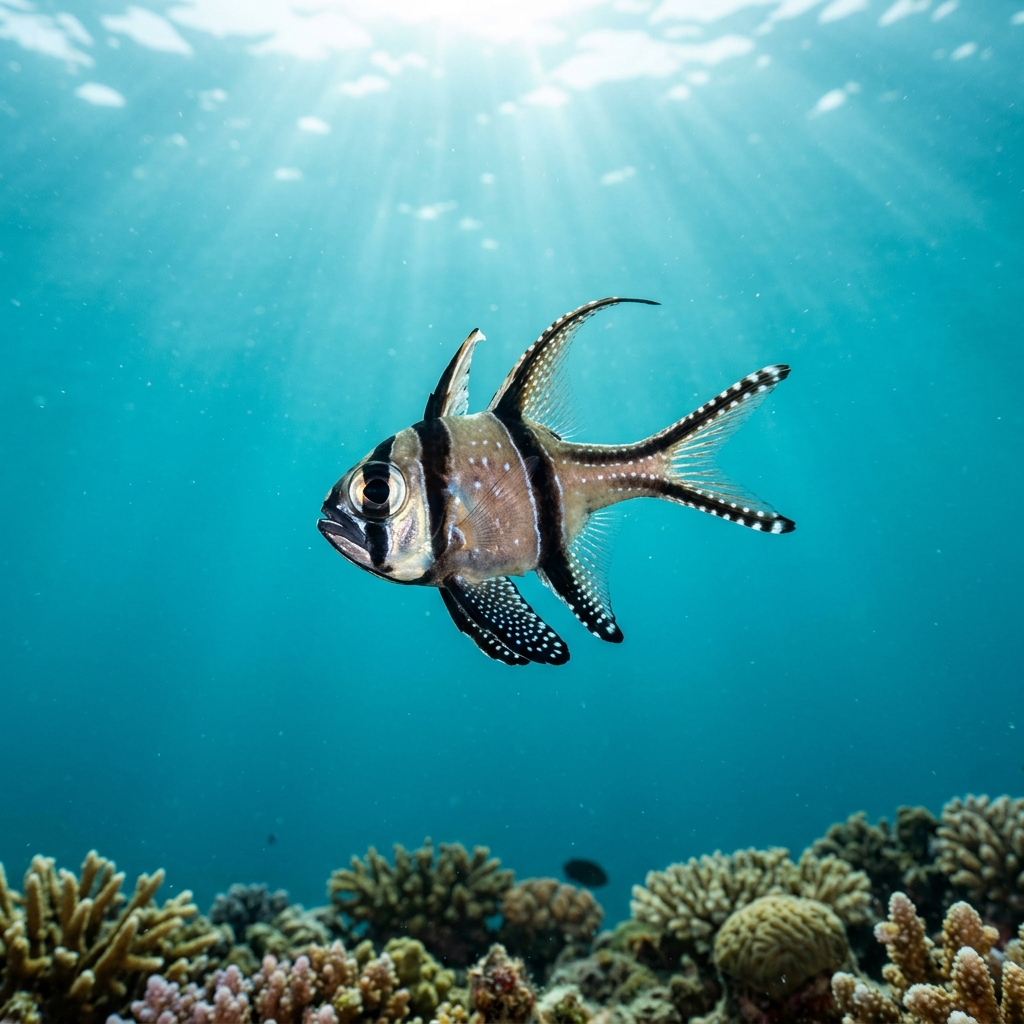
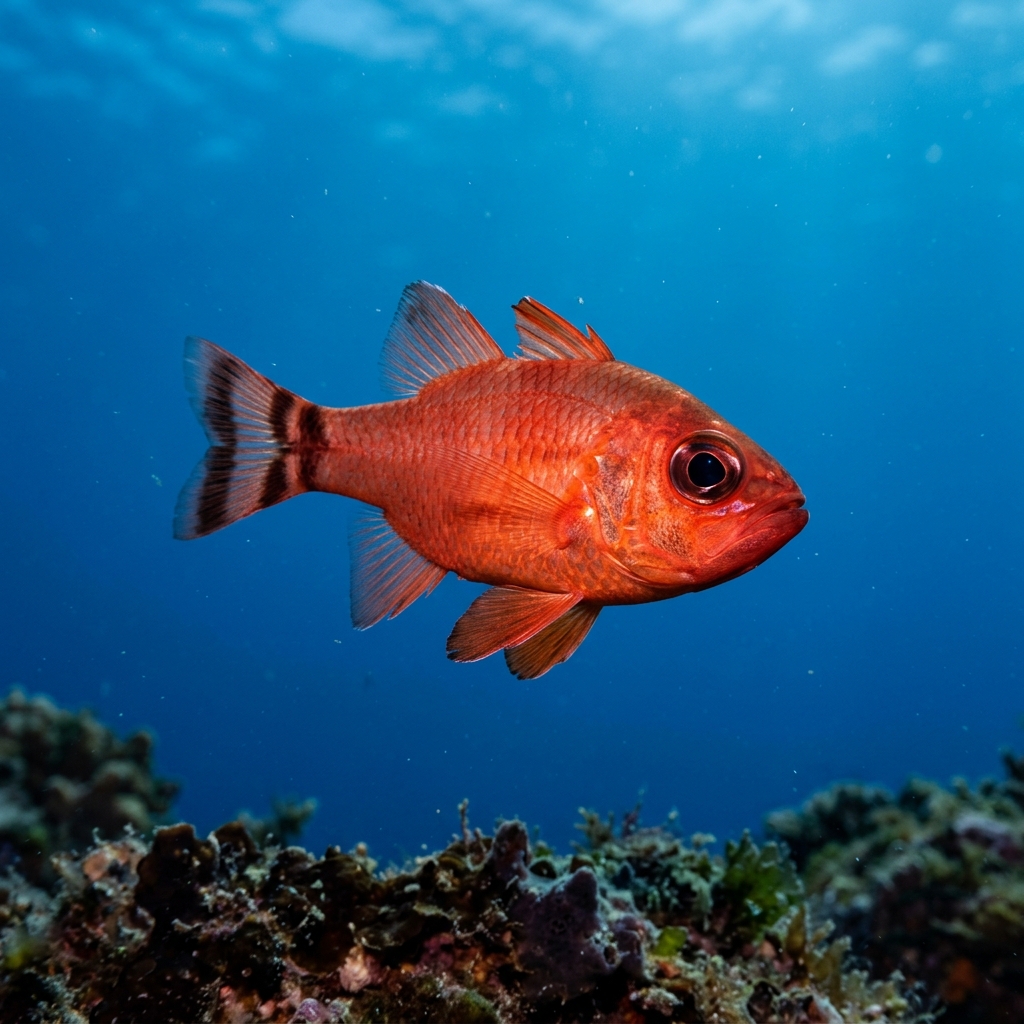
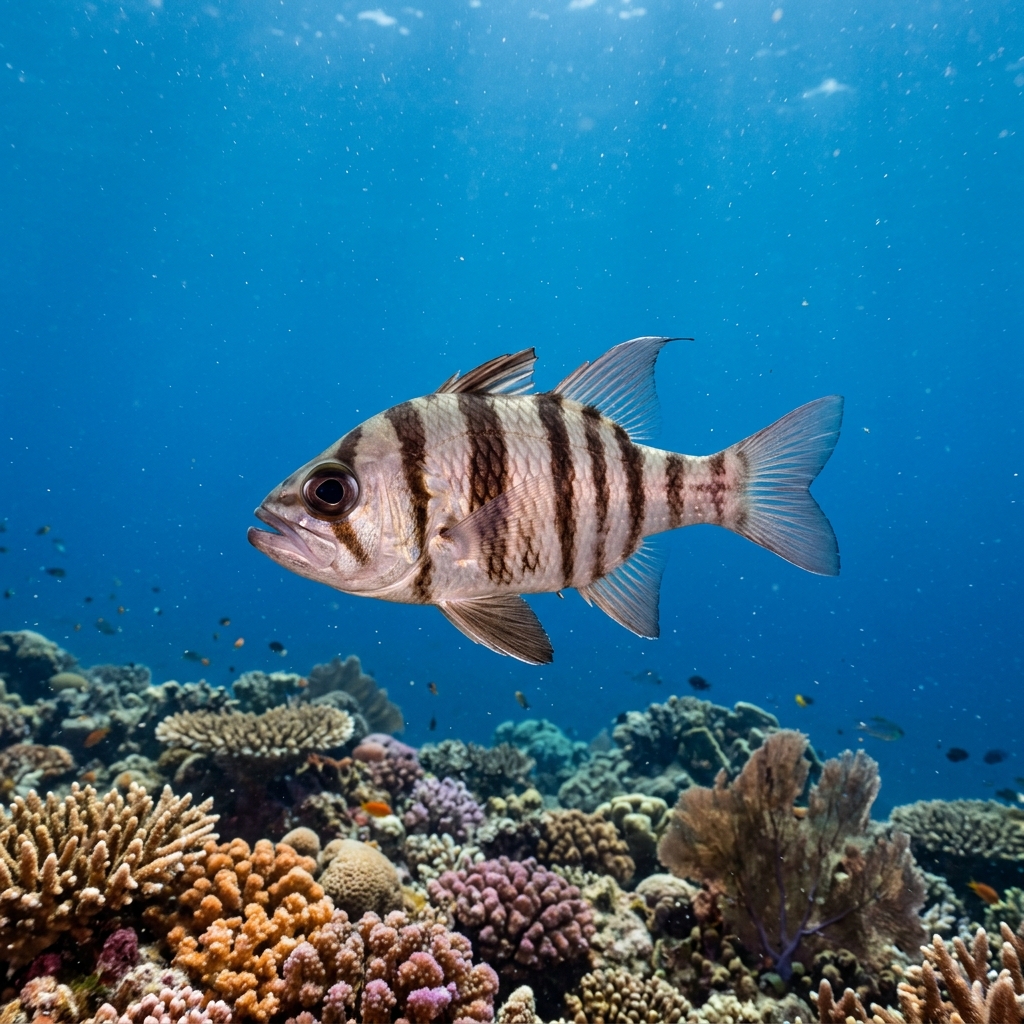
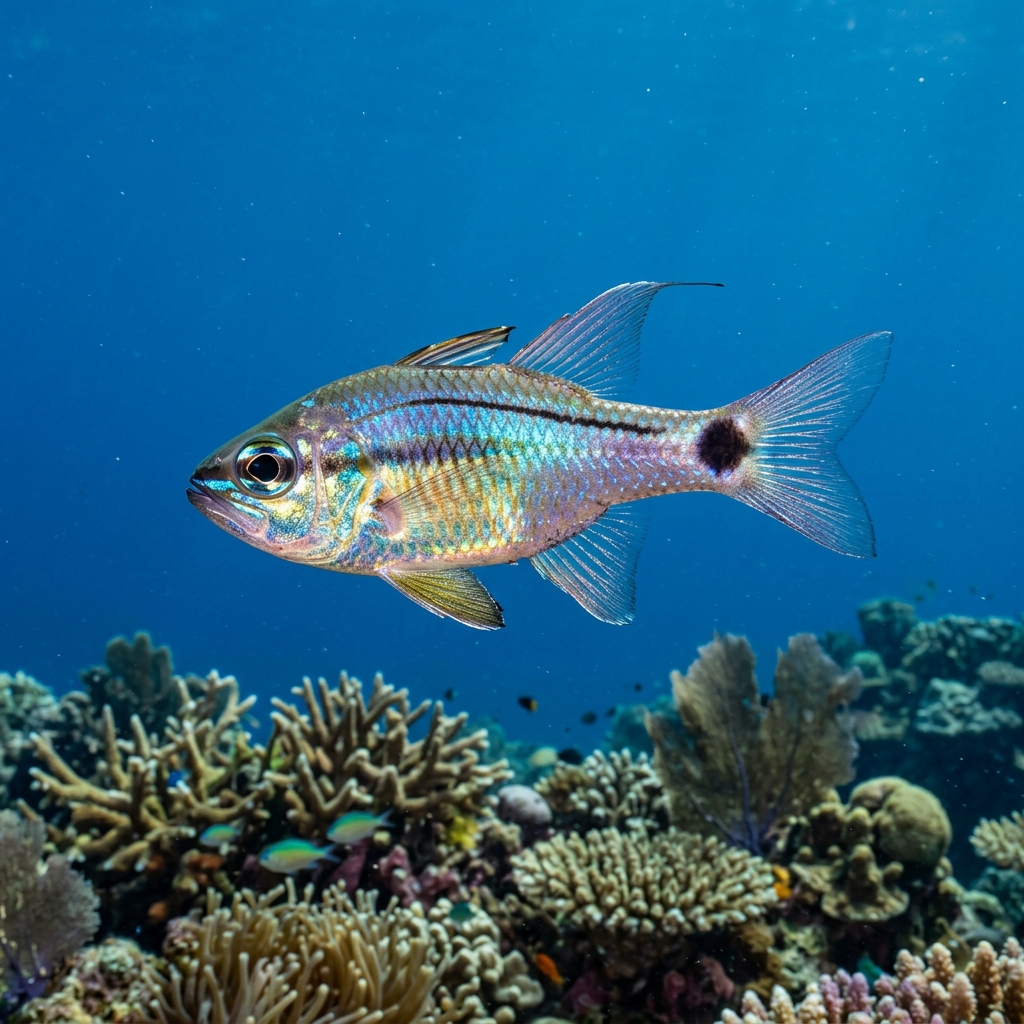
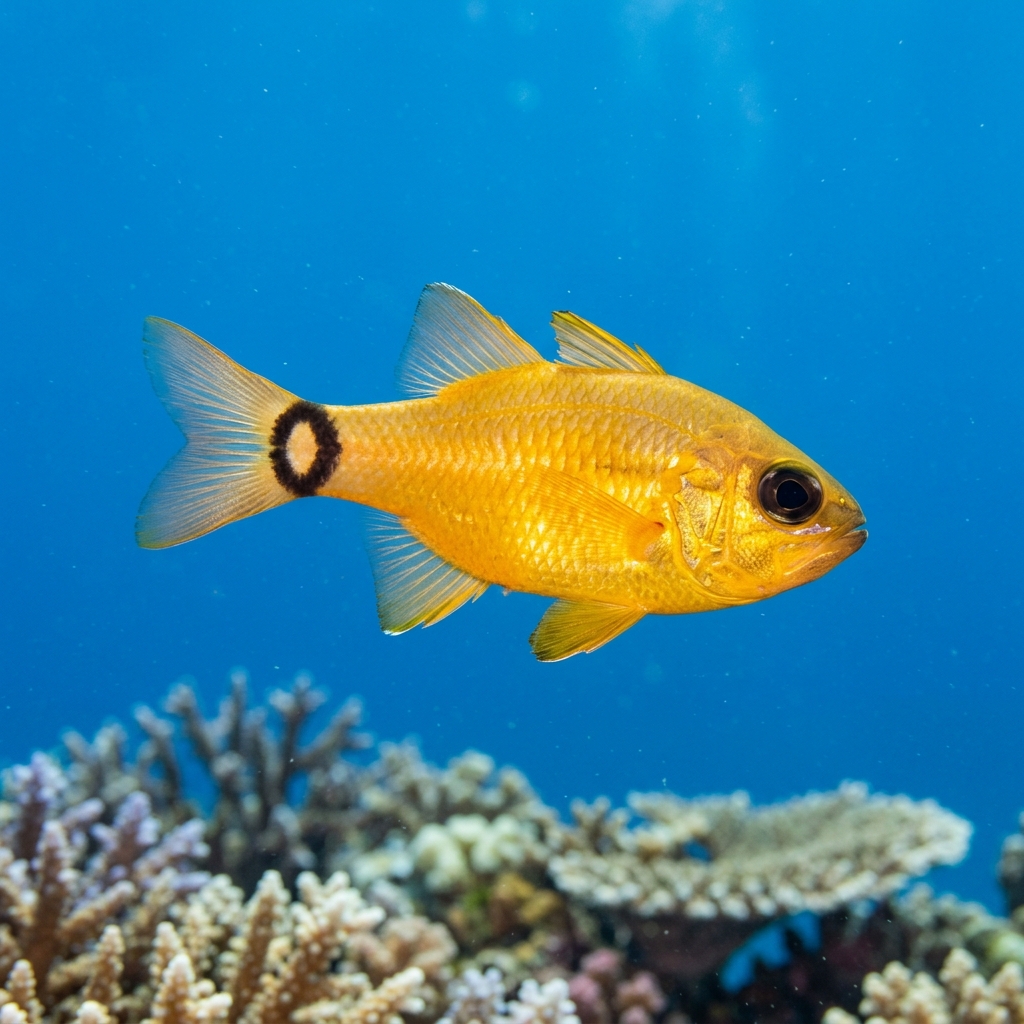
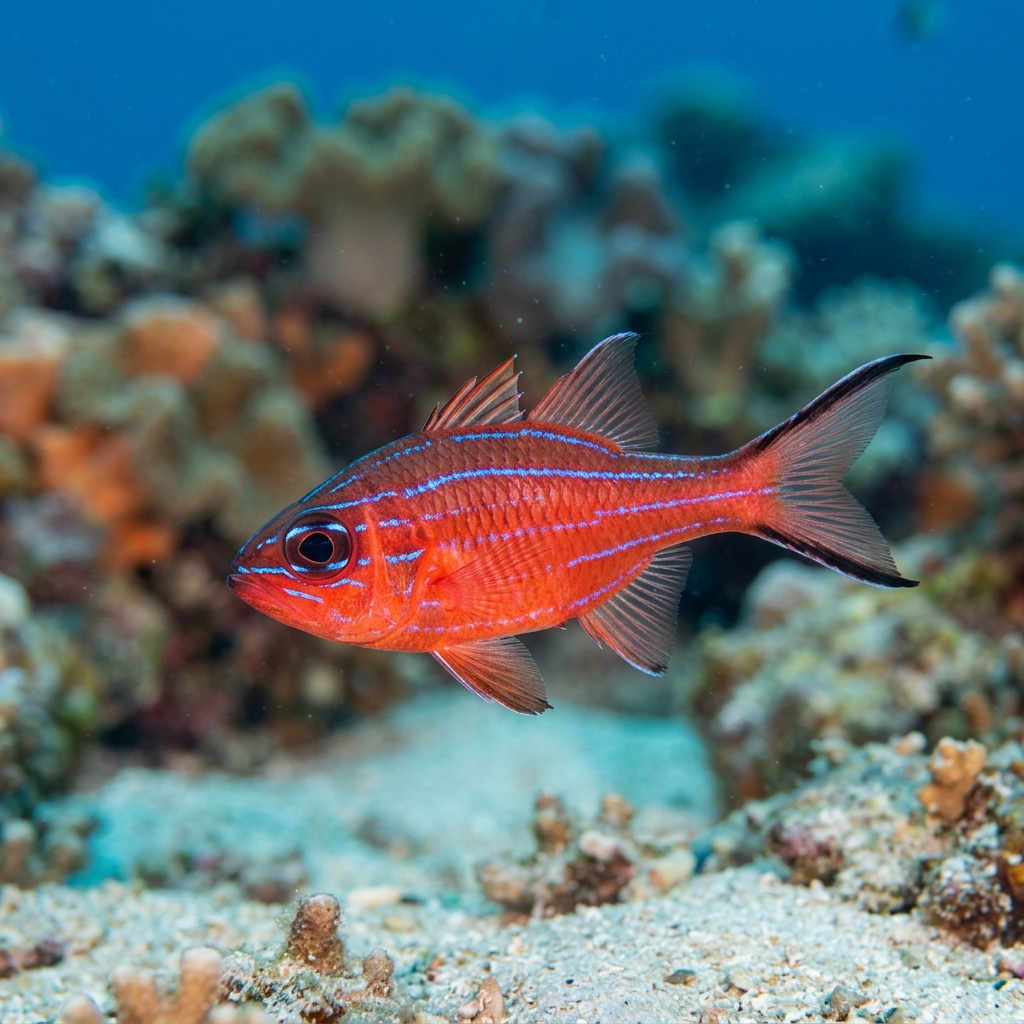
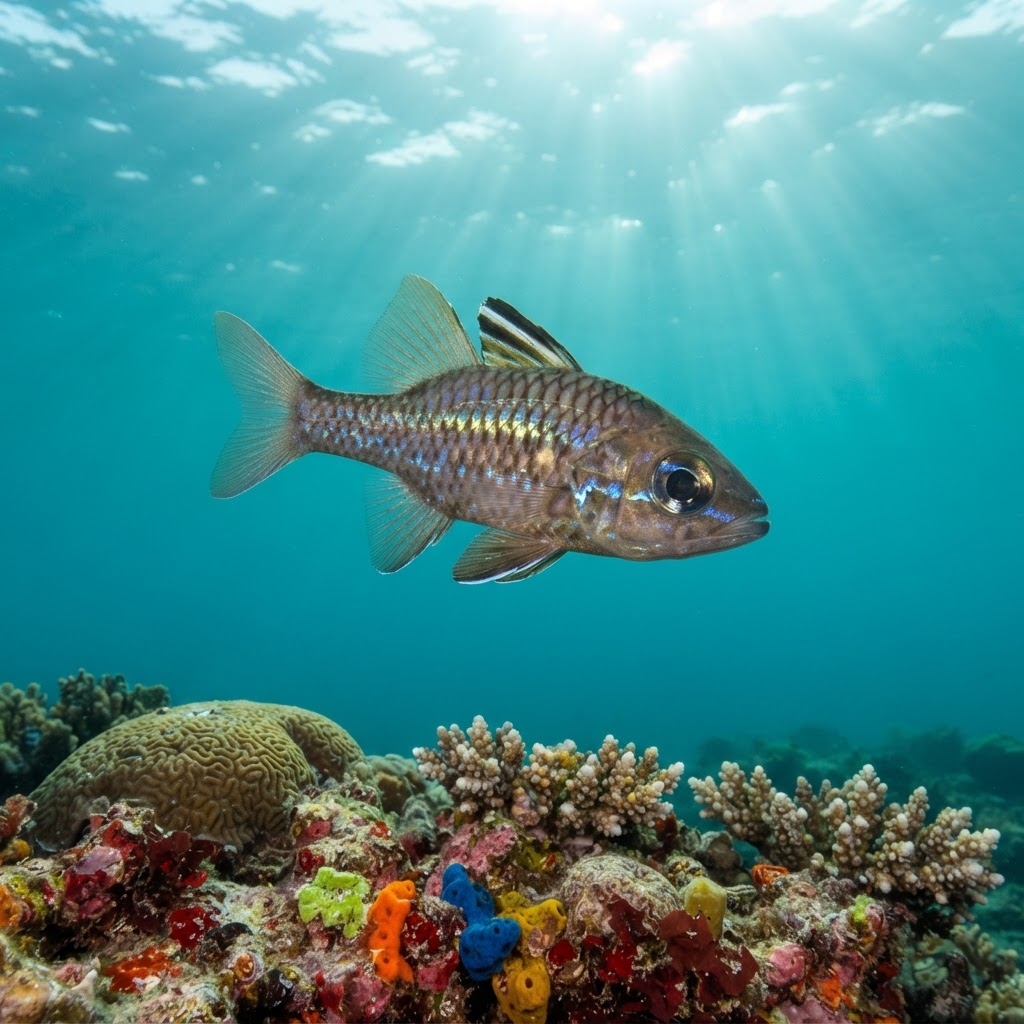
A small, deep-bodied cardinalfish around 14cm, silvery to pale bronze with large dark eyes typical of the family. The key mark is a dusky band running along the base of the soft dorsal and anal fins, which is where the common name comes from. Look for it hovering close to a coral head or ledge rather than out in open water, usually alone or in a loose small group rather than a dense school.
Divers typically find it tucked close to a coral head or under a ledge, holding a fixed position rather than roaming the reef. Like most cardinalfish it tends to be more active around dusk and at night, and by day sits fairly still and lets divers approach without much fuss. It's logged as rare at every site so far, so spotting one usually comes down to a slow, careful look into crevices rather than expecting an open encounter.
Cardinalfish in this family are mouth-brooders, with the male carrying the fertilised eggs in his mouth until they hatch, a trait shared across the group even though it hasn't been specifically documented for this species.
No clear seasonal pattern shows in the sighting data, and the 25.1 to 29.3C range it's been recorded in matches Hawaii's reefs year-round, so there's no particular month to target. Plan around general Hawaii dive conditions rather than a species-specific season.
Reef neighbours a diver could mistake it for. Use the identification notes above to tell them apart.
All logged sightings in the data come from Hawaii, United States, making it the only confirmed region for this species so far. Within Hawaii it turns up on reef sites where divers check ledges and coral heads closely rather than mid-water.
Mapping where Bandfin Cardinalfish is logged…
The only confirmed sightings logged so far are from Hawaii, United States, where it's found on reef sites with ledges and coral heads to hide under. It hasn't been reported from other regions in current diver data.
There's no detected season in the sighting data, and it's been recorded across a warm 25.1 to 29.3C range consistent with Hawaii's reefs year-round. Any time you're diving Hawaii is as good as any other for a chance encounter.
Look for a small silvery cardinalfish around 14cm with large eyes and a dusky band along the base of its dorsal and anal fins. It sits still near coral heads and ledges rather than swimming in open water, so a slow look into crevices helps.
They reach around 14cm, a typical size for a small reef-dwelling cardinalfish.
No. They're a small, harmless reef fish with no risk to divers, happy to be observed from a normal, respectful distance.
Like other cardinalfish, they're thought to be mouth-brooders, meaning the male likely holds fertilised eggs in his mouth until the young hatch, protecting them from predators on the reef.
Site and sighting data is aggregated from diver logs, iNaturalist and GBIF. For taxonomy and conservation status:
Iridescent Cardinalfish
1,781 sites