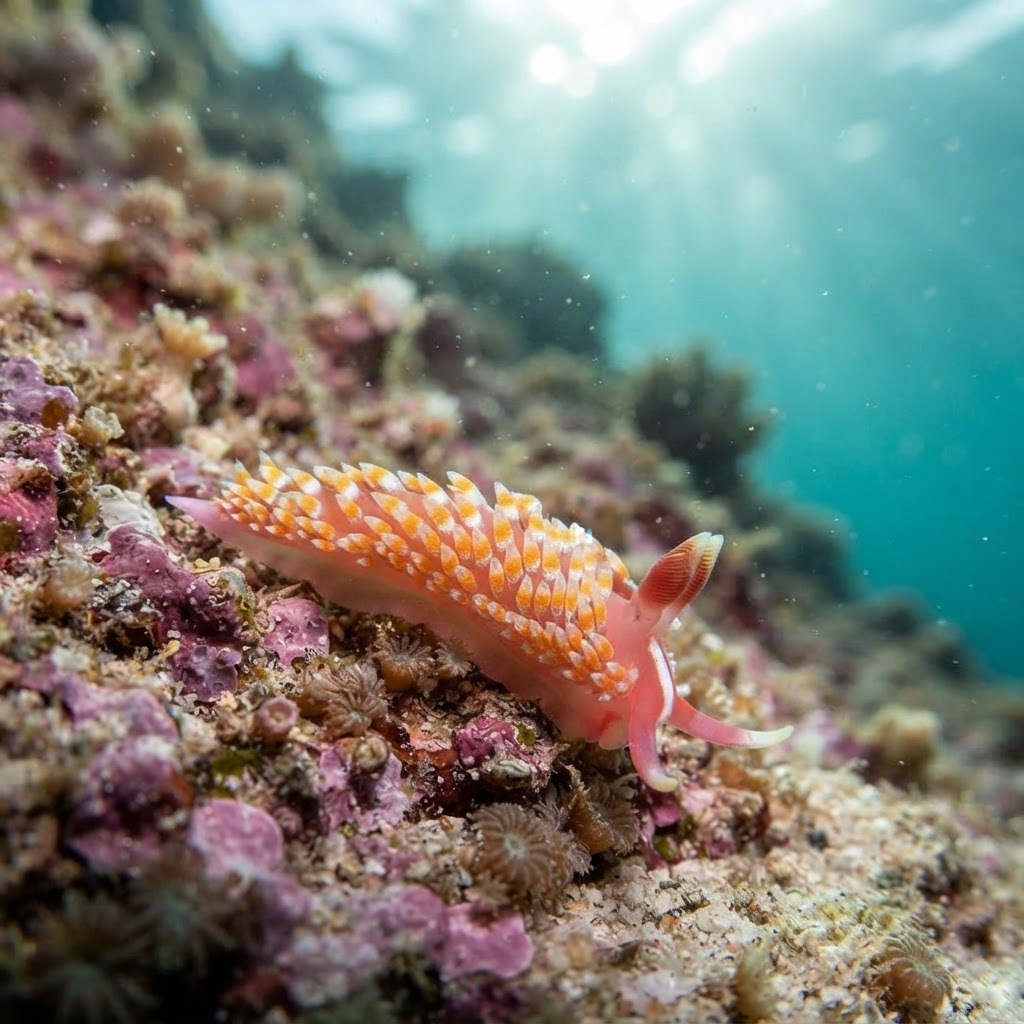
Babakina festiva
A 1cm nudibranch rarely seen even by regulars: hunt for it on California and Baja California reefs in 14-20C water.
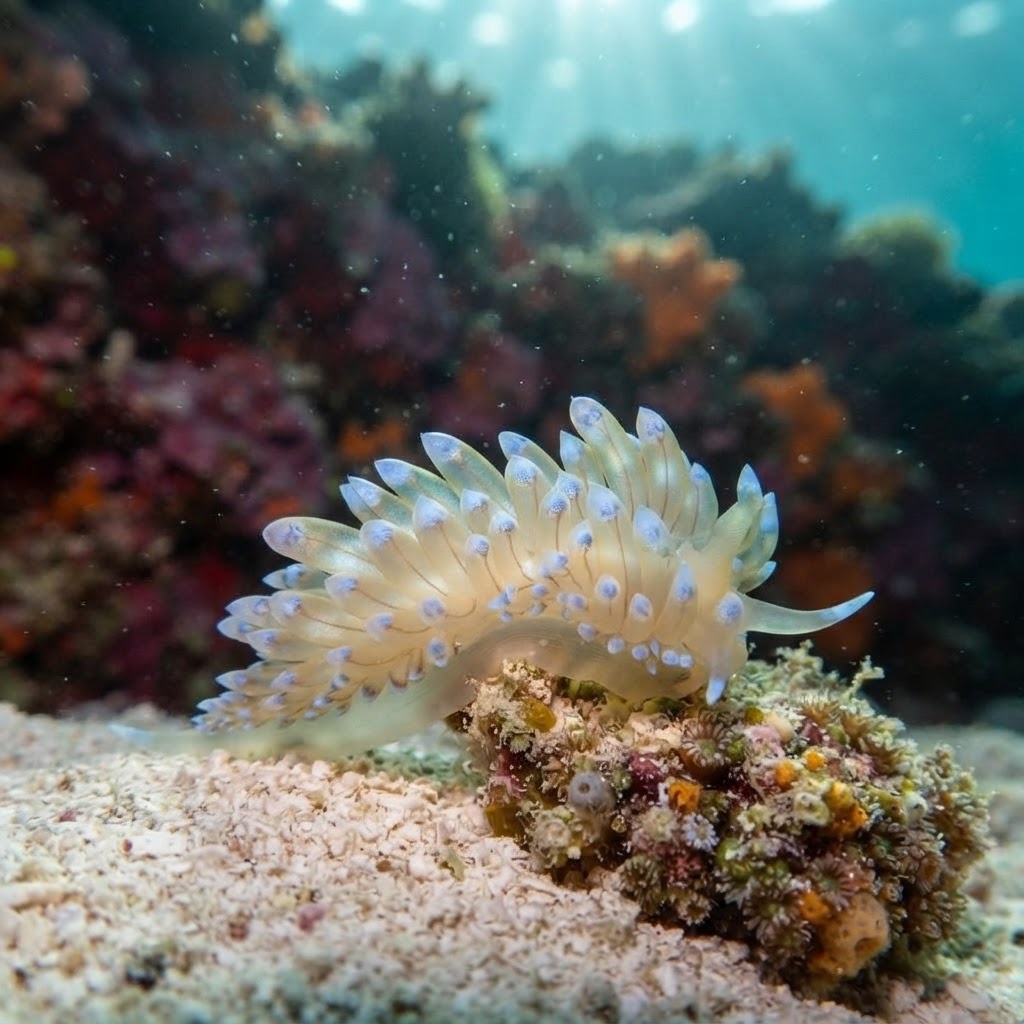
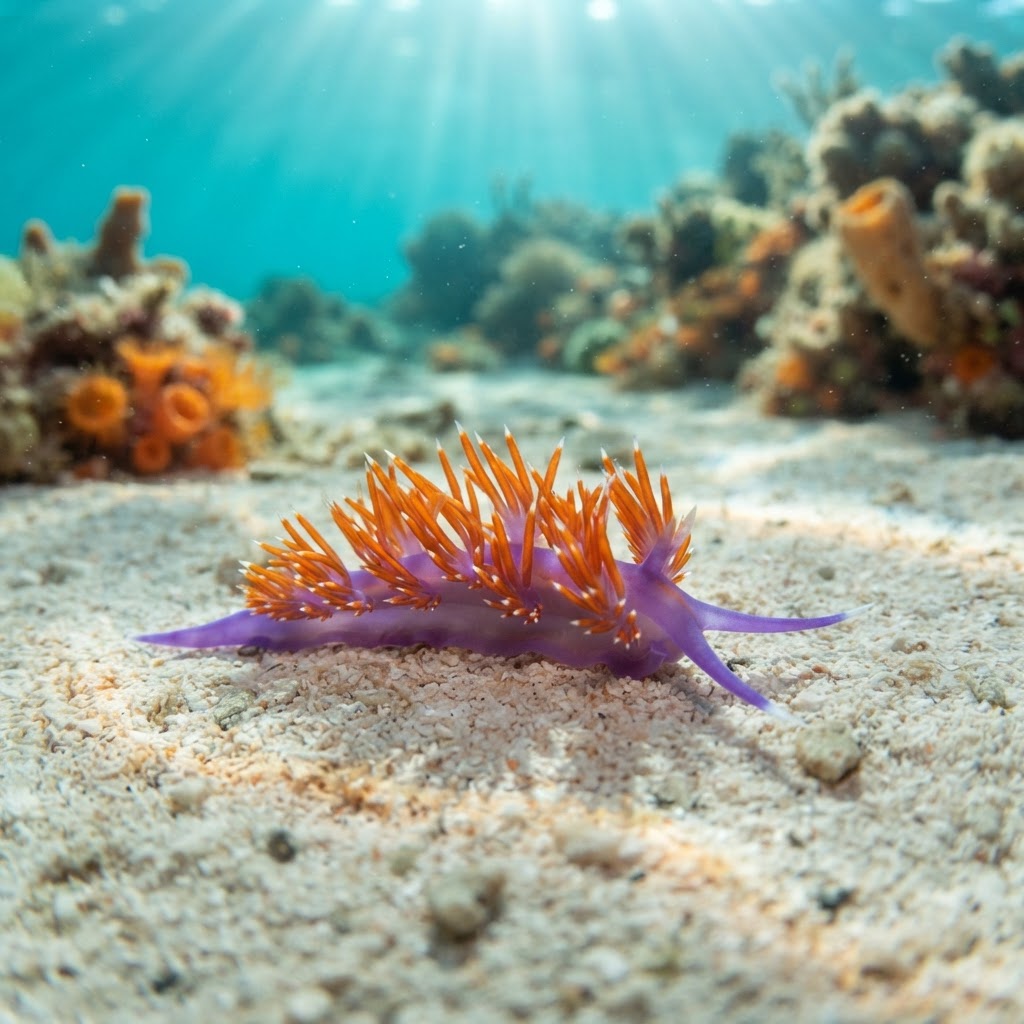
Barely 1 centimetre long, so you are looking for a speck of colour rather than a shape at distance. Its back is covered in slender finger-like projections (cerata) that show orange to pink tips over a translucent to purplish body, giving it a soft, bristly look under a torch. There is no shell and no obvious head marking beyond a pair of thin sensory tentacles (rhinophores) up front. At this size a macro lens or a very close look is doing most of the identification work.
Divers find it grazing slowly over rock and reef surfaces rather than swimming, sticking close to the substrate where it feeds. It shows no reaction to divers beyond continuing to crawl, since at this size and speed it has little else to do. Most logs describe it as a rare to uncommon find, so spotting one usually comes down to a slow, close search rather than a chance pass.
Like other aeolid nudibranchs, it likely feeds on hydroids and can store stinging cells from its prey in those cerata along its back as a defence, though this has not been specifically documented for the species.
Sightings are spread across the year with no clear seasonal spike in the data, matching a species that tolerates a fairly wide cool-water band of 14.1 to 20.1C. Plan around water temperature and site conditions rather than a specific month.
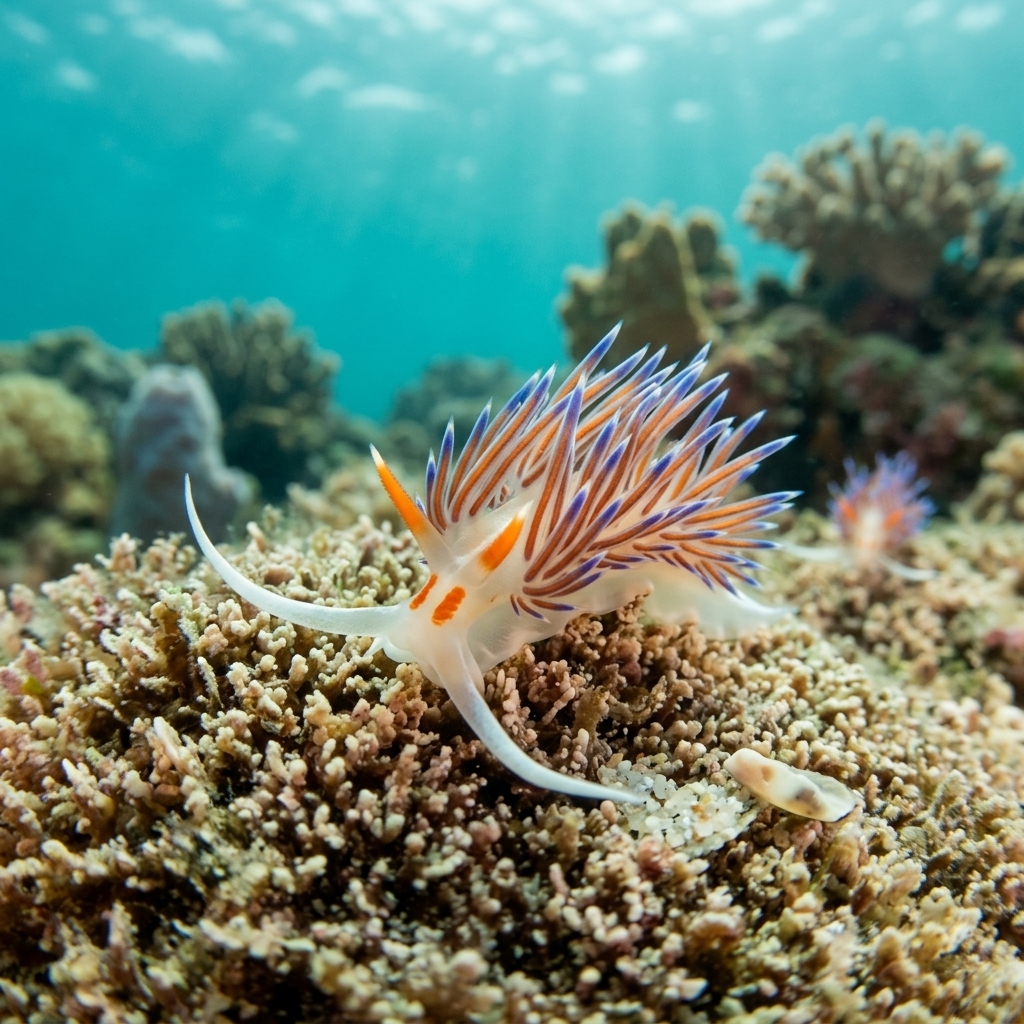
Reef neighbours a diver could mistake it for. Use the identification notes above to tell them apart.
Logged almost exclusively along the eastern Pacific, with California in the United States and Baja California in Mexico carrying the bulk of recorded sightings. Outside these two regions it has barely been documented, so cold-water sites on the US and Mexican Pacific coast are currently the reliable bet.
Mapping where Baba's Festive Aeolid is logged…
Recorded almost entirely along the eastern Pacific coast, with the strongest logs from California in the United States and Baja California in Mexico. Sightings outside these two regions are currently rare to non-existent in diver records.
There is no detected season in current sighting data, so it is logged year-round within its cool-water range of roughly 14 to 20C. Focus on site and visibility conditions rather than timing a trip around a season.
Look for a tiny, roughly 1cm slug covered in slender cerata tipped orange to pink over a pale or purplish body. It has no shell and moves slowly across rock surfaces, so a close, patient search with a torch is usually needed to pick it out.
It stays tiny, typically around 1 centimetre long, making it one of the smaller nudibranchs divers try to photograph.
No. It poses no threat to divers and is far too small to interact with beyond careful observation and photography.
Site and sighting data is aggregated from diver logs, iNaturalist and GBIF. For taxonomy and conservation status:
Nudibranch
3,168 sites