Chromis limbata
Spot Azores Chromis across the Canary Islands and Azores in waters from 18-28 °C. Sightings peak Jun, Feb. Here's where to find them and how to ID them.
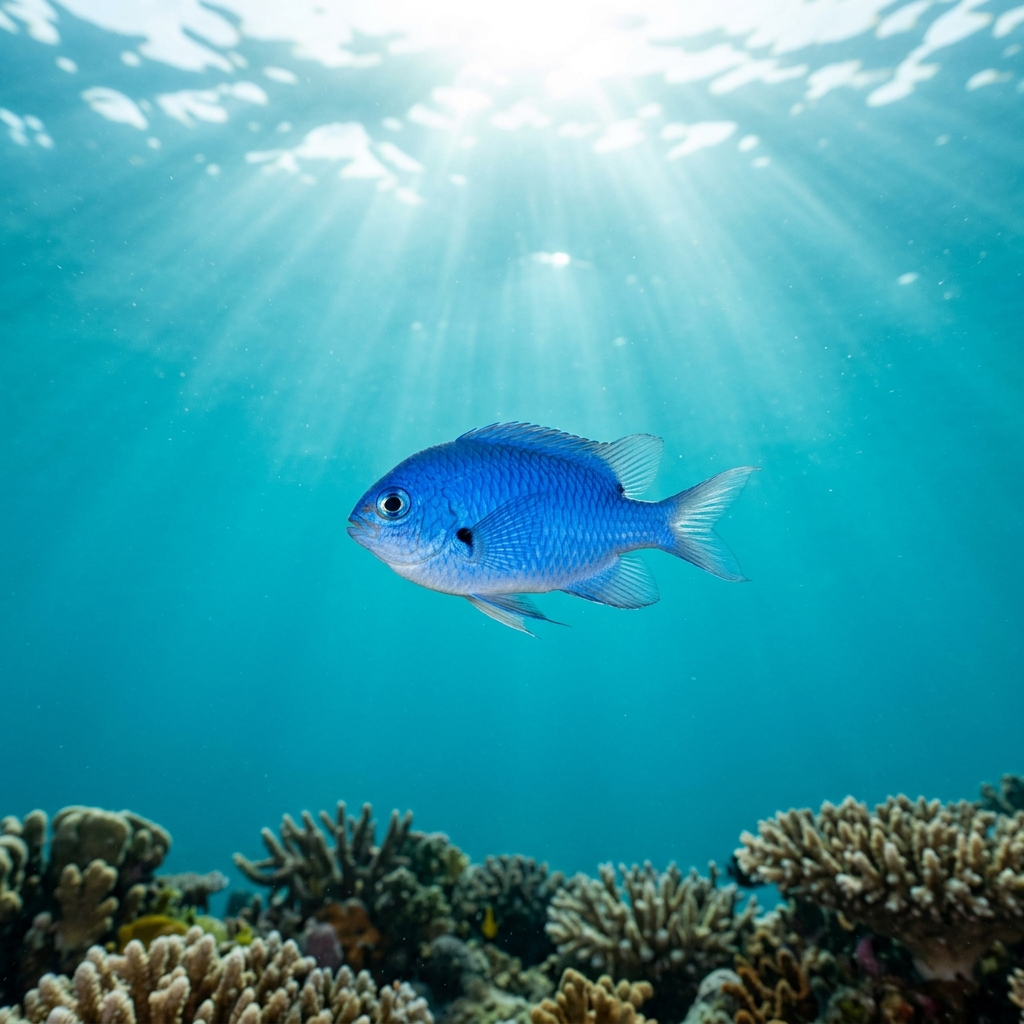
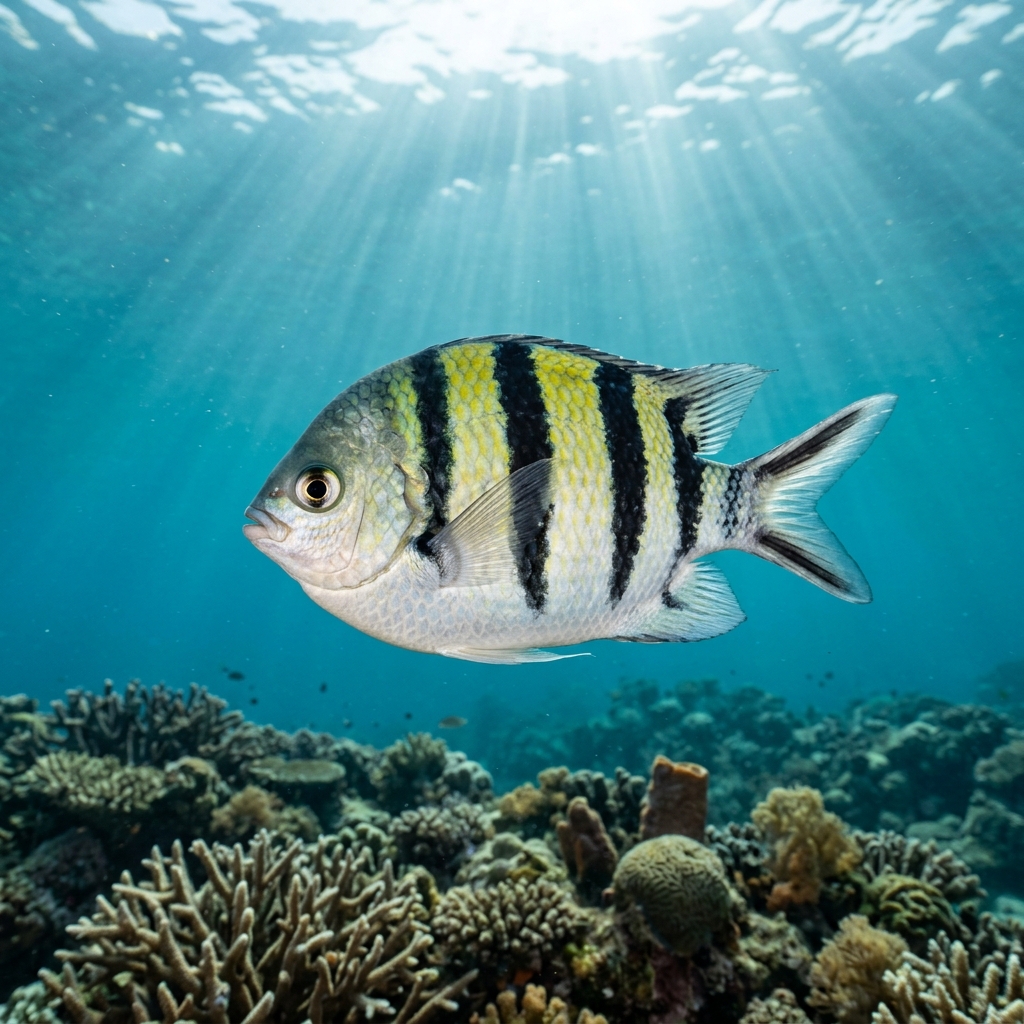
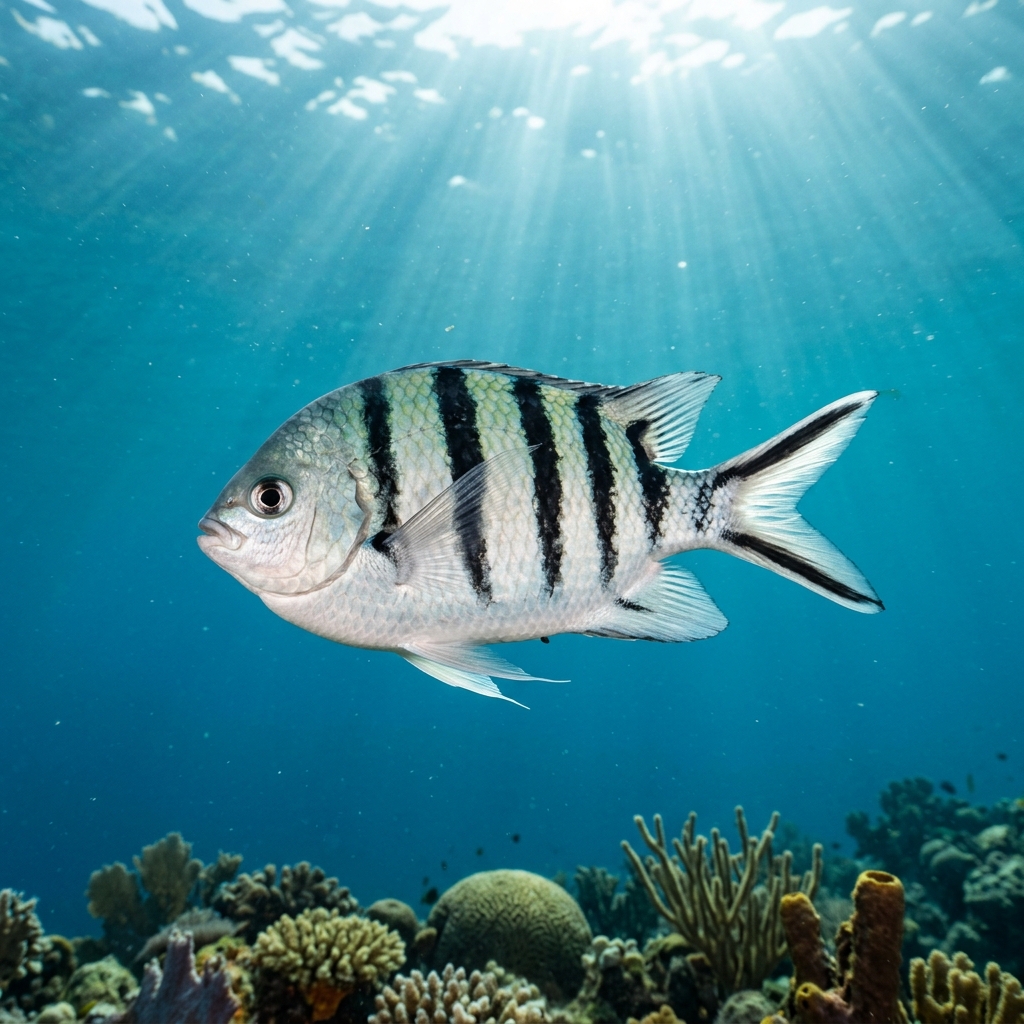
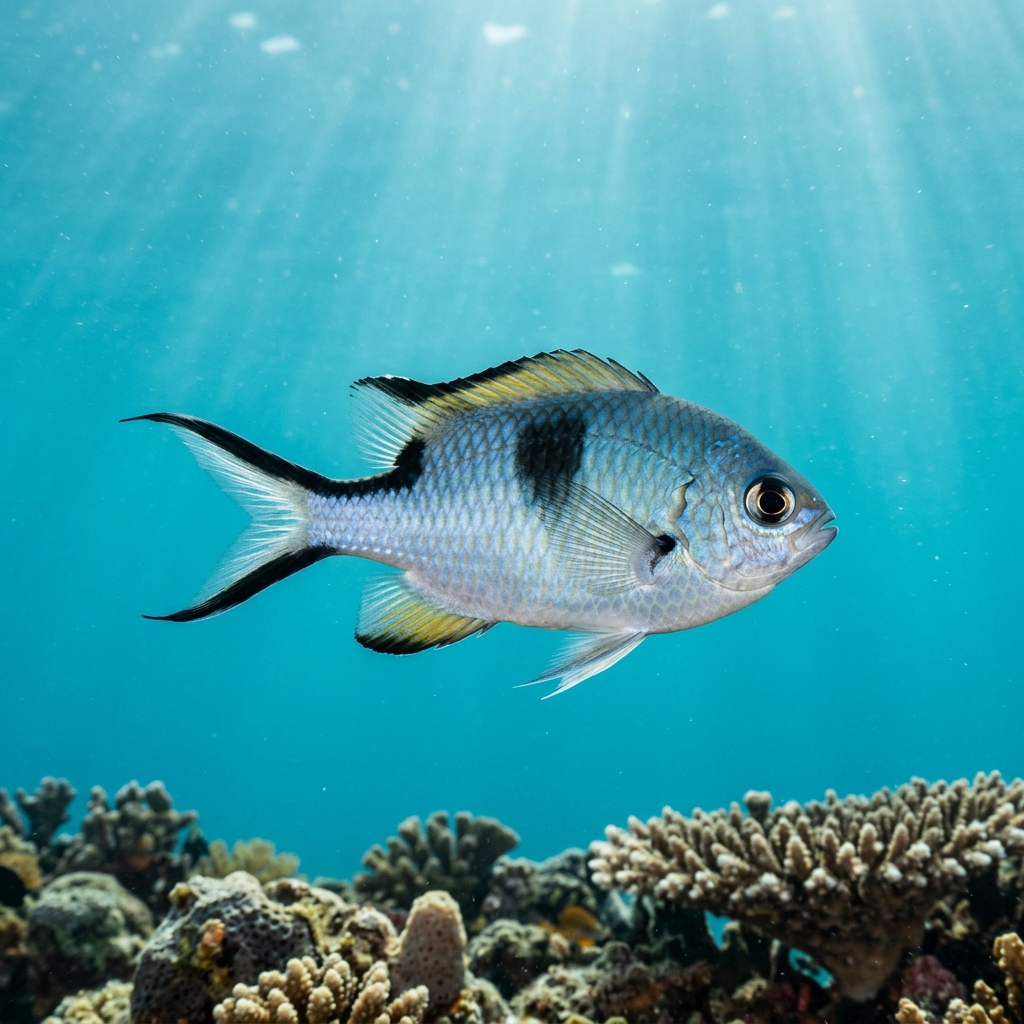
A small, oval-bodied damselfish around 8 cm long, silvery to pale blue-grey with a subtly darker margin along the tail fin, the detail that sets it apart from a plain background of reef fish. Look for loose aggregations hovering just above rocky or volcanic reef in mid-water; its compact, deep-bodied damselfish shape and restless darting movement are strong cues. The forked tail with its dark edging is the clearest single mark to lock onto underwater.
Azores Chromis typically form loose, mobile shoals just above rocky or volcanic reef, picking zooplankton (tiny drifting animals) from the water column rather than grazing the rock itself. They are not particularly skittish but will tighten the group and retreat closer to the reef if approached too quickly. Encounters are most commonly reported in the 5-20 m zone, where current and upwelling keep planktonic food moving through.
Like most damselfishes, males guard and aerate a nest of adhesive eggs laid on cleared rock, a behaviour that makes them unusually bold and territorial during the breeding season, even towards much larger animals passing nearby.
Sightings concentrate between June and February in the Northern Hemisphere, making the summer-through-winter window the most productive time to look for them across the Canary Islands and Azores. The species tolerates a wide temperature band (18-28 °C), so cooler winter dives are still within its comfort zone.
The Canary Islands are overwhelmingly the best place to encounter Azores Chromis, with Tenerife, Gran Canaria, Lanzarote, and Fuerteventura all contributing strong sighting records. The Azores, particularly São Miguel and Santa Maria, are the next most reliable destination, followed by Madeira Island. Smaller populations have been logged off Dakar in Senegal and along the Brazilian coast, reflecting the species' broader Macaronesian and East Atlantic range.
Mapping where Azores Chromis is logged…
The Canary Islands, especially Tenerife, Gran Canaria, and Lanzarote, hold the strongest sighting records by a clear margin. The Azores (São Miguel and Santa Maria) and Madeira Island are also reliable destinations. Smaller populations exist off Dakar in Senegal and along the Brazilian coast.
Logged sightings concentrate between June and February in the Northern Hemisphere, so the extended summer-through-winter period is your best window across the Canary Islands and Azores. The species handles water temperatures down to around 18 °C, so cooler winter dives in the Canaries are still productive.
Look for a small (roughly 8 cm), oval, silvery to pale blue-grey fish hovering in loose shoals above volcanic or rocky reef. The clearest single mark is a dark margin on the forked tail. Its compact damselfish body shape and mid-water feeding behaviour help narrow it down quickly.
Adults typically reach around 8 cm, about the length of a finger. That makes them easy to overlook against a busy reef background, so scanning mid-water just above the rock, rather than the rock itself, gives you the best chance of picking them out.
They are carnivores that feed on zooplankton, tiny drifting animals, which they pick from the water column above the reef. This mid-water feeding habit is one of the easiest behavioural cues to spot: a shoal hovering and darting just off the rock is almost certainly feeding.
Site and sighting data is aggregated from diver logs, iNaturalist and GBIF. For taxonomy and conservation status:
Dascyllus
3,697 sites