Sphyraena novaehollandiae
Slim silver predator logged across Western Australia and Victoria in 15-25 C water, usually solo and easy to miss on temperate reef dives.
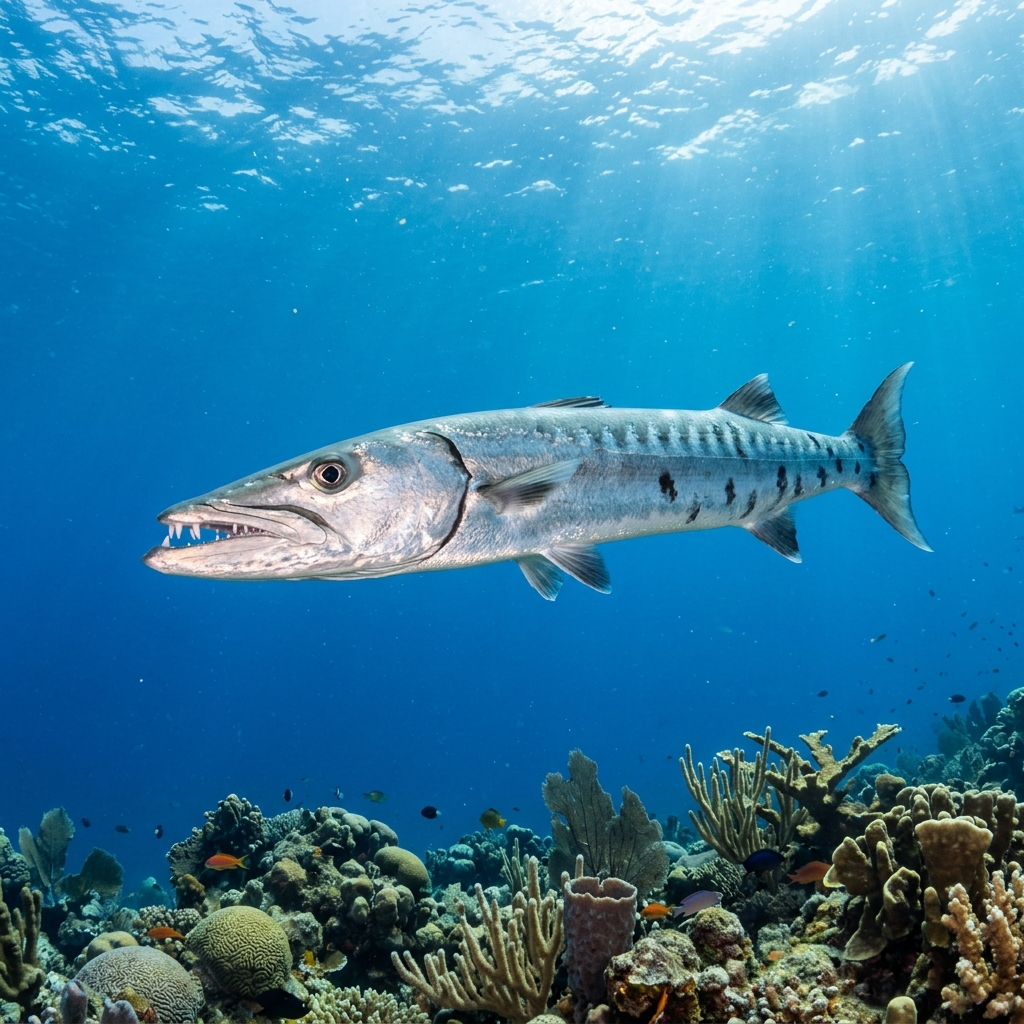
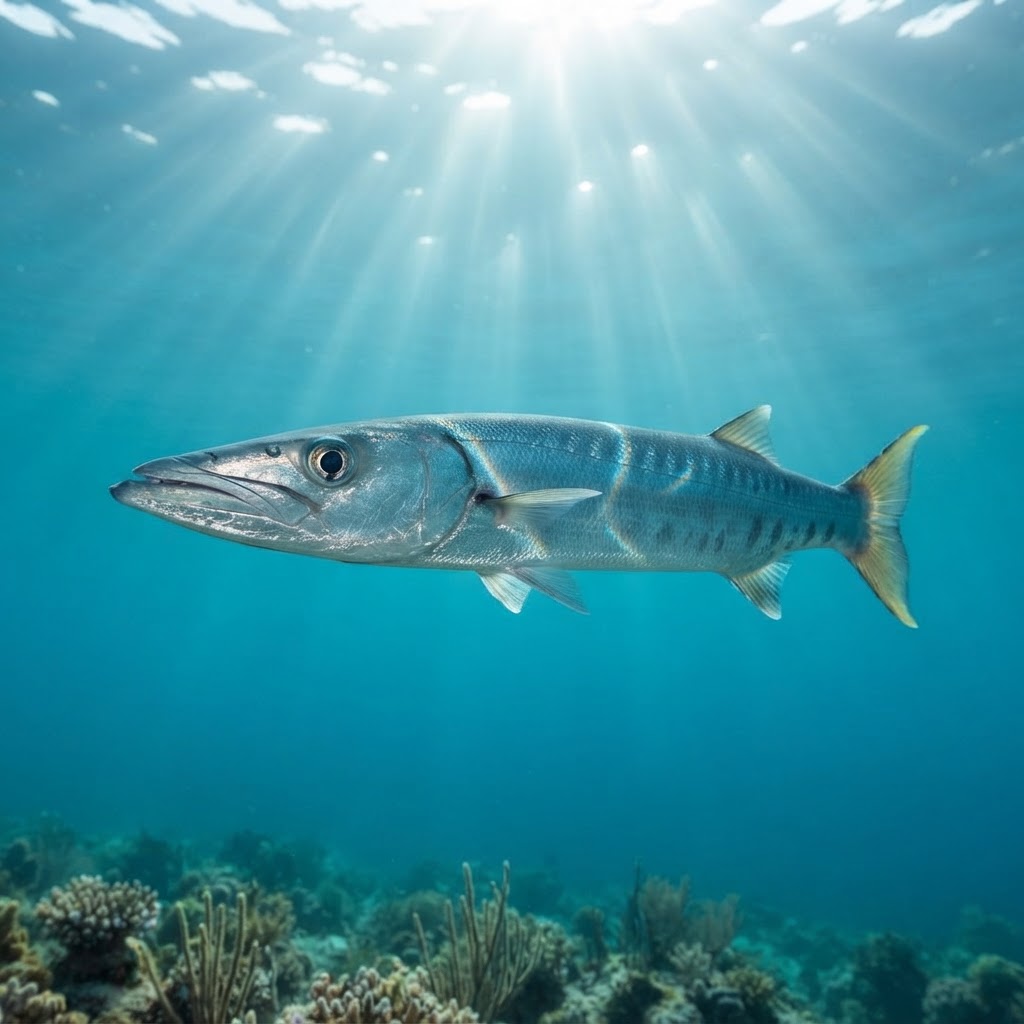
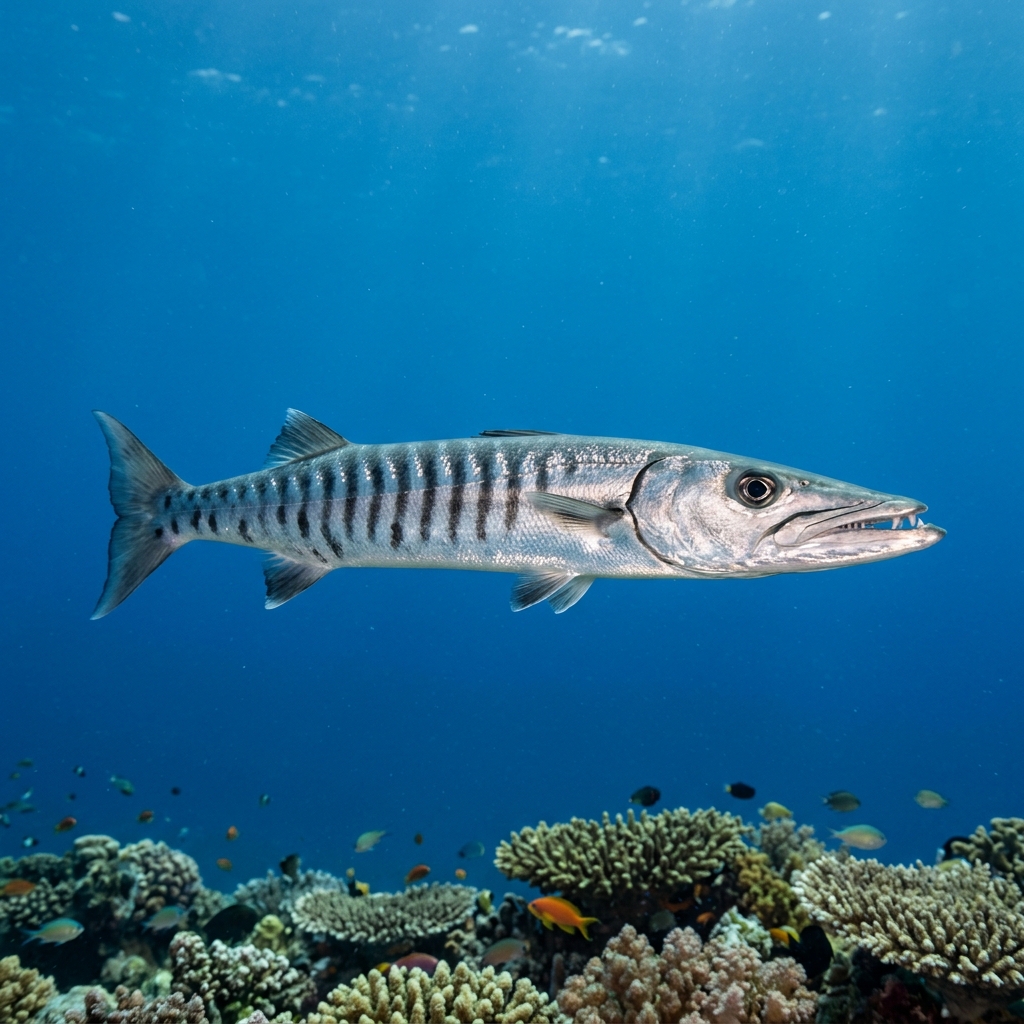
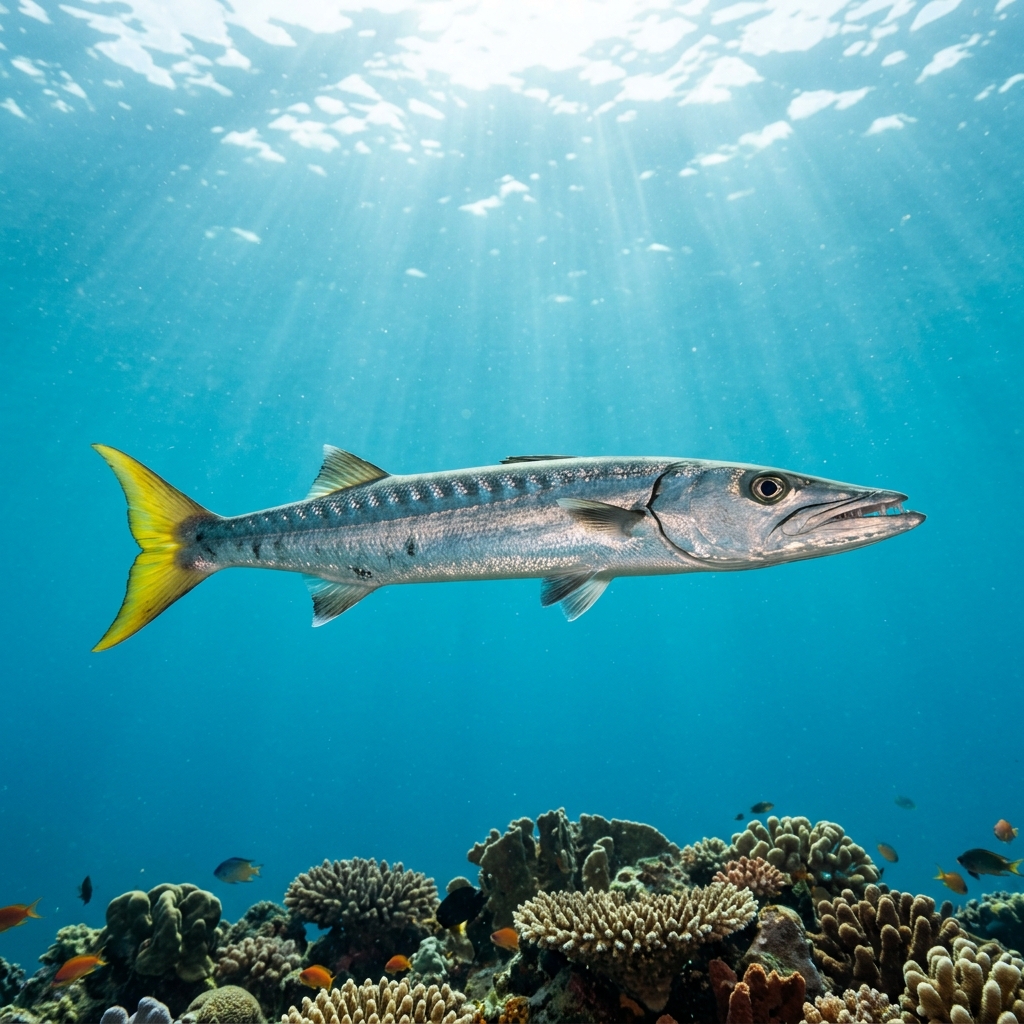
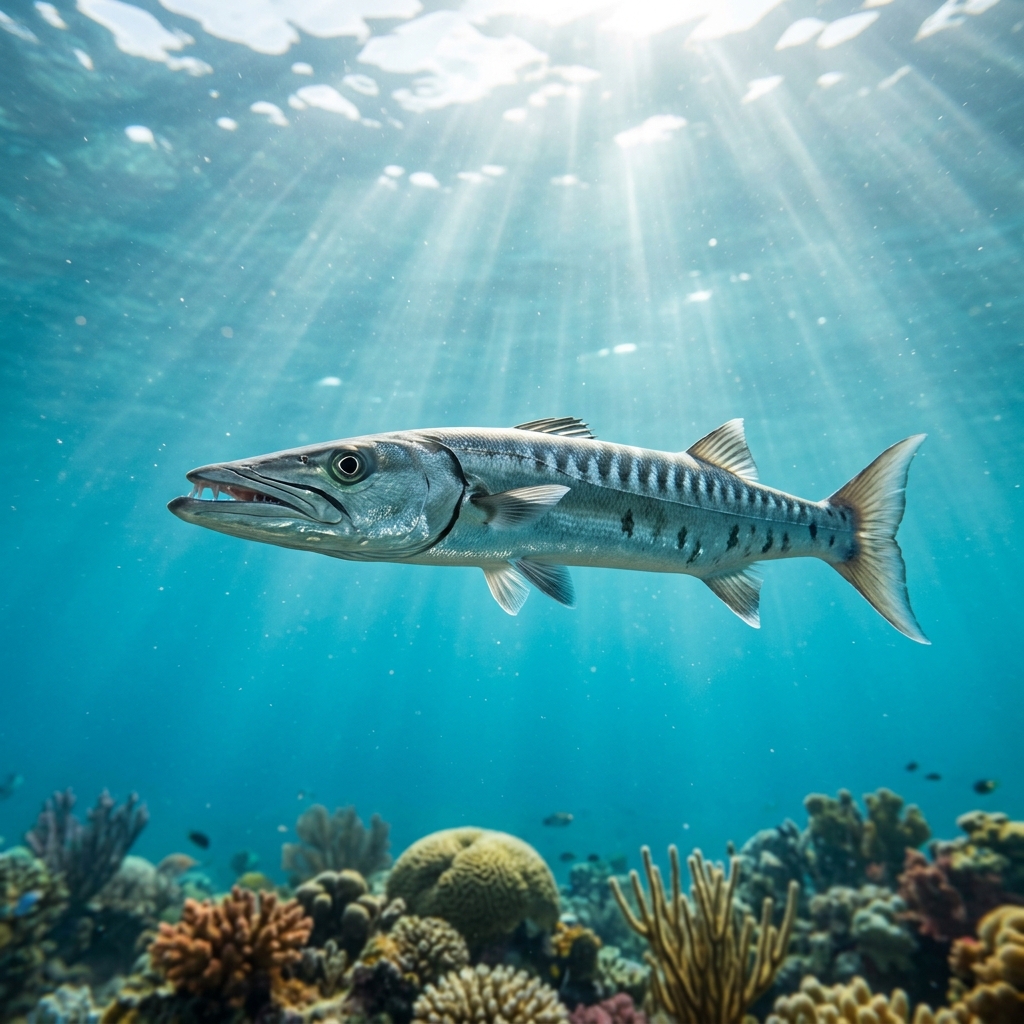
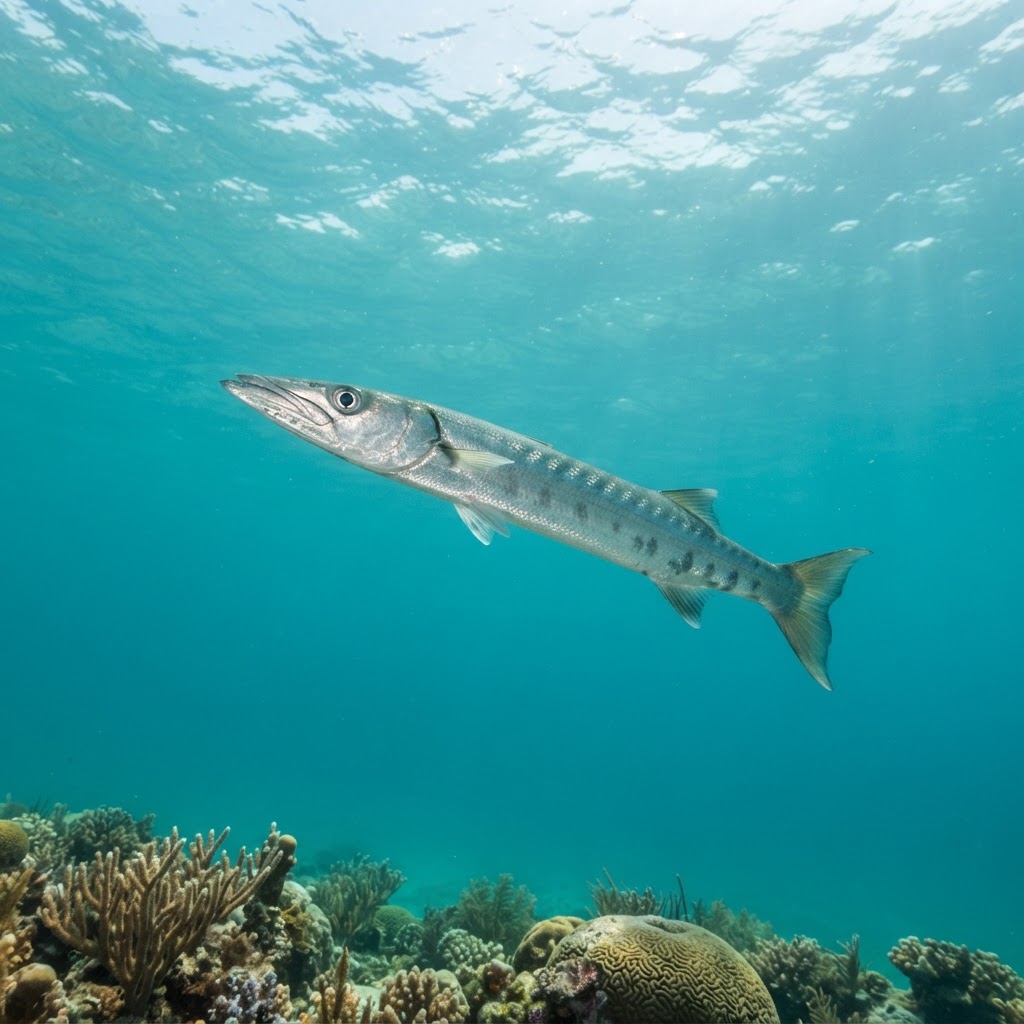
Long, torpedo-shaped body with a silvery flank and faint bronze sheen, growing to around 70 cm, a pointed head and an underslung jaw lined with visible teeth. It swims with minimal fin movement, often hanging almost motionless in midwater rather than schooling, which helps separate it from more social baitfish sharing the same reef.
Usually spotted alone or in loose pairs, hanging in midwater over rocky or mixed reef rather than patrolling in the tight schools seen in tropical barracuda species. Divers describe it as unbothered by their presence, holding position or drifting off at an easy pace rather than bolting, which makes for a good look if you spot one early.
It is logged as rare at most sites where divers record it, so even in its Western Australian stronghold a sighting is more a lucky encounter than something you can plan a dive around.
No clear seasonal pattern shows up in the data, and with a comfortable range of 15 to 25.4 C it can turn up on temperate Australian reefs at any time of year.
Reef neighbours a diver could mistake it for. Use the identification notes above to tell them apart.
Most reliably logged in Western Australia, with a solid secondary presence in Victoria and South Australia. Sites across these three states account for the bulk of confirmed sightings, making southern and western Australian temperate reefs the places to look rather than the tropical north.
Mapping where Australian Barracuda is logged…
Western Australia has the strongest sighting record, with further logged encounters in Victoria and South Australia. It turns up on temperate reef and rocky-bottom dives rather than tropical coral sites.
There is no strong seasonal pattern in the sighting data, so it is considered a year-round possibility on southern and western Australian reefs where water sits between roughly 15 and 25 C.
Look for a slender silver body around 70 cm long, a pointed head with a visible underbite, and a tendency to hover alone in midwater rather than school. It lacks the bold bar or stripe patterns seen on some other barracuda species.
They typically reach around 70 cm in length, making them a mid-sized member of the barracuda family compared to the much larger Great Barracuda.
No, they are not considered dangerous to divers. They are generally observed holding still or moving off calmly rather than showing any aggressive interest.
No, most dive sites that log it class sightings as rare, with a smaller number reporting it as uncommon. Seeing one is a matter of luck rather than a guaranteed dive highlight.
Site and sighting data is aggregated from diver logs, iNaturalist and GBIF. For taxonomy and conservation status:
Pickhandle Barracuda
1,020 sites