Austraeolis stearnsi
A rare cold-water find off California, usually spotted alone in cool 14-20C water on rocky reef.
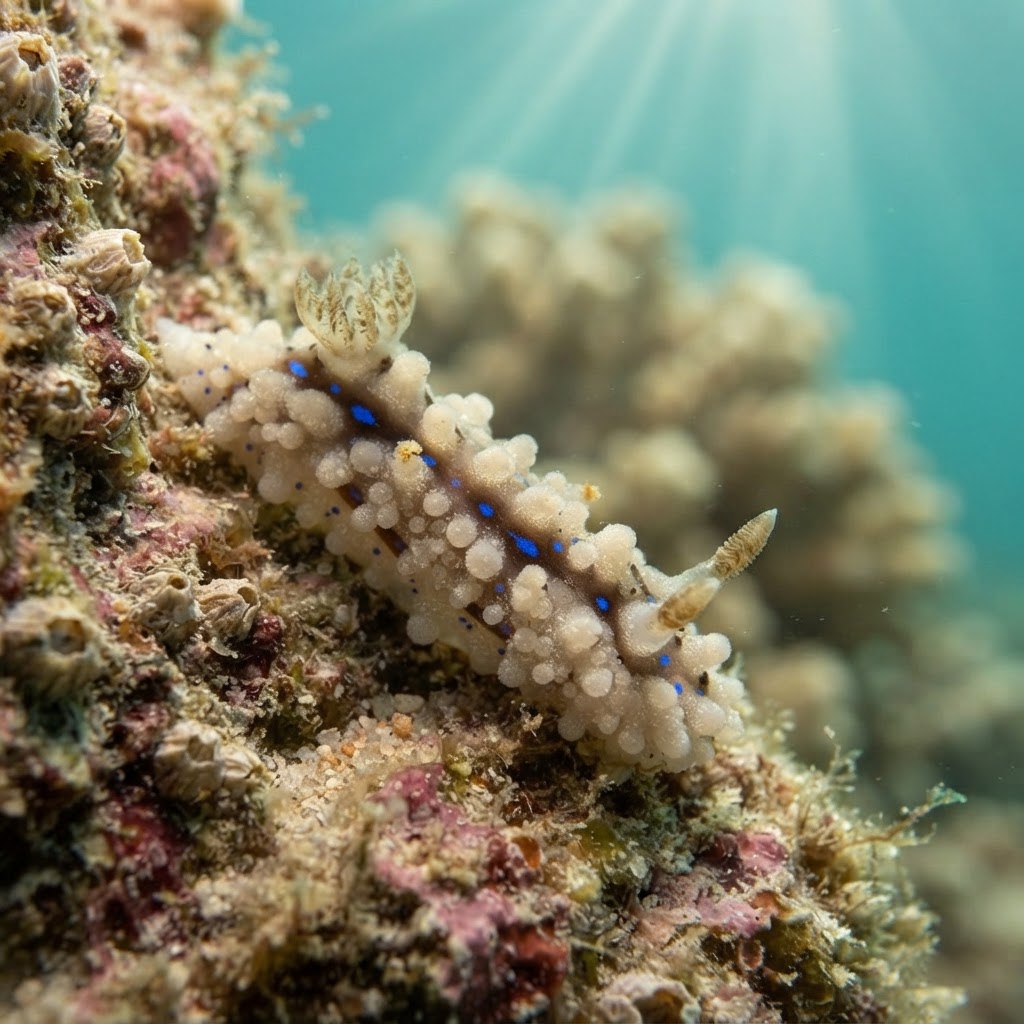
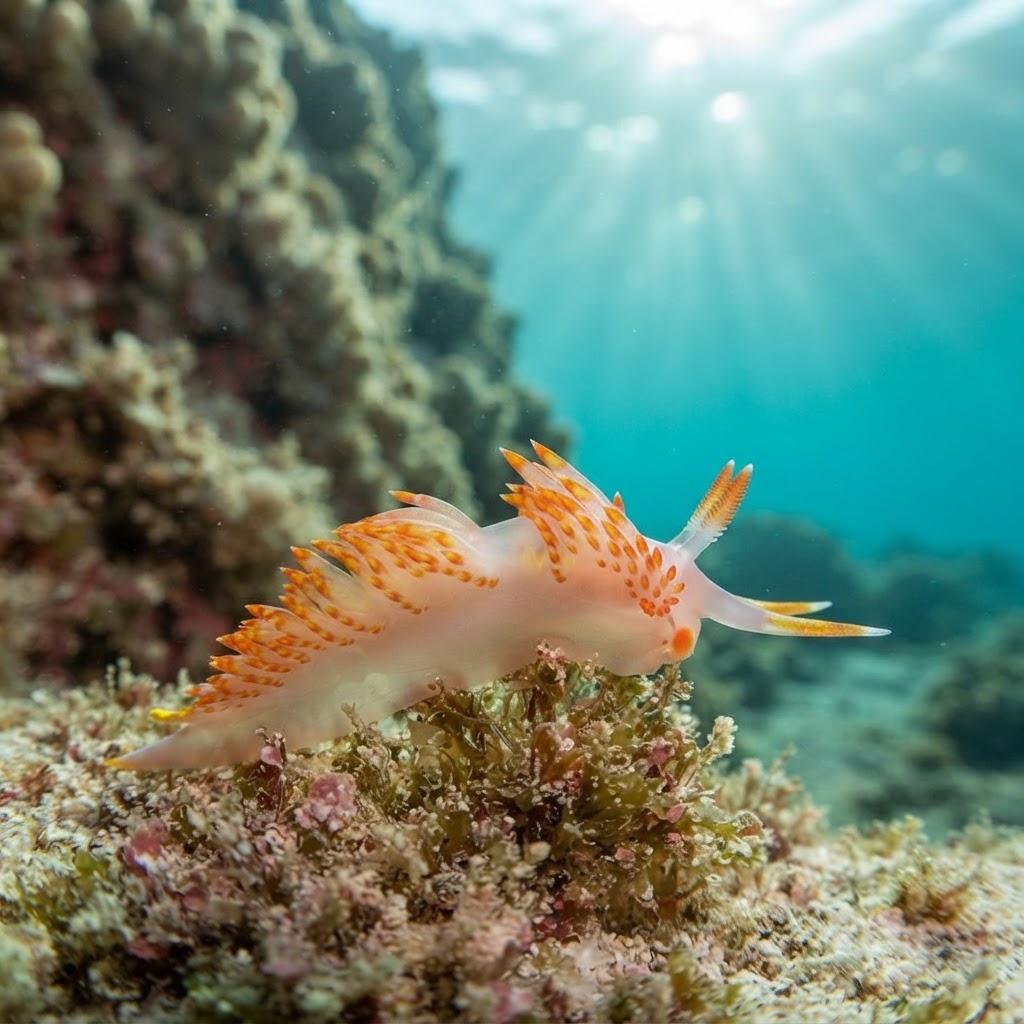
A small, slender aeolid nudibranch (a group that carries feathery finger-like projections called cerata along its back) with a translucent white to pale body. The cerata are tipped in shades of orange or peach, giving it a soft, speckled look against grey rock and algae. It lacks the bold contrasting stripes or spots of many reef nudibranchs, so divers tend to spot it by its texture and outline rather than colour punch.
Divers typically find this one moving slowly across rock or algae-covered surfaces, tucked into the kind of cool, current-washed reef terrain common along the California coast. It shows no reaction to divers beyond its usual crawl, and most logs describe a single animal rather than a cluster, so a slow scan of the substrate is the way to find it.
Like other aeolid nudibranchs, it likely stores stinging cells from its hydroid prey in the tips of those orange cerata, turning its meal into its own defence.
Sightings show no clear seasonal pattern, so treat this as a year-round possibility on Californian reefs. Recorded dives sit in a 13.8 to 19.8C range, consistent with the cool water this coastline holds most of the year.
Every logged sighting in the data comes from California, in the United States, making it a California specialty rather than a species with any wider known range. Within the state it turns up on rocky reef and kelp-adjacent sites, most often as a single individual rather than in numbers.
Mapping where Stearns' Aeolid is logged…
Every confirmed sighting comes from California, in the United States, on rocky reef sites along the coast. It has not been logged as a reliable find outside California.
There is no detected season, sightings are spread across the year in water between roughly 14 and 20C. Any month diving Californian rocky reef gives a shot at finding one.
Look for a small, translucent white-bodied nudibranch with orange-tipped cerata running along its back. It lacks bold patterning, so check rocky and algae-covered surfaces closely rather than scanning for bright colour.
Most sites where it has been recorded log it as rare, with a handful reporting it as uncommon and just one as common. It is best treated as an unusual find rather than a guaranteed sighting.
No. It poses no threat to divers and can be safely observed and photographed at close range without disturbing it.
Site and sighting data is aggregated from diver logs, iNaturalist and GBIF. For taxonomy and conservation status:
Light-spotted Aegires
3,168 sites