Atagema spongiosa
An uncommon warty nudibranch found on Andaman Islands reef sites, logged across a wide 20-30C range year-round.
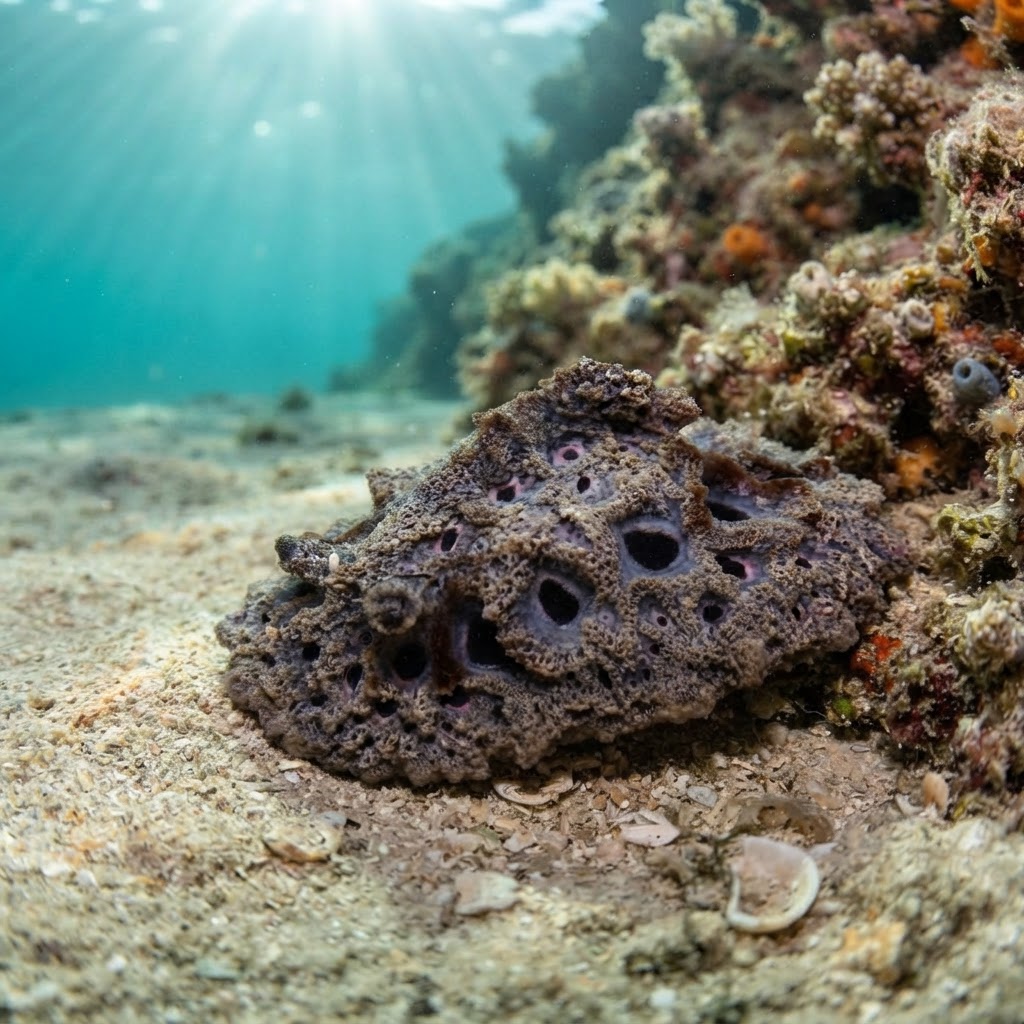
A discodorid nudibranch with a firm, warty mantle that gives it a rough, sponge-like texture rather than a smooth back. Look for a low, broad body sitting flat against the substrate, easy to overlook against sponge-covered rock or rubble. Its muted, mottled colouring blends into the reef floor, which is a big reason divers log it as uncommon even where it turns up repeatedly.
Like most discodorid nudibranchs, it moves slowly across sponge-encrusted rock and rubble, grazing rather than swimming, and pays no attention to divers hovering nearby. Its warty, textured mantle keeps it camouflaged against similar-looking sponge growth, so most sightings happen when someone is scanning the substrate closely rather than cruising past. It shows up at low densities even at sites where it is present, so patience and a slow eye pay off more than luck.
The warty, sponge-textured mantle is not just camouflage, discodorid nudibranchs like this one typically feed on sponges, and their skin texture often echoes the very sponges they graze on.
Sightings show no detectable seasonal pattern, and the species has been recorded across a wide temperature range of roughly 20 to 29.5C, consistent with year-round presence on tropical reefs. Treat this as a look-anytime species rather than one tied to a particular month.
Every logged sighting so far comes from the Andaman Islands, India, making this the one region divers currently associate with this species. There is no recorded spread beyond India in the data, so if you want a real shot at finding it, Andaman reef and rubble sites are the place to focus.
Mapping where Atagema spongiosa is logged…
Every confirmed sighting so far is from the Andaman Islands in India, spread across several dive sites there. It has not been reliably logged anywhere else, so the Andamans are currently the best-known place to look.
There is no clear seasonal pattern in the sightings, and it has been recorded across a broad range of water temperatures from about 20 to 29.5C. That points to a year-round presence rather than a specific season to plan around.
Look for a low, flattened nudibranch with a warty, rough-textured mantle that resembles the sponges it lives on. It blends closely with its surroundings, so slow, close-focus searching on rubble and sponge-covered rock is the best way to spot one.
No, this species poses no danger to divers. It is a small, slow-moving grazer that can be observed and photographed safely without any risk.
As a discodorid nudibranch, it almost certainly feeds on sponges, using its rough mantle texture as camouflage against the sponge growth it grazes on. This sponge-feeding habit is typical for members of its family.
Site and sighting data is aggregated from diver logs, iNaturalist and GBIF. For taxonomy and conservation status:
Blue Dragon
3,163 sites