Armina occulta
An uncommon find on muck dives in Visayas, Bali and Dili, this burrowing nudibranch turns up on warm tropical reefs year-round.
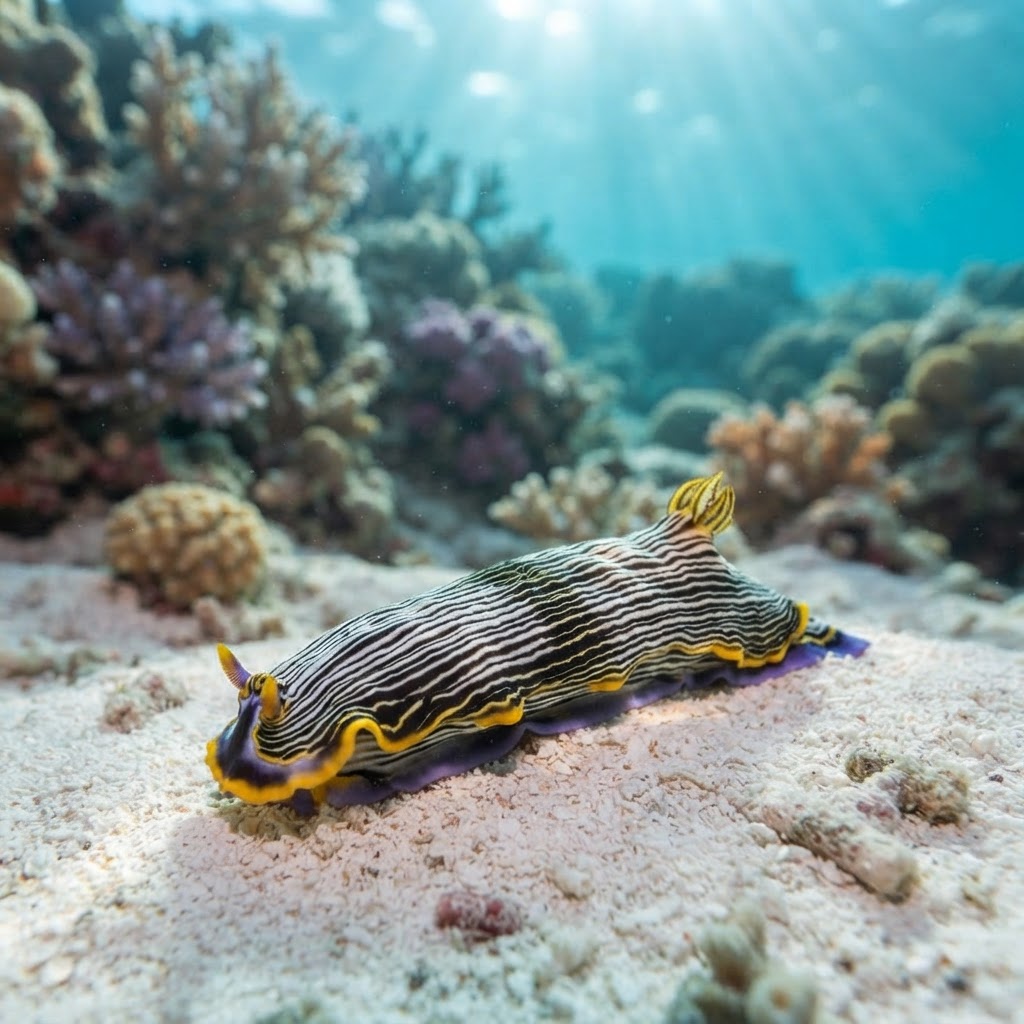
A ridged, elongated body with a striped or corrugated look along its back, coloured in muted greys and browns that help it disappear against sand and rubble. It sits low and slug-like on the substrate rather than climbing over coral, and its edges show the fine longitudinal ridges typical of the arminidae family. There is no dramatic pattern to key on, so divers usually spot it by its shape and texture against a plain sandy or silty bottom rather than by colour.
Divers usually find it parked on sand or silty rubble, often partly settled into the substrate rather than crawling in the open. It shows no reaction to divers beyond the slow, deliberate movement typical of nudibranchs, so a careful look with a torch on a muck dive is usually how it gets noticed. Given its uncommon rating at every site where it has been logged, most sightings come from divers specifically hunting small, cryptic life rather than casual reef swims.
Members of the arminidae family are known to feed on sea pens and soft corals buried in sediment, which lines up with this species' habit of favouring sandy and rubble habitats rather than hard coral structure.
Sightings show no clear season, and with a comfortable range of 25.5 to 31.5C this fits typical year-round tropical reef conditions across the Philippines, Indonesia and Timor-Leste. Dive whenever you'd normally visit these regions and treat any sighting as a bonus rather than a seasonal target.
Most reliably logged in the Philippines, especially around the Visayas region, and in Bali, Indonesia, with a smaller but consistent presence at sites near Dili, Timor-Leste. These are muck and rubble-style dive sites rather than hard coral reef, which fits this species' low-profile, substrate-hugging habits.
Mapping where Armina Occulta is logged…
It turns up most reliably on muck and rubble sites in the Visayas region of the Philippines and around Bali, Indonesia, with additional sightings near Dili in Timor-Leste. It favours sandy, silty bottoms over coral reef structure.
There is no detected season, so sightings happen year-round. Water temperatures at the sites where it is found stay between 25.5 and 31.5C throughout the year, which suits it in any month.
Look for a ridged, elongated body in muted grey-brown tones resting on sand or rubble rather than on coral. Its longitudinal ridges and low-profile, burrowing posture are the main clues, since it lacks the bright colours of many reef nudibranchs.
Exact size data isn't confirmed for this species, but like other members of the arminidae family it is a small, elongated nudibranch typically only a few centimetres long, best spotted with a careful, close look.
Like other arminid nudibranchs, it is thought to feed on sea pens or similar buried cnidarians, which is likely why it favours sandy and rubble habitats instead of hard coral reef.
Site and sighting data is aggregated from diver logs, iNaturalist and GBIF. For taxonomy and conservation status:
Blue Dragon
3,163 sites