Antiopella fusca
A frilly orange-brown nudibranch of cold water: most reliably logged in British Columbia and the US Pacific Northwest, year-round in 8 to 14 C water.
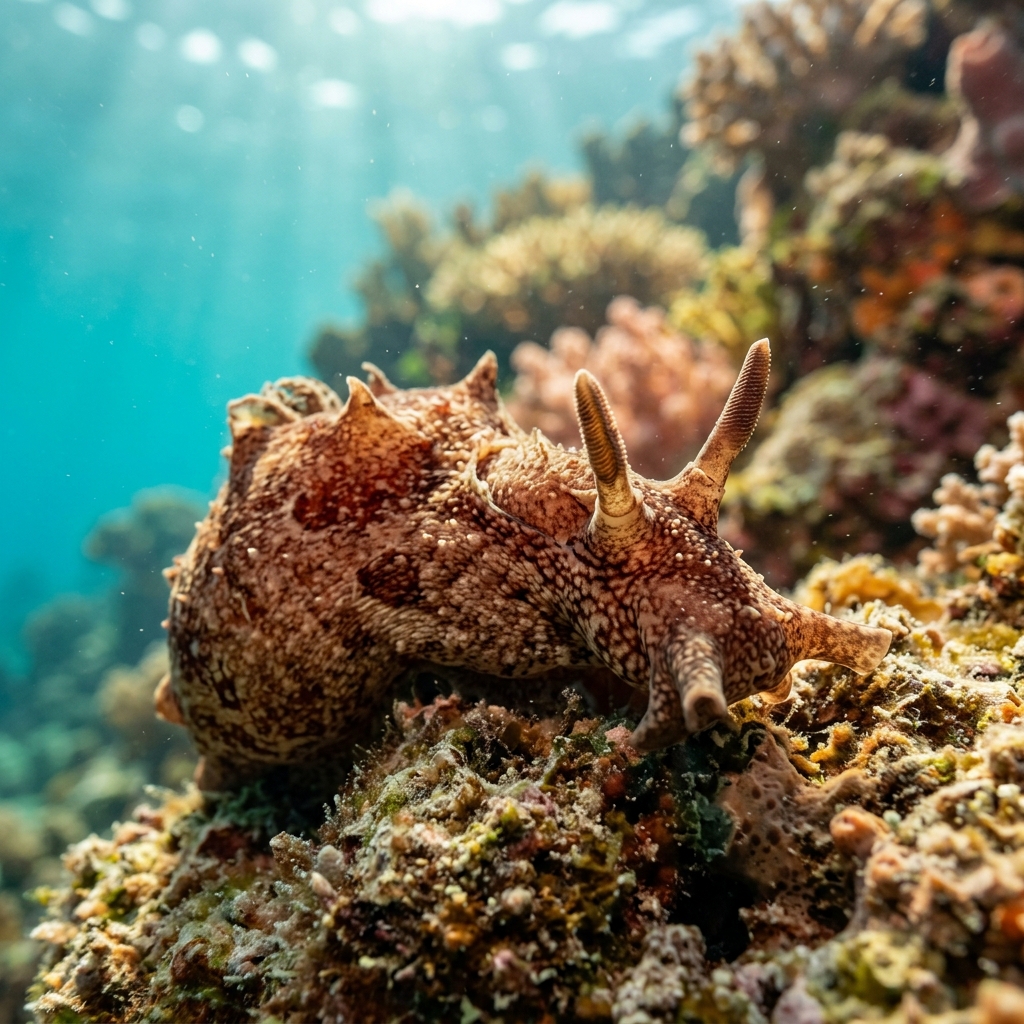
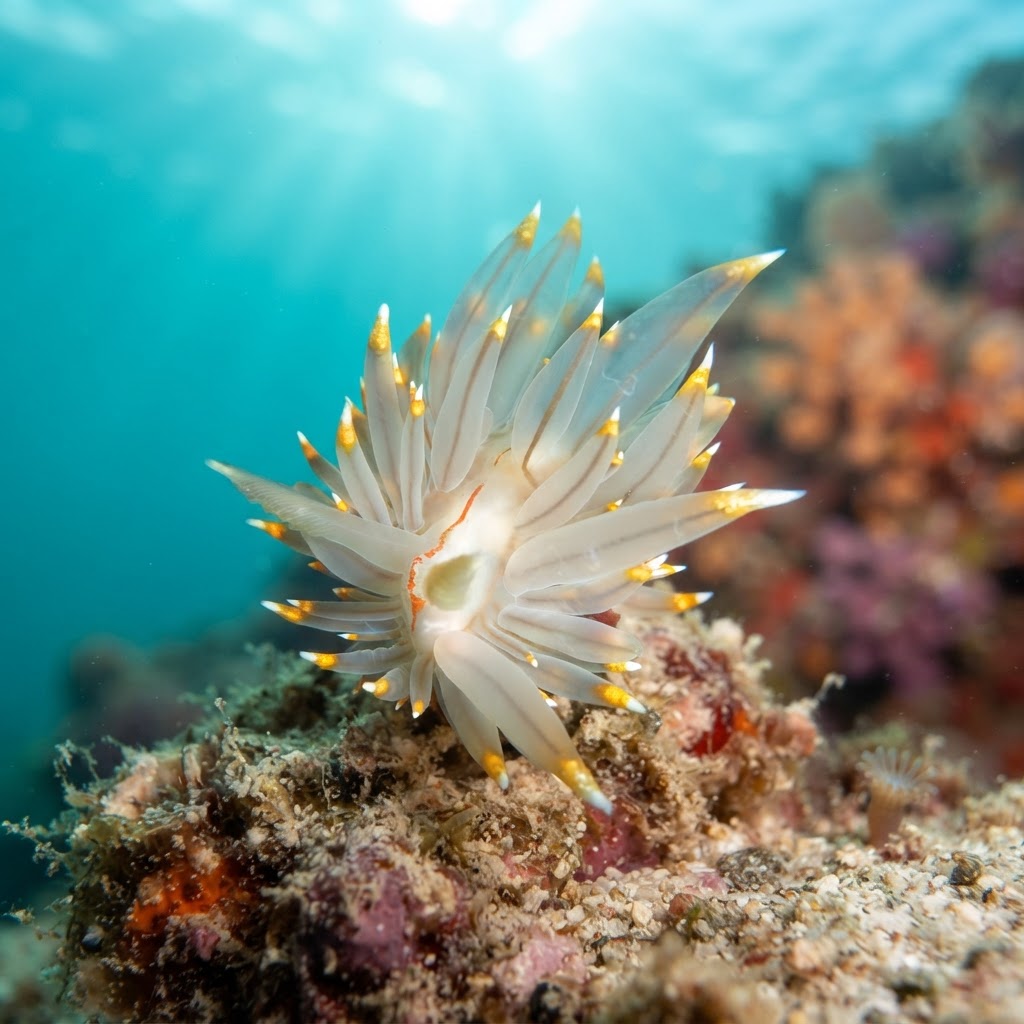
A small, elongate nudibranch with a soft brown to orange-brown body covered in branching, finger-like projections (cerata) along its back that give it a shaggy, frilly outline rather than a smooth one. There is no bold contrasting pattern to key on here; instead look for the overall bushy silhouette and muted earthy colour against grey rock or sponge-covered reef. Most sightings are single animals moving slowly across hard substrate rather than out in the open water column.
Divers most often find it slowly grazing across rocky or sponge-encrusted surfaces, moving little and paying no attention to a diver hovering close with a torch or macro lens. It is logged most often as an uncommon find, so most divers who see one spot a single animal on a dedicated slow, close look at the substrate rather than stumbling on numbers of them. Because it blends into cluttered cold-water reef, it rewards divers who slow down and scan texture rather than colour.
Like other members of the family Janolidae, it likely feeds on hydroids, and the branching cerata on its back are thought to help it store stinging cells from that prey for its own defence, a trick shared across many aeolid-type nudibranchs.
Sightings show no detected seasonal pattern, and it turns up year-round in the 7.7 to 13.7 C water typical of British Columbia and Pacific Northwest dive sites. Plan around good visibility and conditions in those regions rather than a particular month.
This is a cold-water Pacific species, most consistently logged along British Columbia in Canada and the Pacific Northwest coast of the United States. Sites in these two regions account for essentially all recorded sightings, so divers chasing this species should plan trips around temperate rock and kelp reefs in that stretch of coastline rather than tropical destinations.
Mapping where White-and-orange-tipped Nudibranch is logged…
It is most reliably found on cold-water reef dives in British Columbia, Canada, and along the Pacific Northwest coast of the United States. Almost all logged sightings come from these two regions.
There is no strong seasonal pattern in the data, so it is considered a year-round find in the 7.7 to 13.7 C water typical of Pacific Northwest and British Columbia dive sites.
Look for a small, elongate nudibranch with a shaggy coat of branching brown to orange-brown cerata rather than a smooth patterned body. It moves slowly across rock and sponge and lacks bold contrasting colours, so it is easy to overlook against cluttered cold-water reef.
No. It poses no danger to divers and can be observed and photographed up close without any risk.
Exact size data is not confirmed, but like most Janolidae nudibranchs it is a small animal, typically only a few centimetres long, best appreciated with a macro lens.
Those branching cerata are thought to store stinging cells taken from the hydroids it feeds on, a defence trick common to many aeolid nudibranchs in this family.
Site and sighting data is aggregated from diver logs, iNaturalist and GBIF. For taxonomy and conservation status:
Light-spotted Aegires
3,168 sites