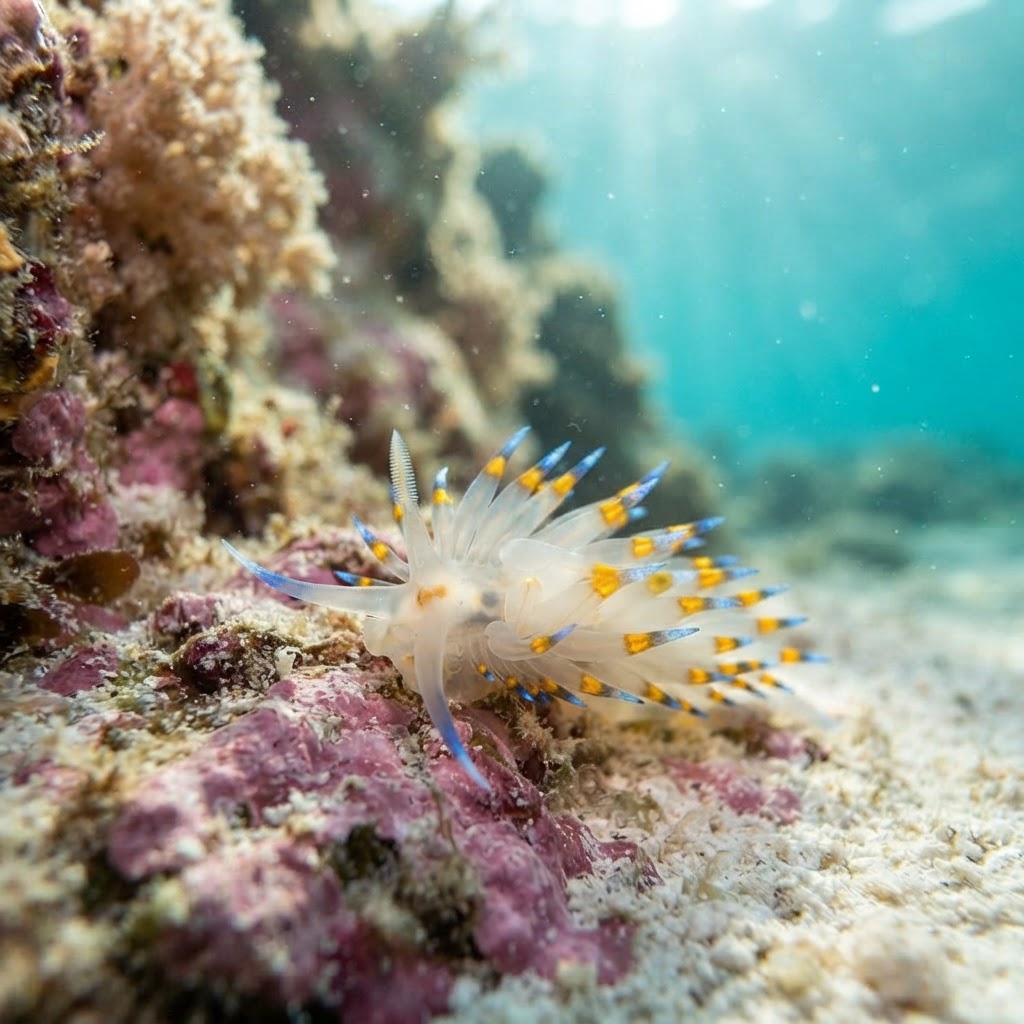
Antiopella barbarensis
A blue-and-white frosted nudibranch logged at 27 California sites, most often in cool water between 12 and 19C, year-round.
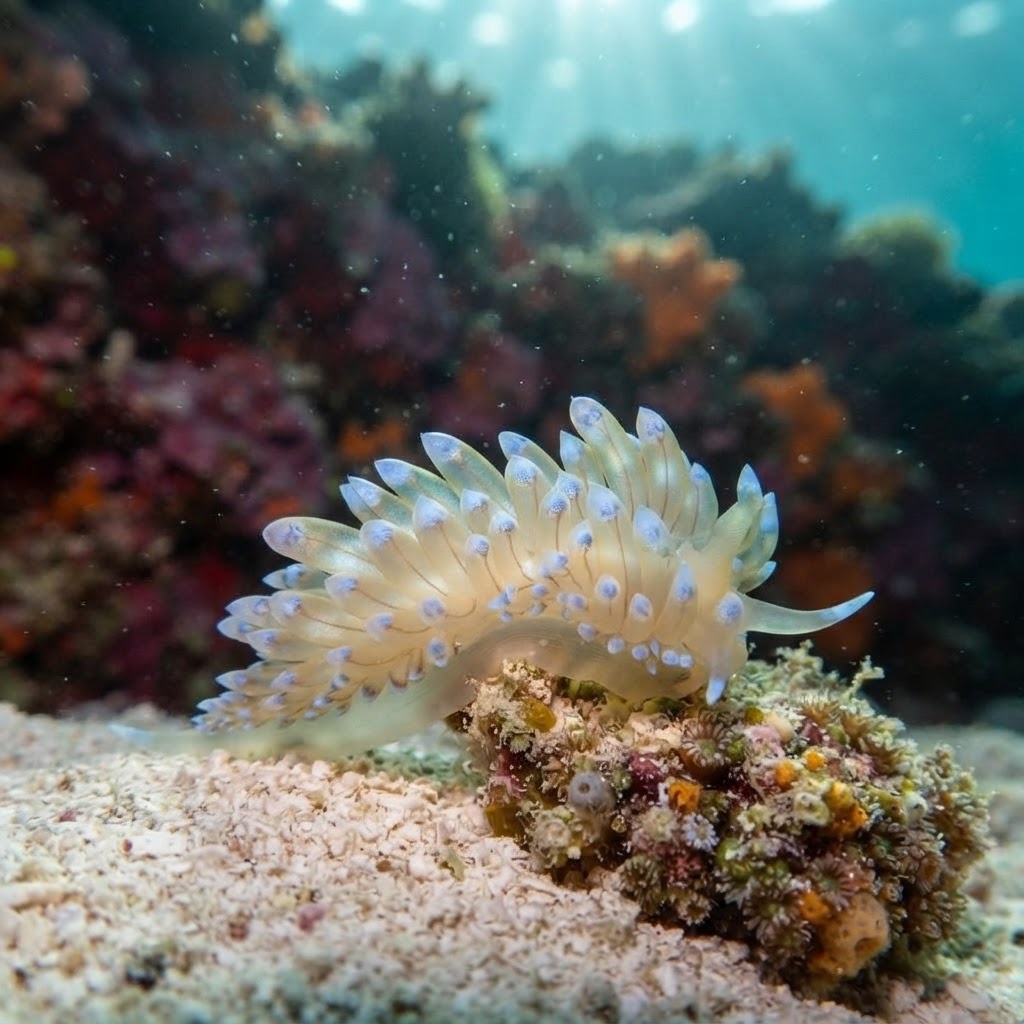
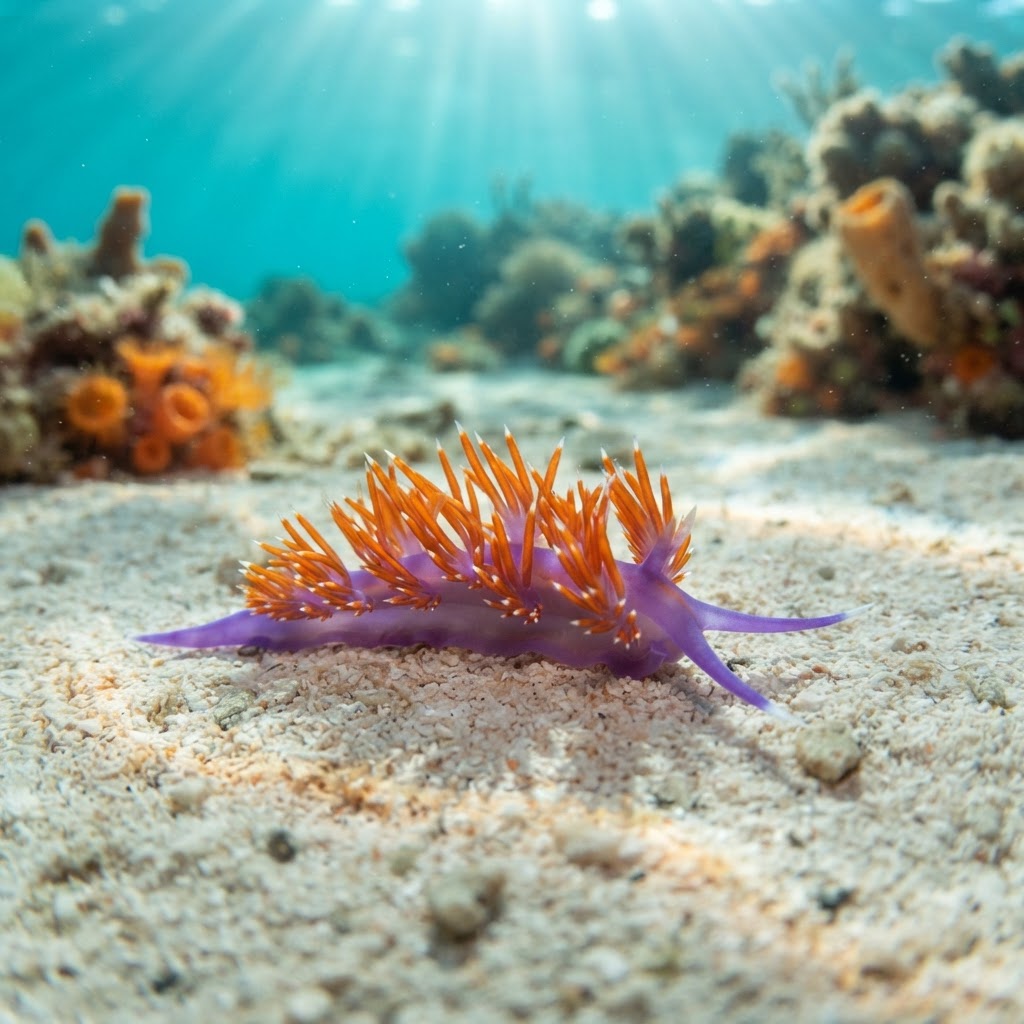
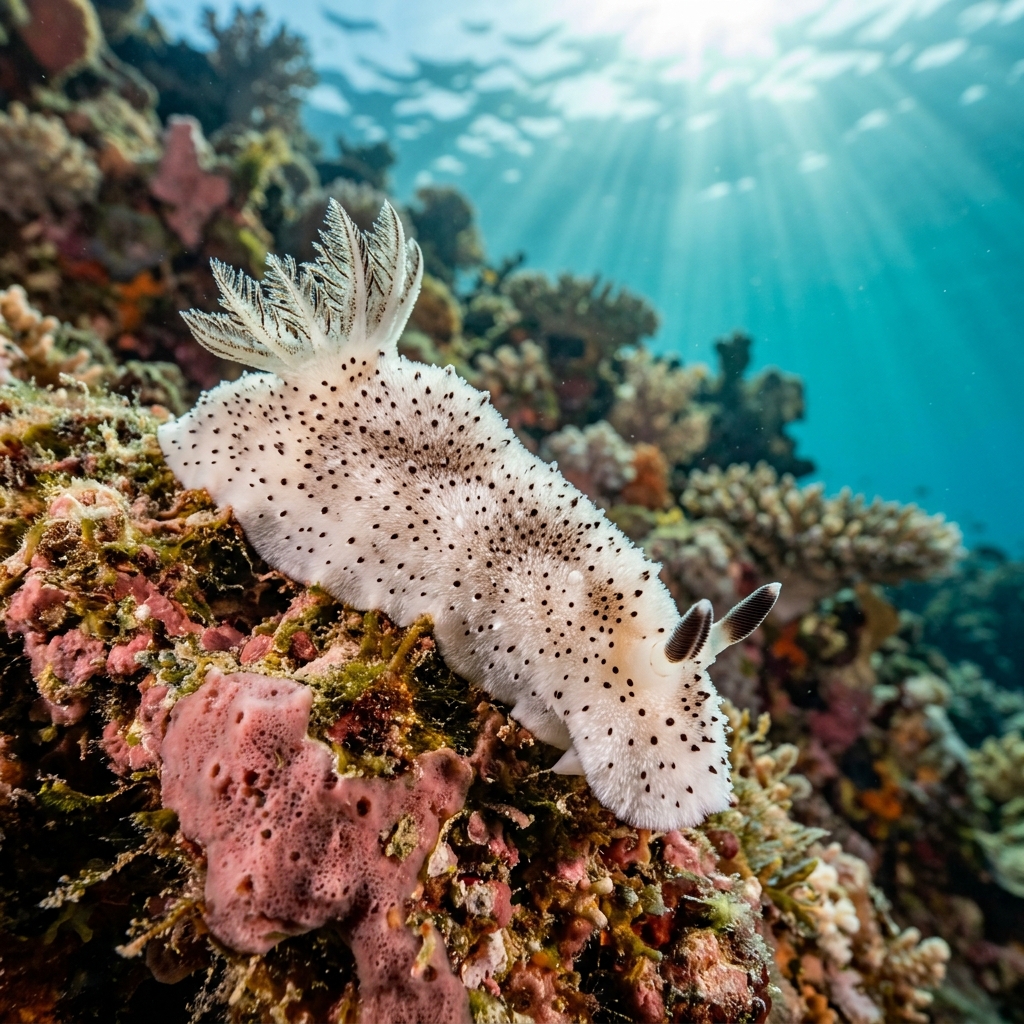
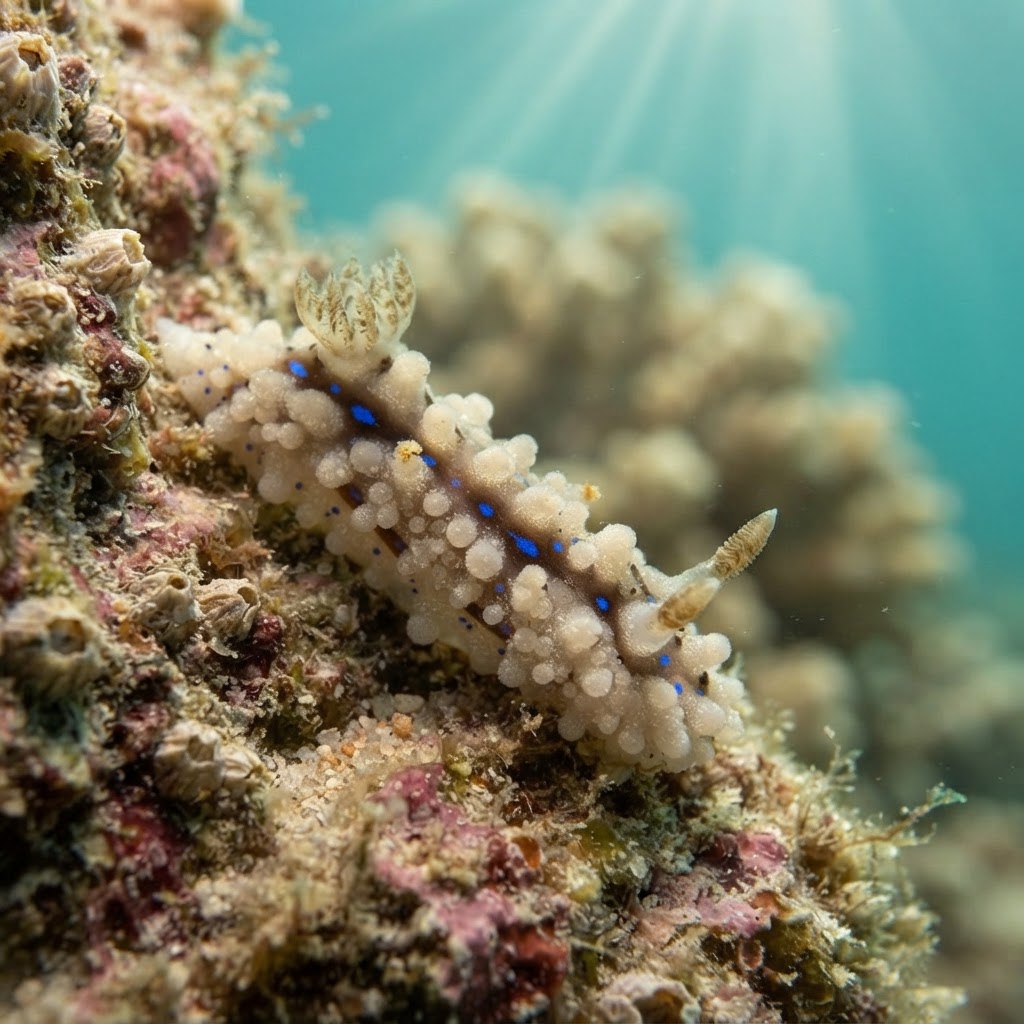
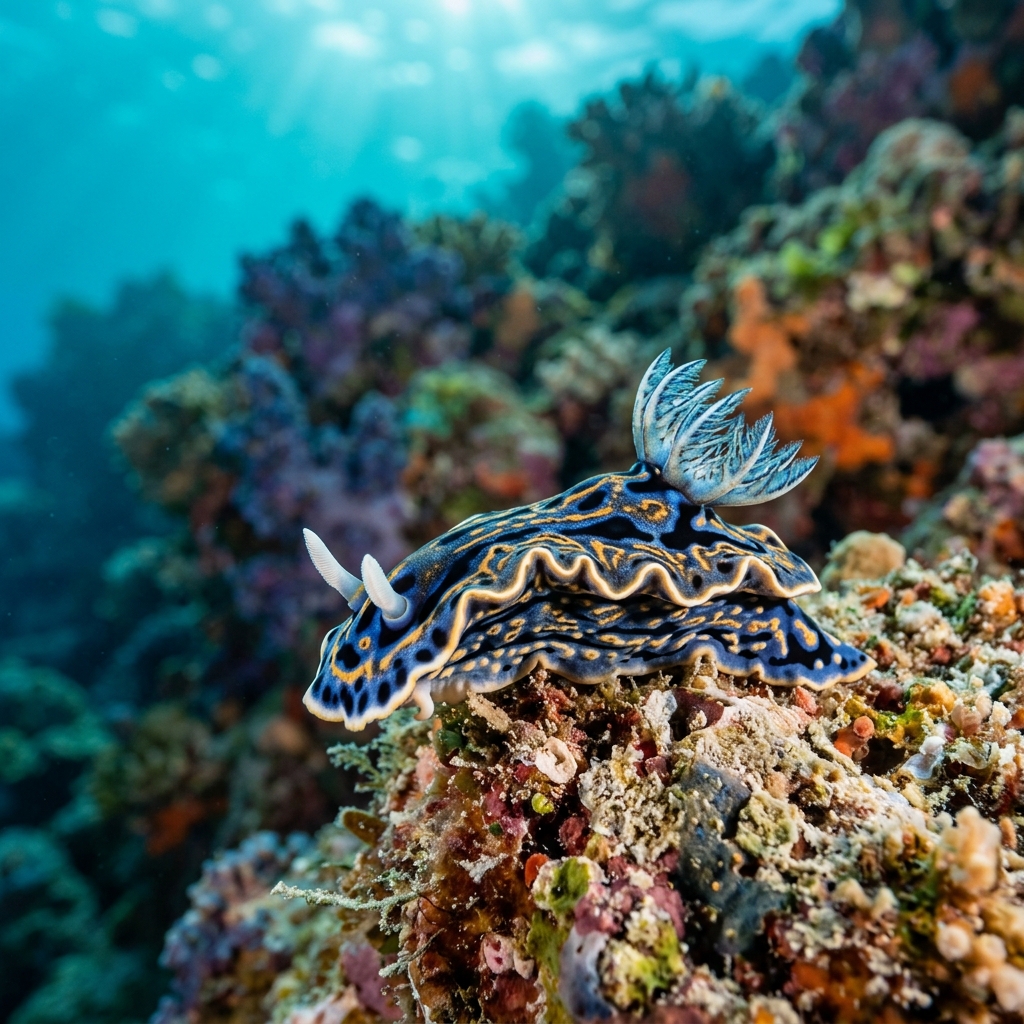
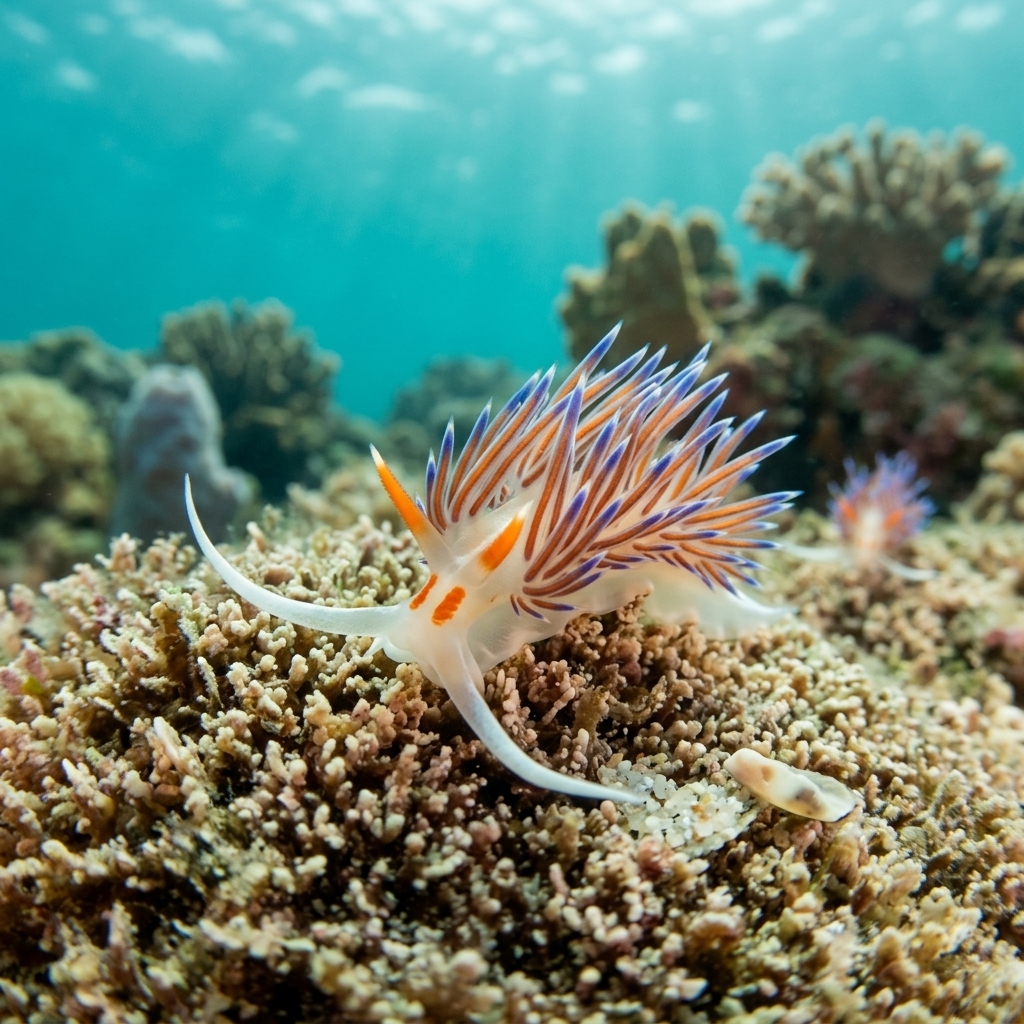
Slender, translucent white body topped with a dense forest of blue-tinged, finger-like projections (cerata) running down its back, giving it a frosted, almost fuzzy silhouette against dark rock. Look for the orange or yellow tips on the cerata and the pair of smooth, curled rhinophores (sensory horns) on the head. It sits low on the reef and moves slowly, so once you spot the texture change on a rock face it is easy to hold a light on it.
Divers typically find it tucked into rocky crevices or grazing slowly across encrusted rock and boulder reef, moving at the unhurried pace typical of nudibranchs. It shows no reaction to divers beyond continuing its crawl, so a steady light and a close look is usually all it takes to get a good view. Most logs come from temperate reef and kelp-forest habitat rather than open sand or wall dives.
The cerata on its back aren't just decoration, in many janolid nudibranchs like this one they can store stinging cells taken from the hydroids it feeds on, repurposed as a defence against predators.
Sightings show no detectable seasonal pattern, and the species turns up across a fairly wide cool-water range of 12.3 to 18.9C, so it is a reasonable year-round find on Californian dives rather than a specific-month target.
Reef neighbours a diver could mistake it for. Use the identification notes above to tell them apart.
This one is a California speciality in the data, logged consistently along the state's coast, with California the clear centre of recorded sightings. Divers working the rocky reefs and kelp forests of the region stand the best chance of finding it, rather than warm-water tropical sites.
Mapping where Antiopella Barbarensis is logged…
It is most reliably logged along the California coast, particularly on rocky and kelp-forest reef sites, with no other regions showing meaningful numbers in current dive data.
There's no clear seasonal spike in sightings, and it's found across a cool 12.3 to 18.9C range, so divers log it in California waters throughout the year.
Look for a translucent white body covered in a dense cluster of blue-tinted, orange-tipped cerata along its back, with curled rhinophores on the head. It moves slowly over rocky reef, making it easy to inspect closely once spotted.
No, it poses no risk to divers. It has no means of stinging or biting people and simply continues grazing when approached.
Like other janolid nudibranchs, it likely borrows stinging cells from the hydroids it eats and stores them in its cerata as a defence against predators, turning its food into its own protection.
Site and sighting data is aggregated from diver logs, iNaturalist and GBIF. For taxonomy and conservation status:
Nudibranch
3,168 sites