Anteaeolidiella cacaotica
An uncommon aeolid nudibranch logged in Milne Bay, Papua New Guinea, on reefs between 20 and 26.4C year-round.
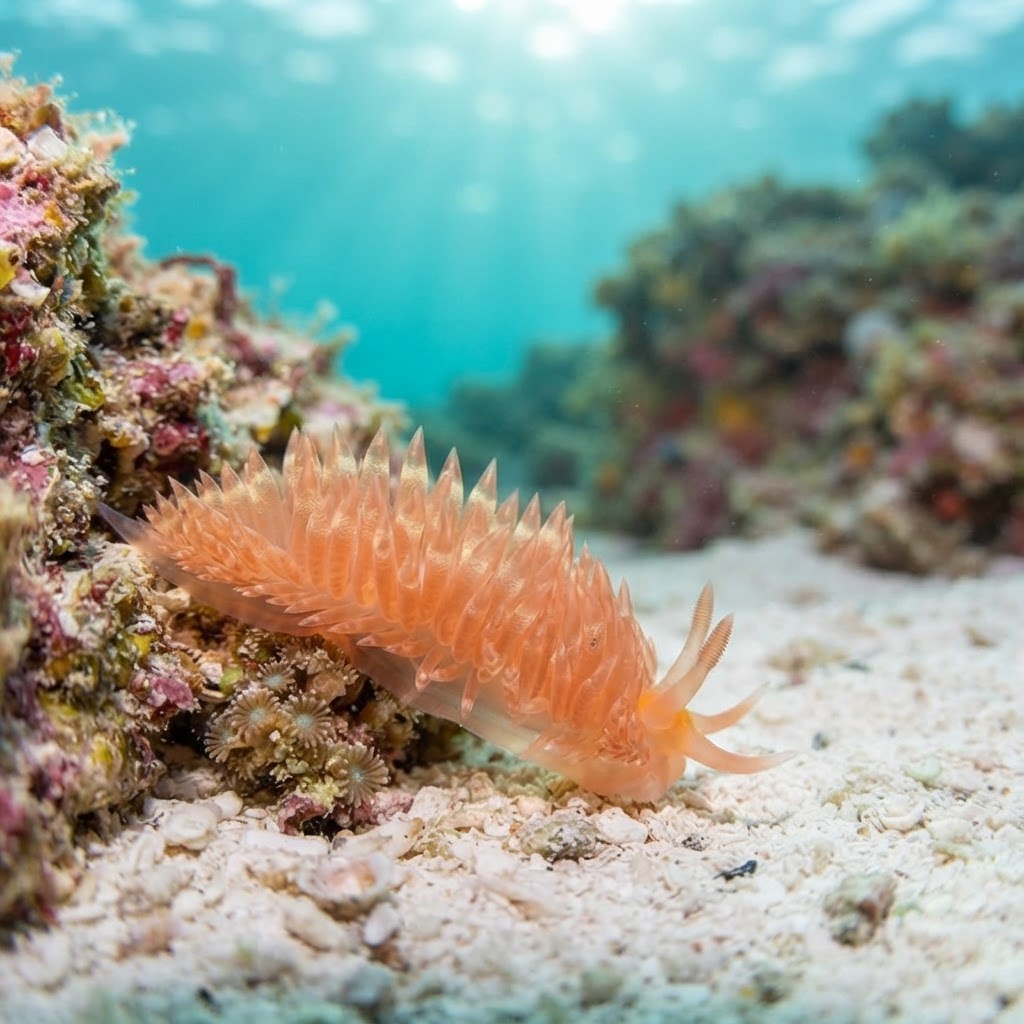
Look for a slender, soft-bodied nudibranch covered in finger-like projections called cerata running down its back, giving it a bristly, textured silhouette rather than a smooth dorsal surface typical of dorid nudibranchs. Colouring tends toward muted brown to cacao tones across the cerata and body, which is where the common cacaotica reference likely comes from, blending into shaded reef rubble and coral debris. It is a small, easily overlooked animal best spotted with a slow scan and a torch rather than a casual pass over the reef.
This is a slow-moving grazer, typically found tucked into reef crevices, rubble, or crawling openly over hard substrate while hunting for the stinging anemones and hydroids that aeolid nudibranchs feed on. It shows no reaction to divers beyond continuing its slow crawl, making it an easy subject once spotted, though its small size and camouflage mean most divers glide right past it.
Like other aeolids, this species likely repurposes stinging cells from its cnidarian prey and stores them in its cerata as a defence, meaning those bristly back projections may double as a borrowed weapons cache.
Sightings sit in a narrow tropical water-temperature band of 20 to 26.4C with no detected seasonal pattern, so treat this as a year-round find rather than a seasonal target. Milne Bay's water stays within that range most of the year, which likely explains the lack of a clear season in the sighting data.
The only confirmed sightings in the data come from Papua New Guinea, concentrated in Milne Bay, which is currently the reliable place to look for this species. It has not been logged elsewhere, so a Milne Bay muck or reef dive focused on slow, close-focus searching is your best bet.
Mapping where Anteaeolidiella cacaotica is logged…
Every confirmed sighting comes from Papua New Guinea, specifically Milne Bay, making it the region to target if you want to see this nudibranch.
There is no detected season in the sighting data. Water temperatures in its known range stay between 20 and 26.4C year-round, so it can turn up on any dive in that window.
Look for a small aeolid nudibranch with rows of finger-like cerata along its back in muted brown to cacao tones, crawling slowly over reef rubble or hard substrate. Its texture and colour help it blend in, so a slow, close search is needed.
Exact size data is not available, but like most aeolid nudibranchs in the aeolidiidae family, it is likely a small, easily overlooked animal measured in centimetres rather than tens of centimetres.
As an aeolid nudibranch, it probably feeds on stinging anemones or hydroids and stores their stinging cells in its cerata for its own defence, turning prey weapons into personal protection.
No, this species poses no danger to divers. It is a small, slow-moving nudibranch that can be observed and photographed safely at close range.
Site and sighting data is aggregated from diver logs, iNaturalist and GBIF. For taxonomy and conservation status:
Blue Dragon
3,163 sites