Phyllidiella zeylanica
Warty white-and-black nudibranch logged from KwaZulu-Natal to Zanzibar and Sumatra, thriving in 24-29C reef water year-round.
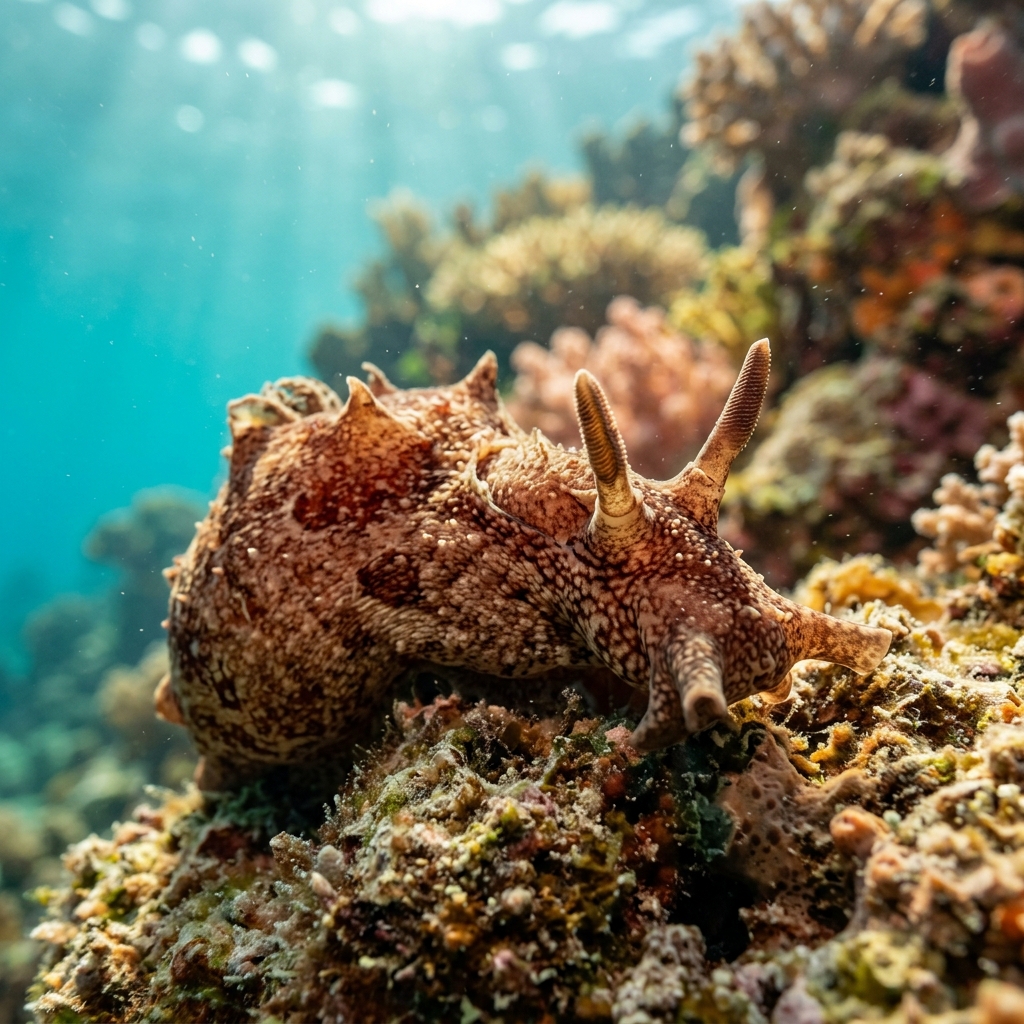
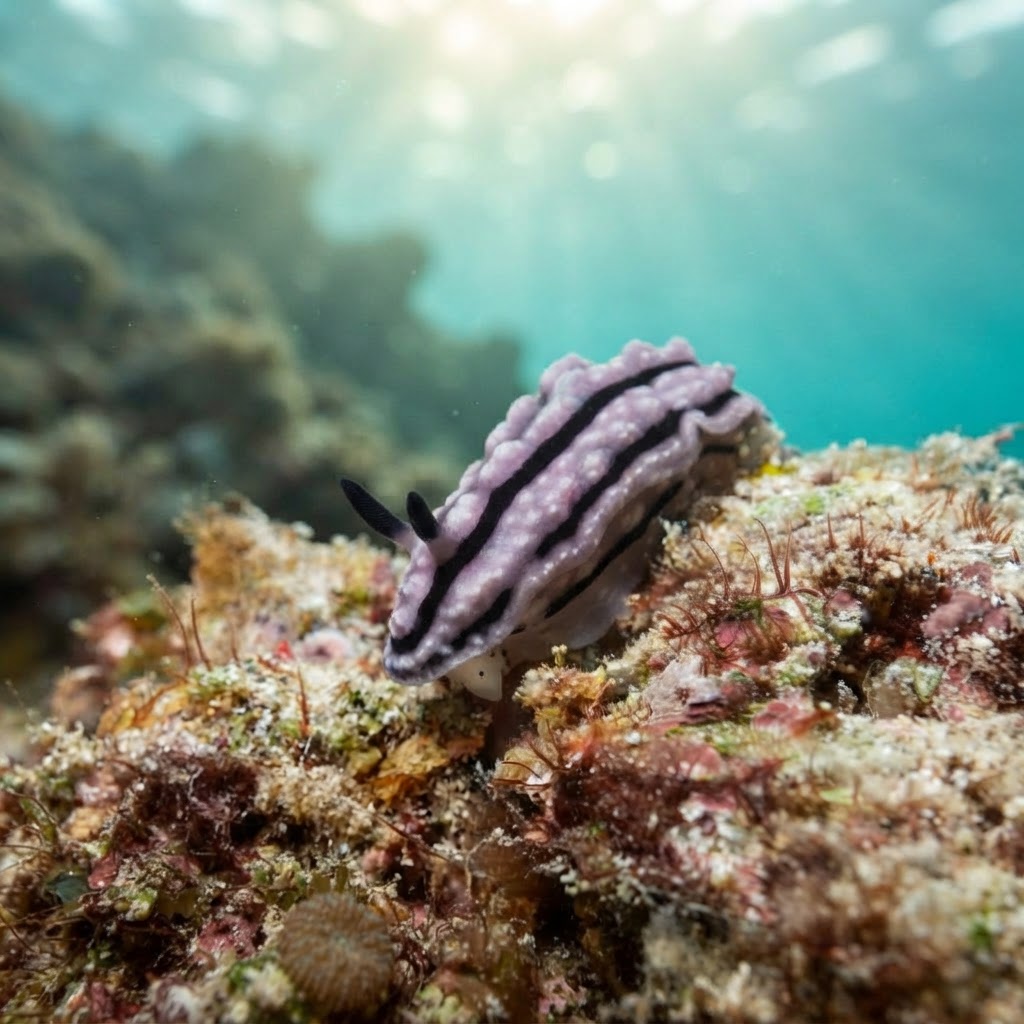
A small, firm-bodied nudibranch around 4 cm long, covered in raised angular warts (tubercles) arranged in a rough grid down its back. Colouration is typically pale grey to white with dark grey or black patches between the warts, giving it a mottled, encrusted look rather than a smooth, glossy one. Unlike many showier nudibranchs, it has no flared mantle edge or feathery gill plume standing proud at the rear, so it reads as a low, textured lump on the reef rather than a swimming banner.
Look for it grazing slowly across rubble, encrusted rock, and low reef structure, usually tucked in close to the substrate rather than out in the open water column. It shows no real reaction to divers beyond its usual crawl, since it relies on being unappetising rather than on fleeing. Most sightings are made by divers scanning slowly over reef flats and walls rather than spotting it from a distance, as its mottled pattern blends into encrusted surfaces.
Like other Phyllidiella nudibranchs, it feeds on sponges and stores their chemical defences in its own tissue, which is part of why it can sit exposed on the reef in daylight without being picked off by fish.
No clear seasonal pattern shows up in the data, and its comfort range of roughly 23.5 to 29.5 C covers these reefs year-round, so it is worth watching for on any dive rather than a particular month.
KwaZulu-Natal in South Africa and Zanzibar in Tanzania are the strongest areas for this species, with a reliable presence also logged in Sumatra, Indonesia and the Andaman Islands, India. Smaller but consistent numbers turn up around Nosy Be in Madagascar, Western Australia, Trincomalee in Sri Lanka, and Mayotte's Passe en S.
Mapping where Angular Wart Slug is logged…
The most consistent sightings come from KwaZulu-Natal in South Africa and Zanzibar in Tanzania, with further records from Sumatra in Indonesia and the Andaman Islands in India.
There is no detected seasonal pattern, and its warm-water range of about 23.5 to 29.5 C keeps it present on tropical reefs throughout the year.
Look for a small, roughly 4 cm nudibranch with a firm, warty back covered in angular grey-to-white and black patches, hugging low on rubble or reef rather than swimming freely.
They stay small, reaching around 4 cm in length, so divers usually need to look closely at reef surfaces to spot one.
No, they pose no danger to divers and can be safely observed and photographed without any special precautions.
It grazes on sponges and absorbs their chemical compounds into its own body, which likely helps deter predators and lets it sit exposed on the reef without much cover.
Site and sighting data is aggregated from diver logs, iNaturalist and GBIF. For taxonomy and conservation status:
Light-spotted Aegires
3,168 sites