Amphorina viriola
A rare, tiny nudibranch found on cool-water reefs in Portugal's Algarve and Denmark's Jutland, spotted at temperatures as low as 8C.
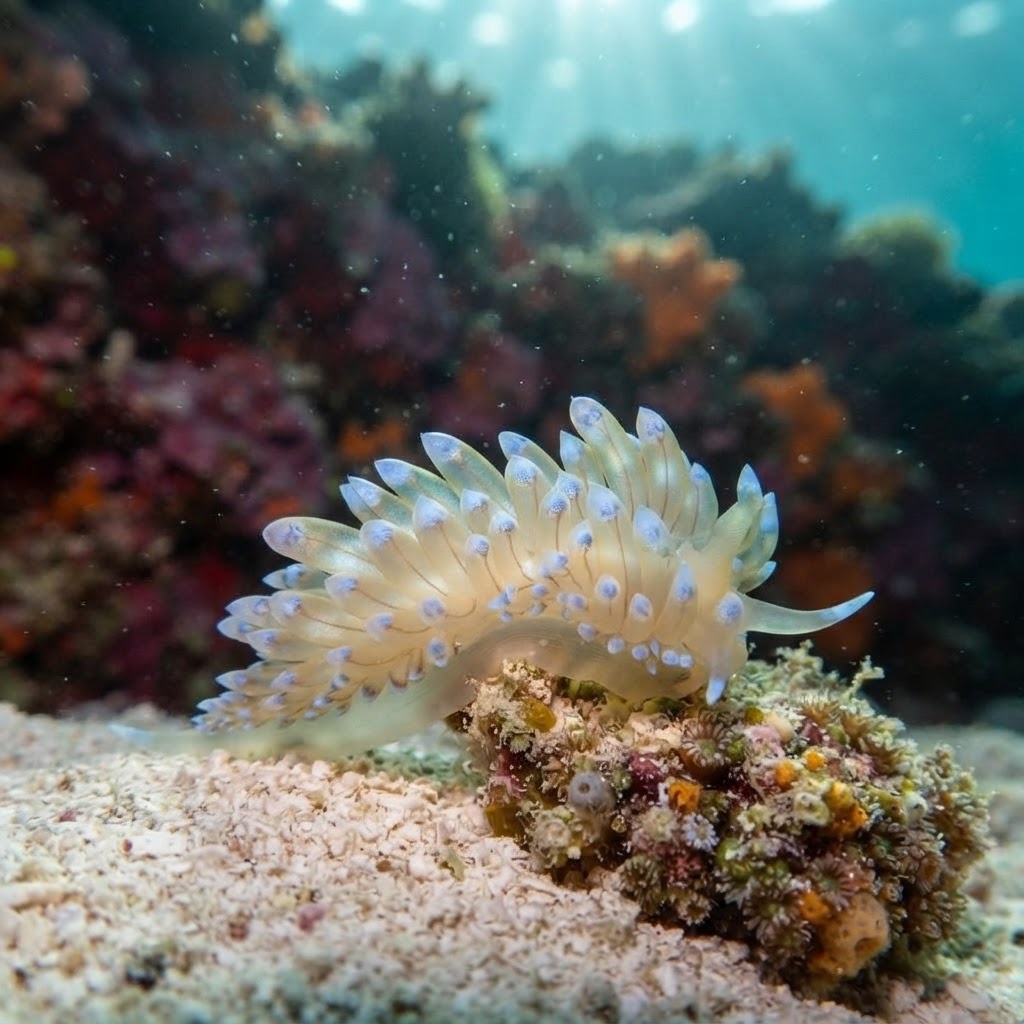
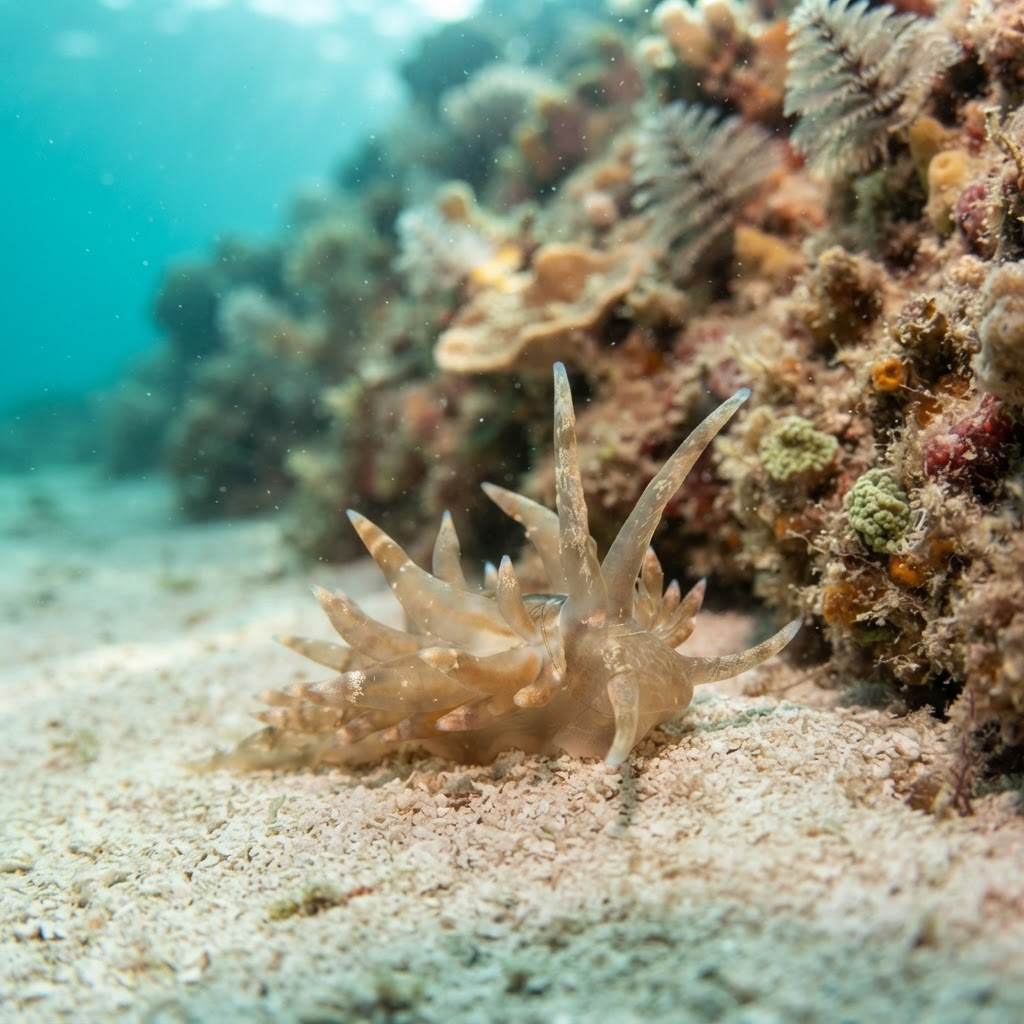
A small, slender sea slug with a translucent to pale body and rows of finger-like projections (cerata) running down its back, often tinted by the colour of what it has recently eaten. Look closely along rocky or algae-covered surfaces rather than in open water, since it is easy to miss against similar textures. Size is not well documented, so go by the slim, elongated shape and the fine cerata rather than any bold pattern.
Divers typically find it moving slowly over rock and algae-covered substrate while grazing, usually tucked into cooler, temperate sites rather than open sand or reef flats. It shows no reaction to divers and simply carries on feeding, so a slow, close look with a torch or magnifying lens is the best way to actually notice one.
Like other members of its family, it likely feeds on hydroids and stores stinging cells from its prey in those back-mounted cerata for its own defence, a trick common across aeolid nudibranchs.
Sightings are spread across the year with no clear seasonal pattern in the data, and the species turns up in water from 8 to nearly 18C, so cooler months in these Atlantic and North Sea locations are just as viable as warmer ones.
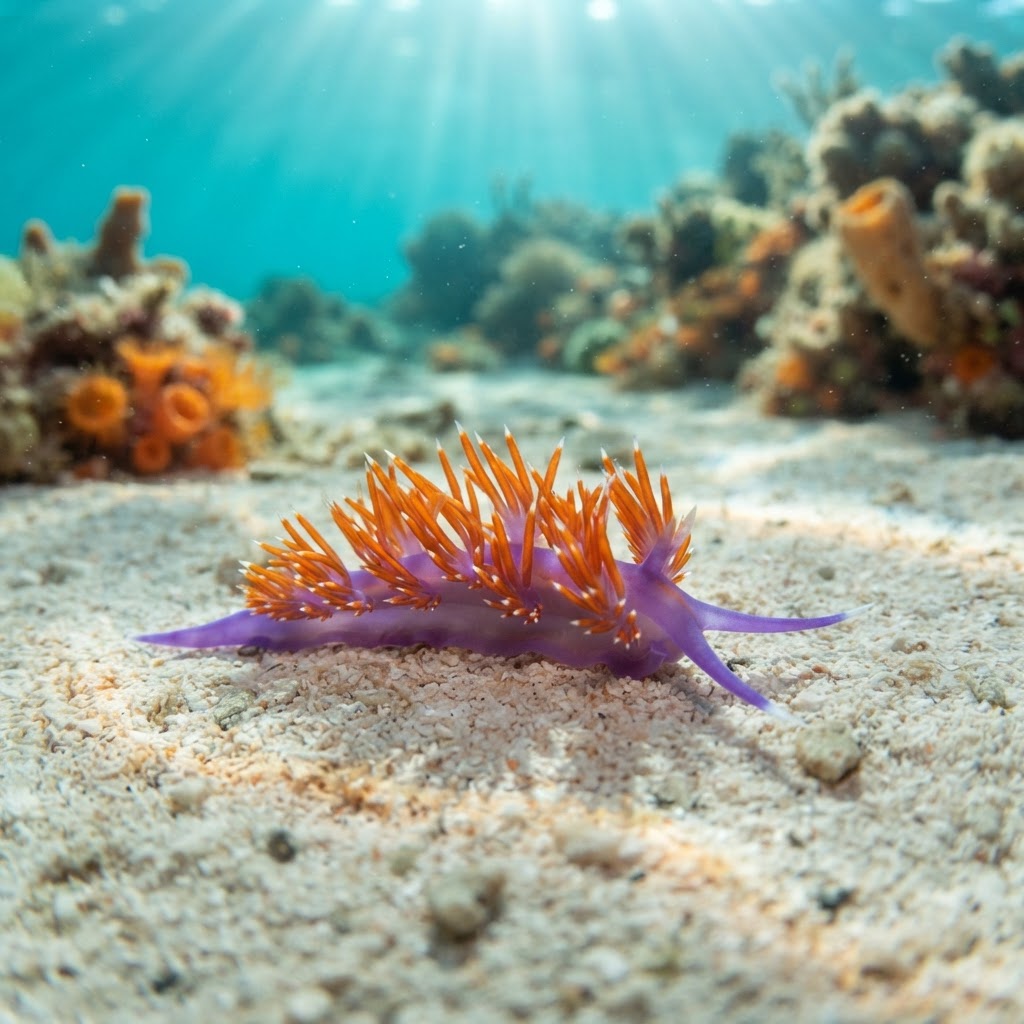
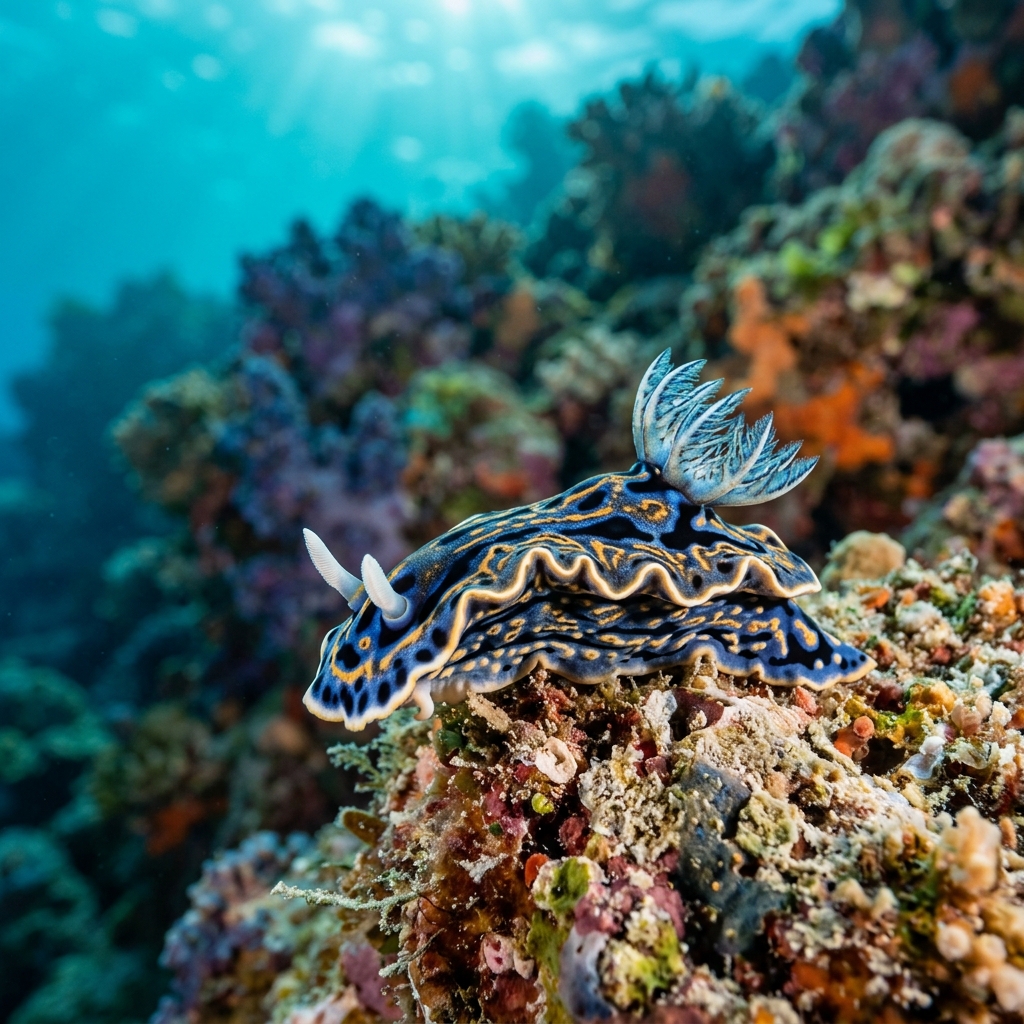
Reef neighbours a diver could mistake it for. Use the identification notes above to tell them apart.
Most reliably found in the Algarve region of Portugal and across Jutland in Denmark, with smaller numbers of sightings logged in England, Occitanie in France, and Schleswig-Holstein in Germany. Across all these sites it stays a rare to uncommon find, so treat any sighting as a bonus rather than a given.
Mapping where Amphorina Viriola is logged…
It is most often logged in the Algarve region of Portugal and in Jutland, Denmark, with occasional sightings in England, France, and Germany. Even in these areas it stays a rare find, so search slowly over rocky, algae-covered ground.
There is no strong season in the sighting data, and it has been recorded in water from 8 to nearly 18C, so it can turn up year-round at these cooler-water sites.
Look for a small, slender, pale or translucent sea slug with rows of fine cerata along its back, often blending into rocky or algae-covered surfaces. It lacks bold colour bands, so slow, close searching is key to spotting it.
No, it poses no danger to divers. It is a tiny, slow-moving sea slug that cannot bite or sting people.
Exact size data is not well documented for this species, but like other members of its family it is a small nudibranch best located by scanning closely rather than looking for size from a distance.
As with related aeolid nudibranchs, it likely feeds on hydroids and repurposes their stinging cells within its own cerata as a defence against predators.
Site and sighting data is aggregated from diver logs, iNaturalist and GBIF. For taxonomy and conservation status:
Blue Dragon
3,163 sites