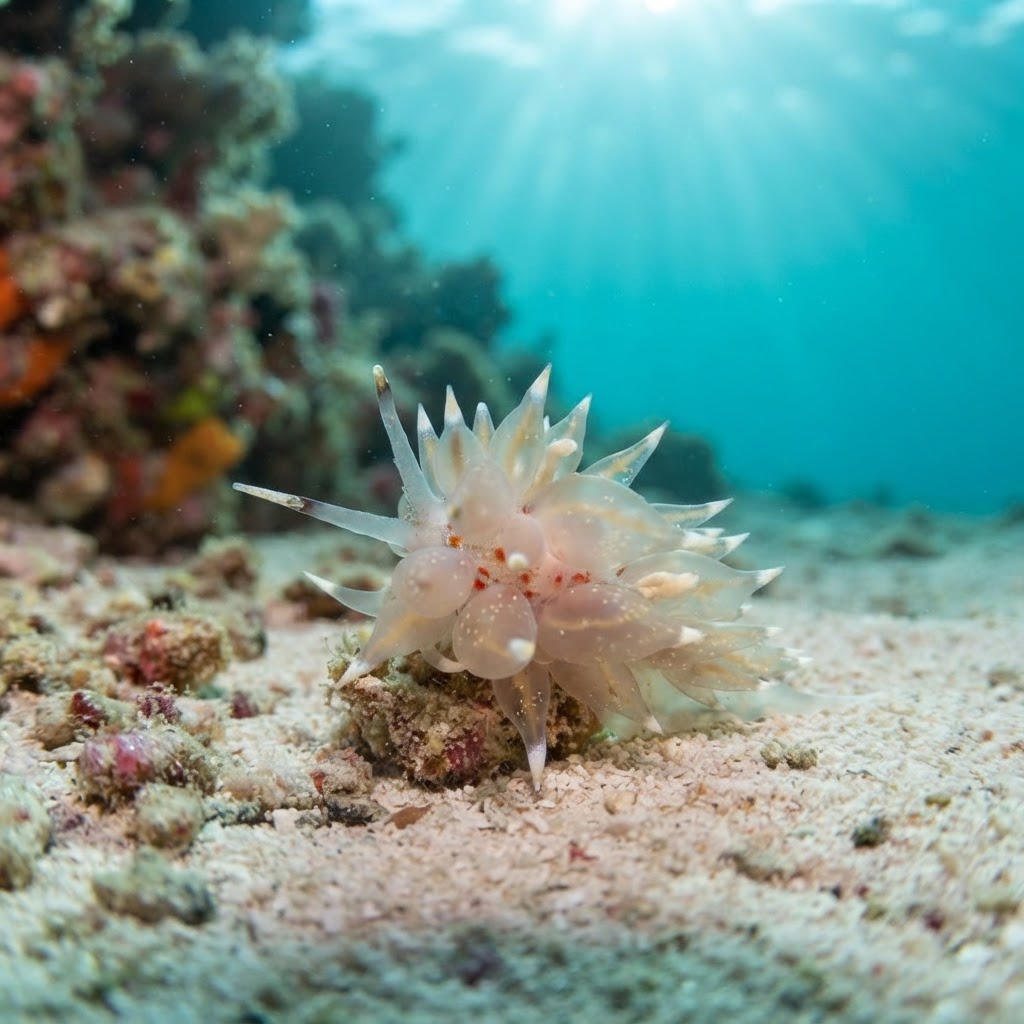
Amphorina linensis
A small, uncommon nudibranch most reliably logged in Zeeland, Netherlands, in cool 11-18C water year-round.
A small sea slug (nudibranch) with a slender, translucent body and rows of finger-like projections (cerata) along its back, often tipped with orange or brownish pigment that shows the digestive gland through the skin. It moves slowly over hard structure and algae, and at typical size is easy to miss unless you are scanning closely with a torch. There is no reported difference between sexes or across life stages in the data.
Divers typically find it moving slowly across rock, wreck structure, or weedy substrate while grazing, usually spotted on a slow, close-focus search rather than mid-water. It shows no reaction to divers beyond simply carrying on feeding, and most logs describe it as an uncommon to rare find even at sites where it is known to occur.
Like other eubranchid nudibranchs, it likely feeds on hydroids, using the cerata on its back to store stinging cells from its prey for its own defence.
Sightings show no detectable seasonal pattern, so this is a year-round find within its observed temperature range of roughly 11 to 18C. Plan around water temperature rather than a calendar season, targeting the cooler Atlantic and North Sea sites where it is most often reported.
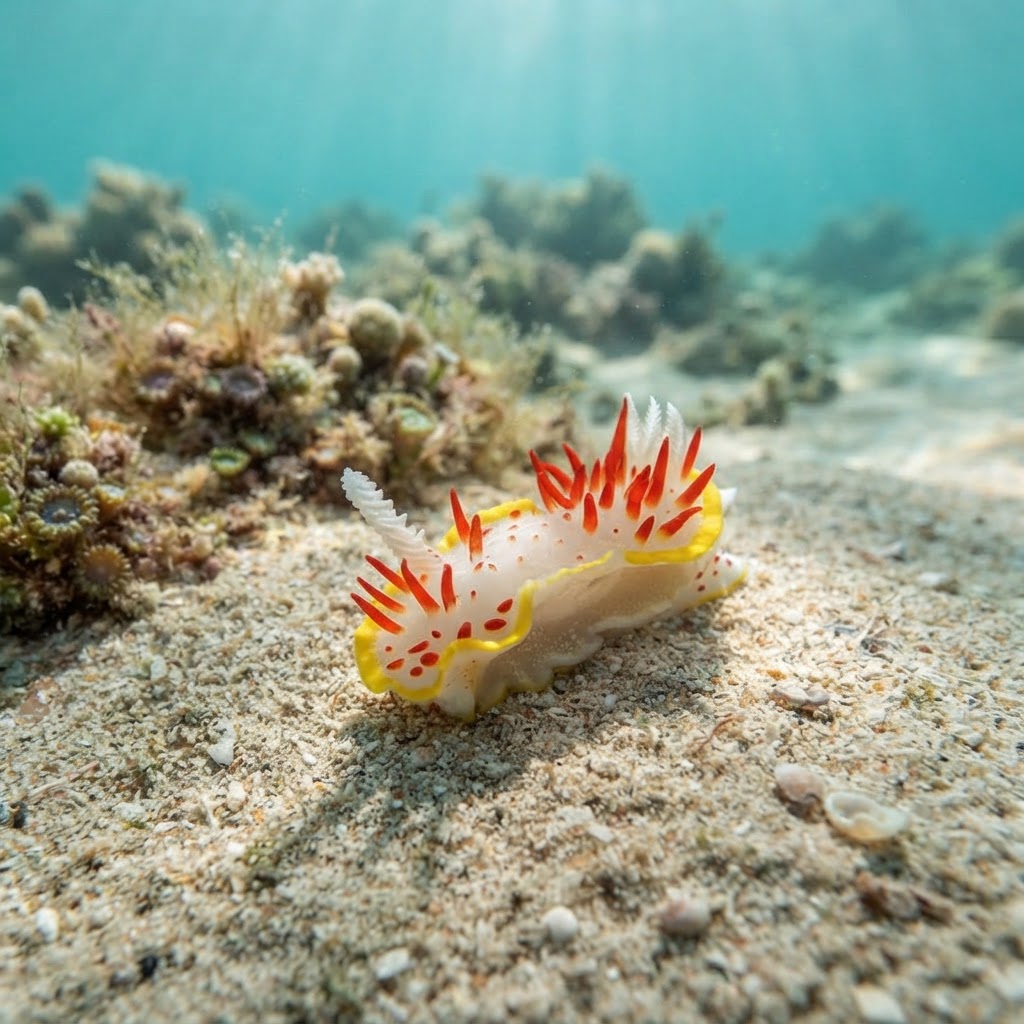
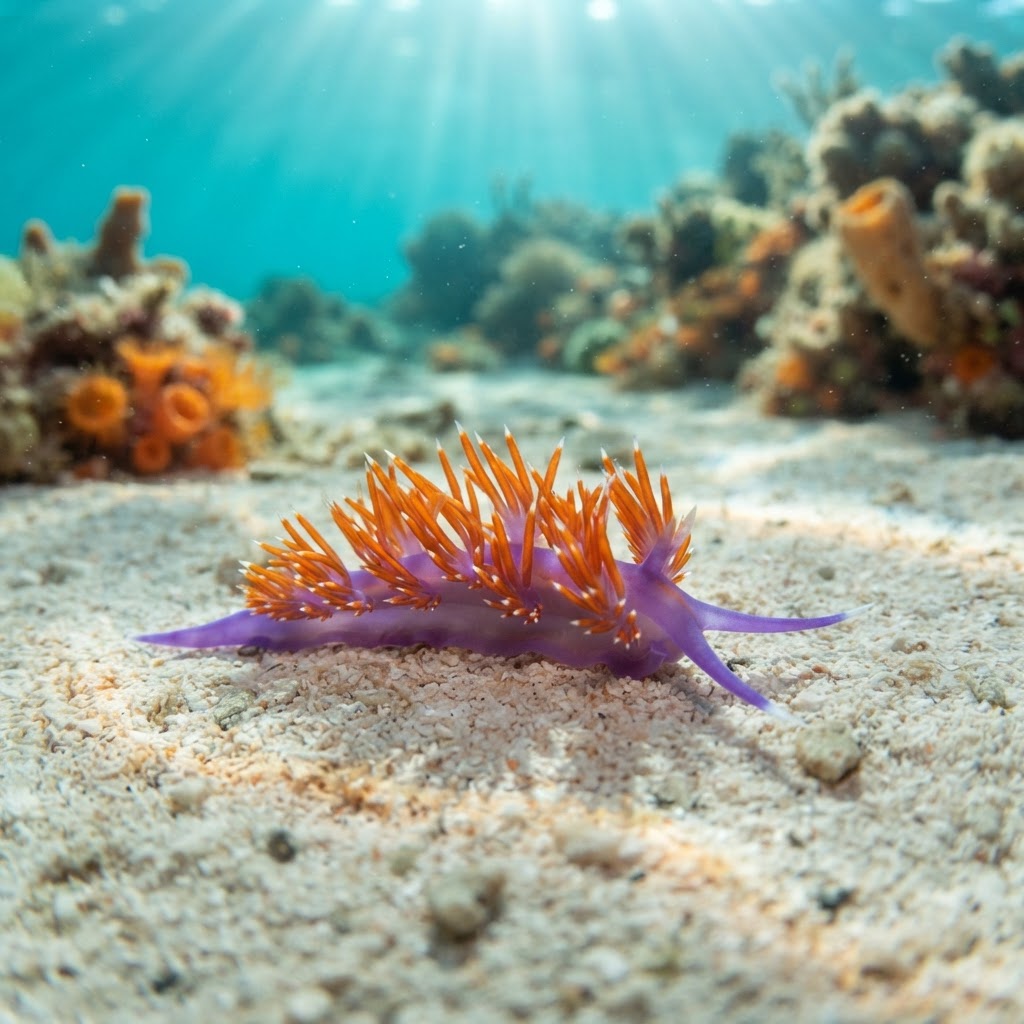
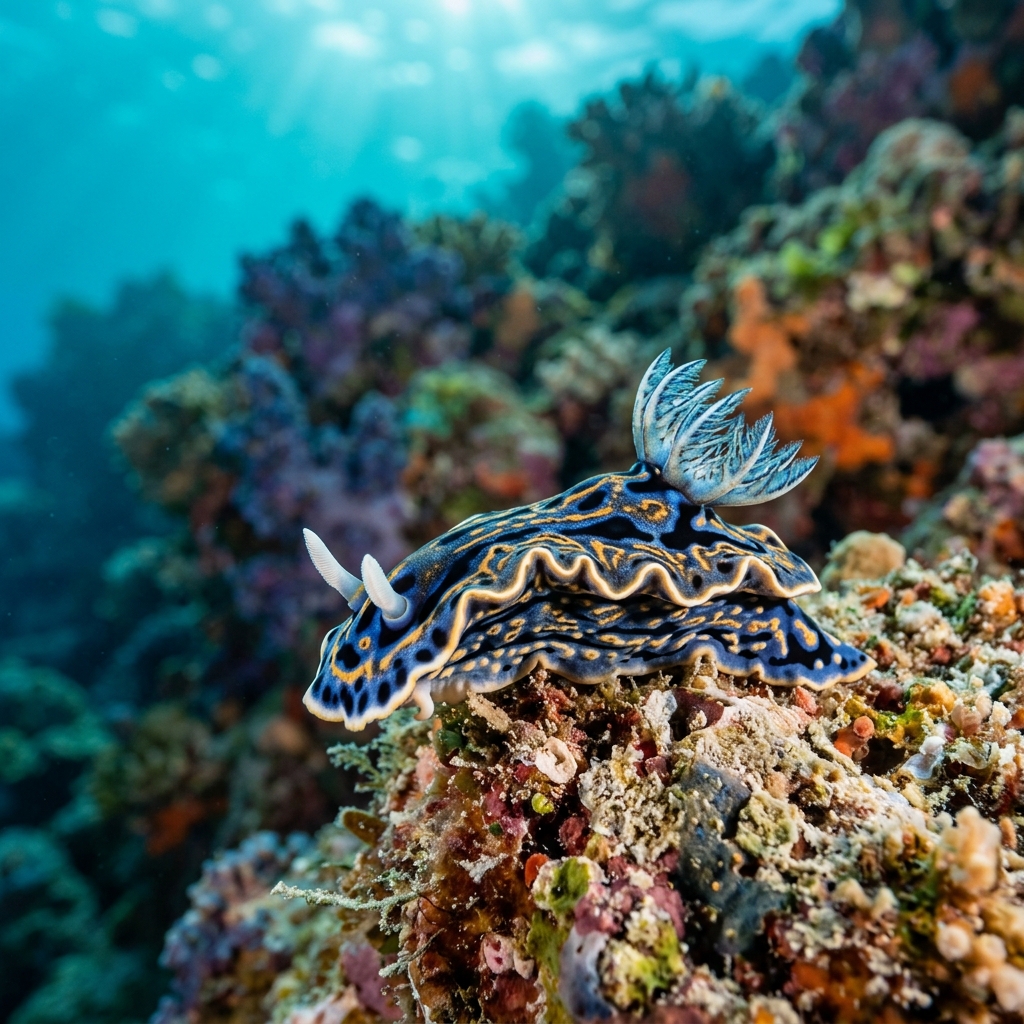
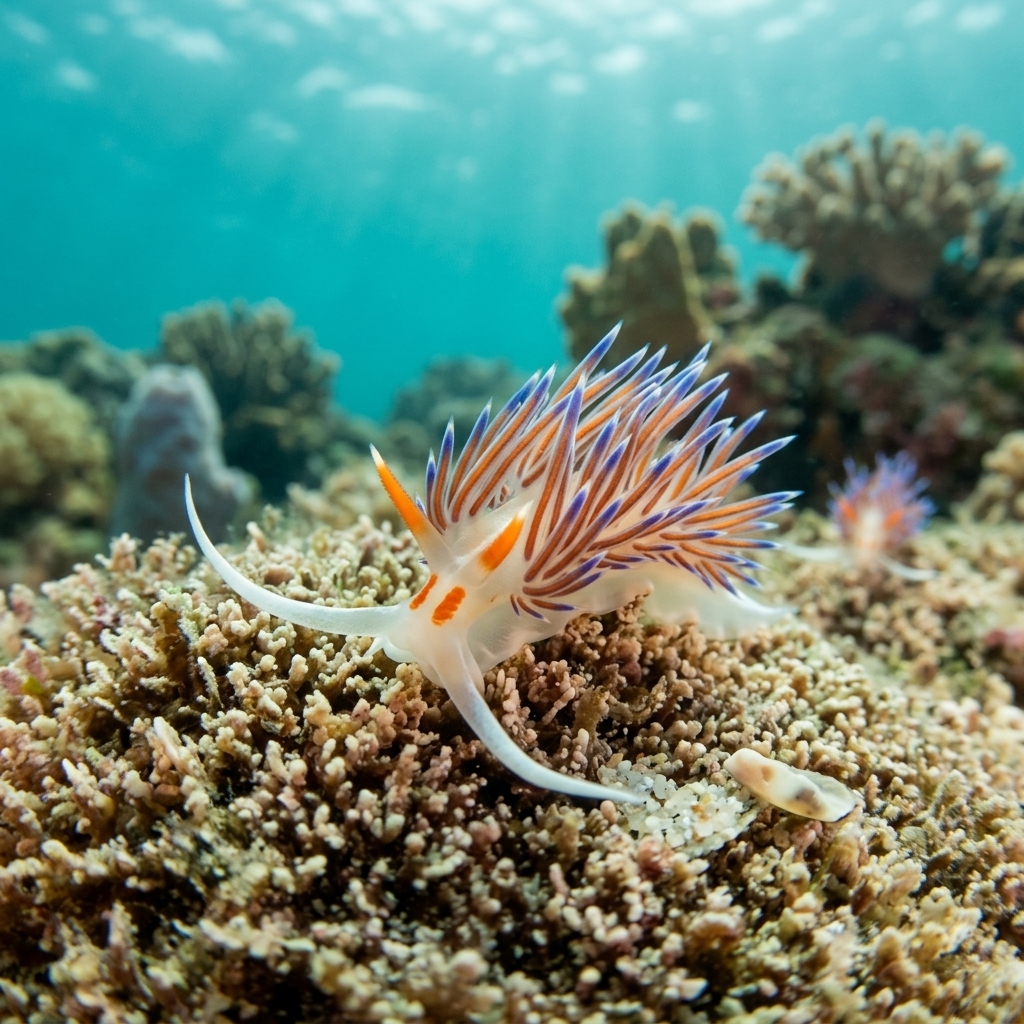
Reef neighbours a diver could mistake it for. Use the identification notes above to tell them apart.
Most reliably logged in Zeeland in the Netherlands, which accounts for the large majority of sightings, with smaller but steady populations in the Algarve in Portugal and along the English coast in the United Kingdom. A single record from Nordland in Norway shows it also turns up at the colder edge of its range.
Mapping where Amphorina Linensis is logged…
It is most consistently found in Zeeland, Netherlands, with smaller populations in the Algarve, Portugal, and along the England coast in the UK. A rare record also exists from Nordland, Norway.
There is no clear seasonal pattern in sightings, so it is considered a year-round species within its observed 11 to 18C temperature range rather than a seasonal target.
Look for a small, slender, translucent nudibranch with rows of cerata along its back tipped in orange or brown. It moves slowly over rock or weed and is easy to overlook without a close, torch-lit search.
Exact size data is not recorded, but as a member of the small-bodied eubranchid nudibranch family, it is a small species best spotted with a slow, close-range search of the substrate.
No, this is a small, harmless sea slug that poses no risk to divers and simply continues grazing when approached.
It most likely feeds on hydroids, in keeping with the diet of related eubranchid nudibranchs, and may store its prey's stinging cells in its cerata for defence.
Site and sighting data is aggregated from diver logs, iNaturalist and GBIF. For taxonomy and conservation status:
Nudibranch
3,168 sites