Amphiprion latezonatus
A New South Wales endemic anemonefish seen in cooler 20-25 °C waters. Find out where along Australia's east coast to spot one and when to go.
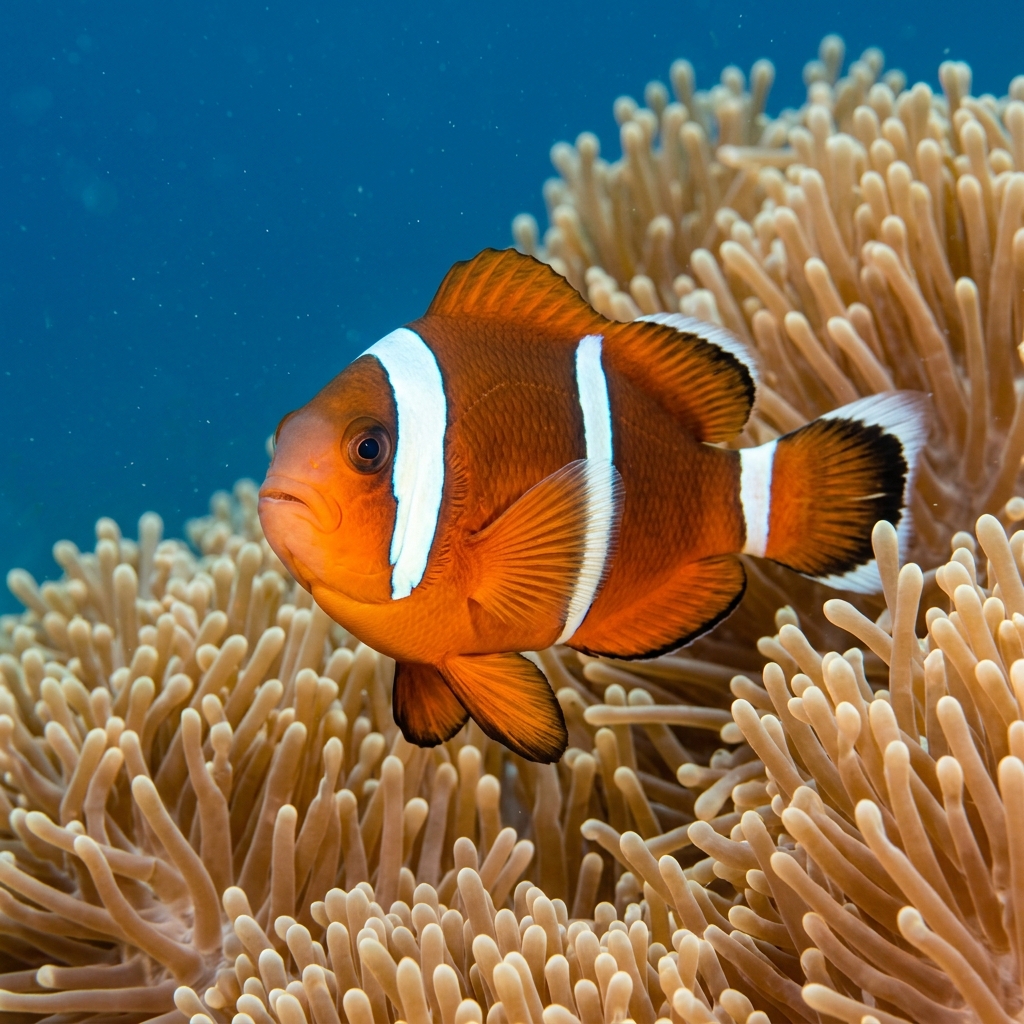
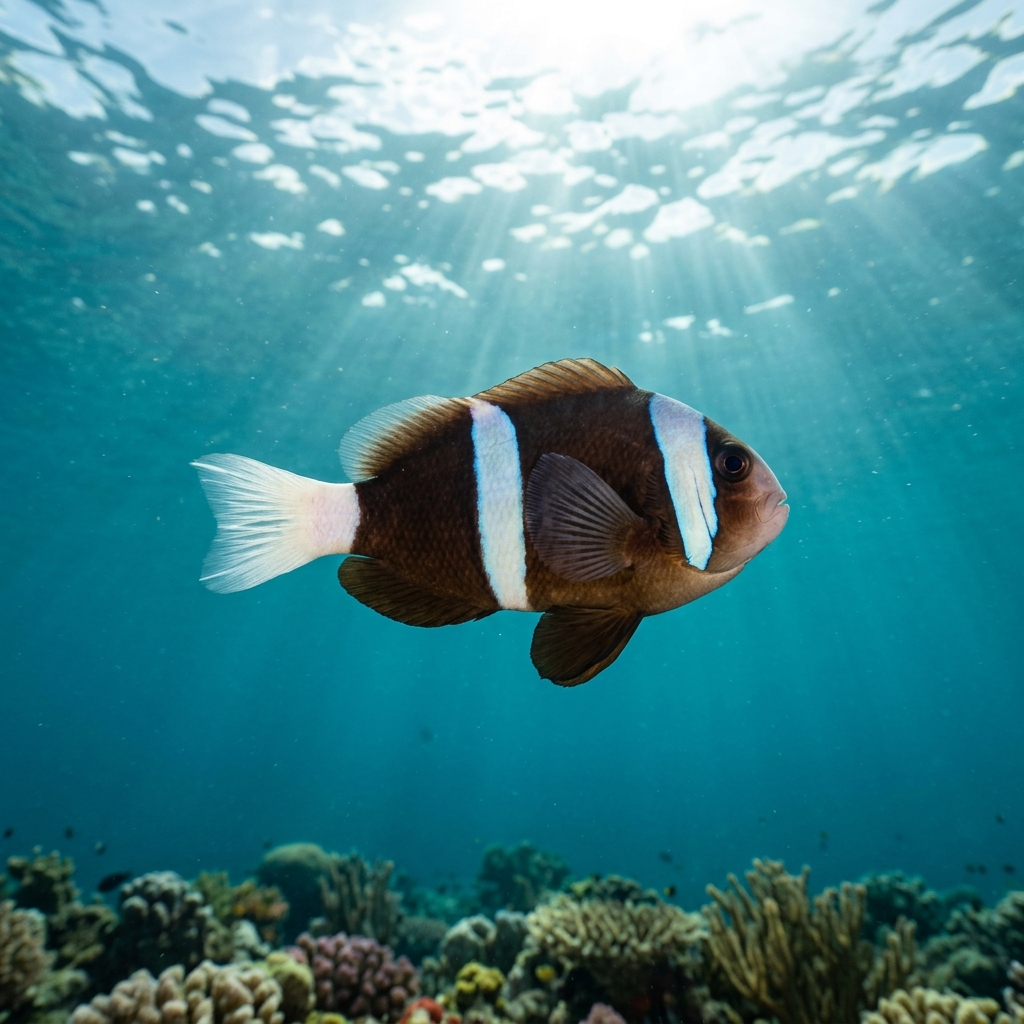
A stocky, deep-bodied anemonefish with rich orange-red colouring and a single, unusually wide white band across the mid-body, that broad band is the field mark that separates it from most other clownfish. A second, narrower white bar sits just behind the eye, and the tail is pale or white. Compared with most of its relatives, the mid-body stripe is strikingly thick rather than a thin stripe.
Like all anemonefish, it spends its life in close association with its host anemone and rarely strays far. Divers typically find it hovering within the anemone's tentacles, making short darting movements to defend the anemone against intruders, that includes curious divers who get too close. It will swim at a diver's mask if it feels its host is threatened.
All anemonefish are protandrous hermaphrodites: every fish begins life capable of becoming male, and the dominant individual in a group will transition to female if the resident female disappears. The largest fish in any anemone you find is almost certainly the female.
Sightings concentrate between December and June, which covers the Southern Hemisphere summer and early autumn when water temperatures along New South Wales climb towards the warmer end of this species' 20-25 °C comfort zone.
Almost every sighting comes from the eastern coast of Australia, with New South Wales accounting for the overwhelming majority of logged dive sites. A single site on Norfolk Island rounds out the range. Look for it at rocky reef and kelp-edged sites typical of the New South Wales coast rather than the tropical coral gardens where most anemonefish are found.
Mapping where Wideband Clownfish is logged…
New South Wales, Australia, is far and away the best place to find one, with a handful of sites also recorded on Norfolk Island. It is one of the few anemonefish tied to the cooler temperate and subtropical waters of Australia's east coast rather than the tropics.
Sightings are most frequently logged between December and June along the New South Wales coast. This Southern Hemisphere summer-to-autumn window aligns with the warmer end of the species' preferred temperature range of around 20-25 °C.
Focus on the mid-body white band, it is noticeably broader than in related species, which is exactly what gives this fish its common name. The body is deep orange-red and the tail is pale or white. A narrow white bar sits behind the eye as well.
Yes. They are protandrous hermaphrodites, meaning all individuals start out as functional males. If a group's female dies or is removed, the dominant male transitions to female. The largest fish on any given anemone is always the breeding female.
Site and sighting data is aggregated from diver logs, iNaturalist and GBIF. For taxonomy and conservation status:
Dascyllus
3,697 sites