Amphiprion bicinctus
Spot the Twoband Anemonefish in Sharm el Sheikh and Marsa Alam year-round. Two white bands, orange body, Red Sea icon. Here's where and when to find it.
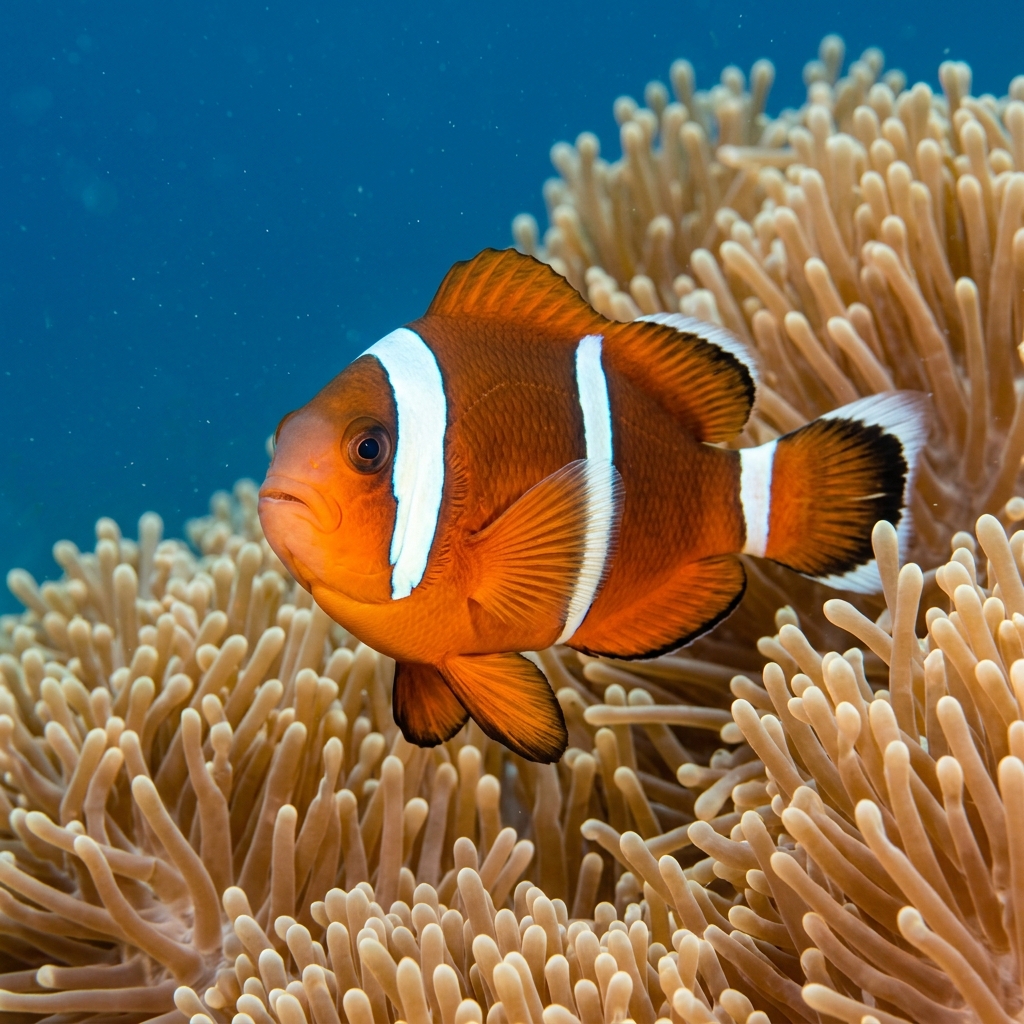
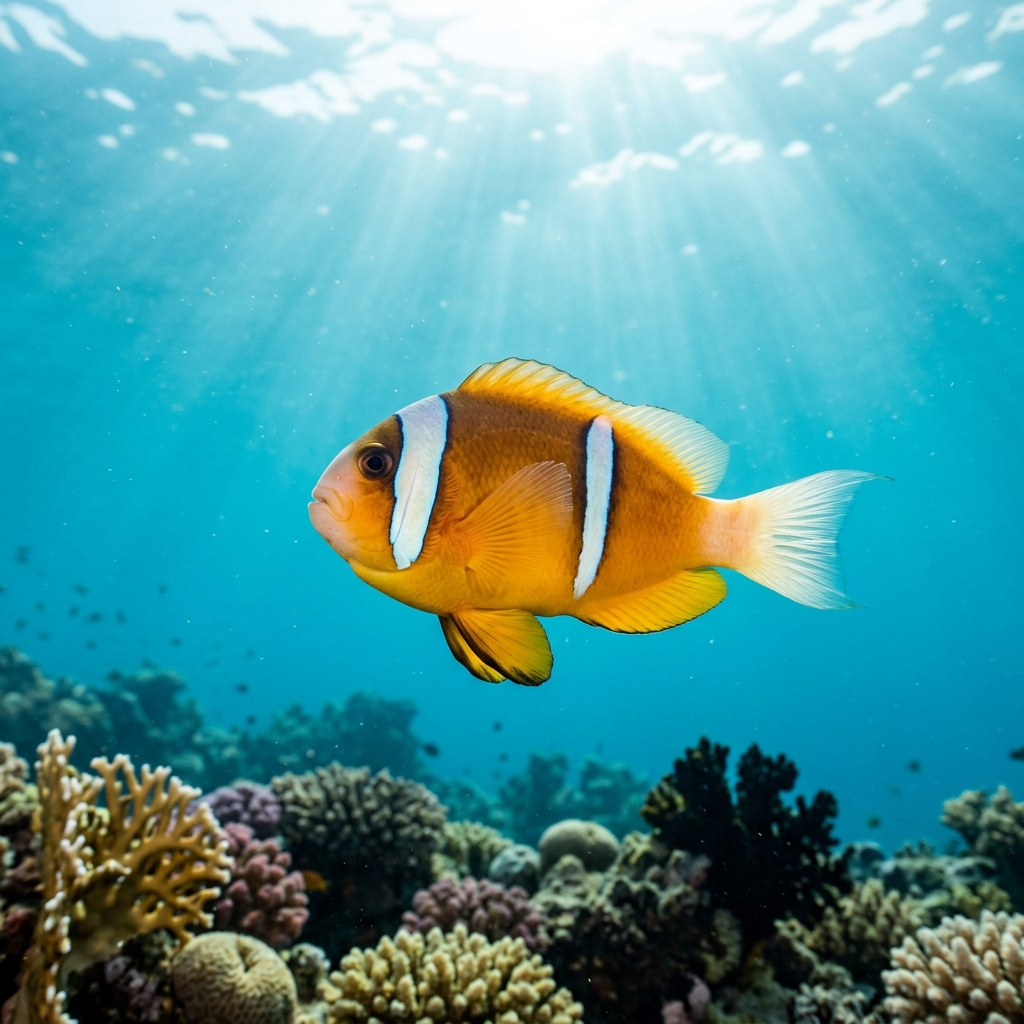
A stocky, orange-bodied clownfish with two crisp white vertical bands: one behind the eye and one at mid-body, the second often tapering toward the tail. The trailing edge of each white band is bordered by a thin black line, which helps distinguish it from lookalikes at a glance. In the water it reads as bright orange with two clean white stripes rather than the three-banded pattern seen on more familiar clownfish. Size is modest, typical of the genus, so look for it tucked tightly among anemone tentacles close to the reef.
Almost every encounter happens within centimetres of its host anemone, where it darts in and out of the tentacles, rarely straying far. Like other anemonefishes it will boldly face down a diver who approaches too close, making short aggressive lunges toward a mask or camera lens to defend its host. Encounters tend to be at reef depths where large carpet or column anemones are established, often on sloping reef walls or patch reefs.
All anemonefishes, including this species, are protandrous hermaphrodites: every fish starts life as a male and the dominant individual in any group changes sex to become the breeding female. If she disappears, the largest male transitions to take her place.
In the Red Sea and northern hemisphere sites it is present year-round, which makes sense given its comfortable temperature niche of roughly 22 to 28 °C matched by Red Sea conditions in all seasons. Southern hemisphere sites such as Zanzibar and South Africa see sightings concentrate between October and February and again in April to June.
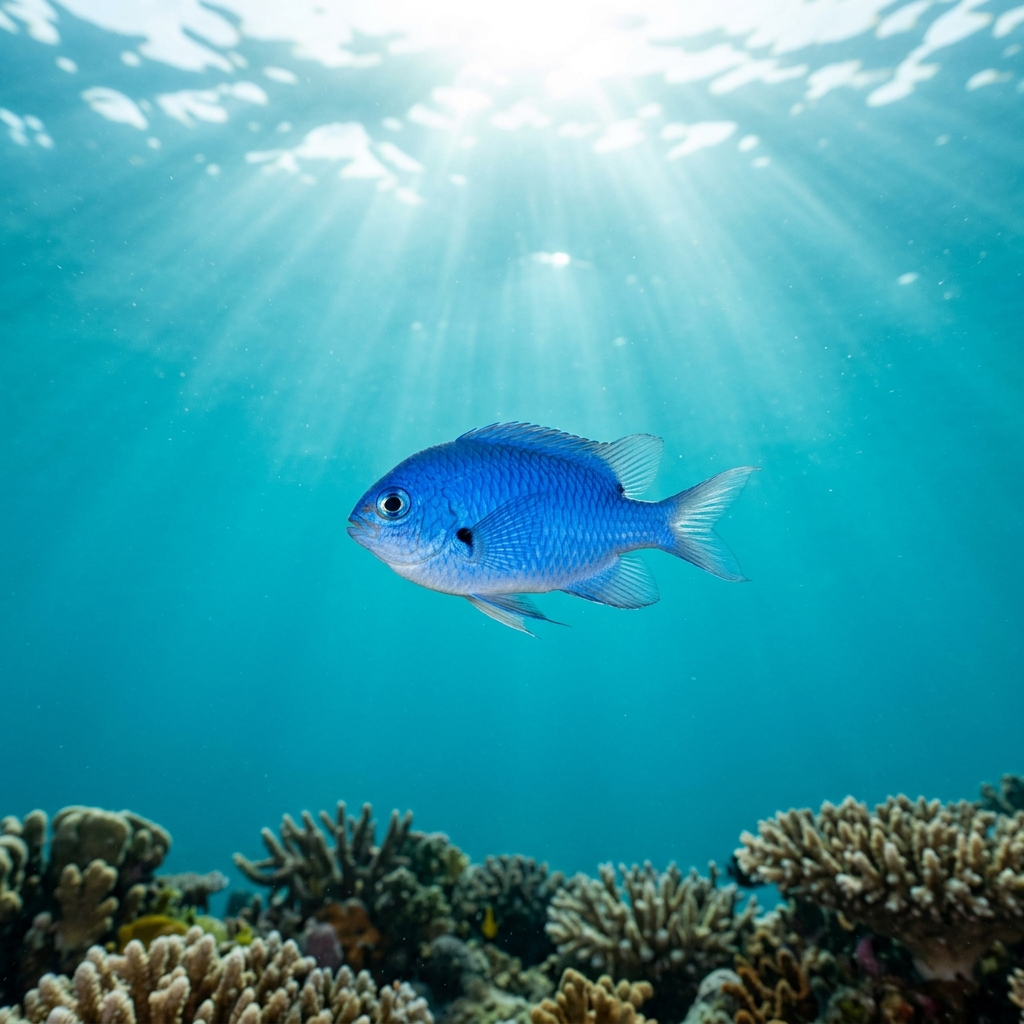
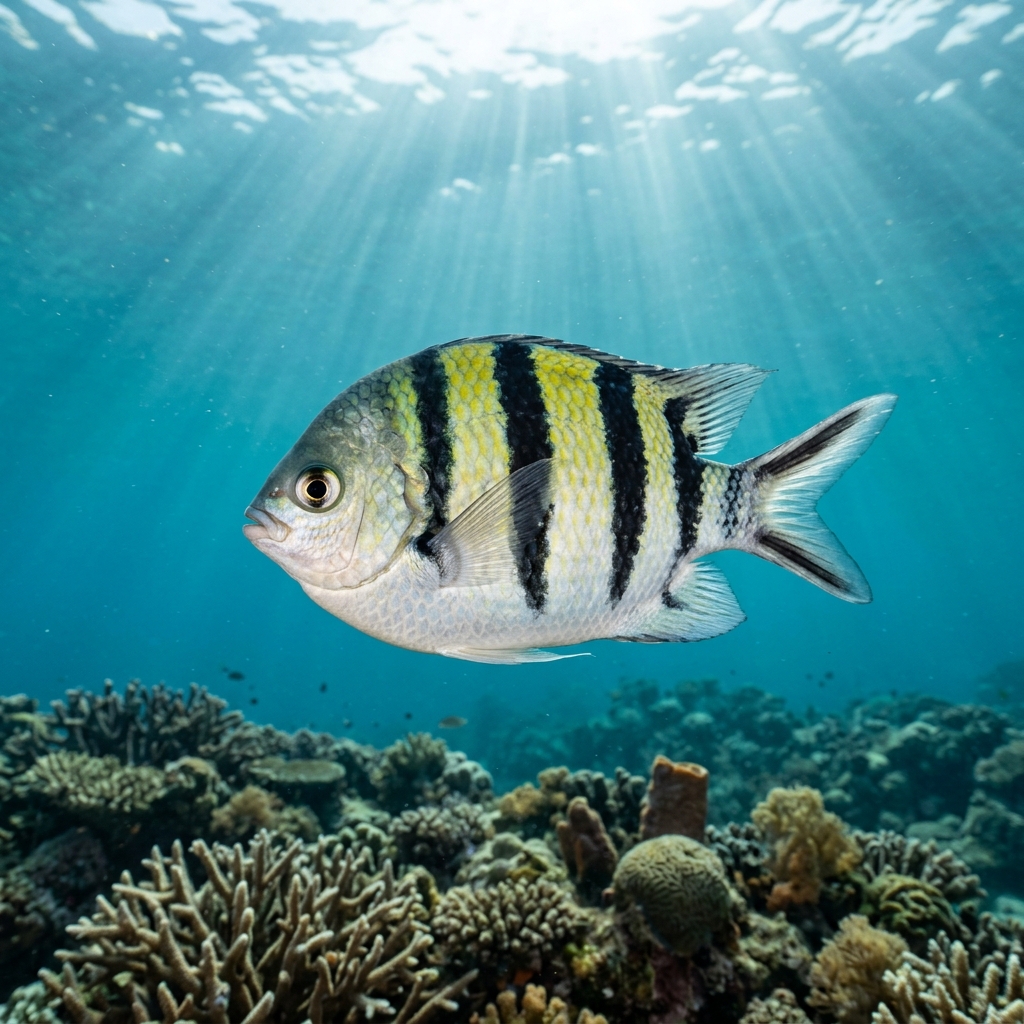
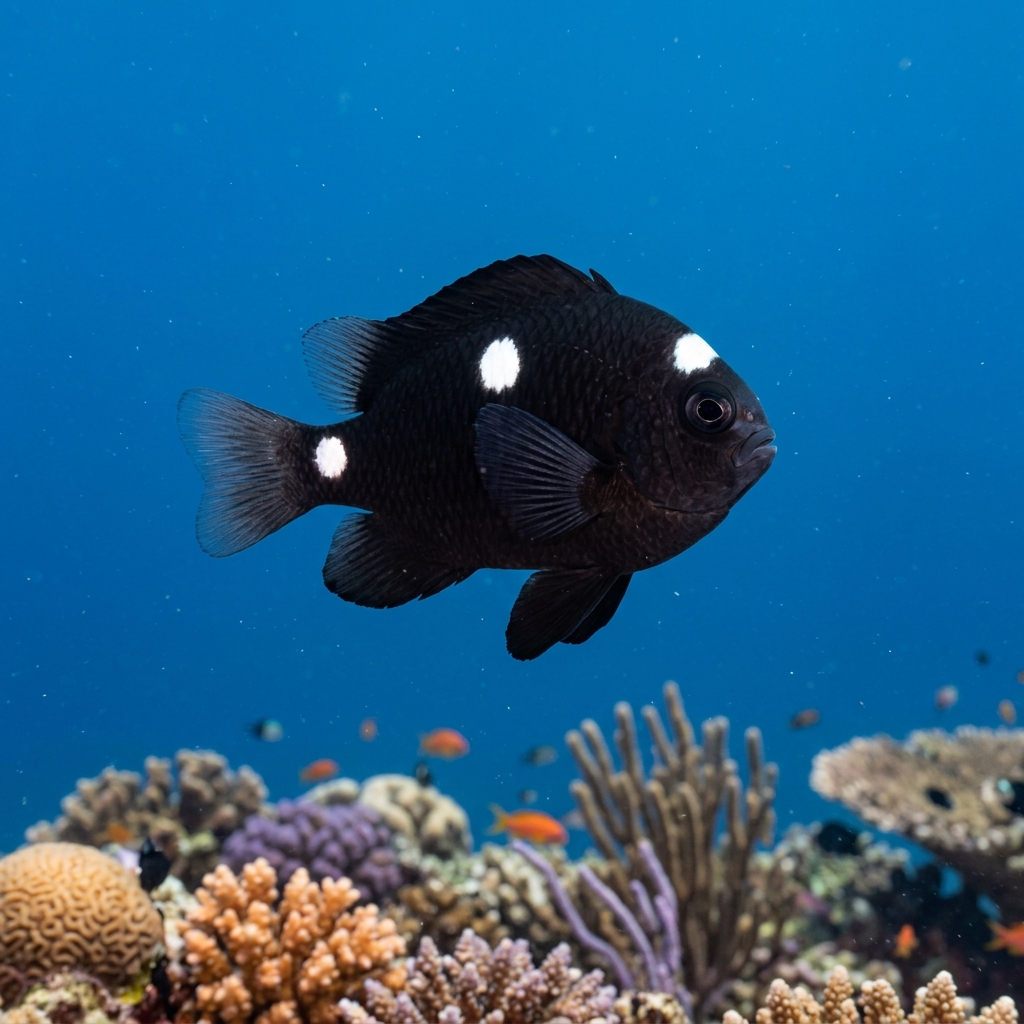
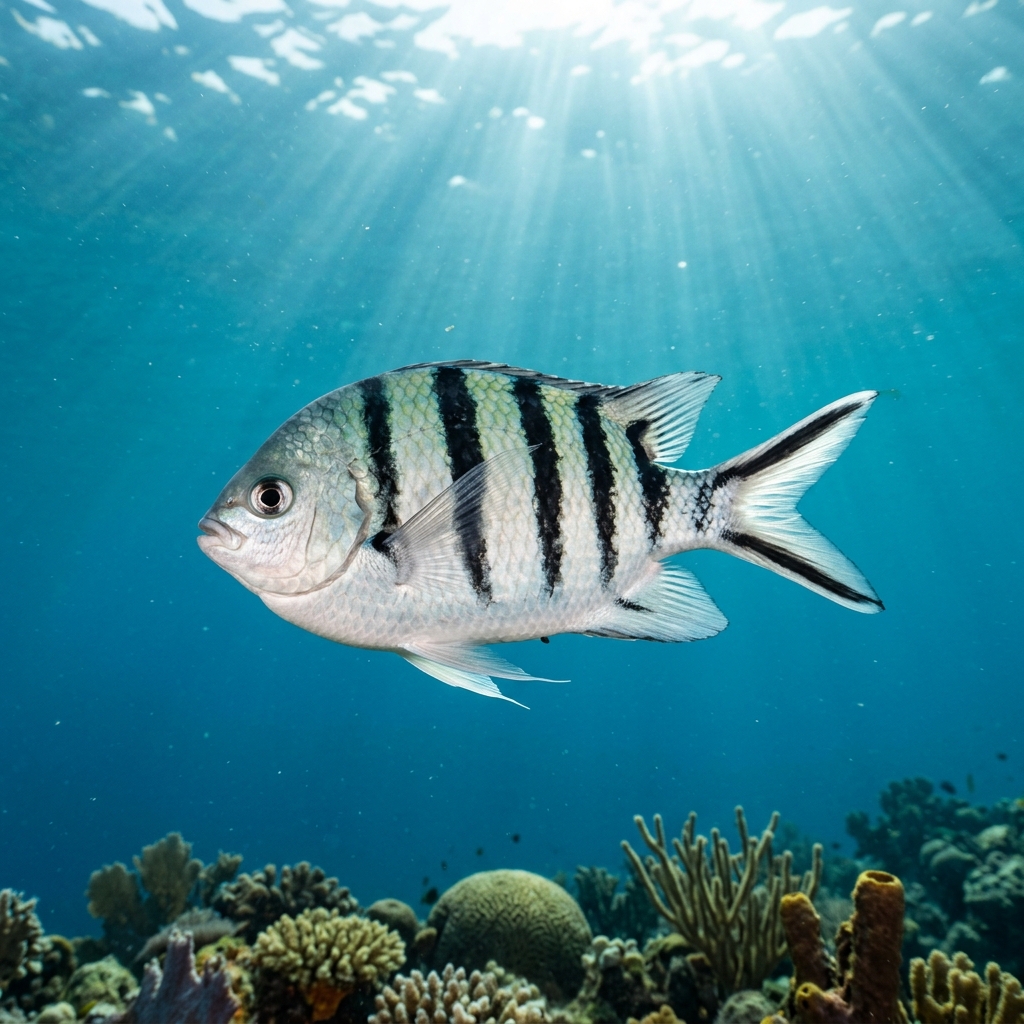
Reef neighbours a diver could mistake it for. Use the identification notes above to tell them apart.
The Red Sea is comfortably the best place on Earth to dive with this species, with Egypt accounting for the vast majority of logged sightings; Sharm el Sheikh, Marsa Alam, Safaga, and Hurghada all deliver reliable encounters. Outside Egypt, strong populations appear in Aqaba (Jordan) and Eilat (Israel), effectively making the northern Red Sea a continuous hotspot. Further afield, Zanzibar in Tanzania and the Rock Islands of Palau also produce regular sightings.
Mapping where Twoband Clownfish is logged…
The Red Sea is the standout destination, with Sharm el Sheikh, Marsa Alam, Safaga, and Hurghada all offering reliable sightings in Egypt, and Aqaba in Jordan close behind. Zanzibar, Tanzania, and the Rock Islands of Palau are the next-best options outside the Red Sea.
At Red Sea sites they are present year-round, so there is no bad season. If you are diving in the southern hemisphere, for example off Zanzibar or South Africa, sightings are most concentrated between October and February and again from April to June.
Look for the two white bars rather than three. An orange body with one band behind the eye and one at mid-body, each edged in black, is the key field mark. Clark's Anemonefish also shows multiple bands but typically has a third bar near the tail and a yellower belly.
Yes. Like all anemonefishes they are protandrous hermaphrodites, meaning every individual begins life as a male. The dominant fish in a group transforms into a female to breed. Remove the female and the next-largest male will change sex to fill her role.
No. They are currently assessed as Least Concern on the IUCN Red List, with a wide distribution across the Red Sea and western Indian Ocean and no evidence of significant population decline.
Site and sighting data is aggregated from diver logs, iNaturalist and GBIF. For taxonomy and conservation status:
Dascyllus
3,697 sites