Alloiodoris lanuginata
A rare cold-water nudibranch find off New Zealand's North Island, in 11 to 17C water year-round.
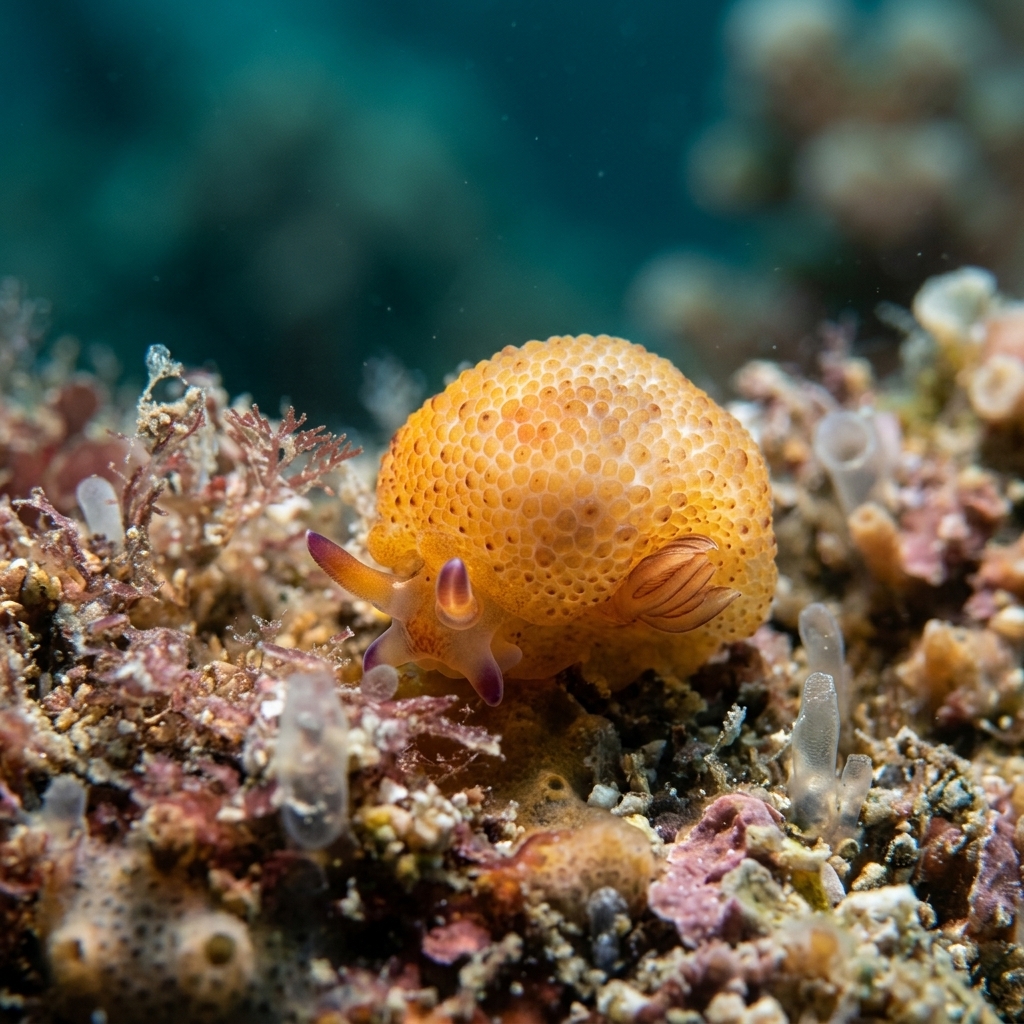
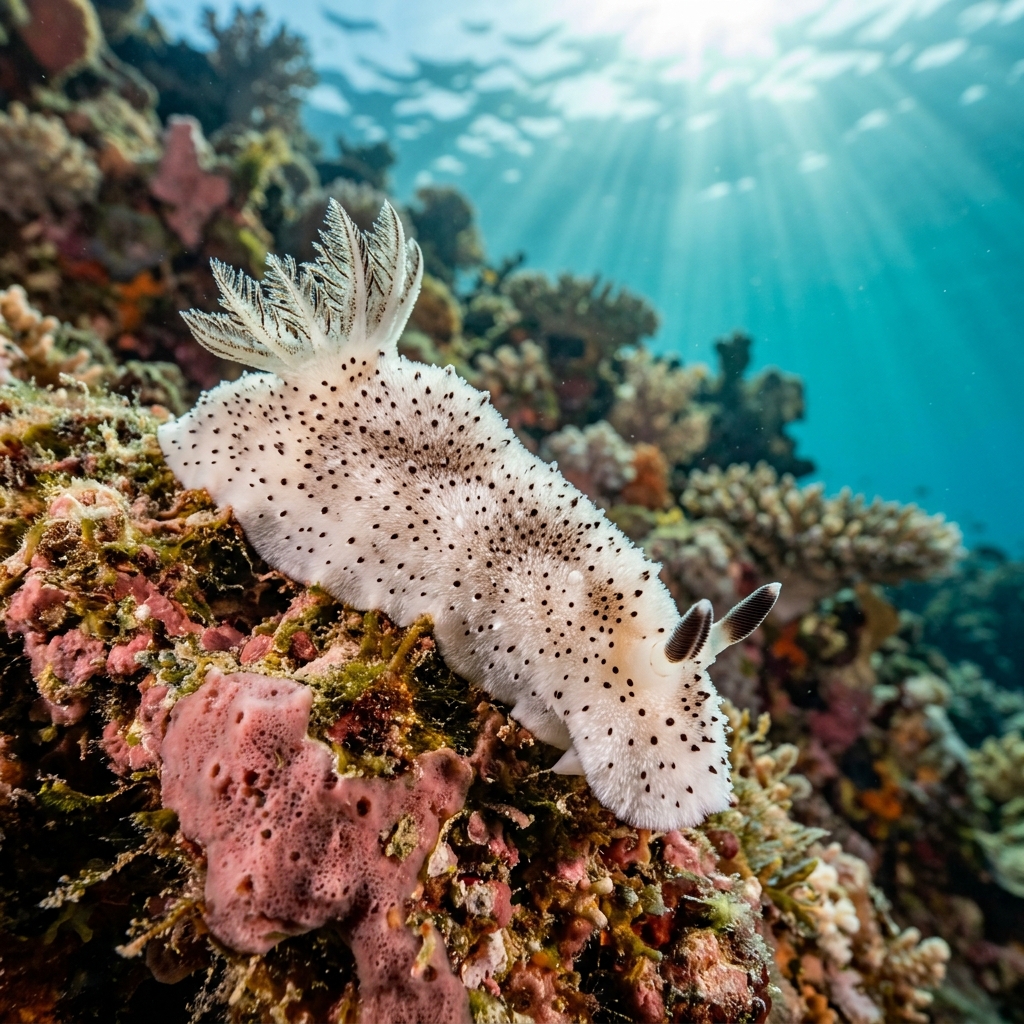
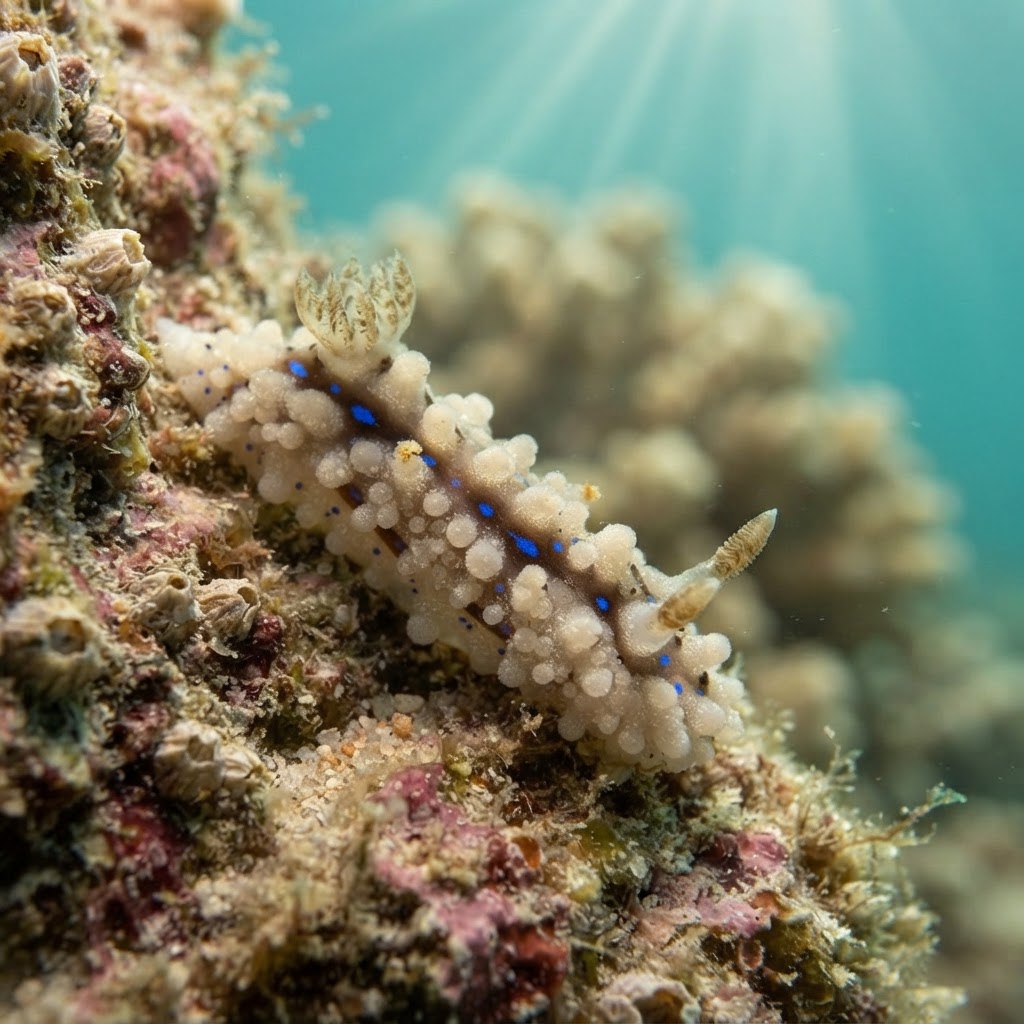
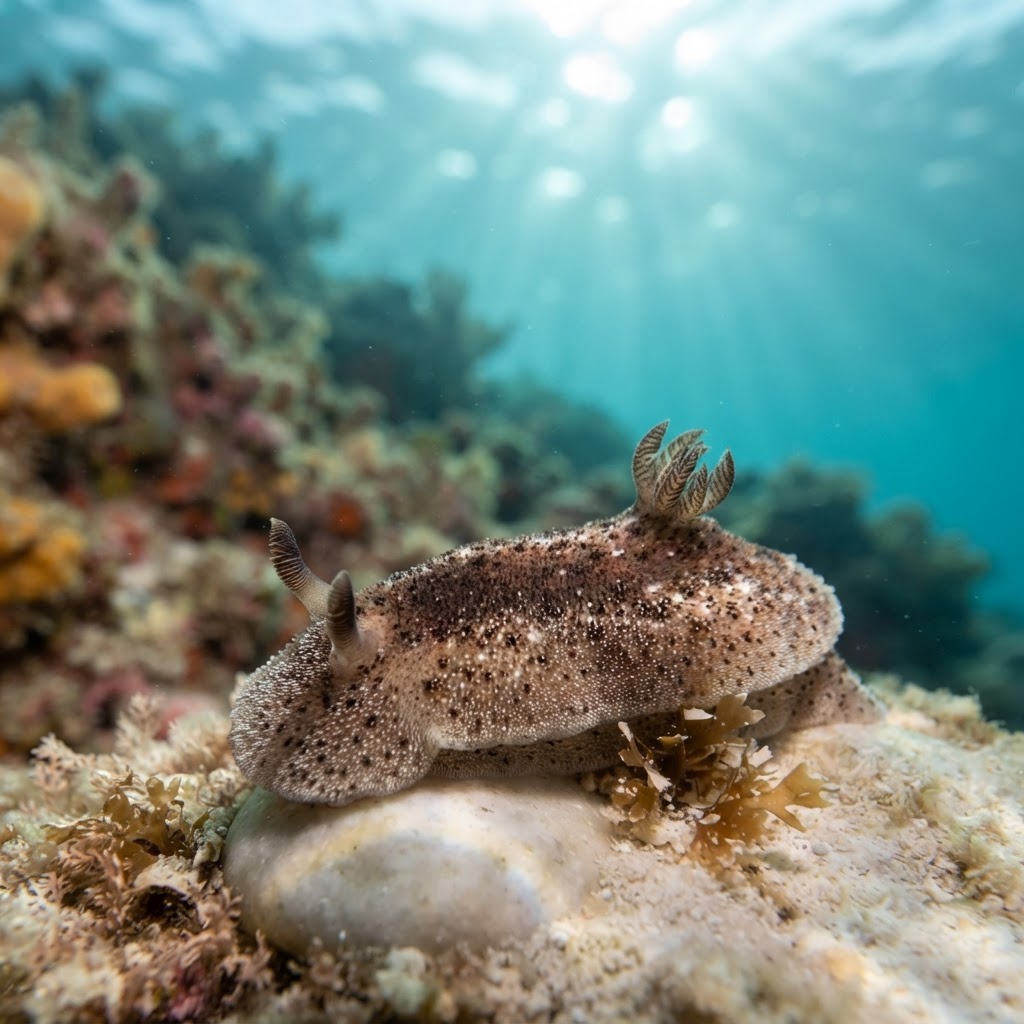
A small, soft-bodied nudibranch with a mantle that looks finely textured or velvety rather than smooth, usually in muted cream, grey or pale brown tones that blend into the rocky substrate it sits on. Look for the low, rounded body shape typical of discodorid sea slugs, with the two rhinophores (sensory tentacles) near the front and a cluster of gill plumes towards the rear. It sits still on rock or reef rubble more often than it crawls in the open, so divers usually spot it by scanning close to the substrate rather than mid-water.
Divers find this one parked on rock and reef surfaces, moving slowly if at all, doing the typical nudibranch grazing routine rather than anything dramatic. It shows no particular reaction to divers since it has no eyes to speak of and relies on chemical senses, so a slow, careful approach with a torch or macro lens won't disturb it. Most logs describe it as a rare find, so sightings tend to be a single animal spotted during a slow, methodical reef scan rather than something you stumble across easily.
Like other discodorid nudibranchs, it almost certainly grazes on sponges, using that food source to help build its own chemical defences against predators, though this hasn't been specifically documented for this species.
There isn't enough monthly sighting data to point to a real season, so treat it as a year-round possibility on North Island reefs. Observed water temperatures of 11.1 to 17.1C fit New Zealand's cooler coastal waters across most of the year, which lines up with a lack of a sharp seasonal spike.
Every logged sighting so far comes from New Zealand, concentrated on the North Island, making it the only real destination for this species. It's not spread across multiple countries in the data, so North Island sites are your best and really only shot at finding one.
Mapping where Alloiodoris lanuginata is logged…
The only confirmed sightings are from New Zealand, with all logged records coming from the North Island. It hasn't been recorded as a reliable find anywhere else, so this is very much a New Zealand specialty.
There's no clear seasonal pattern in the sightings, so it's best treated as a year-round possibility. Observed water temperatures range from 11.1 to 17.1C, typical of New Zealand's coastal waters across most seasons.
Look for a small, soft-bodied nudibranch with a textured, velvety-looking mantle in muted cream or brown tones, sitting low against rock or rubble. It has the classic discodorid shape, with rhinophores up front and gill plumes at the rear, and tends to stay still rather than roam in the open.
Exact size data isn't confirmed for this species, but like most members of its family it's a small nudibranch, likely only a few centimetres long at most, so a close, slow scan of the substrate is needed to spot one.
No, this is a small, harmless sea slug with no sting or bite risk to divers. It poses no threat and can be observed safely up close without disturbing it.
Site and sighting data is aggregated from diver logs, iNaturalist and GBIF. For taxonomy and conservation status:
Blue Dragon
3,163 sites