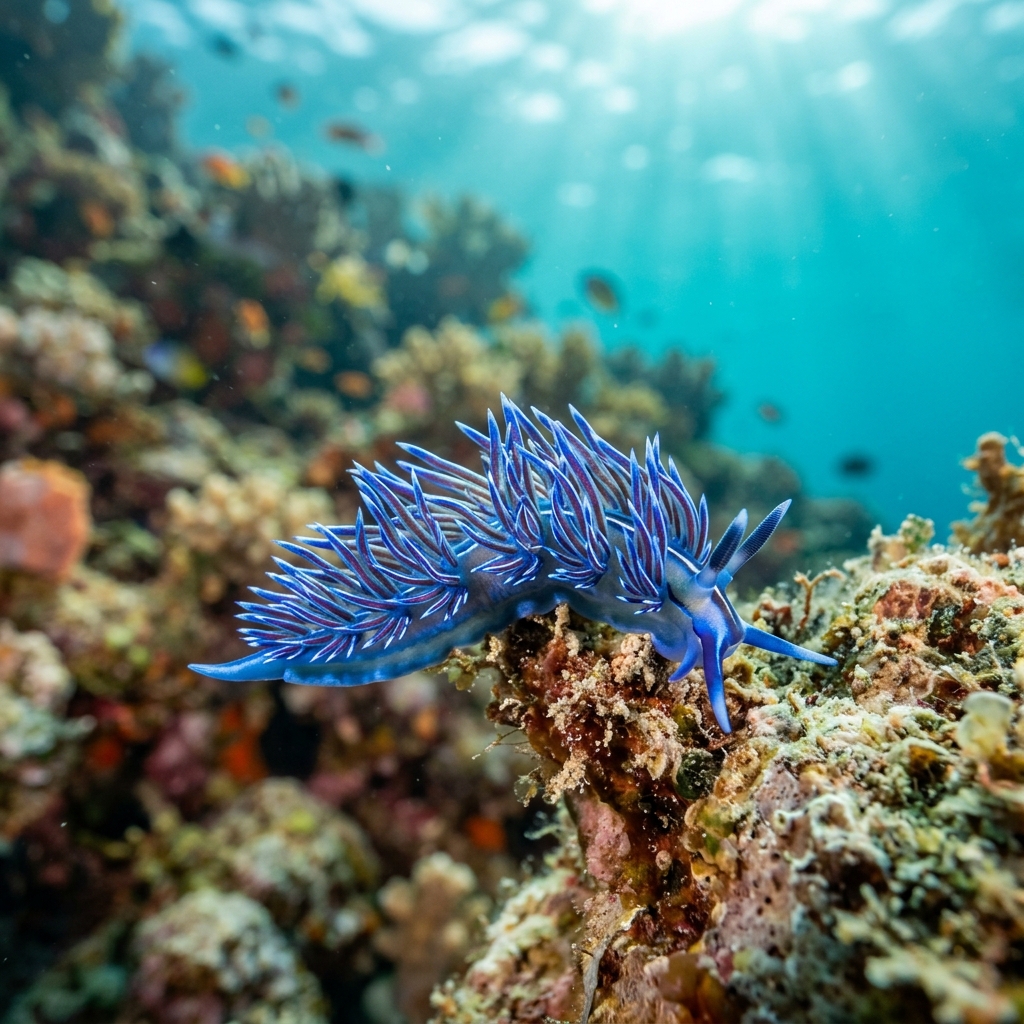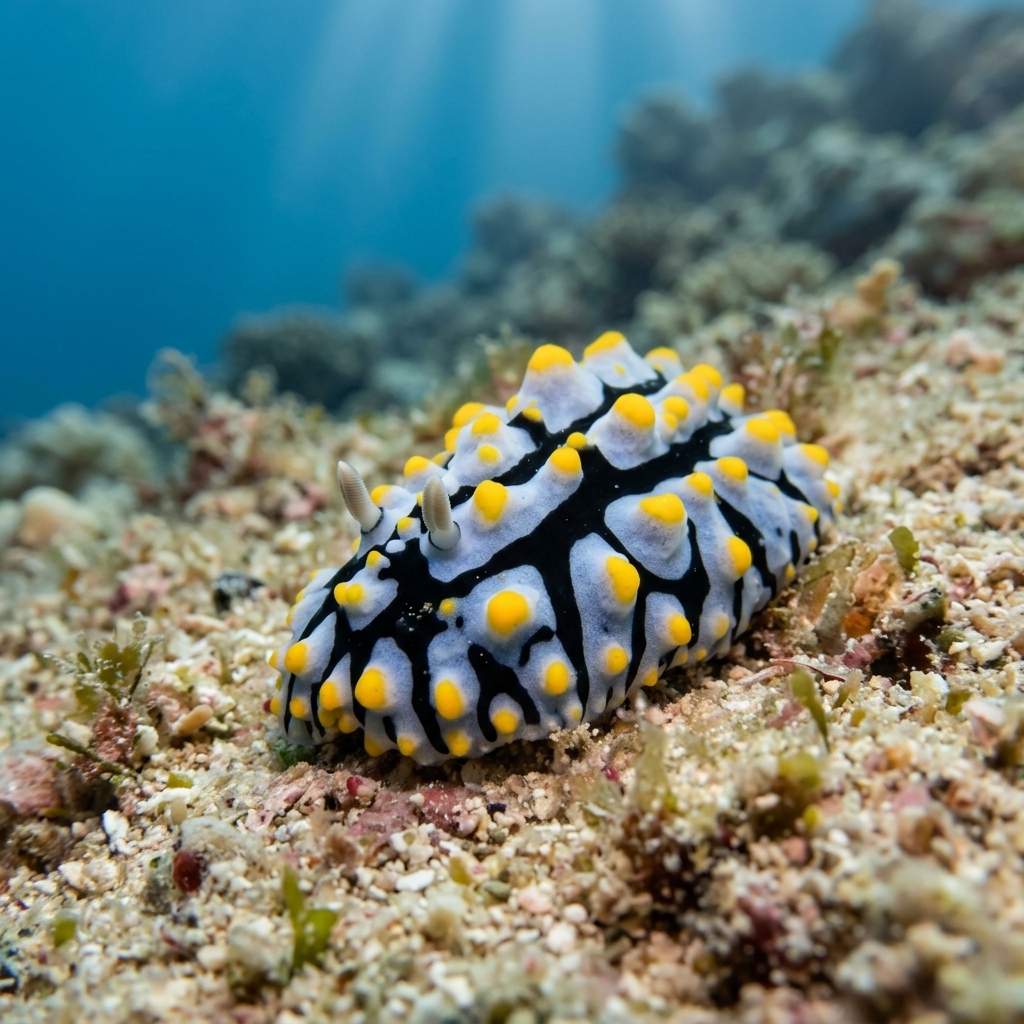
Aeolidia filomenae
Cold-water nudibranch most reliably found in Zeeland, Netherlands, in 9-15C water, no strong season yet logged.
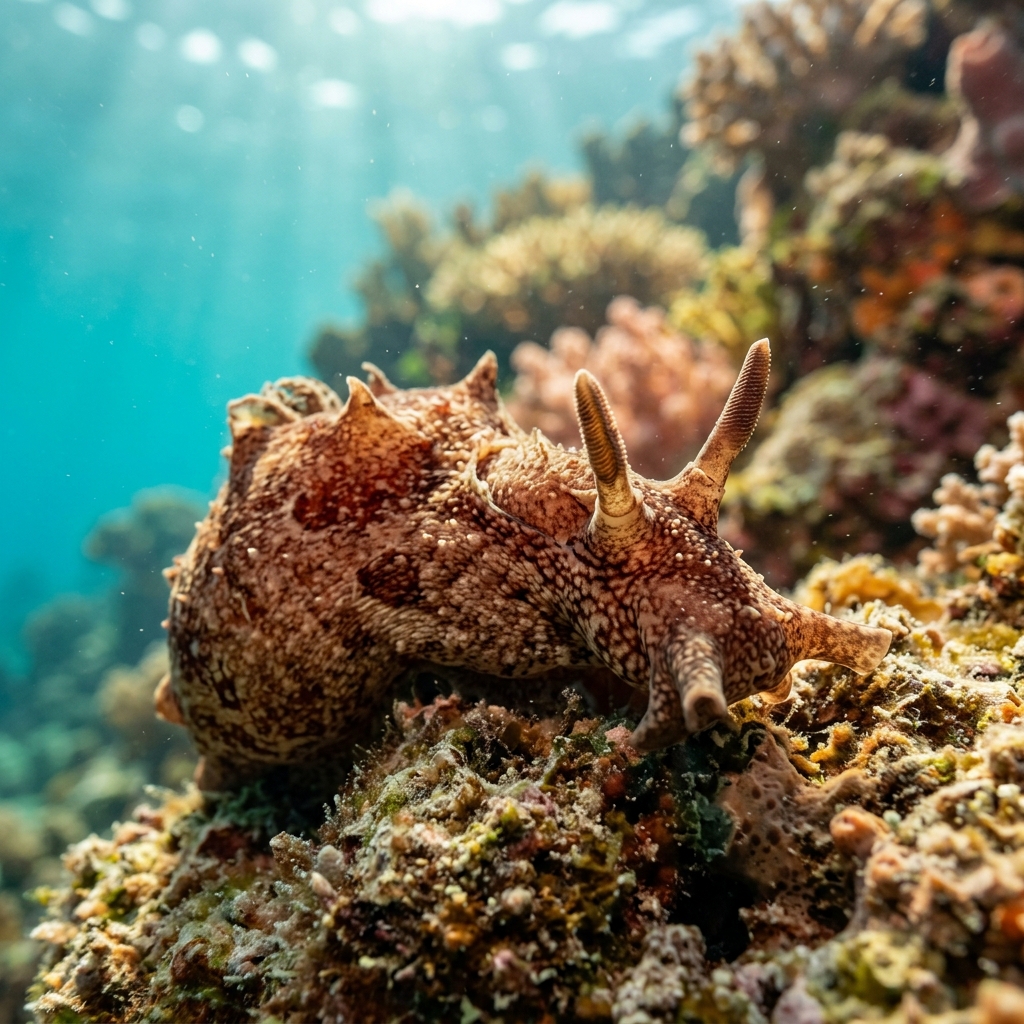
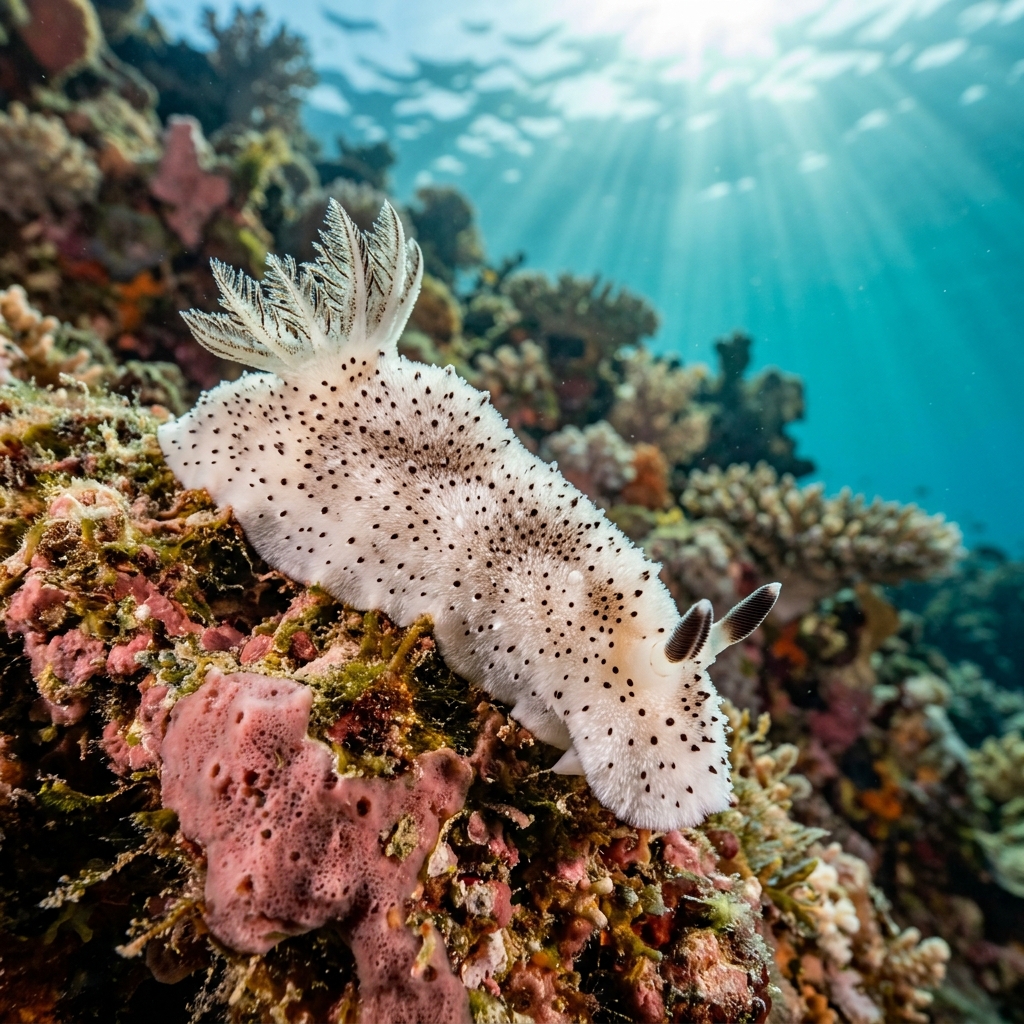
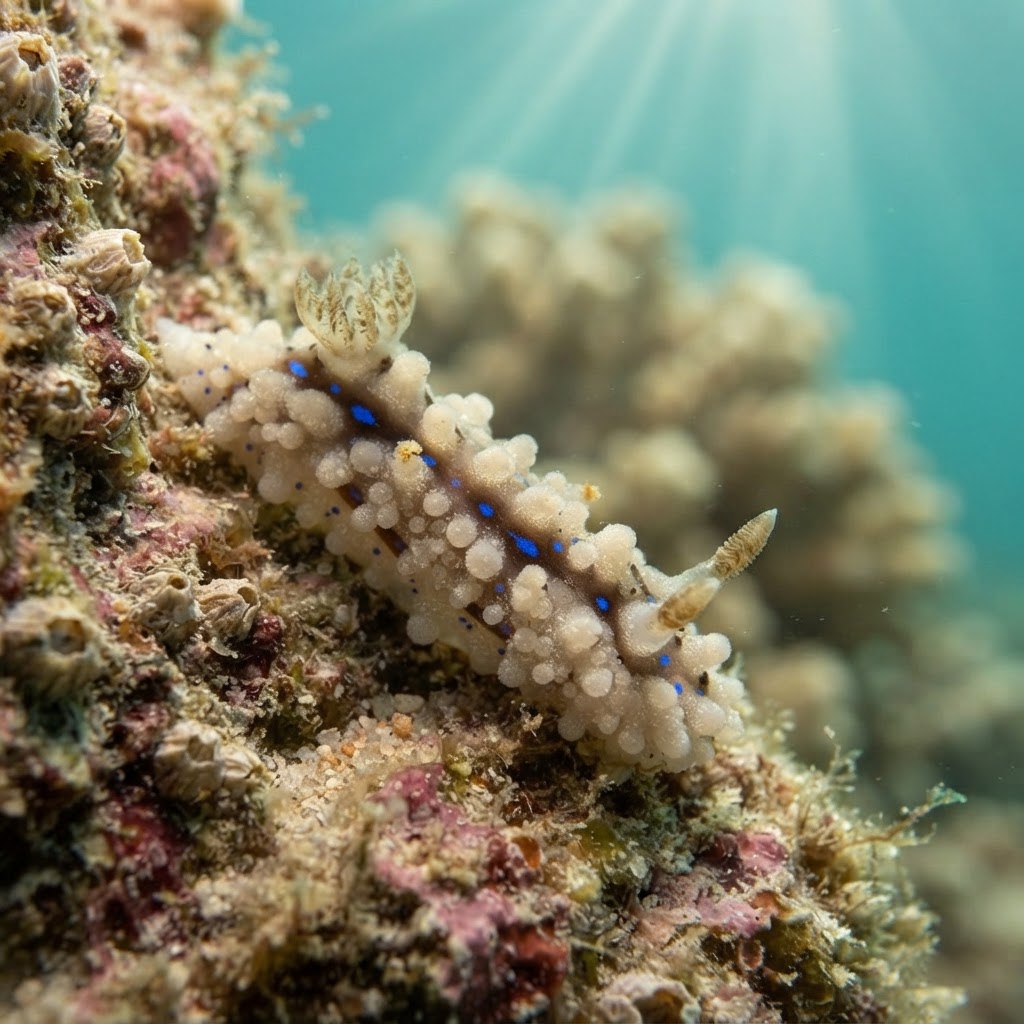
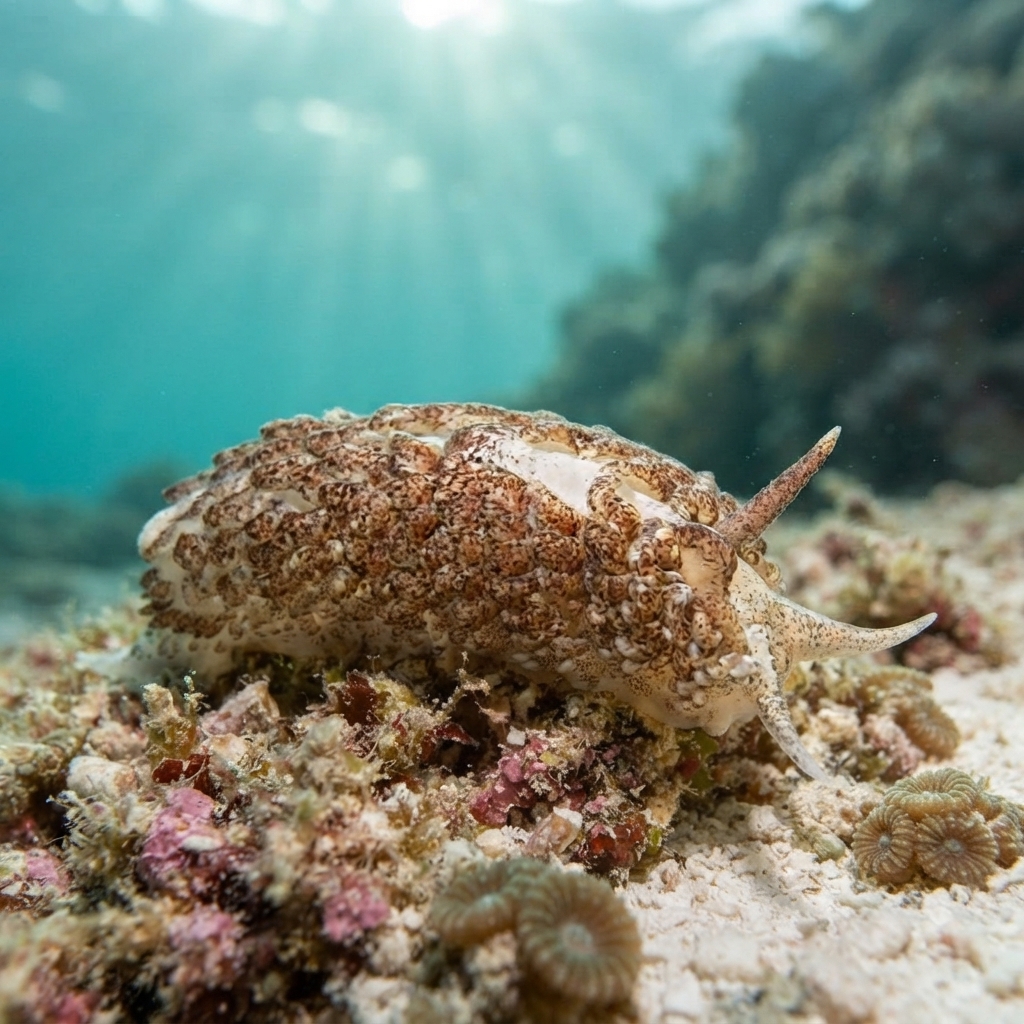
Look for a soft-bodied sea slug covered in dense, finger-like projections (cerata) along its back, giving it a fuzzy, almost furry silhouette rather than a smooth one. Colour tends to run through muted greys and browns, blending it into the rock and sediment it crawls over, which makes it easy to miss unless you slow down and scan closely. Its body is elongated and flattened against the substrate, with no obvious bright patterning to key on, so divers usually spot it by shape and texture first.
Divers most often log this species crawling slowly over rock and mixed substrate rather than out in the open water column, doing what nudibranchs do best: grazing. It shows no reaction to divers and simply carries on moving at its own pace, making it an easy, unhurried subject for a macro shot once you find one. Most sightings come from sites where it sits at uncommon-to-common frequency, so patient searching rather than luck tends to pay off.
Like other aeolid nudibranchs, this species likely feeds on sea anemones and related cnidarians, and can repurpose their stinging cells for its own defence by storing them in the tips of its cerata.
There is not enough seasonal data yet to call out a specific window, so treat this as a year-round possibility on cold-water sites. It sits comfortably in 9 to 15C water, the kind of temperature range found through much of the year in the North Sea, Channel and Irish Sea, which likely explains the lack of a sharp seasonal spike.
Zeeland in the Netherlands is by far the most reliable place to find this nudibranch, logged far more often here than anywhere else. Beyond that, it turns up as a dependable find across England, Northern Ireland, Wales and Brittany in France, with a single confirmed site each in Scotland and Normandy.
Mapping where Filomena's Aeolidia is logged…
Zeeland in the Netherlands is the strongest area for this species by a wide margin. It is also a dependable find across England, Northern Ireland, Wales and Brittany in France.
No clear season has emerged from diver logs so far, so it is best treated as a year-round sighting. It favours 9 to 15C water, a range common across much of the year in North Sea and Channel dive sites.
Check for a flattened, elongated slug covered in dense, fuzzy cerata along its back rather than smooth skin or bright patterning. Its grey-brown tones help it blend into rock and sediment, so slow, close scanning is key to spotting one.
No, this species poses no danger to divers. It is a small, slow-moving grazer with no sting or bite that affects humans.
Like related aeolid nudibranchs, it is thought to feed on sea anemones and similar cnidarians. It can store its prey's stinging cells in its own cerata as a defence against predators.
Site and sighting data is aggregated from diver logs, iNaturalist and GBIF. For taxonomy and conservation status:
Light-spotted Aegires
3,168 sites