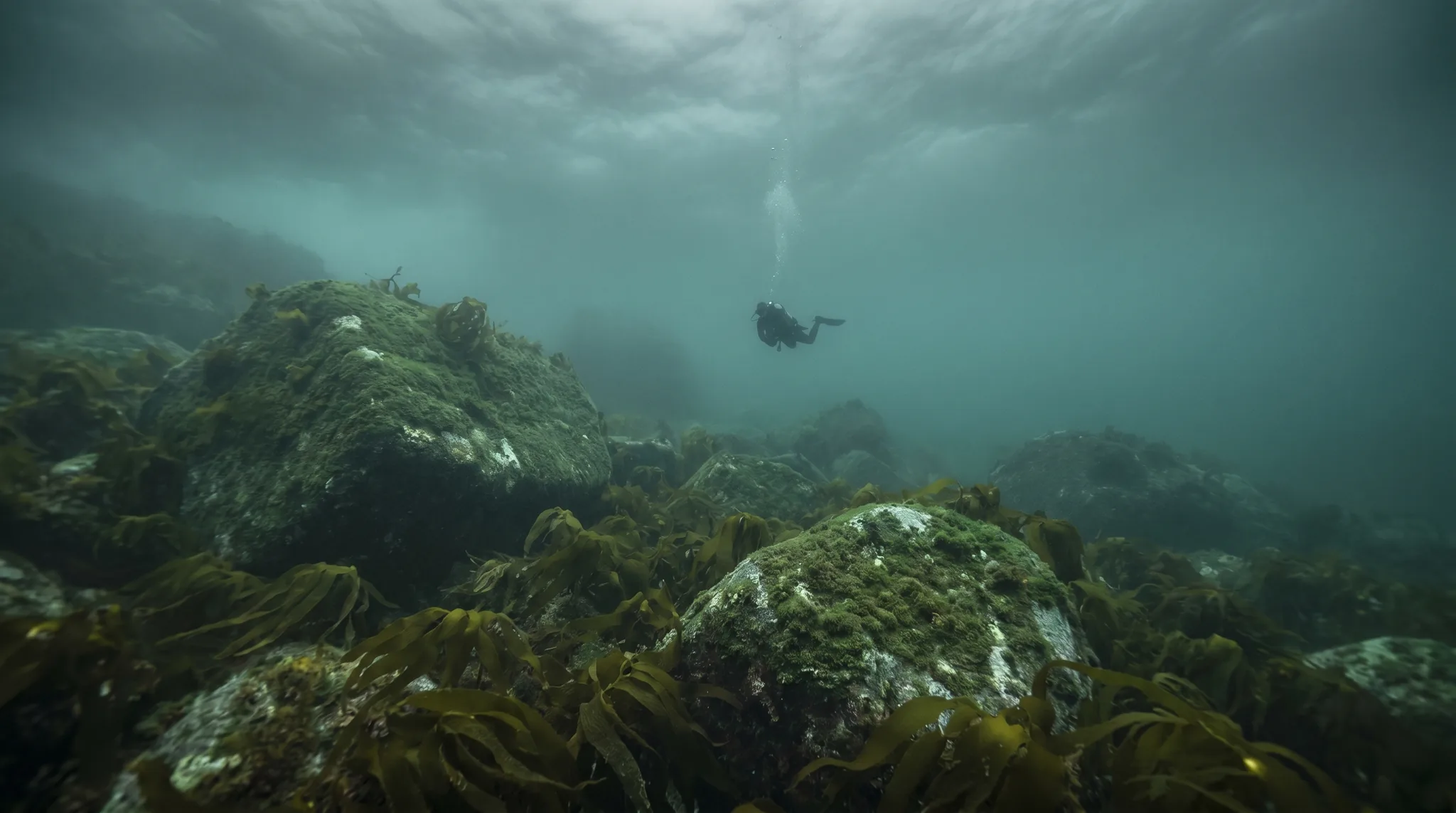
Best for beginner divers, 8-12m, shore entry, mild current.
Pedra da Gaivota is a reef dive located near Lagos, Portugal, suitable for beginner divers. The site features a depth range of 8 to 12 metres, with an average depth of 10 metres. Divers can expect mild currents and visibility between 5 and 10 metres. Due to the presence of sharp rocks and reef structures, careful buoyancy control is required. Water temperatures fluctuate between 15 and 19 degrees Celsius throughout the year, making a 5mm wetsuit advisable. Typical dives last approximately 45 minutes. While shore entry is possible, local guidance suggests checking current conditions and facility availability before planning a dive.
37.07780, -8.74350
Wear at least a 5mm wetsuit even in summer, as 15 degrees Celsius is common and the cold can sneak up on you during longer dives. Check locally for current facility availability before heading out, as amenities at the entry point can be limited.
Access info coming soon
Recorded at this site
Depth
8-12m
Visibility
5-10m
Skill Level
Beginner
Entry
Shore
Water Temp
15-19°C
Current
Mild
Typical Dive
45 min
Best Time
Jun, Jul, Aug, Sep
Yes, the site is suitable for beginner divers looking to build confidence, provided they maintain careful buoyancy control around the reef.
The site sits at a depth of 8 to 12 metres, with an average depth of 10 metres.
While the site is a shore-entry reef, local advice recommends using a boat to avoid surf and shore break hazards.
Visibility typically ranges from 5 to 10 metres with mild currents. Water temperatures vary between 15 and 19 degrees Celsius.
Divers should be cautious of sharp rocks and reef structures, which require good buoyancy control to avoid injury.
Diving at Pedra da Gaivota in Lagos requires the following certifications: Open Water. Always dive within your training limits.
A 7mm wetsuit or semi-dry is recommended for diving at Pedra da Gaivota in Lagos. Water temperatures range from 15°C to 19°C.
The best months to visit Pedra da Gaivota in Lagos are June, July, August, and September. Conditions outside these months can still be good but are less predictable.