Emydocephalus spp.
Blunt-nosed reef snakes turning up across Queensland and Okinawa in warm 23-28C water, most often seen cruising shallow coral year-round.
Safety warning
This animal carries a powerful venom delivered by a bite or a harpoon-like sting, and it can be fatal. Never handle it or pick up its shell, even one that looks empty.
If you're bitten
Venomous biteGeneral first-aid guidance, not a substitute for professional medical care. In an emergency, call your local emergency number.
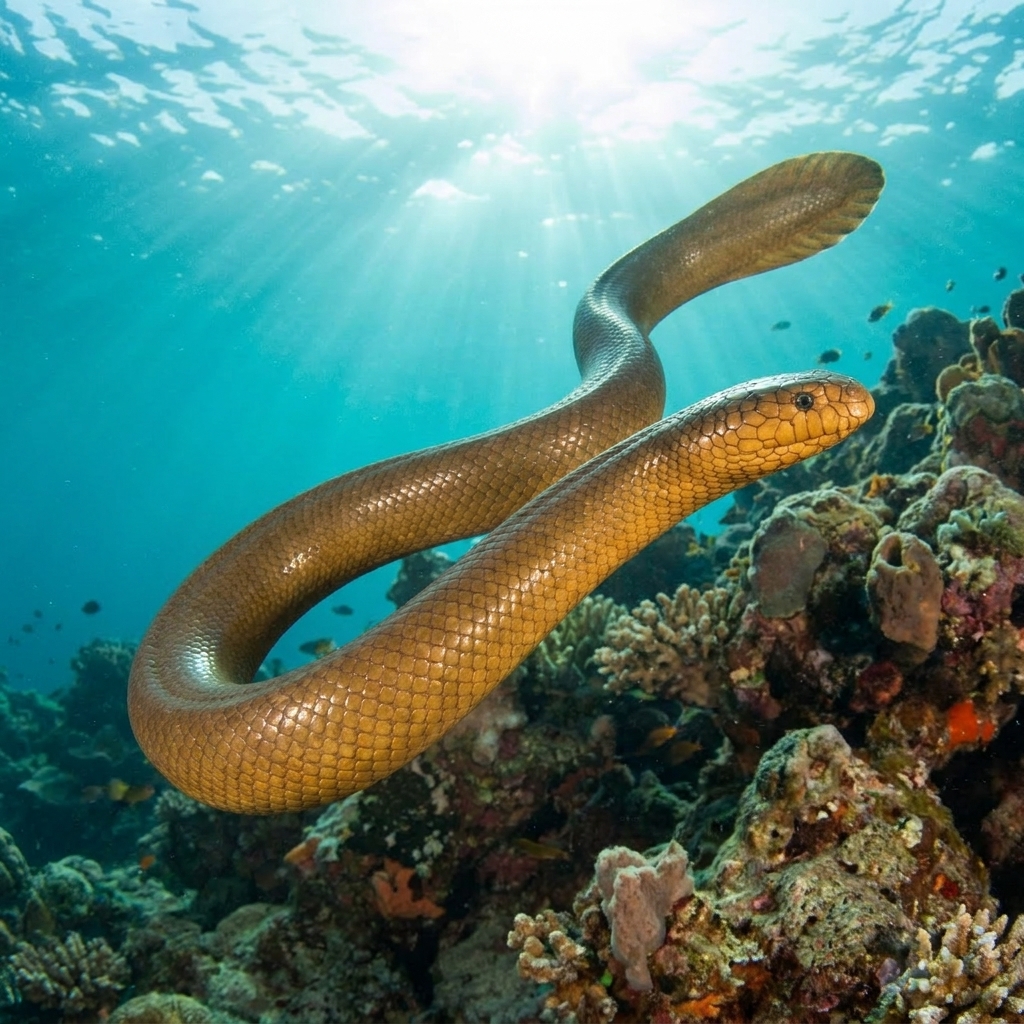
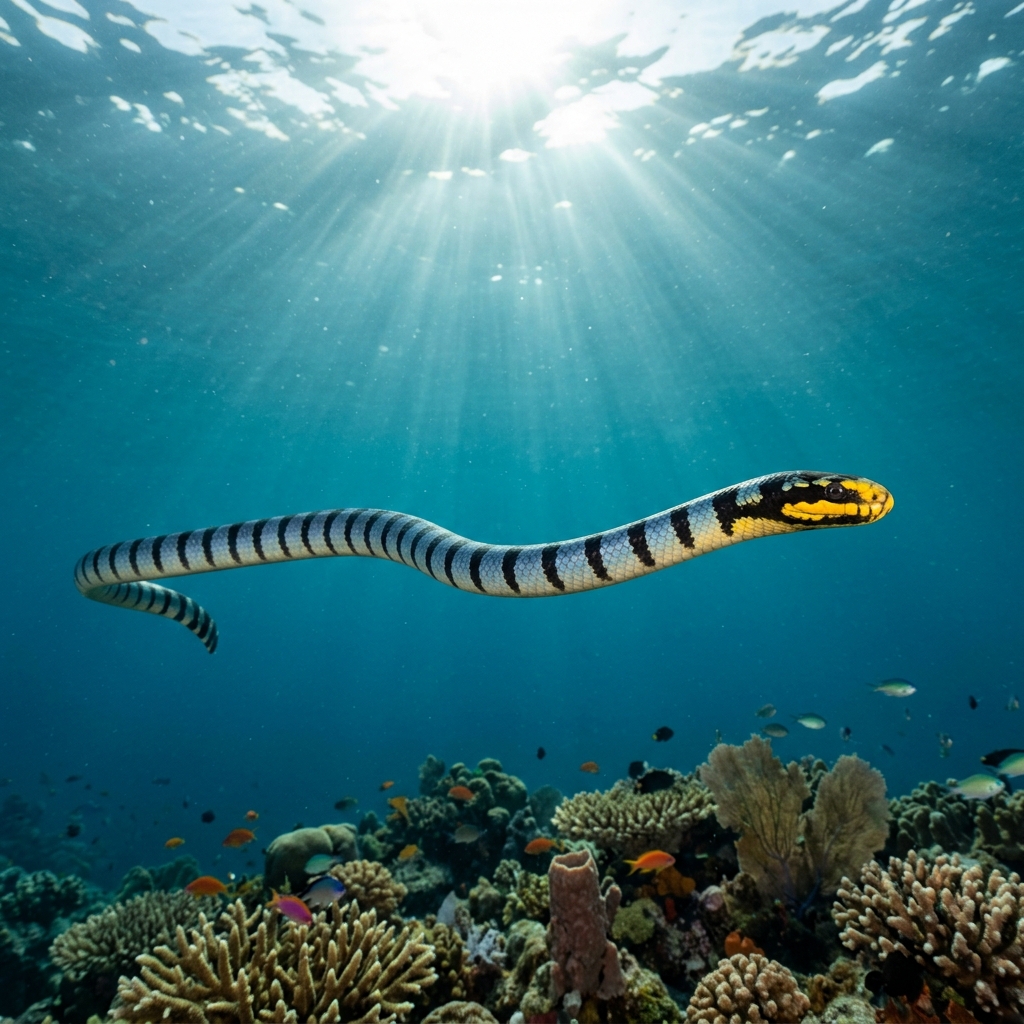
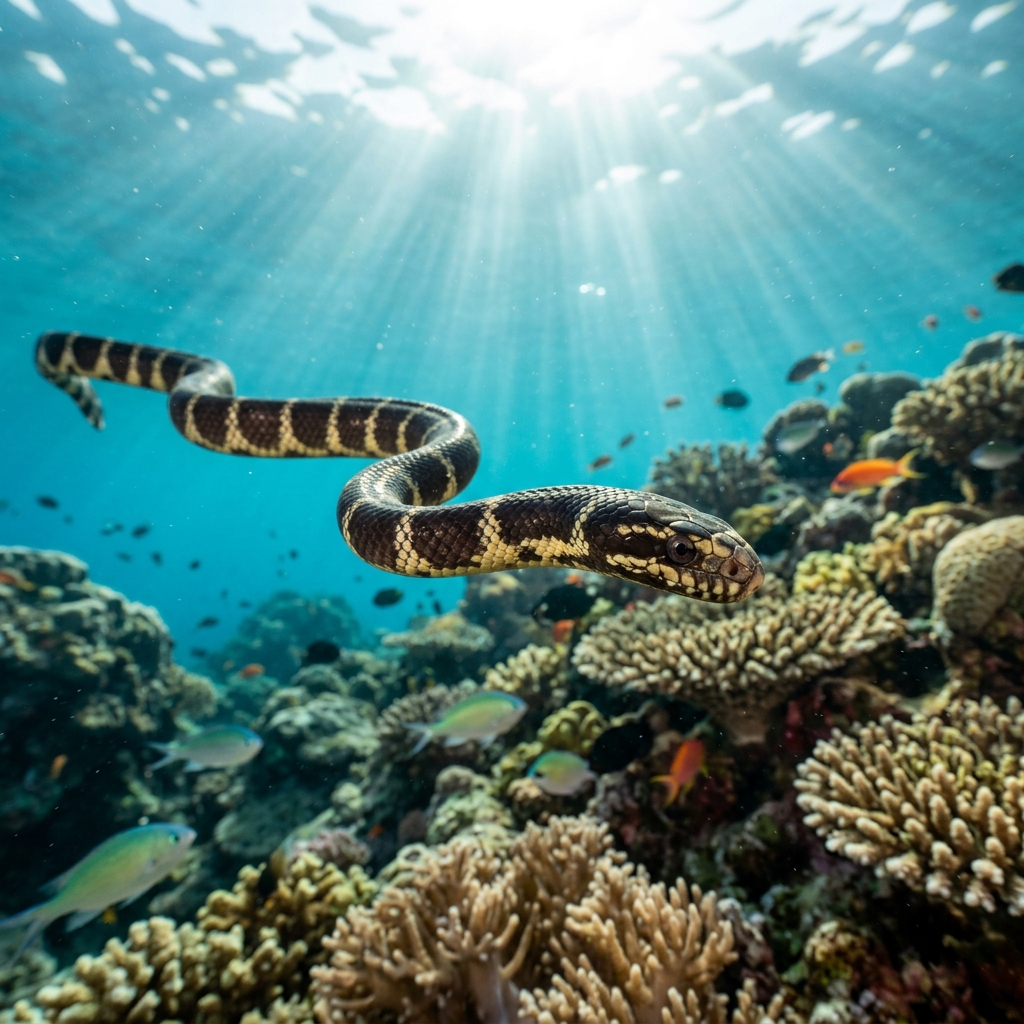
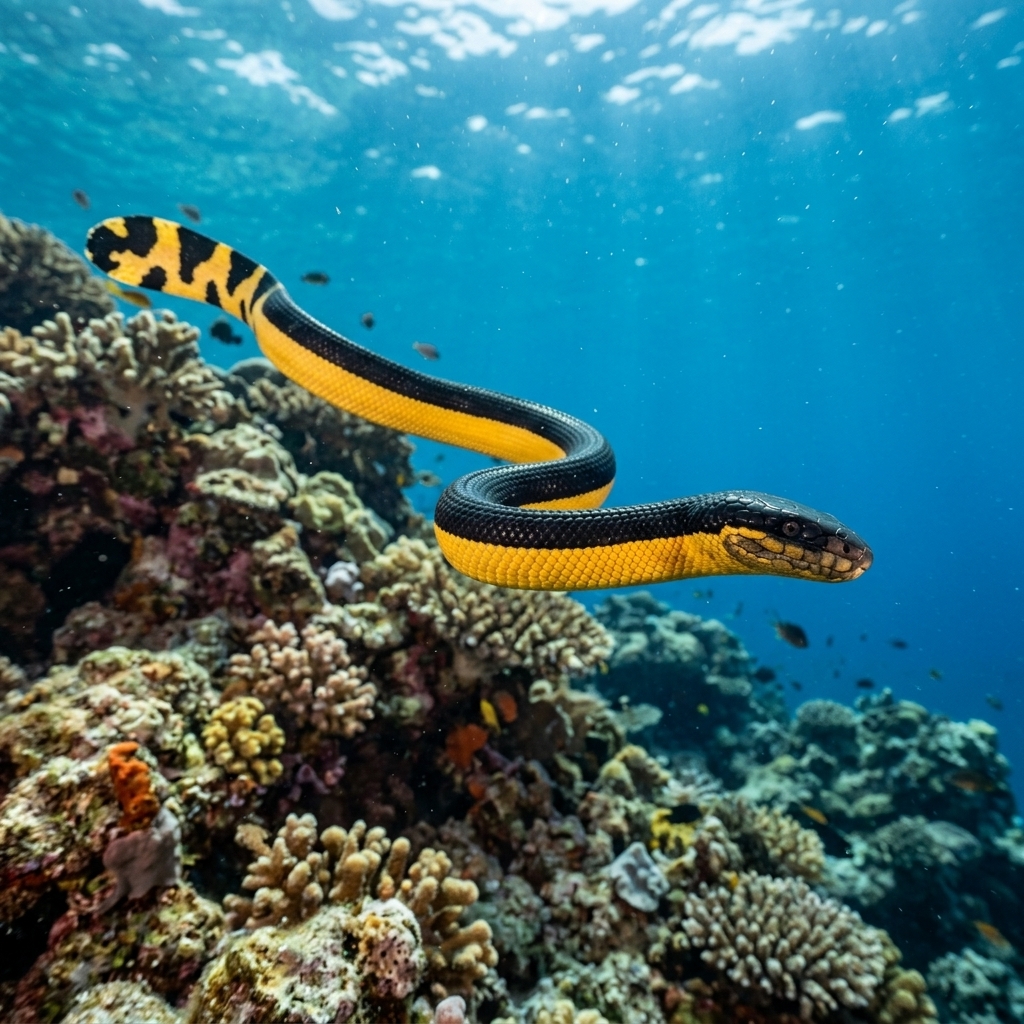
Look for a blunt, rounded snout (the trait behind the name) and a thick, paddle-tailed body patterned in dull grey-white bands or blotches rather than sharp black-and-white stripes. Males tend to run slimmer and darker than the heavier-bodied, paler females. They move slowly along the bottom or hover over coral heads rather than swimming fast in open water, which helps separate them from the more streamlined, actively cruising species they get mistaken for.
Divers most often find them nosing slowly through coral rubble and low reef structure in shallow water, poking into crevices rather than swimming in the open. They are unhurried around divers, usually continuing to forage or rest rather than fleeing, and most sightings come from daytime dives on shallow inshore or lagoon reef rather than deep drop-offs.
Unlike most sea snakes that hunt fish, Emydocephalus species have lost their venom fangs almost entirely and feed by picking fish eggs directly off coral and rock, which is also why their blunt snout evolved for grazing rather than striking.
No clear seasonal pattern shows up in the sightings, and a comfortable range of 23.4 to 27.8C means these snakes sit on shallow tropical and subtropical reefs all year, so any month at a known site is fair game.
Reef neighbours a diver could mistake it for. Use the identification notes above to tell them apart.
Most reliably logged on the Great Barrier Reef and inshore reefs of Queensland, with strong additional records through the Visayas in the Philippines and Okinawa and the wider Ryukyu Islands in Japan. Smaller but consistent populations turn up in Western Australia, Luzon, Nusa Tenggara in Indonesia, and around Nouméa in New Caledonia and Viti Levu in Fiji.
Mapping where Turtle-headed Sea Snake is logged…
Queensland's Great Barrier Reef is the strongest area, with reliable records also through the Visayas in the Philippines and Okinawa in Japan. Smaller populations are logged in Western Australia, Indonesia's Nusa Tenggara, New Caledonia, and Fiji.
There is no strong seasonal pattern in the sightings data, and the 23 to 28C temperature range they favour holds across most of the year on tropical reefs, so they are considered a year-round find at known sites.
They are not considered dangerous to divers. This genus has largely lost its venom-delivery fangs and feeds on fish eggs rather than hunting, and they are typically unbothered by divers nearby.
Check for a short, blunt snout and dull grey-white banding rather than crisp black-and-white stripes, plus a slow, deliberate crawl over coral rather than active open-water swimming. Males are slimmer and darker, females heavier-bodied and paler.
They graze fish eggs straight off coral surfaces instead of hunting live prey, an unusual diet for a sea snake that has led to a reduced, near-toothless bite with little venom function left.
Site and sighting data is aggregated from diver logs, iNaturalist and GBIF. For taxonomy and conservation status:
Olive-brown Seasnake
40 sites