Hydrophis platurus
Most sightings come from the Papagayo Gulf and Gulf of Mexico. See when and where divers actually encounter this open-water snake.
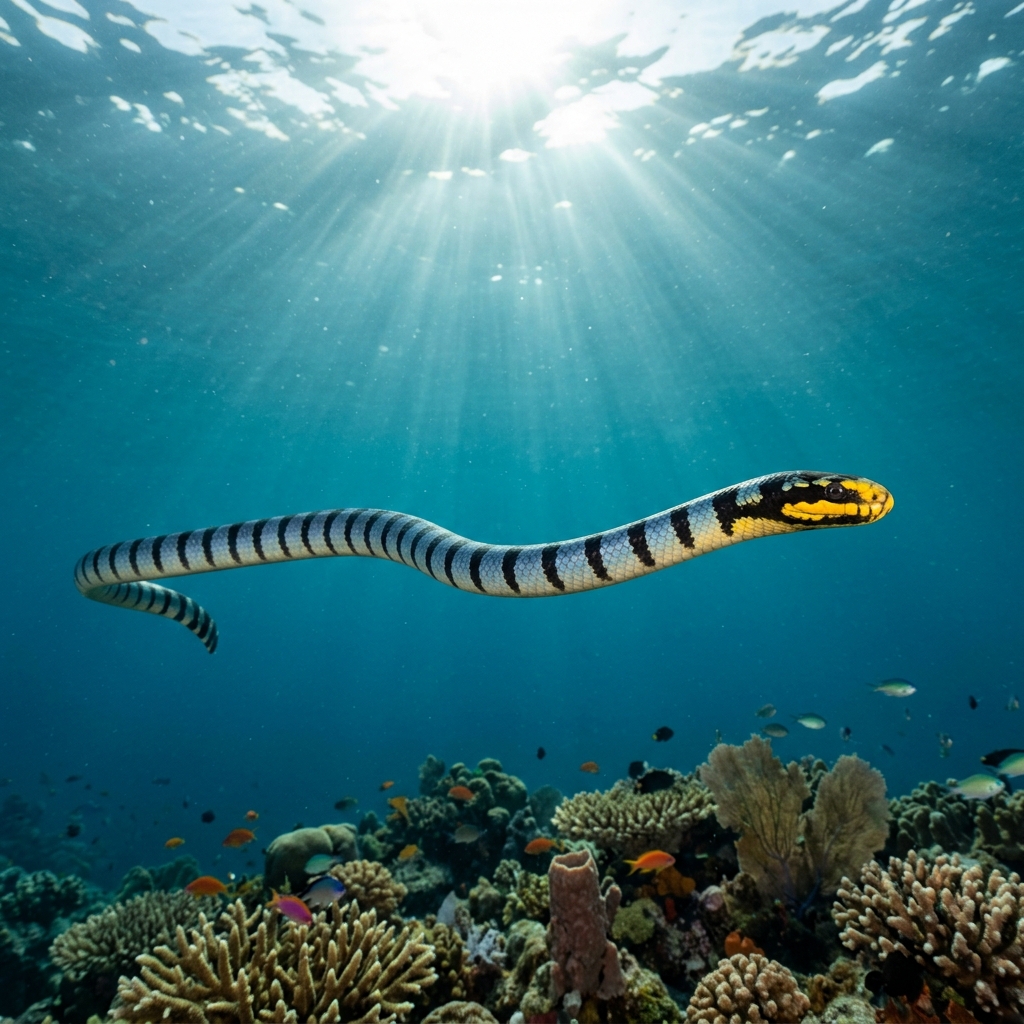
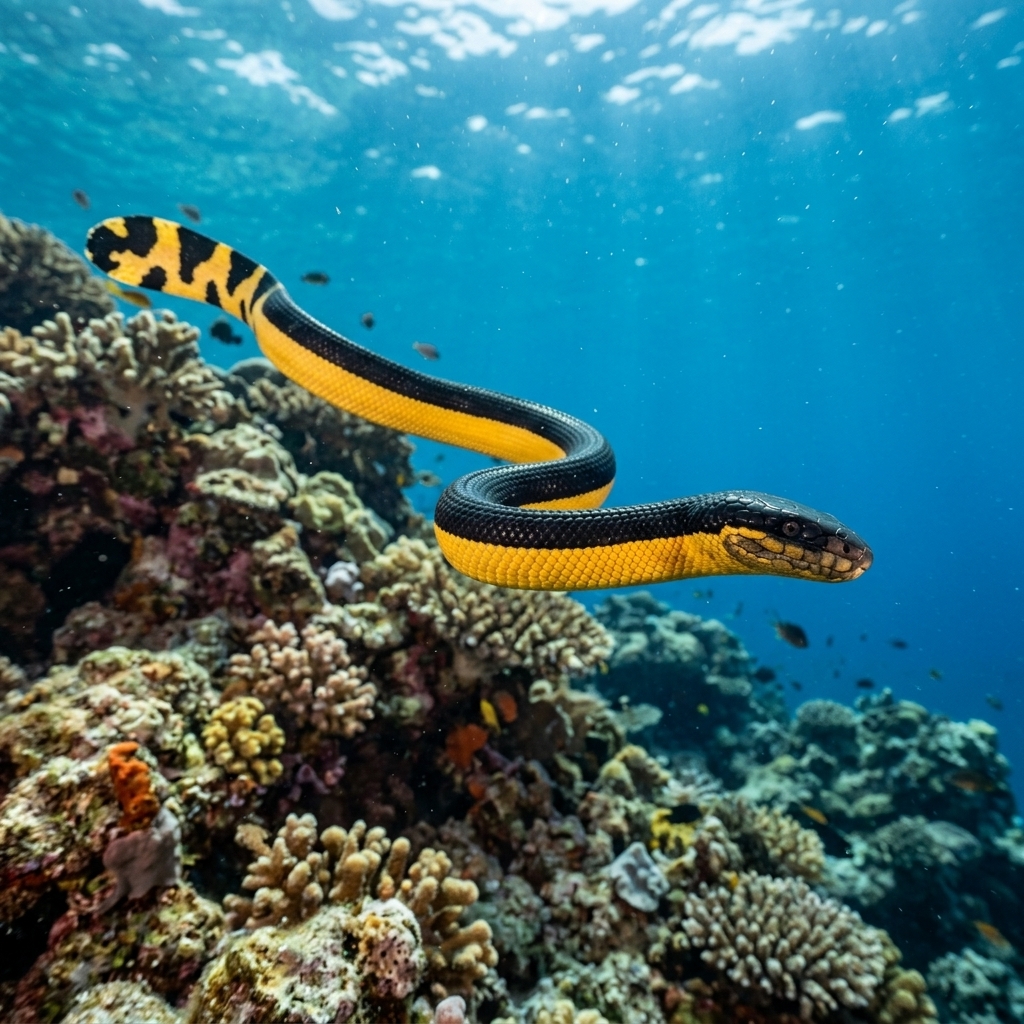
Look for a slender, flattened body with a striking yellow underside and bold black banding or blotching along the upper body, giving a two-tone appearance that is unlike most reef fish. The tail is distinctly paddle-shaped, flattened laterally to aid swimming, and often shows strong yellow and black patterning. Rarely exceeds a metre in length and appears quite slim in the water column. It is almost always seen near the surface rather than close to the reef, drifting or swimming in open water.
This is an open-water species, so encounters typically happen near the surface rather than on the reef itself, often when divers or snorkellers are crossing deeper water between sites. It tends to be unhurried and relatively indifferent to divers, continuing its slow, sinuous swimming at the surface. It comes up periodically to breathe, so watch for it breaking the surface in calm conditions.
It is one of the most widely distributed sea snakes on earth, ranging across the entire tropical Indo-Pacific and into the eastern Pacific, making it the only sea snake regularly found in the open ocean far from any coast.
In the northern hemisphere sites where seasonality data exists, sightings concentrate between January and April, suggesting the cooler end of the tropical season, when water temperatures still sit comfortably within its observed range of around 23 to 29°C.
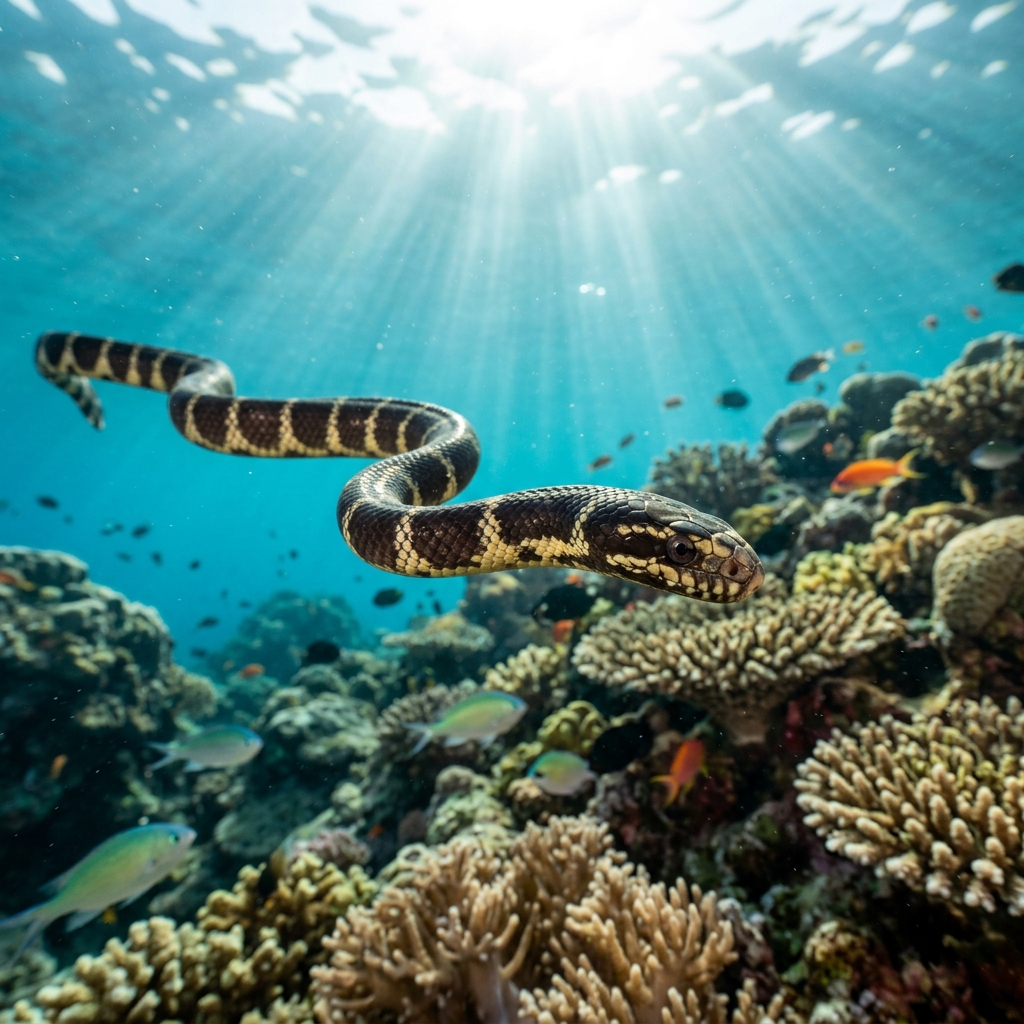
Reef neighbours a diver could mistake it for. Use the identification notes above to tell them apart.
Most sightings come from Mexico and Costa Rica, with the Papagayo Gulf in Costa Rica and the Gulf of Mexico and South region of Mexico accounting for the bulk of logged encounters. The Pacific Coast of Mexico is also a reasonable spot to look. All recorded observations fall within warm tropical Pacific and Gulf waters.
Mapping where Pelagic Sea Snake is logged…
Divers most commonly log this species in the Papagayo Gulf in Costa Rica and in the Gulf of Mexico region of Mexico. The Pacific Coast of Mexico also produces sightings. Encounters tend to happen at the surface in open water rather than on the reef itself.
Based on diver sightings from northern hemisphere sites, January through April appears to be the most productive window. Water temperatures in the observed range of around 23 to 29°C support its presence in these tropical locations during those months.
They are not considered dangerous to divers. Like all sea snakes they are venomous, but they are docile and not inclined to bite unless severely provoked or handled. The standard advice is simply to observe from a respectful distance and not attempt to touch or restrain one.
Key features are the bright yellow underside contrasting with dark banding or blotching on the back, a clearly paddle-shaped tail, and its habit of swimming near the surface in open water. Sea kraits look superficially similar but have a more cylindrical tail and are usually found resting on or near coral reefs rather than in open water.
They are relatively slender snakes. Most individuals encountered by divers appear well under a metre in length, though some adults can reach around a metre. In the water they look quite slim compared with eels of similar length.
It is the only sea snake regularly found far out in the open ocean, well away from any coast or reef. It can also absorb some oxygen directly through its skin while submerged, which helps extend its dive time between breaths at the surface.
Site and sighting data is aggregated from diver logs, iNaturalist and GBIF. For taxonomy and conservation status:
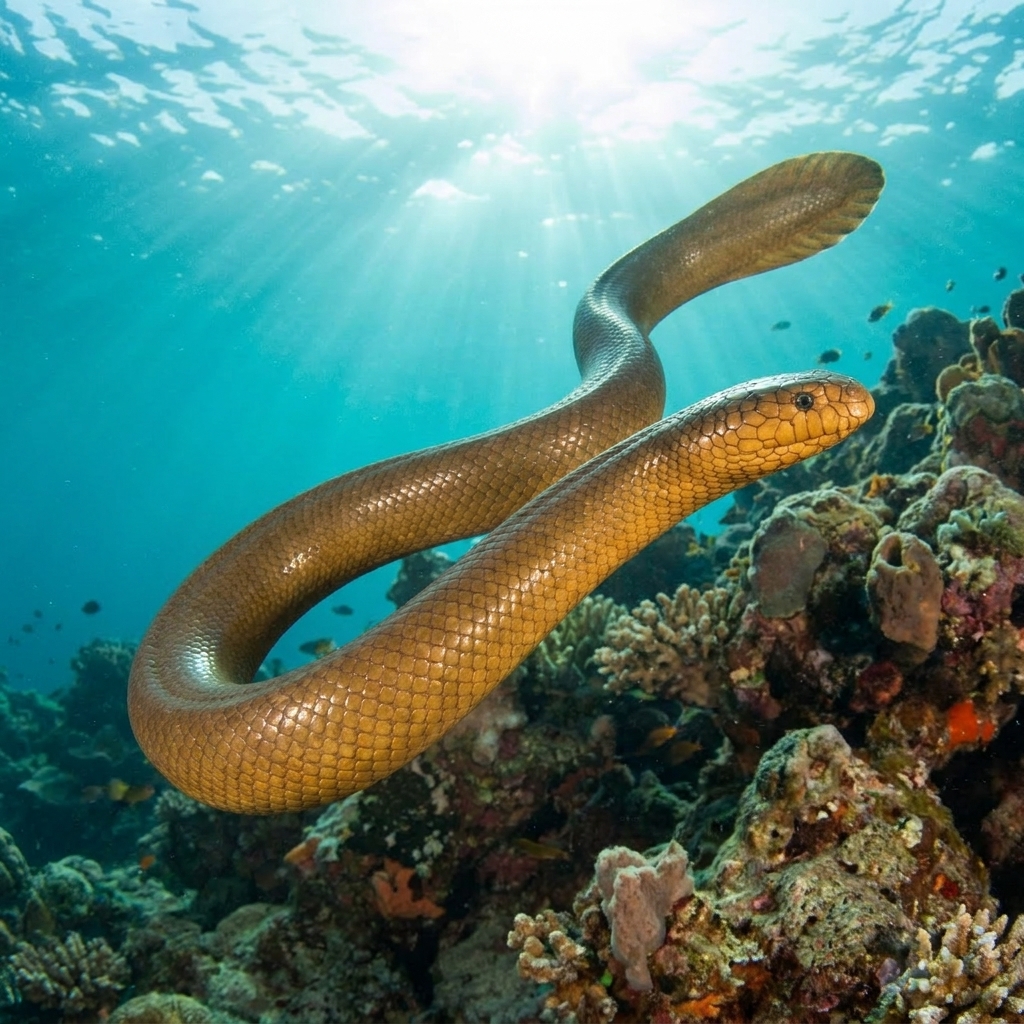
Olive-brown Seasnake
40 sites