Emydocephalus ijimae
Spot Ijima's Sea Snake year-round in Okinawa, the Philippines and Taiwan. A rare find on coral reefs between 22-27 °C. Here's where and how to ID it.
Safety warning
This animal carries a powerful venom delivered by a bite or a harpoon-like sting, and it can be fatal. Never handle it or pick up its shell, even one that looks empty.
If you're bitten
Venomous biteGeneral first-aid guidance, not a substitute for professional medical care. In an emergency, call your local emergency number.
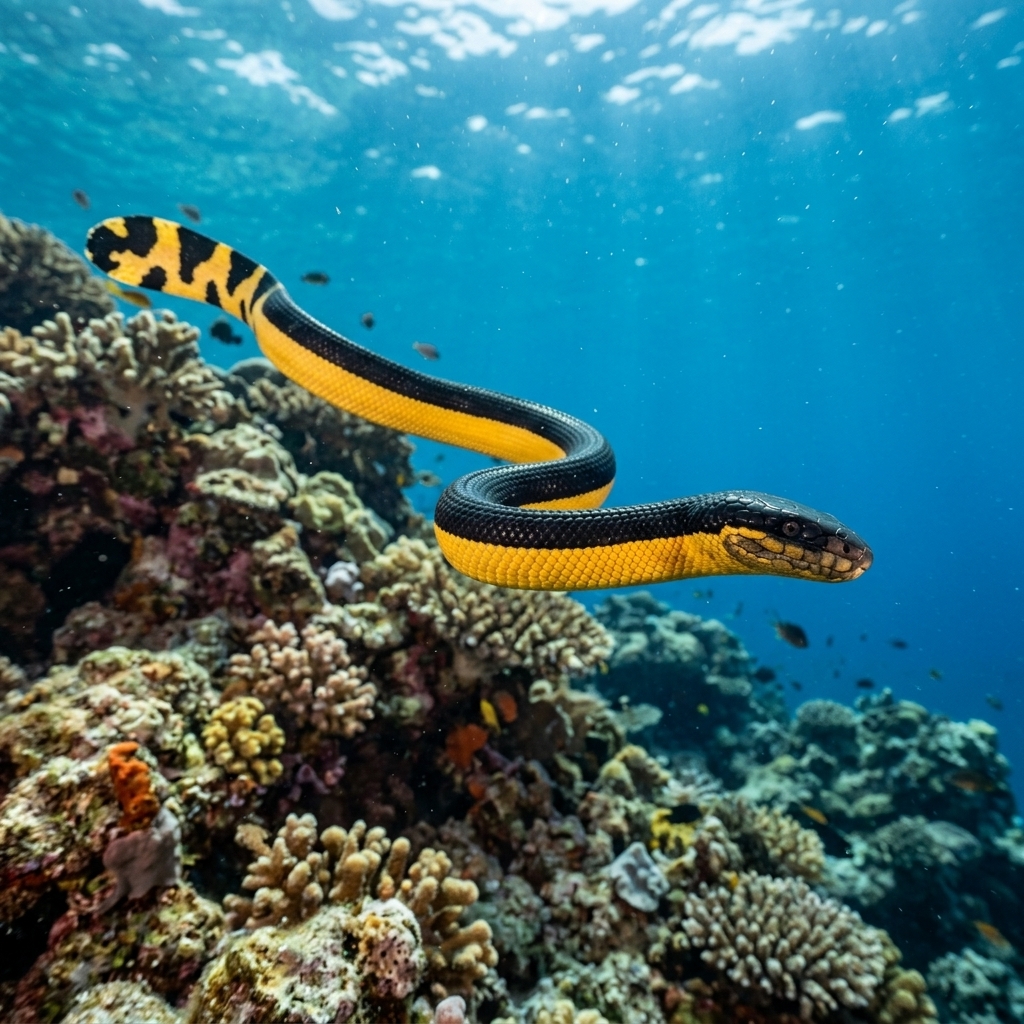
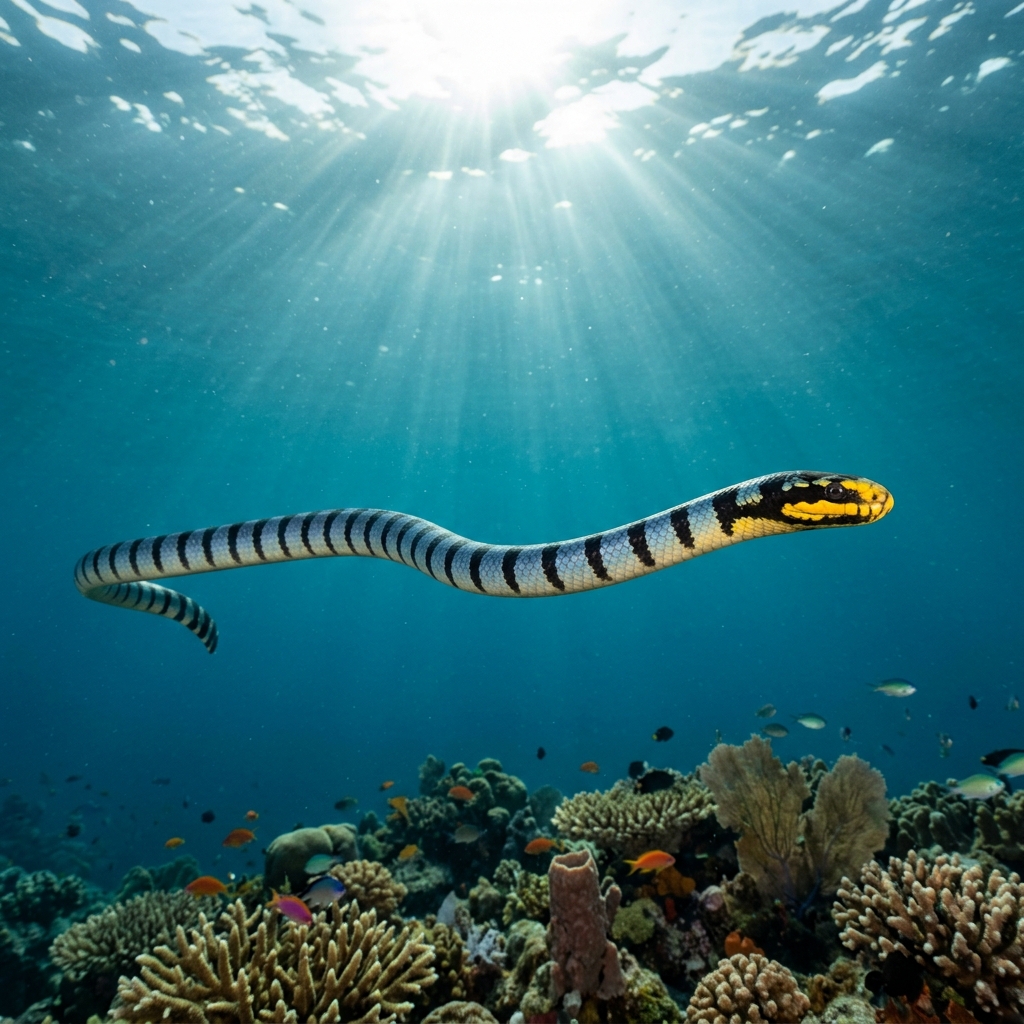
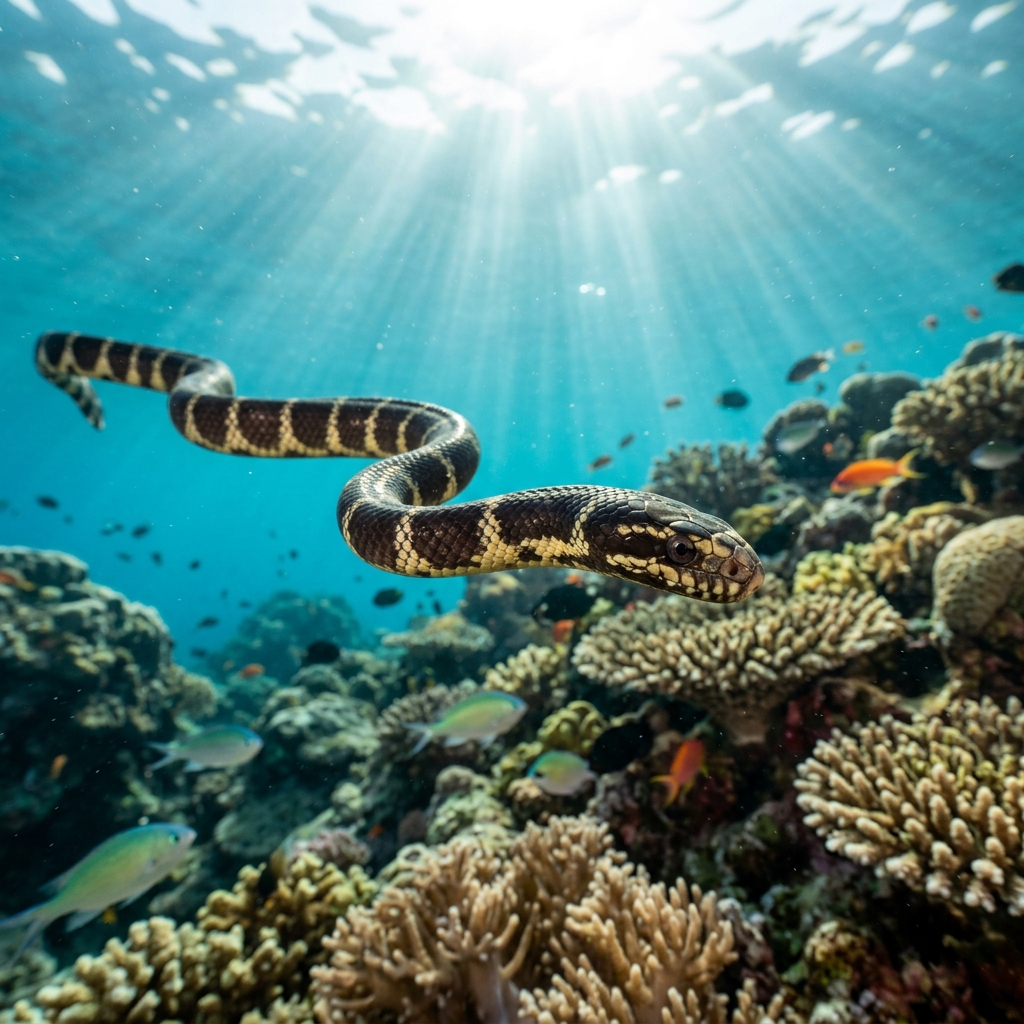
A compact, smooth-scaled sea snake with a distinctly small, rounded head that looks almost too tiny for the body, this flattened, paddle-tailed build is the key underwater cue. Body colouration is typically dark, often appearing black or very dark grey with pale banding that may be subtle in murky conditions. The head shape is the single most useful field mark: much narrower and blunter than most sea snakes, reflecting its specialist diet. Size in the water reads as a slender, medium-length snake, though precise length data is limited.
Ijima's sea snake is most often encountered slowly working over the reef substrate, probing coral rubble and crevices with its small head in search of fish eggs, its highly specialised food source. It tends to be unhurried and largely indifferent to divers who approach calmly, though like all sea snakes it will move away if cornered or pestered. Encounters are typically brief reef-level affairs in shallow to moderate depths.
Ijima's sea snake is an egg-eating specialist: that unusually small, blunt head is a direct adaptation for extracting fish eggs from coral and rubble, and its venom delivery system is correspondingly reduced because it simply does not need to subdue prey.
Sightings are recorded year-round with no concentrated season, consistent with its presence on warm tropical and subtropical reefs in the 22 to 27 °C temperature band those sites maintain throughout the year.
Reef neighbours a diver could mistake it for. Use the identification notes above to tell them apart.
Most sightings come from Japan, particularly across the Okinawa Islands and the Yaeyama and Miyako Islands, which together account for the majority of logged encounters. The Central Visayas in the Philippines and the island sites of Green Island and Lanyu in Taiwan are also strong areas. A smaller but consistent population is recorded around Nouméa, New Caledonia.
Mapping where Ijima's Sea Snake is logged…
The Okinawa Islands in Japan are the top location by a wide margin, with additional strong sighting records across the Yaeyama and Miyako Islands. The Central Visayas in the Philippines, Green Island and Lanyu in Taiwan, and reefs around Nouméa in New Caledonia are also reliable areas to look.
There is no single peak season. Divers log it throughout the year across its range, which makes sense given that its reef habitats stay within its preferred temperature band of roughly 22 to 27 °C year-round.
No. Ijima's sea snake is not considered dangerous to divers. Its mouth and venom apparatus are adapted for eating fish eggs, not subduing large prey, and it shows little interest in humans. Simply avoid handling or cornering it and you will have no trouble.
Focus on the head: it is disproportionately small, rounded, and blunt compared to other sea snakes, the clearest field mark underwater. The body is dark, often near-black with pale or faint banding, and the tail is flattened into the paddle shape typical of true sea snakes. Sea kraits look similar at a glance but have more distinct black and pale banding and a slightly larger head.
It is a dedicated fish-egg specialist, using its tiny blunt head to root through coral rubble and crevices for deposited eggs. This diet is why its head looks so different from most sea snakes, and why its venom apparatus is reduced, it has no need to kill active prey.
Site and sighting data is aggregated from diver logs, iNaturalist and GBIF. For taxonomy and conservation status:
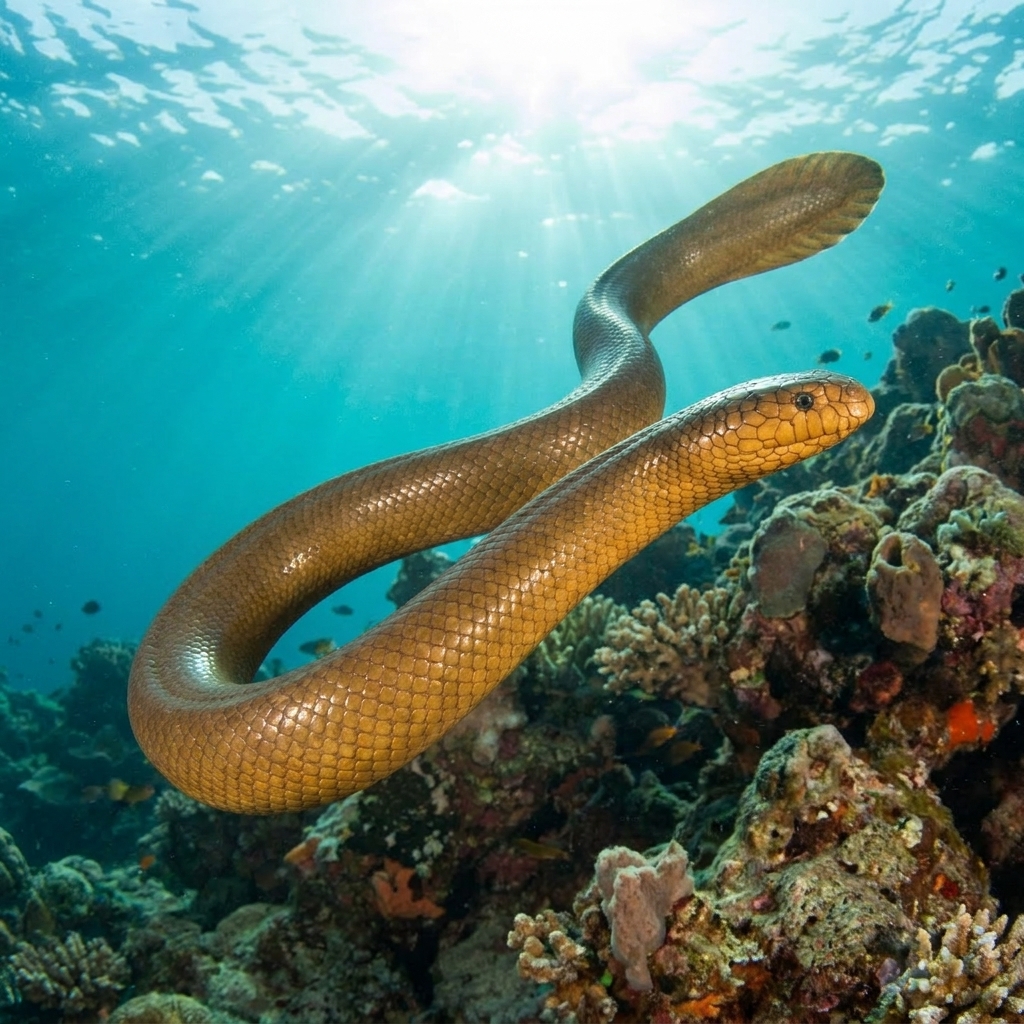
Olive-brown Seasnake
40 sites