Aipysurus laevis
Spot the olive-brown seasnake in Western Australia and Queensland in waters from 22-27 °C. Here's where divers log it and how to tell it apart.
Safety warning
This animal carries a powerful venom delivered by a bite or a harpoon-like sting, and it can be fatal. Never handle it or pick up its shell, even one that looks empty.
If you're bitten
Venomous biteGeneral first-aid guidance, not a substitute for professional medical care. In an emergency, call your local emergency number.
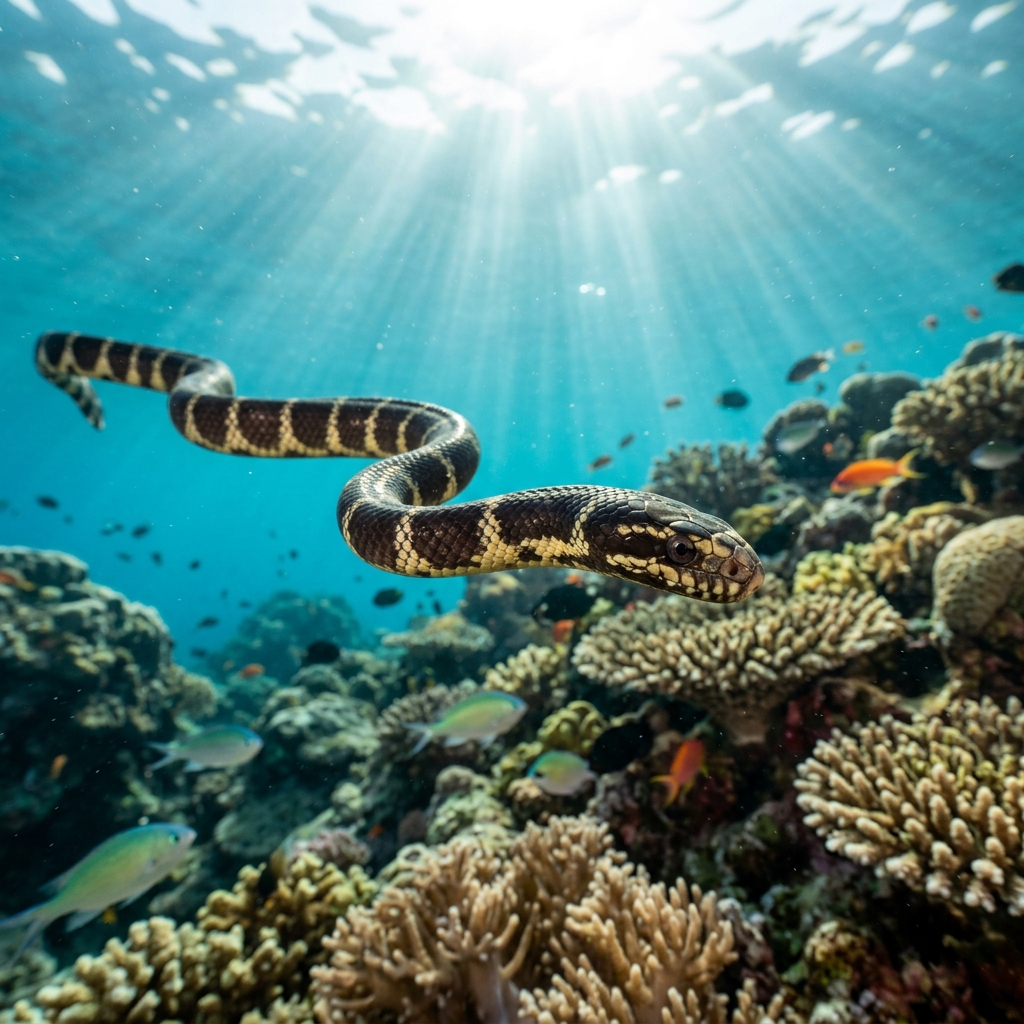
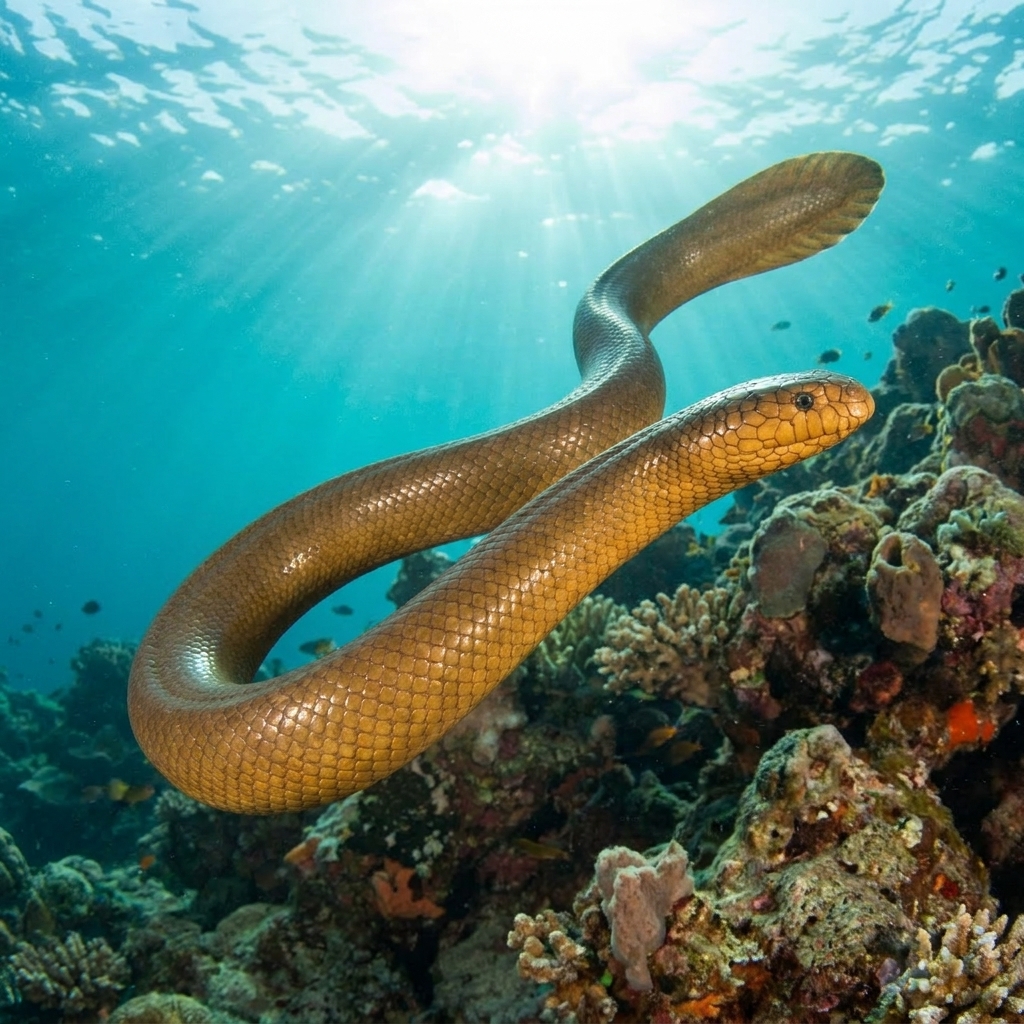
A thick-bodied, uniformly olive-brown to golden-brown snake with smooth, overlapping scales that give it a noticeably glossy look underwater. The body is laterally compressed toward the tail, which flattens into a distinctive paddle shape used for swimming. Adults can reach around a metre in length, and in the water they move in slow, sinuous sweeps rather than the rapid darting you might expect. Look for the blunt, slightly upturned snout and the absence of bold banding, which separates it from many other sea snakes at a glance.
Divers most often encounter it moving slowly along the reef or sandy bottom, probing crevices and coral rubble with its snout in search of fish and eggs. It tends to be unhurried and largely indifferent to diver presence, though it will turn away if cornered or harassed. Encounters frequently happen in shallower reef zones where it periodically surfaces to breathe, so keep an eye on the mid-water column as well as the bottom.
Unlike many reptiles, olive-brown seasnakes can absorb a small amount of oxygen directly through their skin while submerged, which helps extend dive times well beyond what lung size alone would suggest.
There is not enough monthly sighting data to point to a distinct peak season, so treat it as a year-round resident. It is observed in water temperatures between roughly 22 and 27 °C, consistent with the warm, subtropical to tropical conditions found along the Australian coast throughout the year.
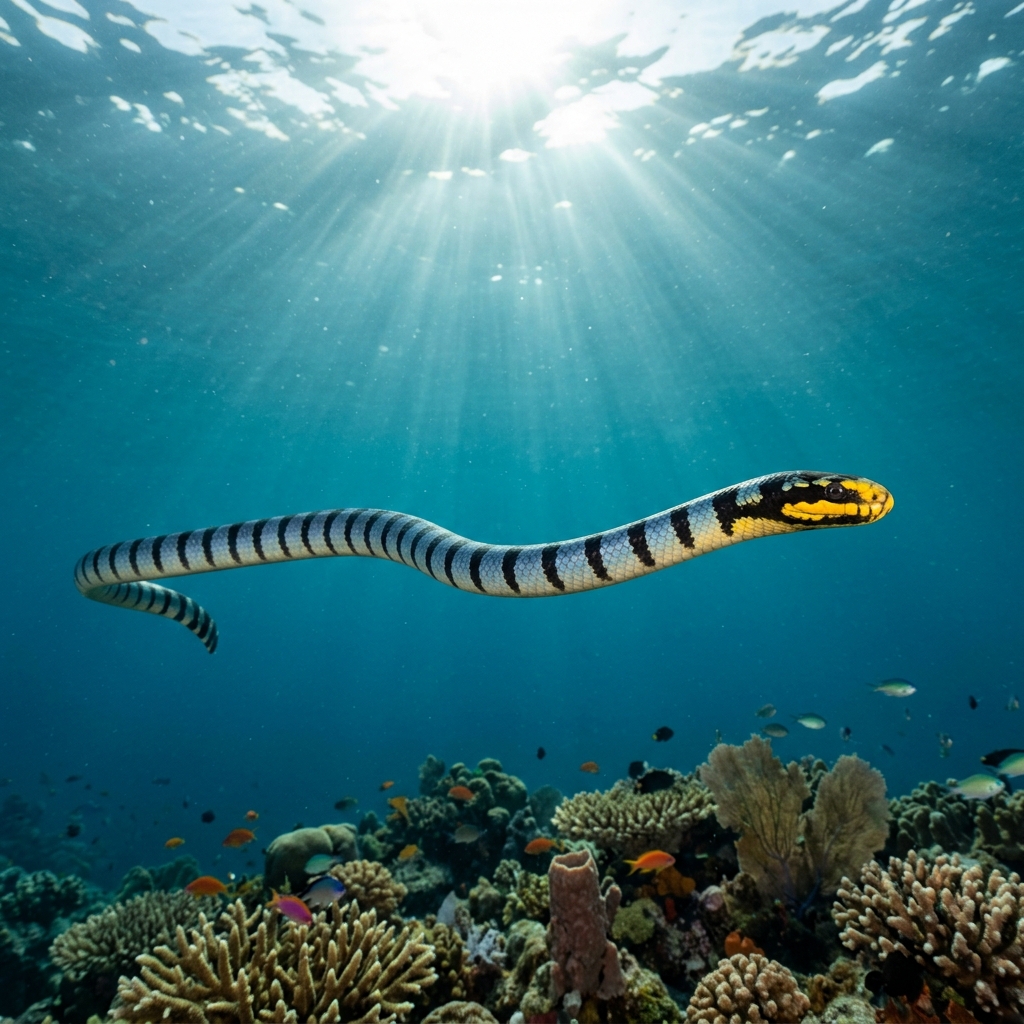
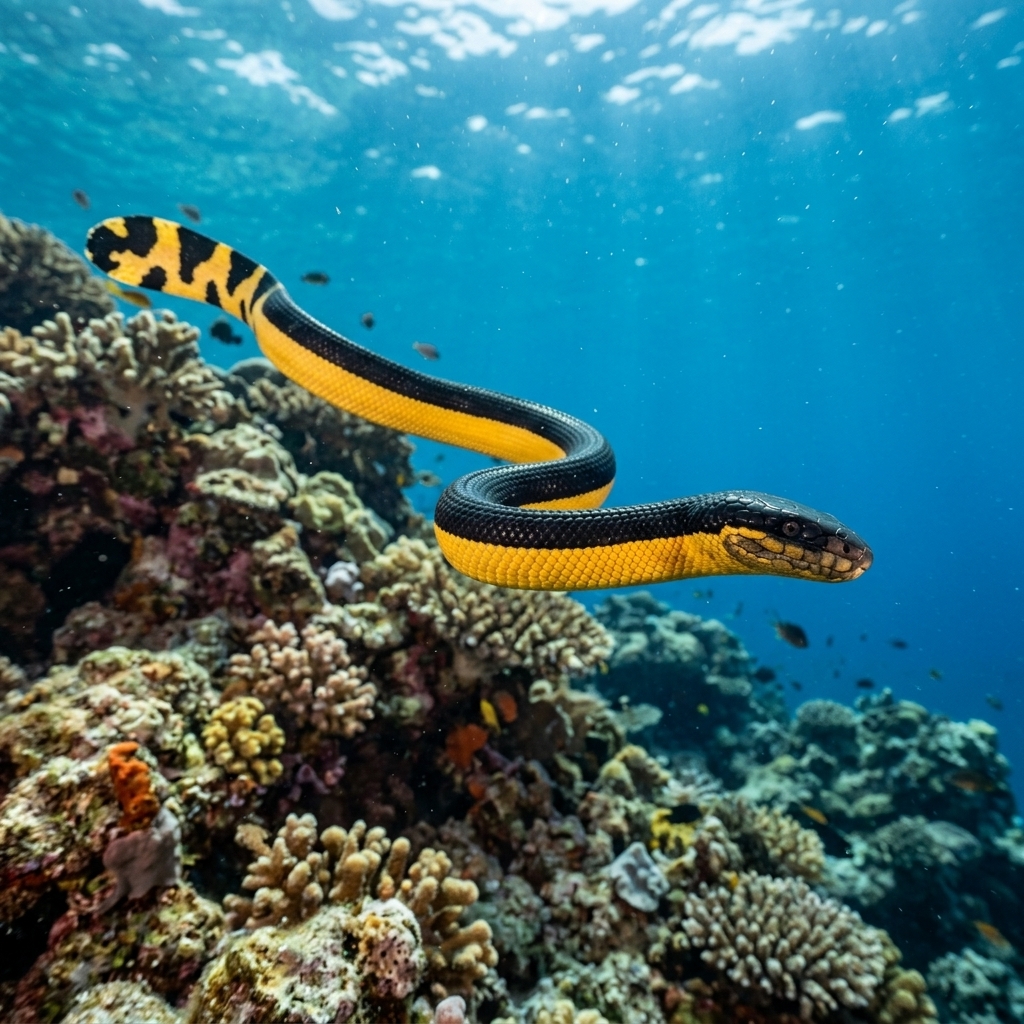
Reef neighbours a diver could mistake it for. Use the identification notes above to tell them apart.
All logged sightings come from Australia, with the bulk of sites concentrated in Western Australia, making that the strongest region to target. Queensland accounts for the remaining sites, so the Great Barrier Reef area is a secondary option worth considering.
Mapping where Olive-brown Seasnake is logged…
Every recorded diver sighting comes from Australia. Western Australia has the most logged sites, making it the top destination, with Queensland and the Great Barrier Reef region as a secondary option.
Sightings are spread across the year with no clear seasonal peak in the data. The species lives in water between about 22 and 27 °C, which is available along the Australian coast year-round, so any visit has a reasonable chance.
They are not considered dangerous to divers. Like all elapids they are venomous, but they are docile, slow-moving, and reliably non-aggressive. Keep a respectful distance, avoid handling them, and encounters are straightforward.
Sea kraits have bold black and white or black and blue banding and come ashore to rest and lay eggs. The olive-brown seasnake is uniformly olive to golden-brown with no strong banding and spends its entire life in the water. The paddle tail is present on both, but the colour difference is the quickest field mark.
Adults typically reach close to a metre in length, sometimes slightly more. In the water the thick body and broad paddle tail make them look bulkier than their length suggests.
Yes, to a limited degree. They can absorb oxygen cutaneously (through the skin) while submerged, which helps supplement their lung-based breathing and allows longer dives. They still need to surface regularly, but less often than you might expect for a reptile.
Site and sighting data is aggregated from diver logs, iNaturalist and GBIF. For taxonomy and conservation status:
Pelagic Sea Snake
72 sites