Cuspivolva tigris
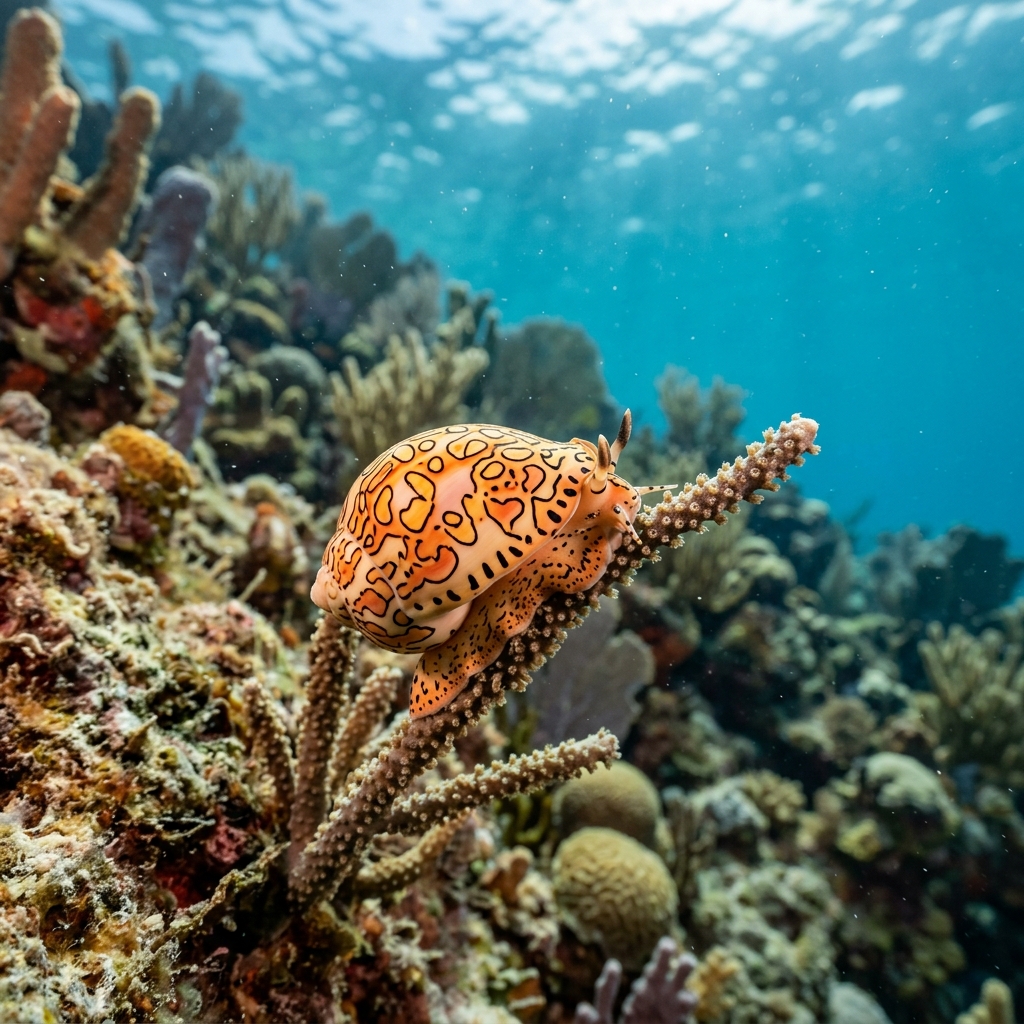
A small, orange-mantled cowrie found on soft coral in Maluku, Indonesia, this shell rewards divers who slow down and look closely.
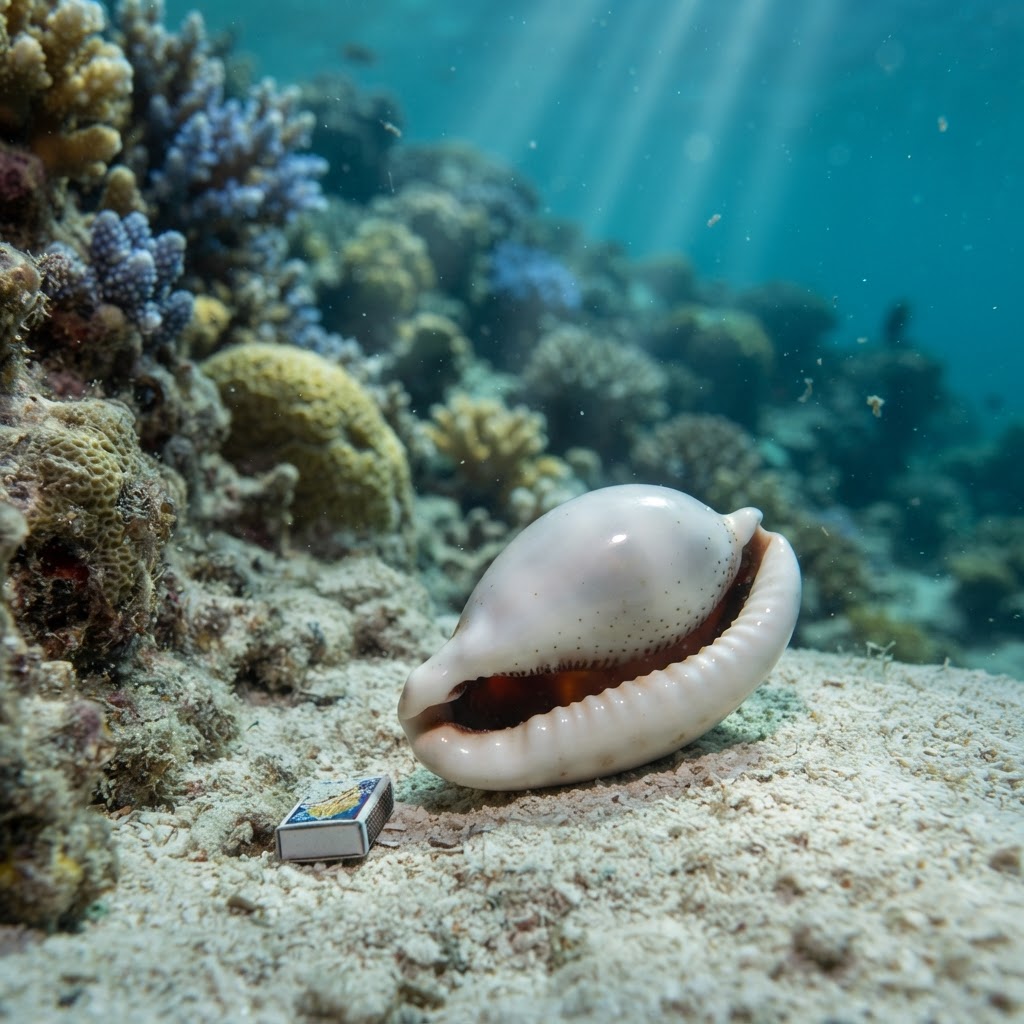
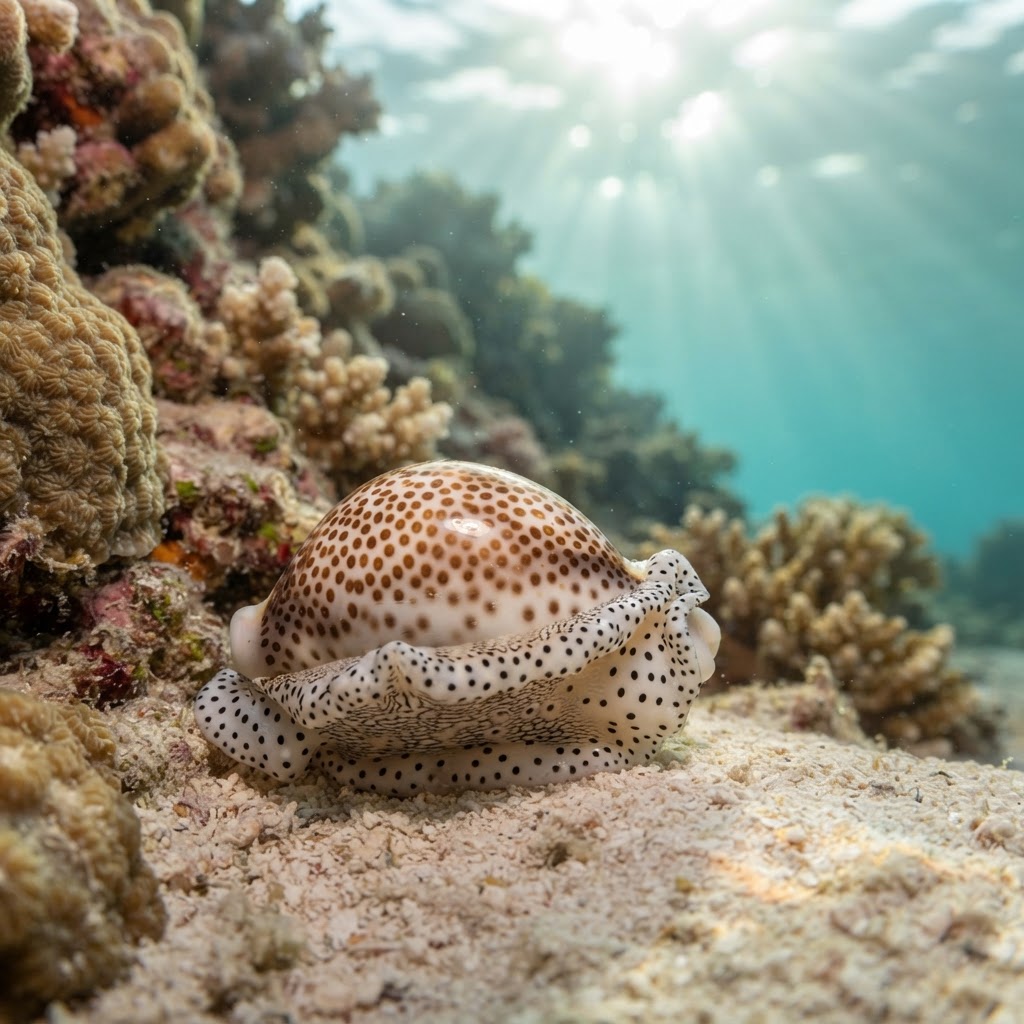
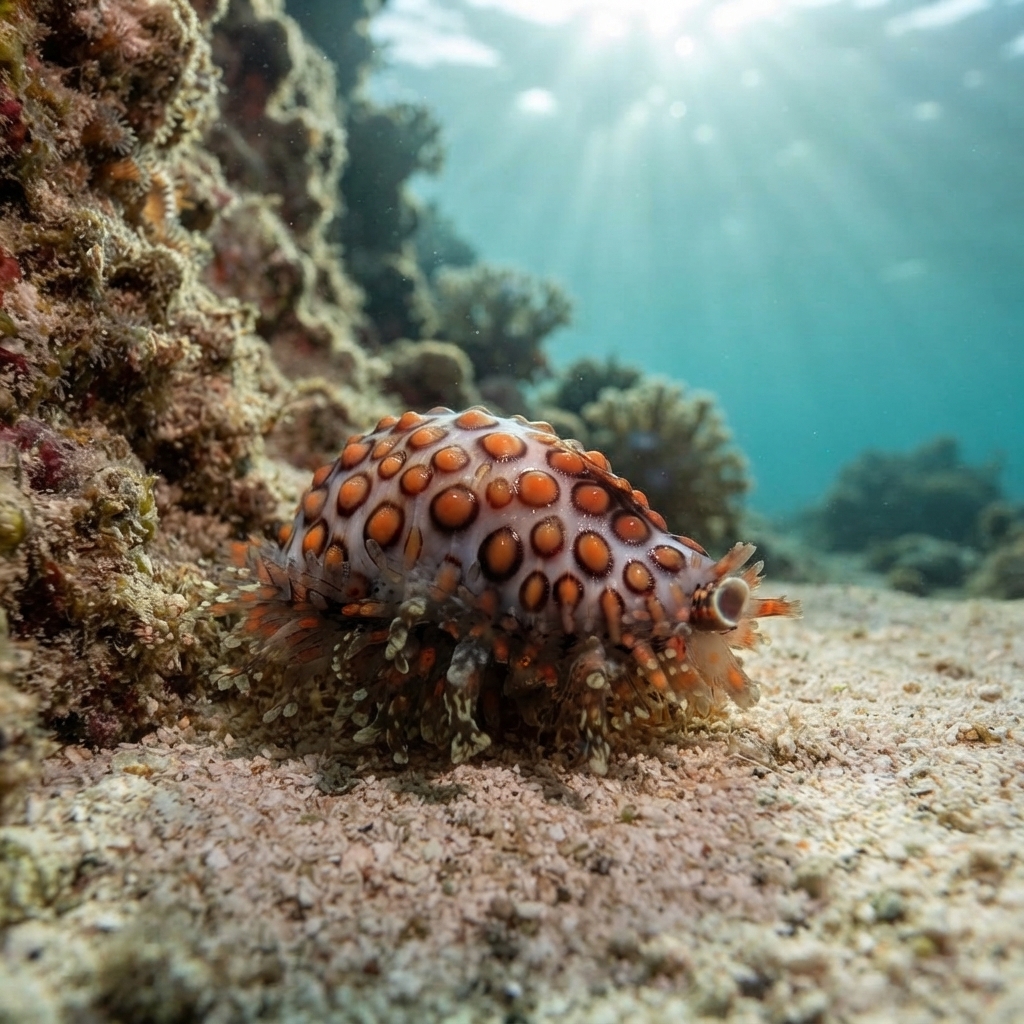
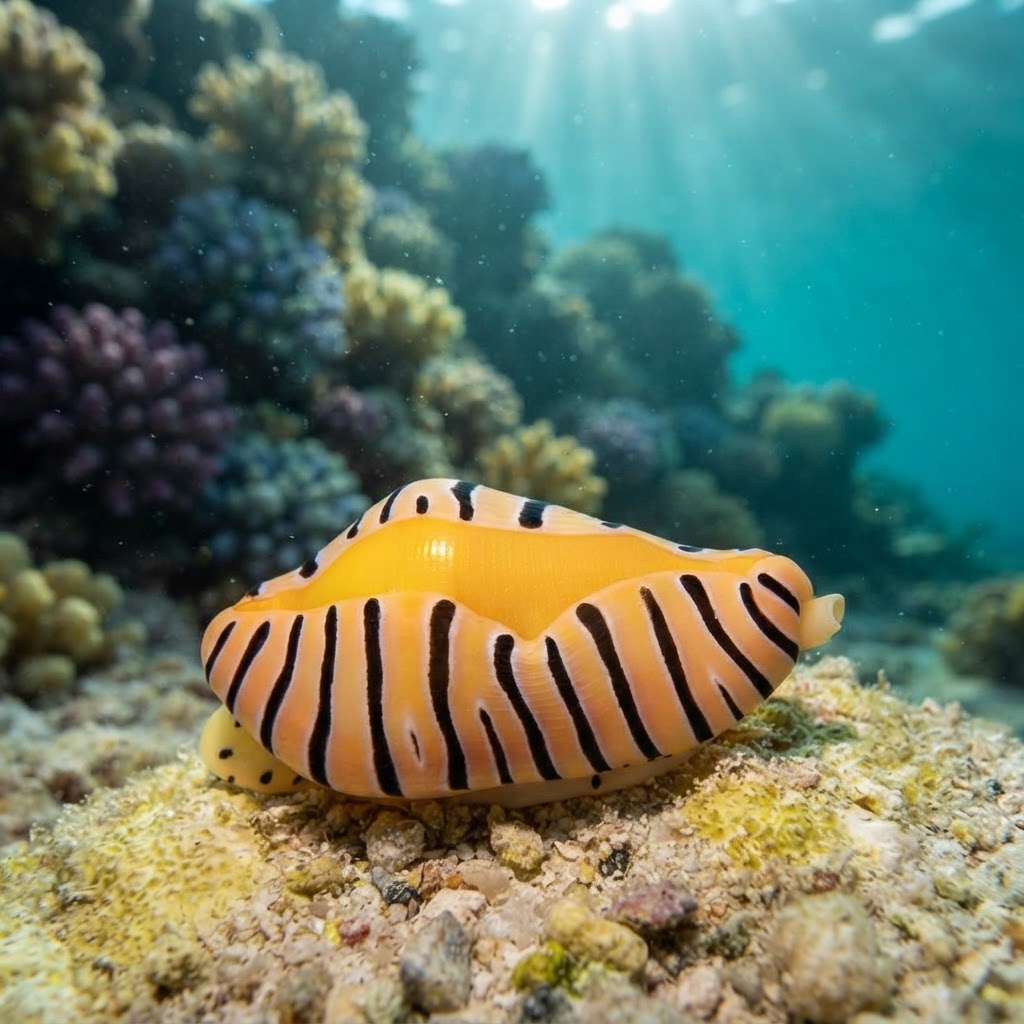
Small, glossy, oval shell largely hidden beneath a fleshy mantle that carries orange to reddish speckling, giving it a tiger-like mottled look against the plain white or cream shell underneath. Divers usually spot it clamped onto the branches of soft coral, where the mantle can retract to reveal the smooth porcelain-like shell beneath. Look closely at the branch itself rather than scanning open water, since this is a slow, sessile-looking animal that blends into its host.
Found clamped to the branches of its soft coral host, where it feeds by grazing on the coral's tissue and polyps rather than swimming off to browse elsewhere. It moves slowly and predictably, so once a diver spots one it typically stays put for a good long look or a photo. Divers tend to find it during slow, close-focus passes along soft coral colonies rather than while cruising open reef.
Like other ovulids, it feeds directly on its coral host and can slide its mantle back over the shell almost instantly if disturbed, so a shell that looked plain white a moment ago can reappear mottled orange once it relaxes again.
Sightings show no detectable seasonal pattern, and with a comfortable range of 20 to 29.5C it likely stays on the reef year-round rather than appearing only in certain months.
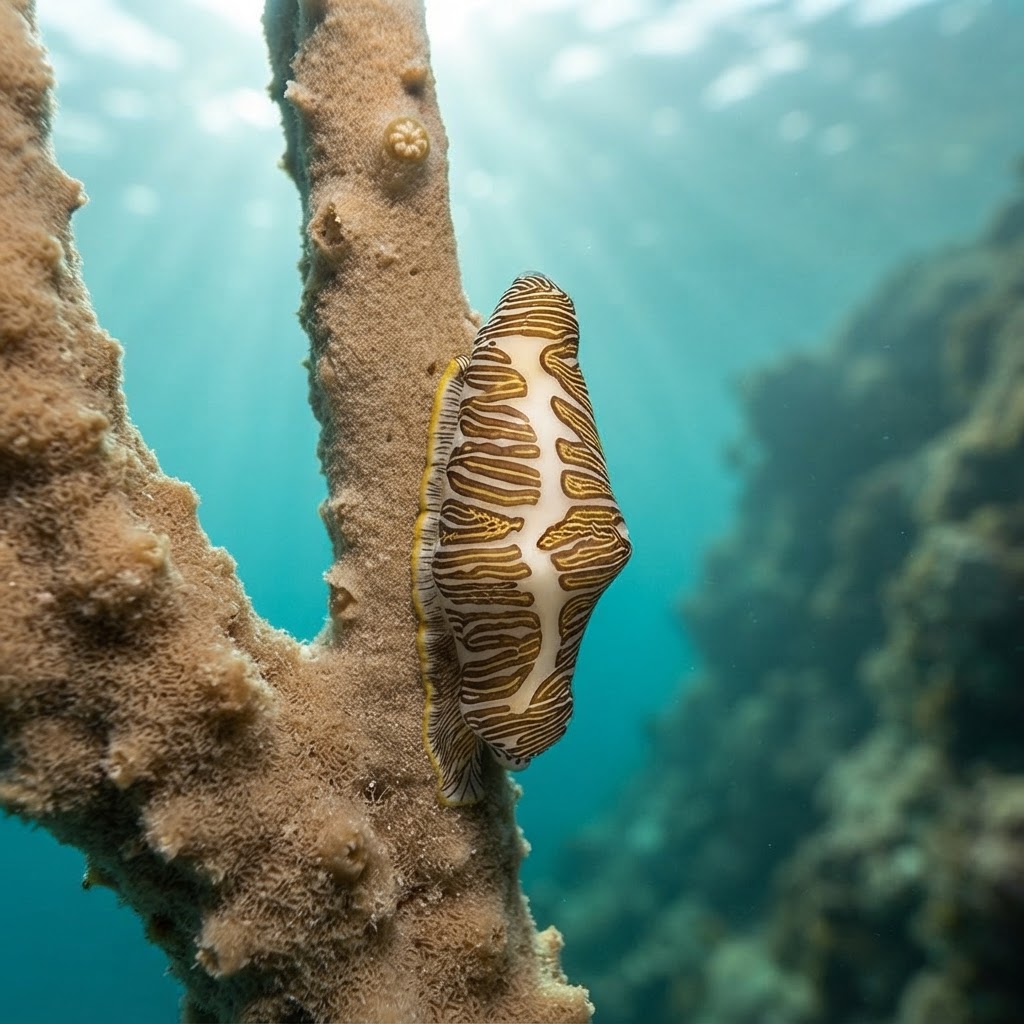
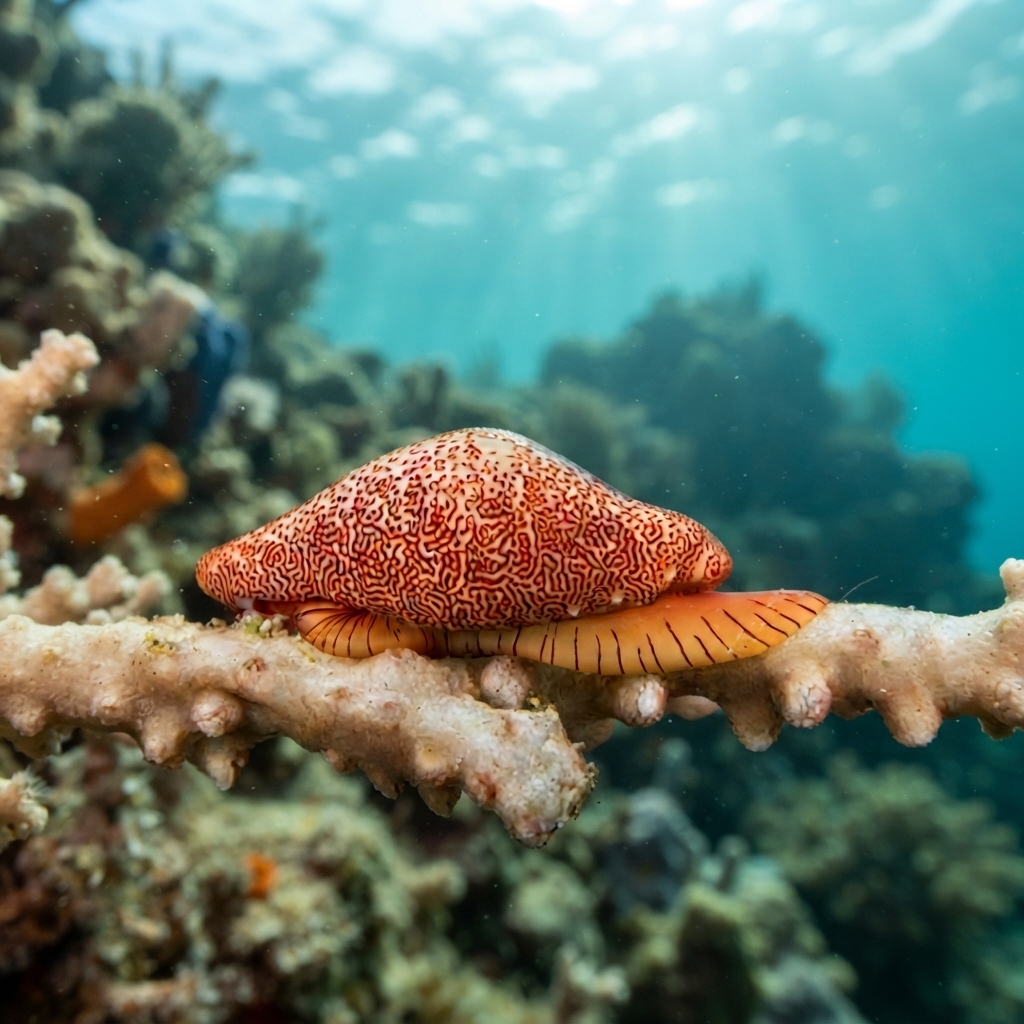
Reef neighbours a diver could mistake it for. Use the identification notes above to tell them apart.
Most reliably logged around Maluku in Indonesia, which accounts for the vast majority of recorded sightings, with an additional record from Khao Lak in Thailand. Divers working soft coral sites in eastern Indonesia have the best odds of a find, though it stays an uncommon spot even there.
Mapping where Tiger Egg Cowrie is logged…
Maluku in Indonesia is by far the most reliable region, with soft coral sites turning up the most sightings. A single record also comes from Khao Lak in Thailand, so it is worth checking soft coral branches wherever you dive in the wider region.
There is no clear seasonal pattern in sightings, and it tolerates a wide temperature range from 20 to nearly 30C, so it is considered a year-round find rather than a seasonal one.
Look for a small oval shell wrapped in a fleshy, orange-speckled mantle clamped to a soft coral branch. The mantle can retract in an instant to show a plain glossy shell underneath, so patience helps confirm the ID.
Exact size data is not established for this species, but like other members of its family it is a small shell, typically small enough to sit along a single soft coral branch rather than sprawl across a colony.
No. It has no sting or bite of concern to divers and simply sits on its coral host, so it poses no risk beyond the usual care needed not to touch or damage the coral itself.
Site and sighting data is aggregated from diver logs, iNaturalist and GBIF. For taxonomy and conservation status:
Fingerprint Flamingo Tongue
122 sites