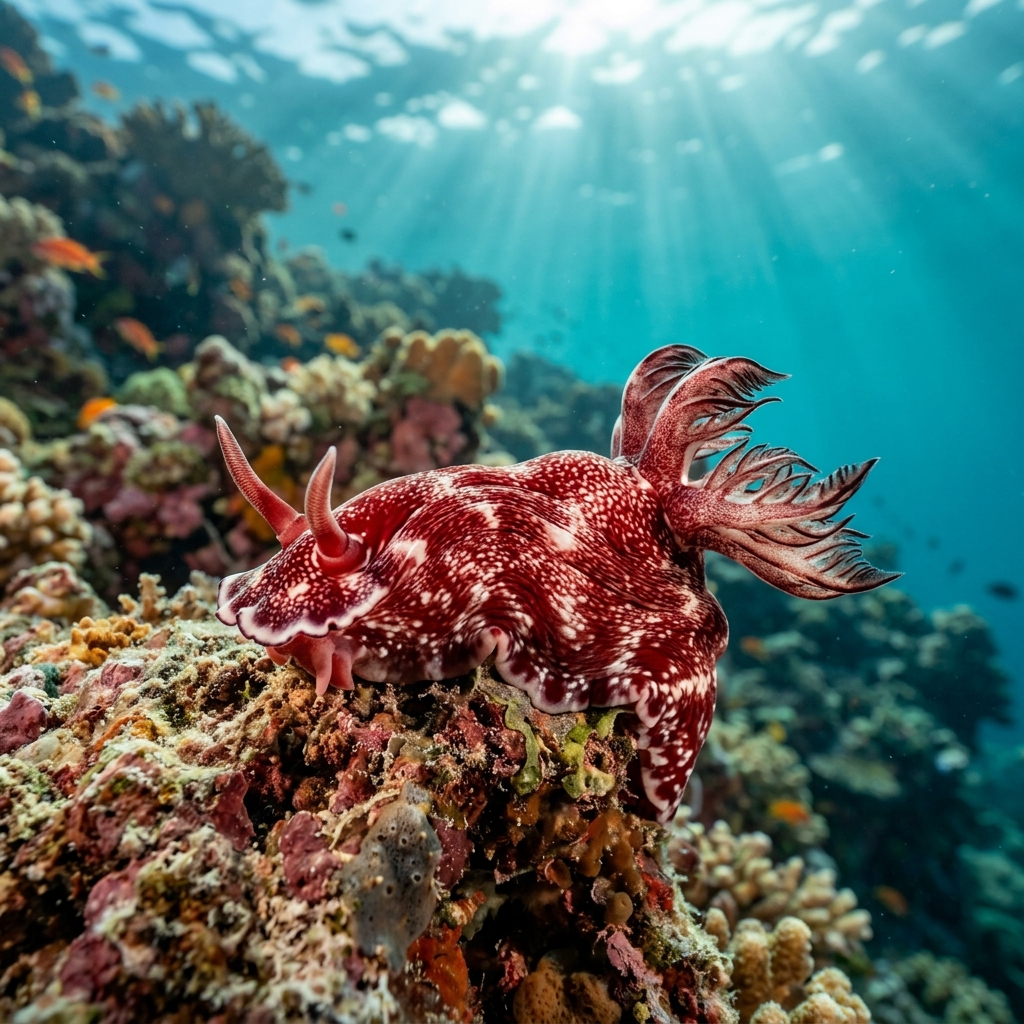
Hexabranchus sanguineus
Spot the world's largest nudibranch in the Philippines, Red Sea or Queensland. Best seen Jan, Sep in northern waters at 21-29 °C.
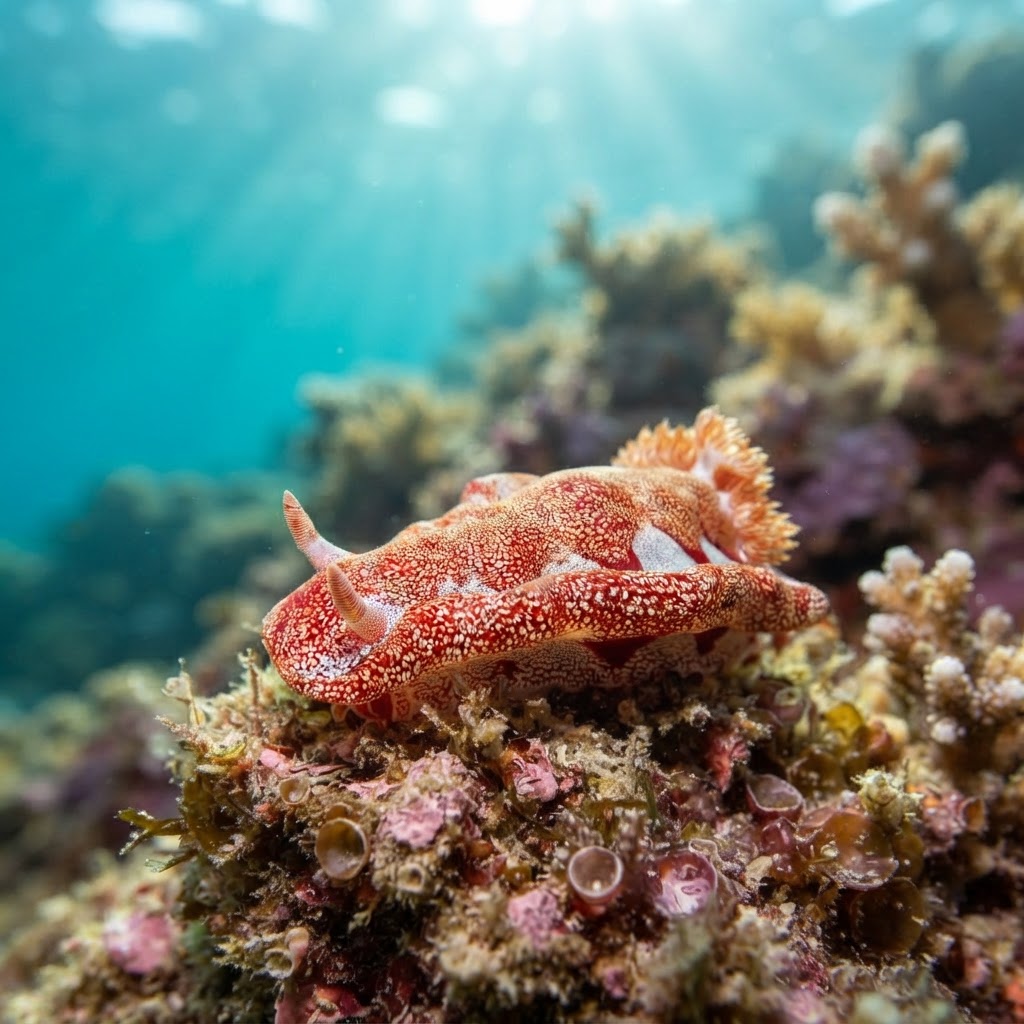
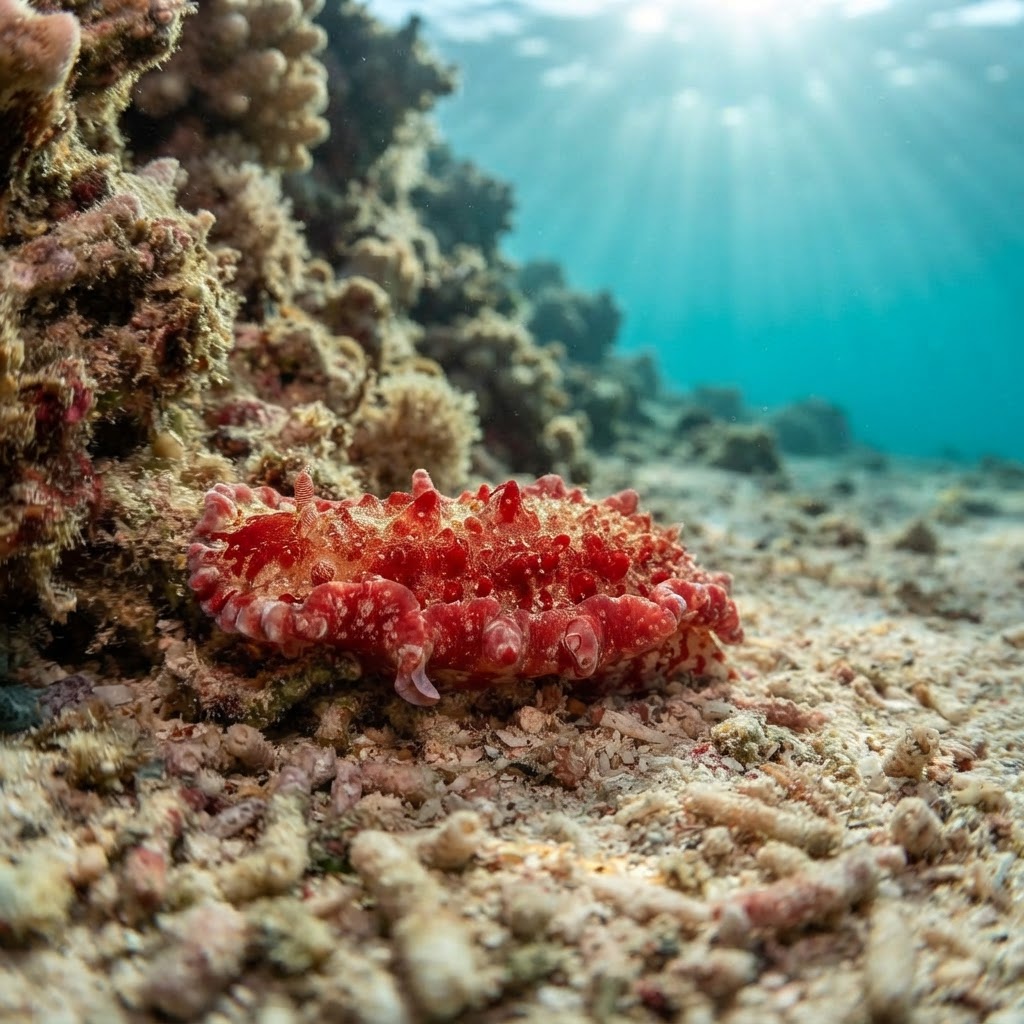
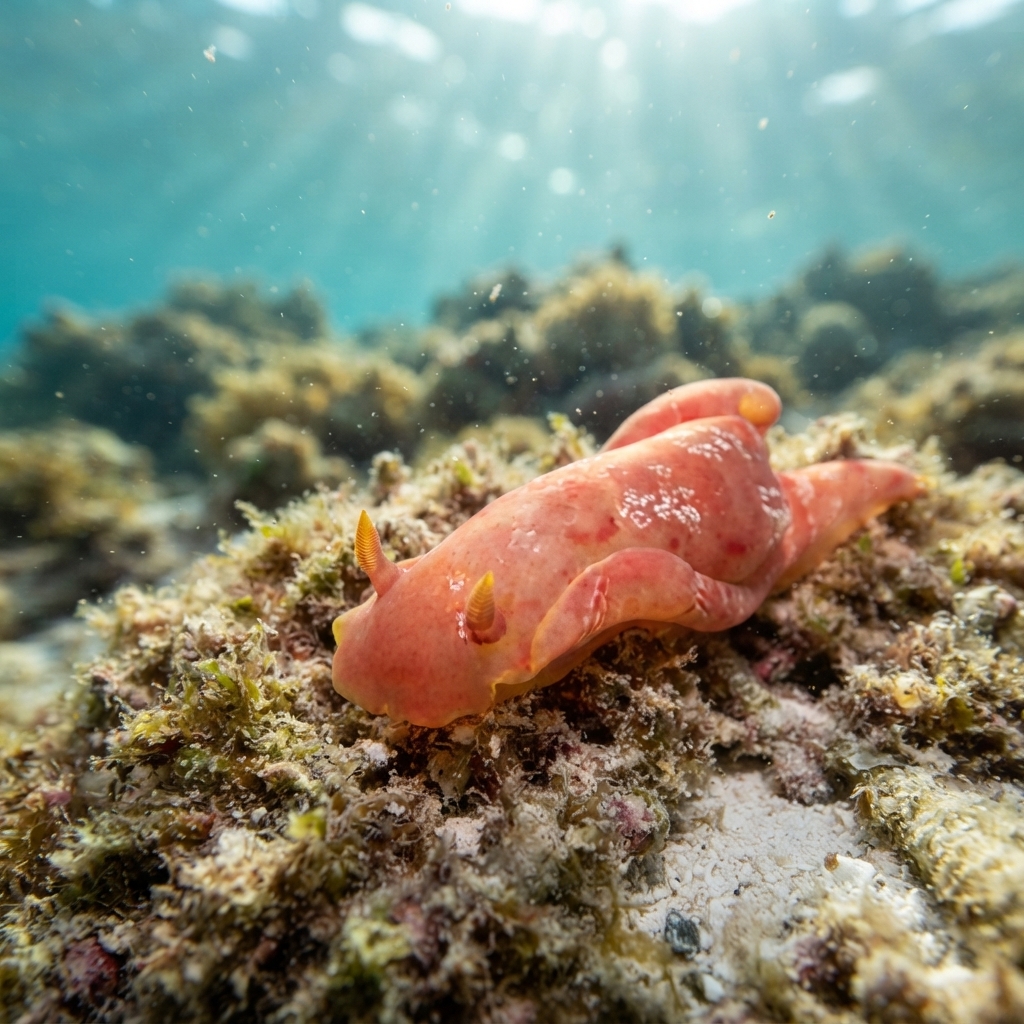
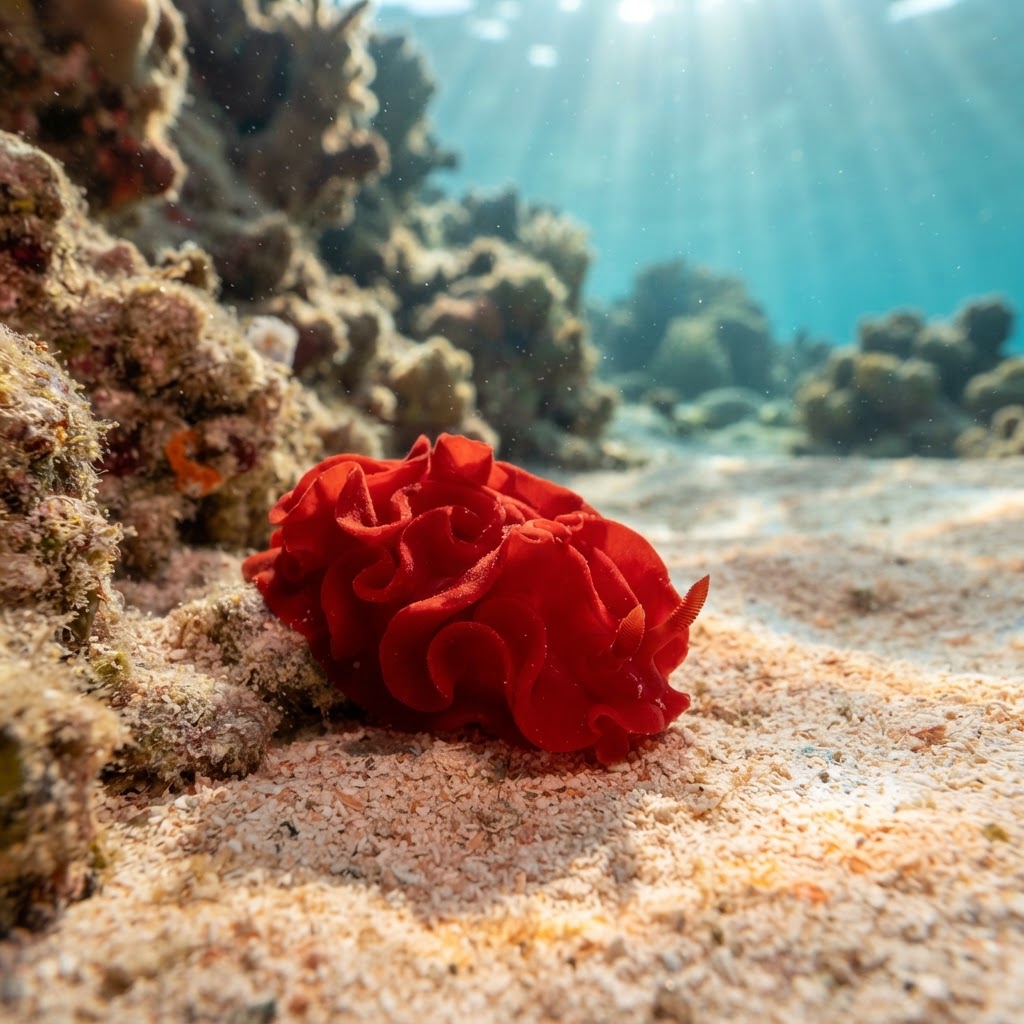
Few animals on the reef are as immediately recognisable: a large, fleshy nudibranch (shell-less mollusc) coloured deep crimson to orange-red, with frilled, rippling mantle edges that flare outward as it moves. Six large, feathery gill plumes cluster at the rear of the body, usually matching the body colour with paler tips. When disturbed it can swim by throwing the whole body into undulating waves, a behaviour unlike any other large nudibranch. At rest it sits flat and spread on the reef, easily exceeding the length of an adult hand.
Spanish dancers are predominantly nocturnal, so the best encounters come on night dives when they emerge to crawl actively across the reef in search of sponges. During the day they tuck into crevices or under ledges and are easy to miss. When threatened, they launch into open water and swim by flexing the body into broad, rolling waves, the flared mantle edges giving the species its name.
Spanish dancers carry a chemical defence borrowed directly from their diet: they sequester toxic compounds from the sponges they eat and transfer those toxins to the bright red egg ribbons they lay, which spiral in characteristic ruffled rosettes on the reef. A small, almost transparent emperor shrimp often hitches a ride on the animal's back, using it as both transport and protection.
In Northern Hemisphere sites, sightings concentrate from January through March and again from May through September, so both the northern winter and mid-year periods are productive. Southern Hemisphere sites such as Queensland and Western Australia show a November to December peak, aligning with the local late-spring warmth as water temperatures climb through the 21-29 °C range the species favours.
Most commonly logged across the Indo-Pacific and Red Sea, with the Philippines leading overall sighting records, particularly in the Visayas and Palawan regions. Australia contributes strongly through Queensland and Western Australia, and Egypt's Sharm el Sheikh region is the standout site for Red Sea encounters. Indonesia's Maluku and Papua waters and Japan round out the core range.
Mapping where Spanish Dancer is logged…
Strong populations are logged across the Philippines (especially the Visayas and Palawan), Australia (Queensland and Western Australia), Indonesia, Egypt's Sharm el Sheikh region, and Japan. They are a wide-ranging Indo-Pacific and Red Sea species, so opportunities exist across much of the tropical dive world.
In the Red Sea and other Northern Hemisphere sites, aim for January, March or May, September. For Australian sites, November and December see a peak in sightings. Because they favour water temperatures between 21 and 29 °C, tropical reefs within that range can produce sightings year-round, but the months above show the strongest concentrations.
Look for a large, flattened, deep-red to orange-red nudibranch with strongly frilled mantle edges and six feathery gill plumes at the rear. The sheer size alone sets it apart from almost every other nudibranch on the reef. If it swims, the whole-body undulation is unmistakable.
They are the world's largest nudibranch and can reach around 60 cm in length, though most divers encounter individuals in the 20-40 cm range. Even at the smaller end of that scale they are conspicuously large compared with other nudibranchs.
Unlike most nudibranchs that simply crawl, Spanish dancers can launch into open water and swim by throwing their bodies into broad, rolling undulations, the ruffled mantle edges spreading like a flamenco skirt. This is a defence behaviour triggered by predator contact, and it is one of the most distinctive sights in tropical diving.
Site and sighting data is aggregated from diver logs, iNaturalist and GBIF. For taxonomy and conservation status:
Hawaiian Spanish Dancer
9 sites