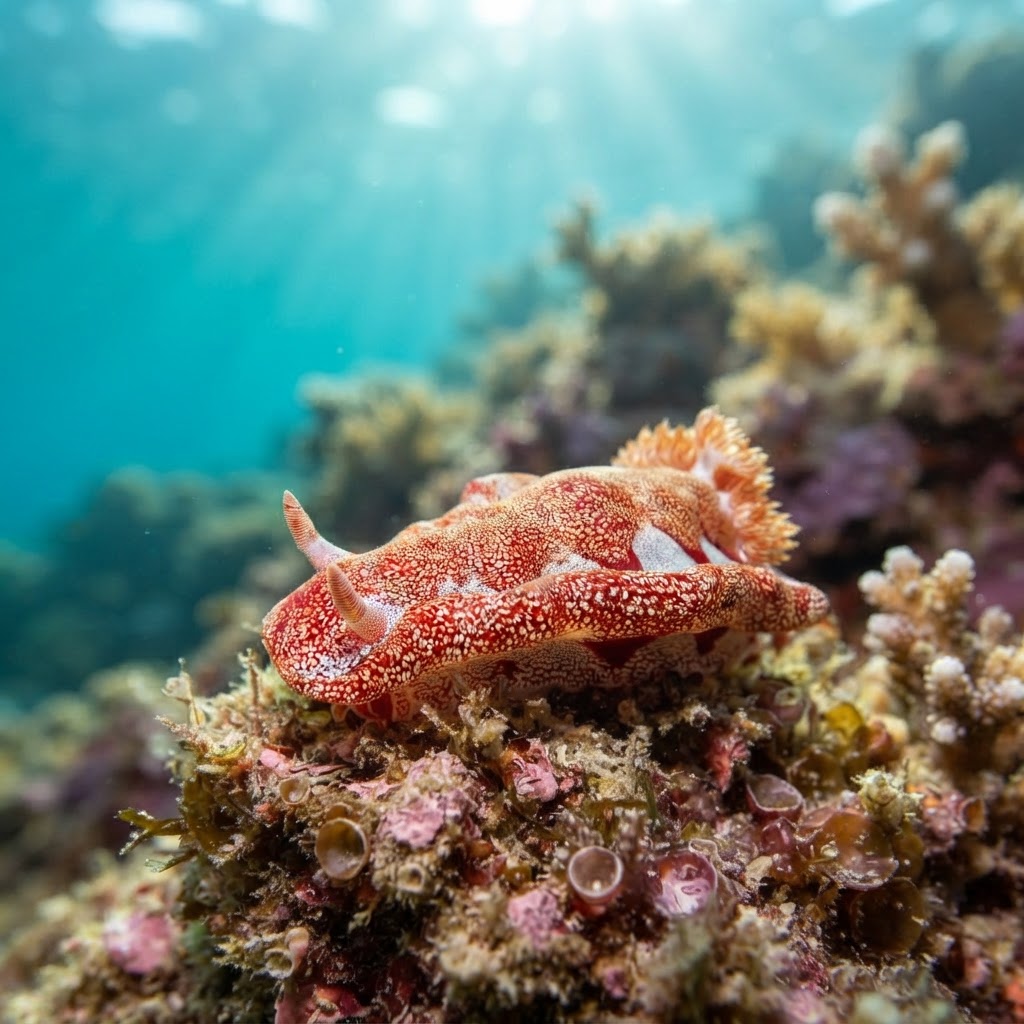
Hexabranchus lacer
Frilly, orange-mottled nudibranch found year-round on reefs in the Visayas, New South Wales and Maluku, usually spotted solo at night.
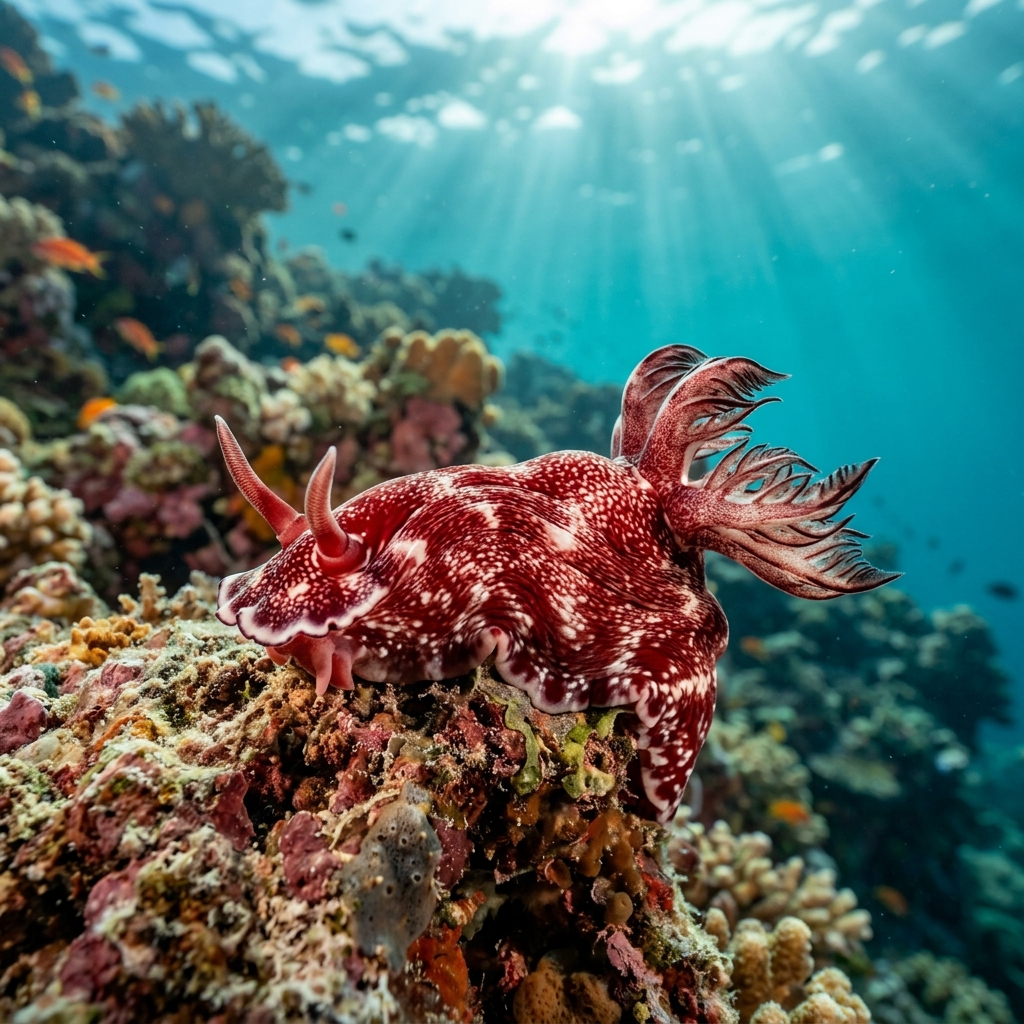
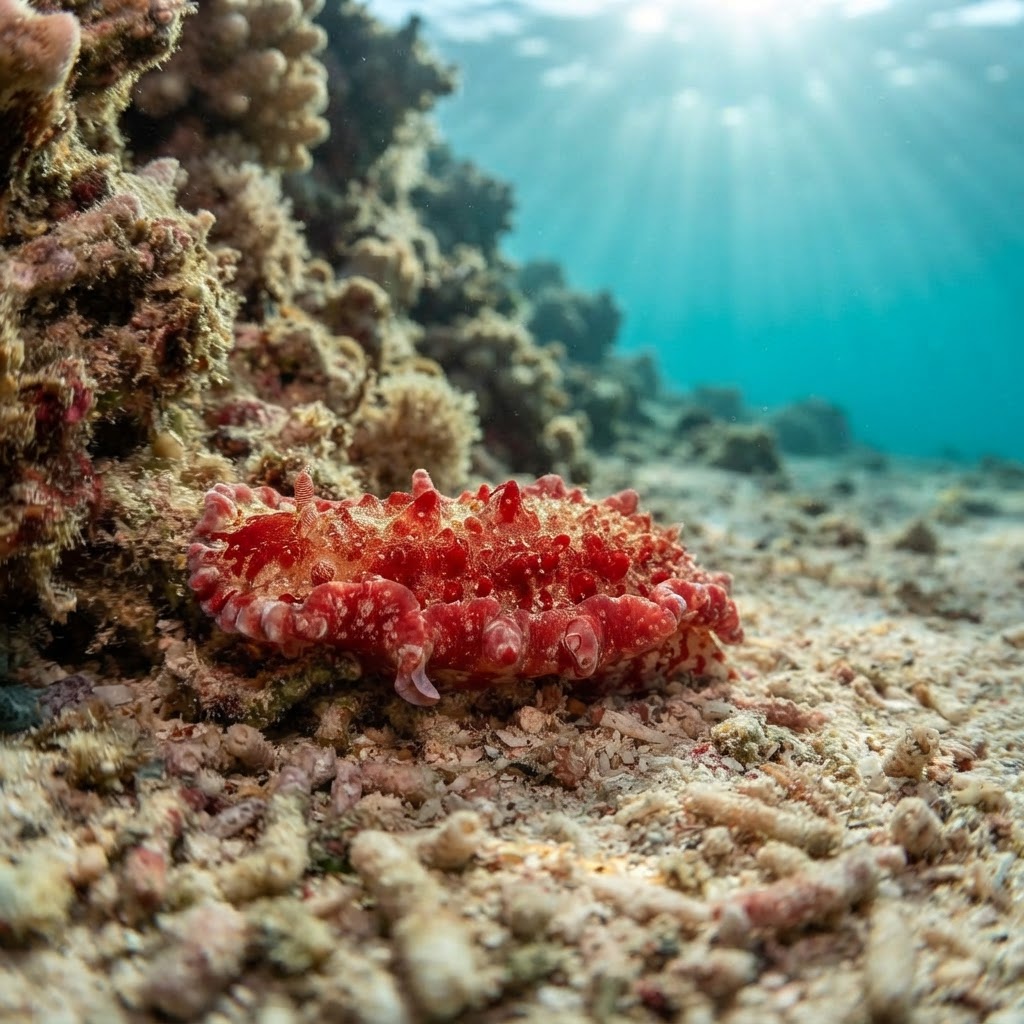
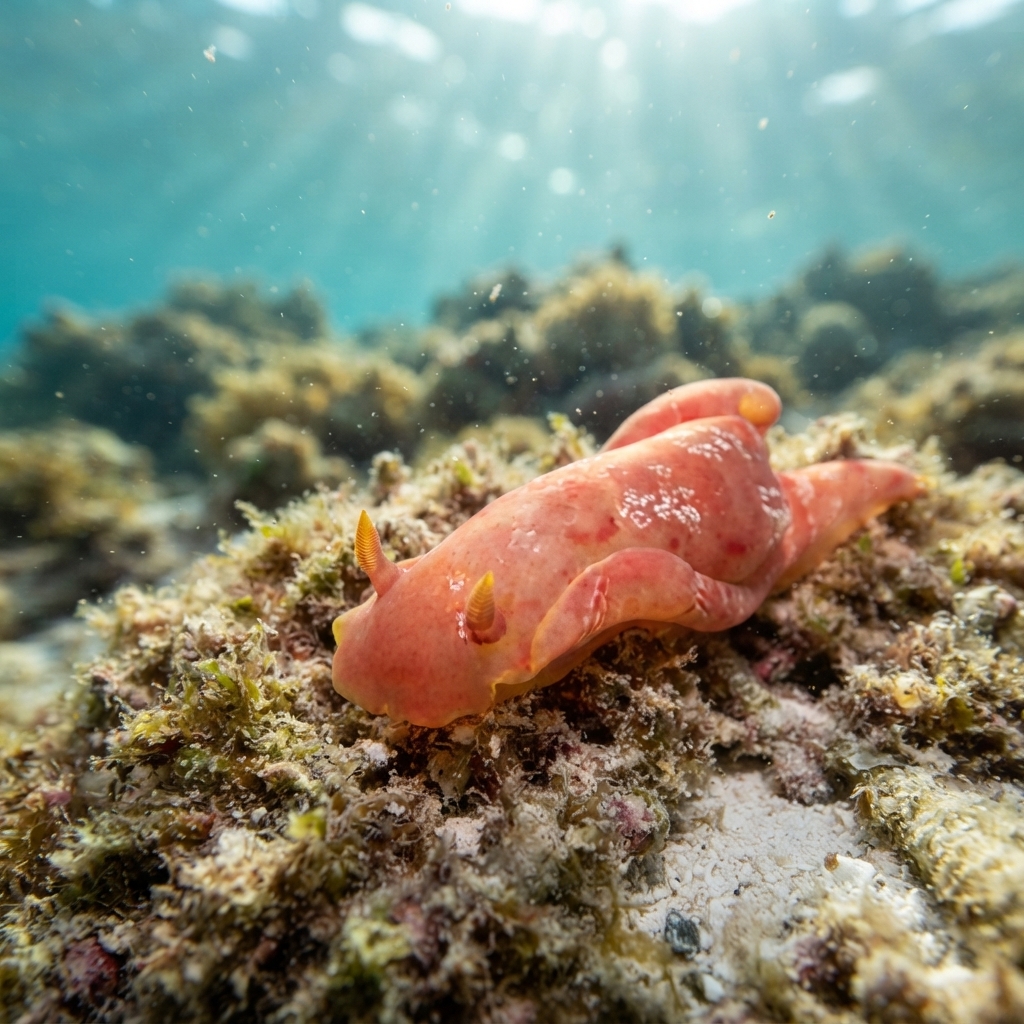
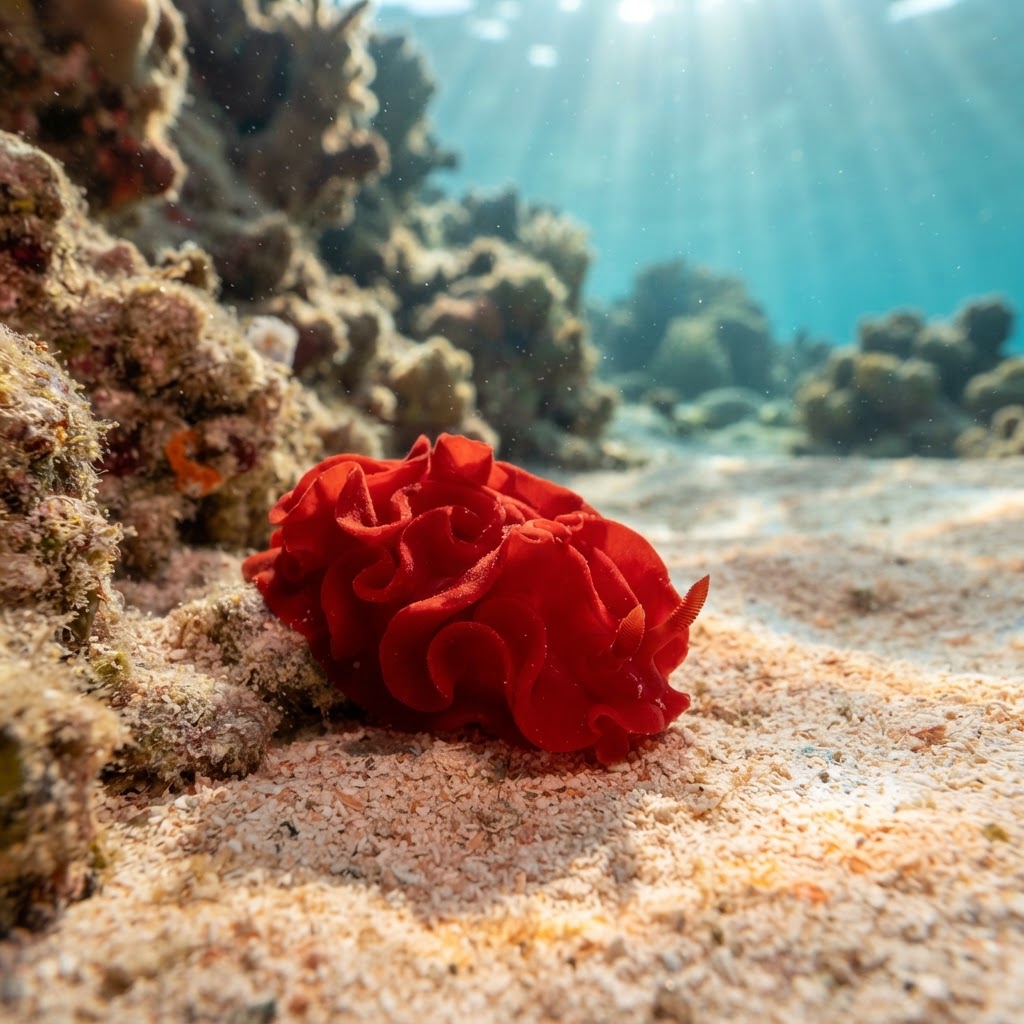
A large, soft-bodied nudibranch with a frilly, skirt-like mantle patterned in mottled orange, red and cream blotches rather than a clean uniform colour. Two rhinophores (paired sensory stalks) sit up front and a rosette of feathery gills sits near the tail, both usually the same mottled tone as the body. Divers key on the ragged, uneven blotching across the mantle edge, which looks scrappier and less bold than the more classic red Spanish Dancer pattern.
Usually found crawling slowly over reef structure or rubble, most often spotted on night dives when it's out foraging in the open rather than tucked away. It shows little concern for divers and won't flee or hide, so it tends to hold still long enough for a good look and a photo. Most sightings are of single animals rather than pairs or groups, and it's logged as uncommon at the vast majority of sites where it does show up.
Like other Hexabranchus species, it feeds on sponges and can store some of their chemical defences in its own tissue, which is thought to be part of why it can move about so openly without much cover.
No clear seasonal pattern shows up in the sightings, and with a comfortable range of roughly 22 to 30C it's present on these reefs year-round rather than tied to a particular month.
Reef neighbours a diver could mistake it for. Use the identification notes above to tell them apart.
Most reliably logged in the Philippines, especially around the Visayas, and in strong numbers across New South Wales in Australia and Maluku in Indonesia. It also turns up consistently on reefs in Taiwan around Kenting and Xiaoliuqiu, off Reunion's Saint-Paul coast, and along Tanzania's Mafia Island and the UAE's East Coast.
Mapping where Mottled Spanish Dancer is logged…
Best odds are in the Philippines, particularly the Visayas, plus New South Wales in Australia and Maluku in Indonesia. It's also a reasonably reliable find in Taiwan, Reunion, Tanzania's Mafia Island and along the UAE's East Coast.
There's no strong seasonal signal in the sightings, so it's considered a year-round find on the warm reefs where it lives, generally in water between about 22 and 30C.
Look for a large, frilly-mantled nudibranch with a scrappy, mottled orange, red and cream pattern rather than one bold uniform colour. It has two rhinophores up front and a cluster of feathery gills near the tail, usually spotted crawling slowly over the reef at night.
No, they pose no threat to divers and can be observed and photographed safely at close range without any risk of stings or bites.
They feed on sponges and can retain some of the sponge's chemical toxins in their own body tissue, which likely helps explain why they crawl around exposed on the reef without much need to hide.
Site and sighting data is aggregated from diver logs, iNaturalist and GBIF. For taxonomy and conservation status:
Hawaiian Spanish Dancer
9 sites