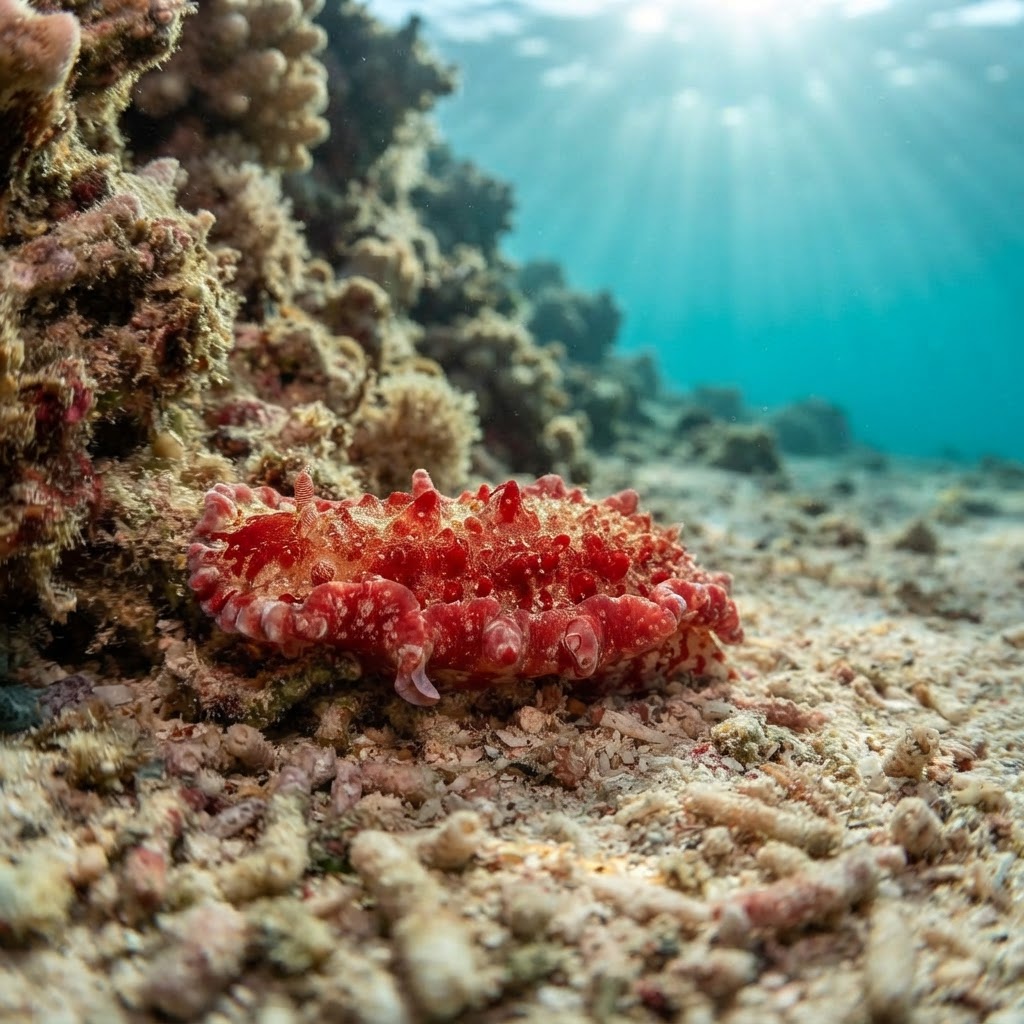
Hexabranchus morsomus
A small, brightly patterned nudibranch logged across Grande-Terre, Guadeloupe, in warm water from 24.7 to 30.7C, year-round.
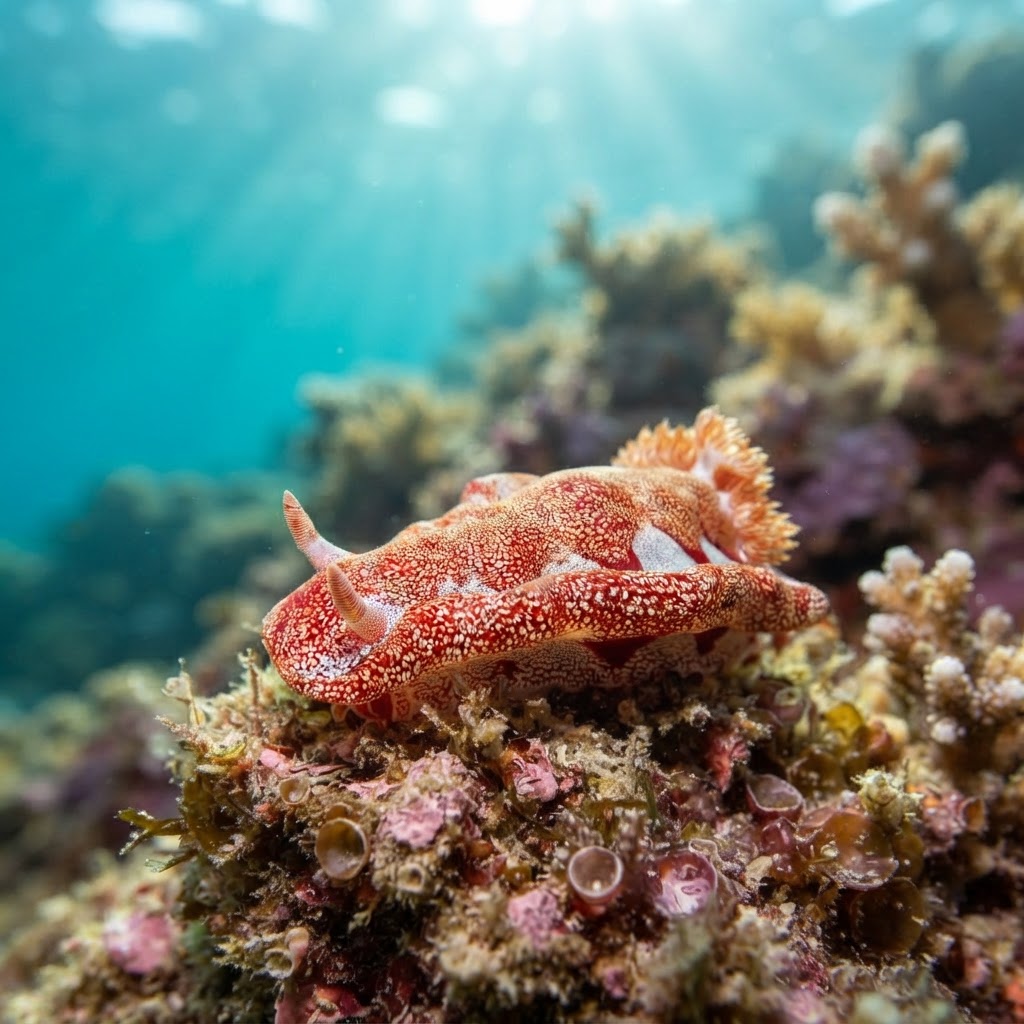
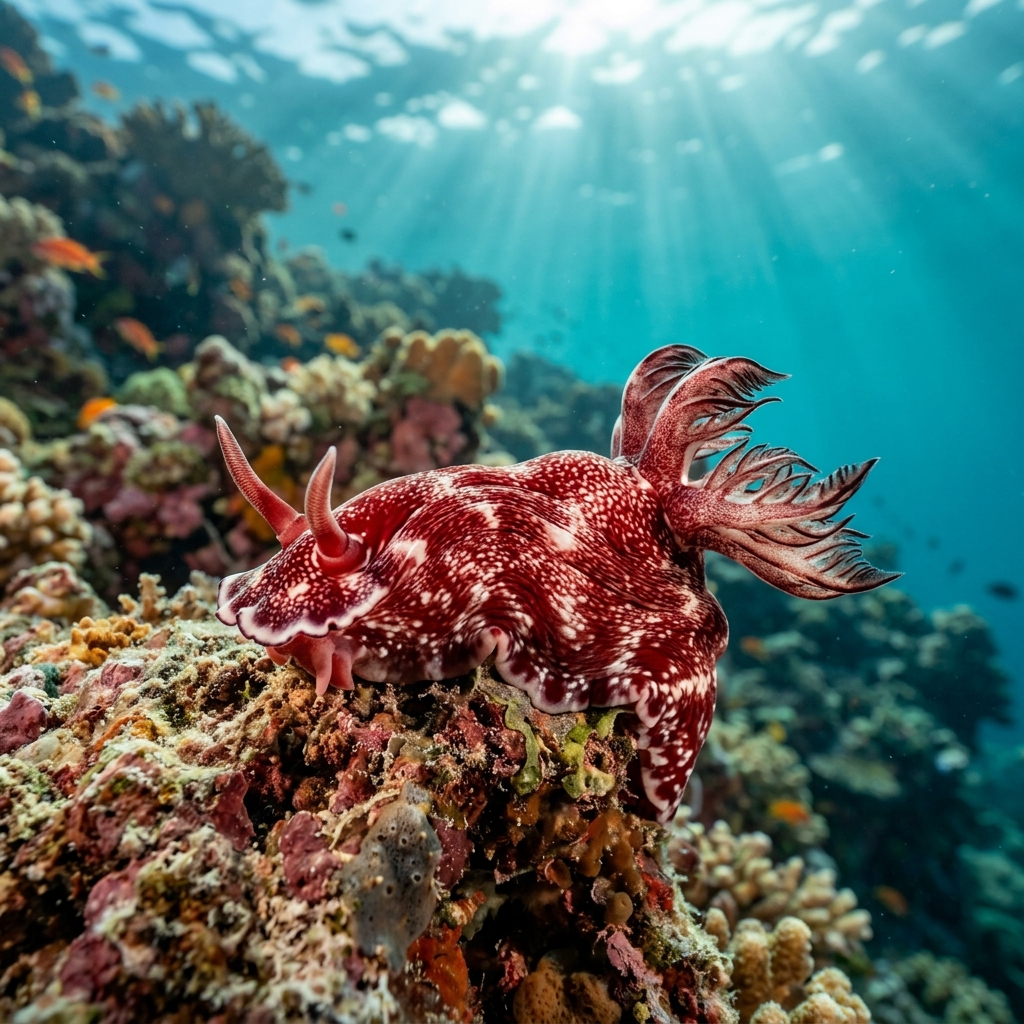
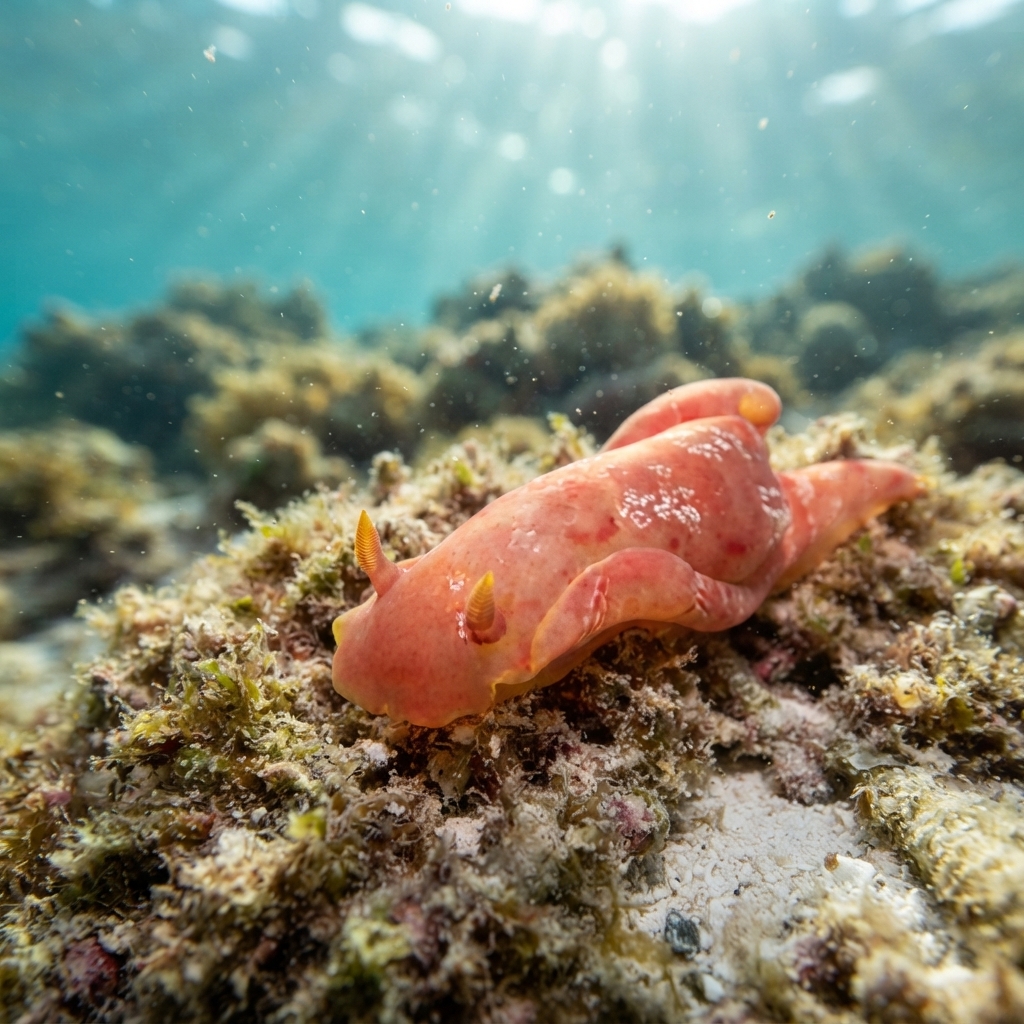
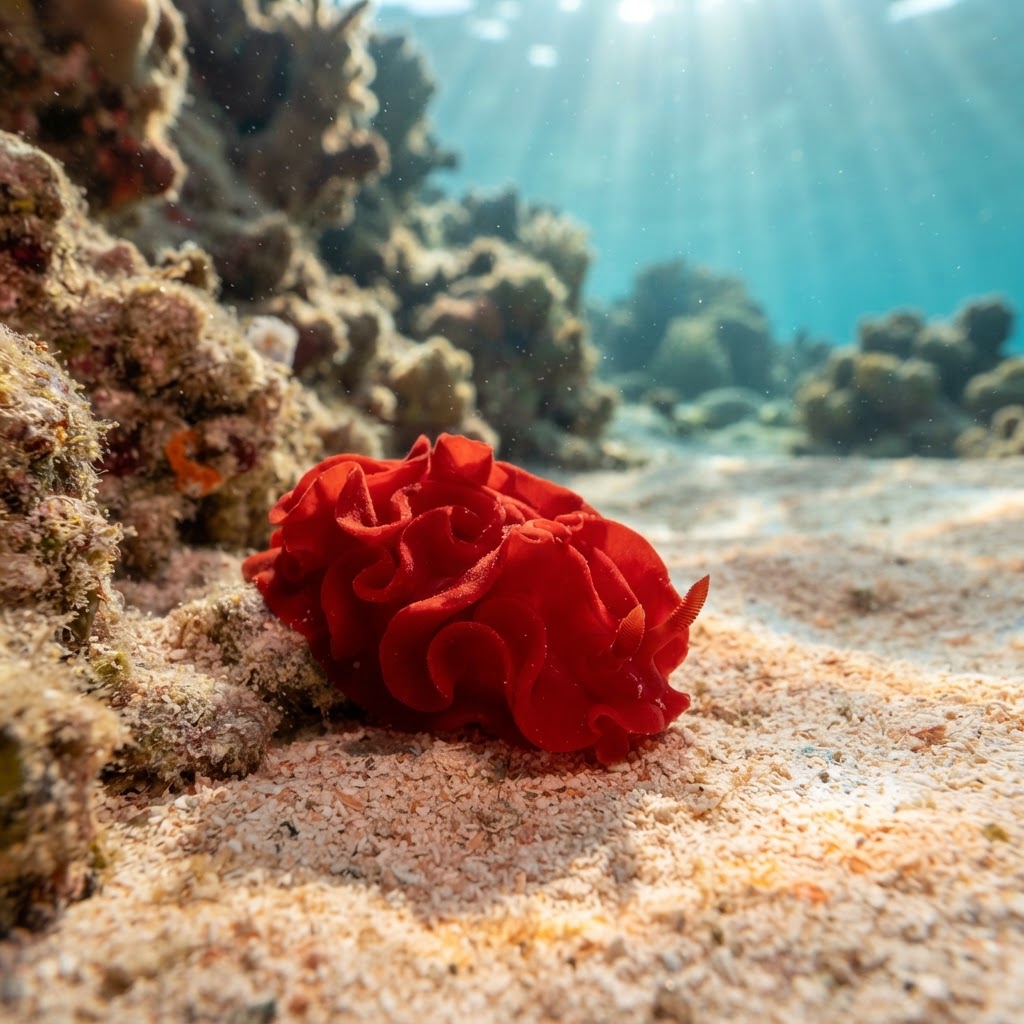
Tops out around 7 cm, so look closely along ledges and rubble rather than scanning open water. Body is soft and flattened, with a frilly, undulating mantle edge typical of the Spanish Dancer group, marked in a mottled pattern rather than one solid colour. Two rhinophores (feathery sensory horns) sit on the head and a ring of feathery gills sits near the tail, both worth checking against similar species before you call the ID.
Divers mostly find it moving slowly over reef rubble and hard substrate, using that frilled mantle to glide rather than swim. Like other members of this family it pays little attention to divers, so a slow approach and a steady light are enough to get a good look without disturbing it. Most logs describe it as an easy, calm subject once spotted, the challenge is finding it against the reef texture.
It belongs to the Spanish Dancer family, nudibranchs named for the way some species unfurl their mantle and swim in an undulating, dance-like motion when disturbed, though at this size the display is far more subtle than in its larger relatives.
Sightings don't show a clear seasonal pattern, and with water temperatures logged between 24.7 and 30.7C, conditions stay comfortable for it across the year. Treat it as a year-round find on Grande-Terre rather than something tied to a particular month.
Reef neighbours a diver could mistake it for. Use the identification notes above to tell them apart.
Every logged sighting so far comes from Guadeloupe, with Grande-Terre standing out as the region where divers most reliably find it. If you're diving that coastline, this is one to add to your slow, close-focus reef checks rather than something to expect elsewhere in the Caribbean.
Mapping where Caribbean Spanish Dancer is logged…
Every recorded sighting comes from Guadeloupe, particularly the Grande-Terre region, making it the place to look for this species today.
There's no strong season in the sighting data, and it's found in water from roughly 24.7 to 30.7C, so it's a reasonable year-round find on Grande-Terre's reefs.
Look for a small, mottled-patterned nudibranch around 7 cm long, with a frilly mantle edge, feathery rhinophores on the head, and a gill tuft near the tail, moving slowly over rubble or reef.
It's a small species, typically around 7 cm, much smaller than its well-known relative the Spanish Dancer, which can reach far larger sizes.
The family gets its name from species that unfurl a frilled mantle and swim with an undulating, dance-like motion when disturbed, a trait shared in reduced form across the group.
Site and sighting data is aggregated from diver logs, iNaturalist and GBIF. For taxonomy and conservation status:
Hawaiian Spanish Dancer
9 sites