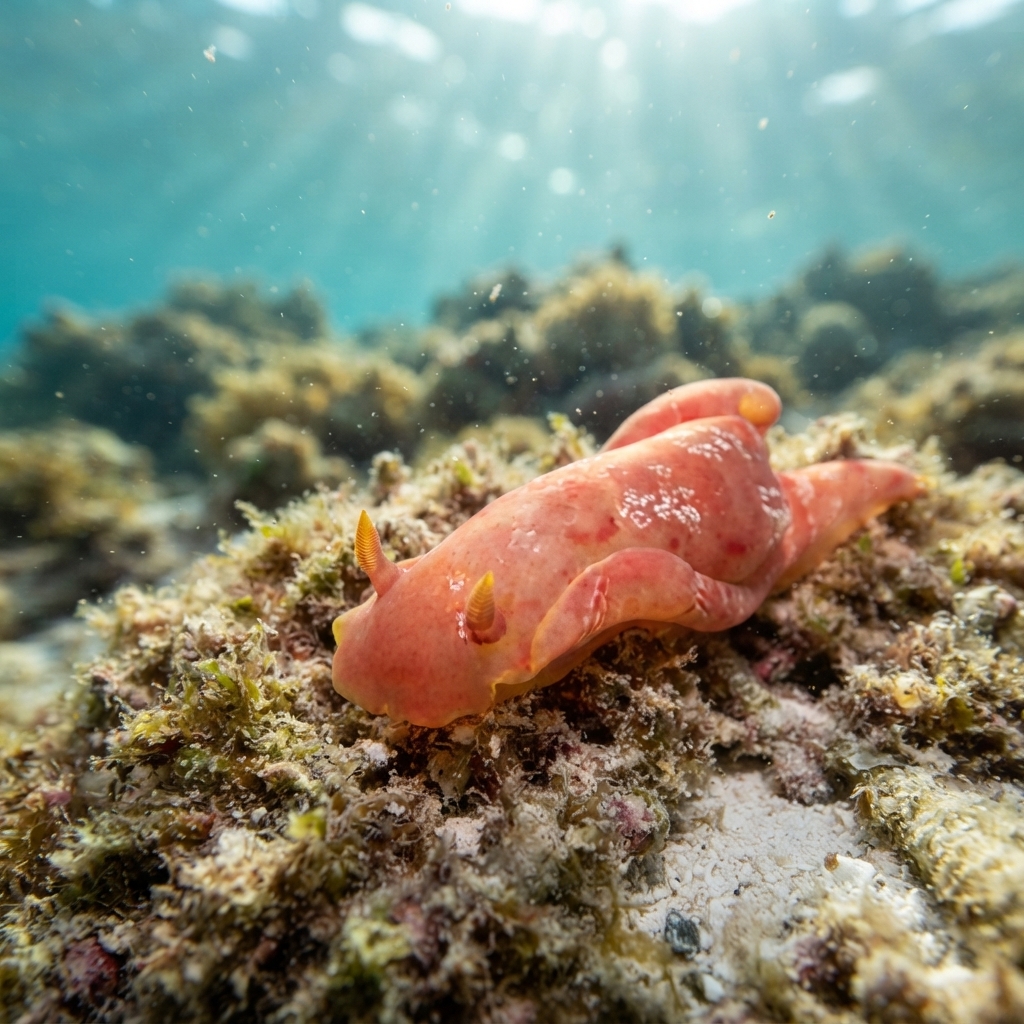
Hexabranchus aureomarginatus
A gold-edged nudibranch turning up on reefs across Hawaii, most often logged as an uncommon find in 22.4 to 28.4 C water.
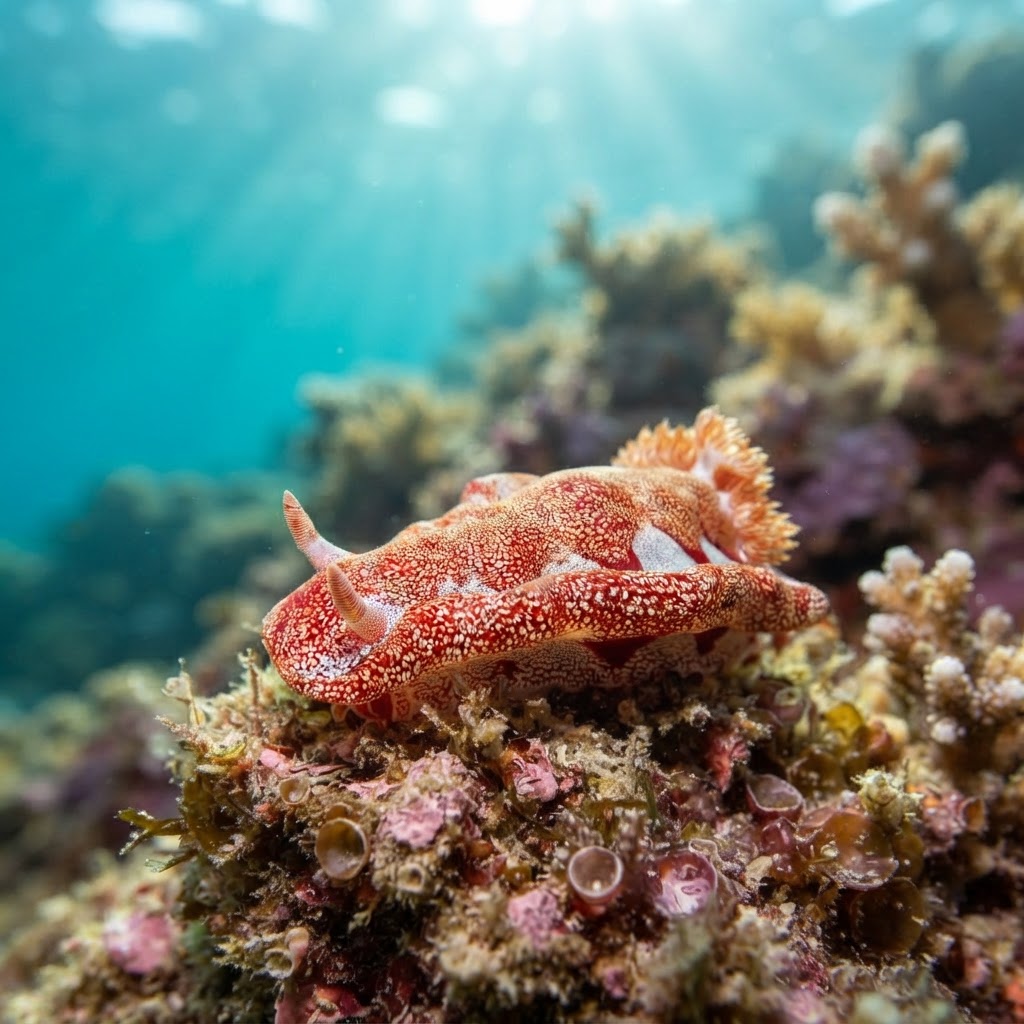
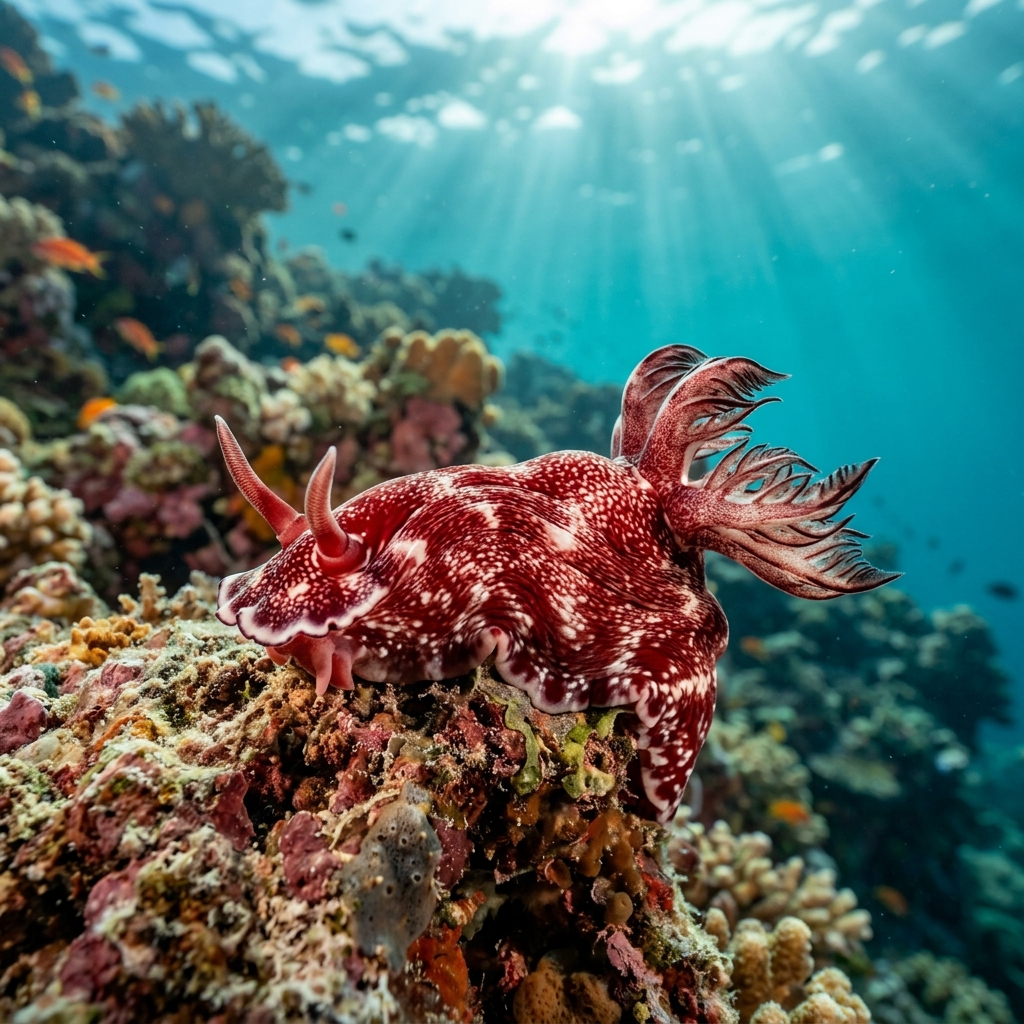
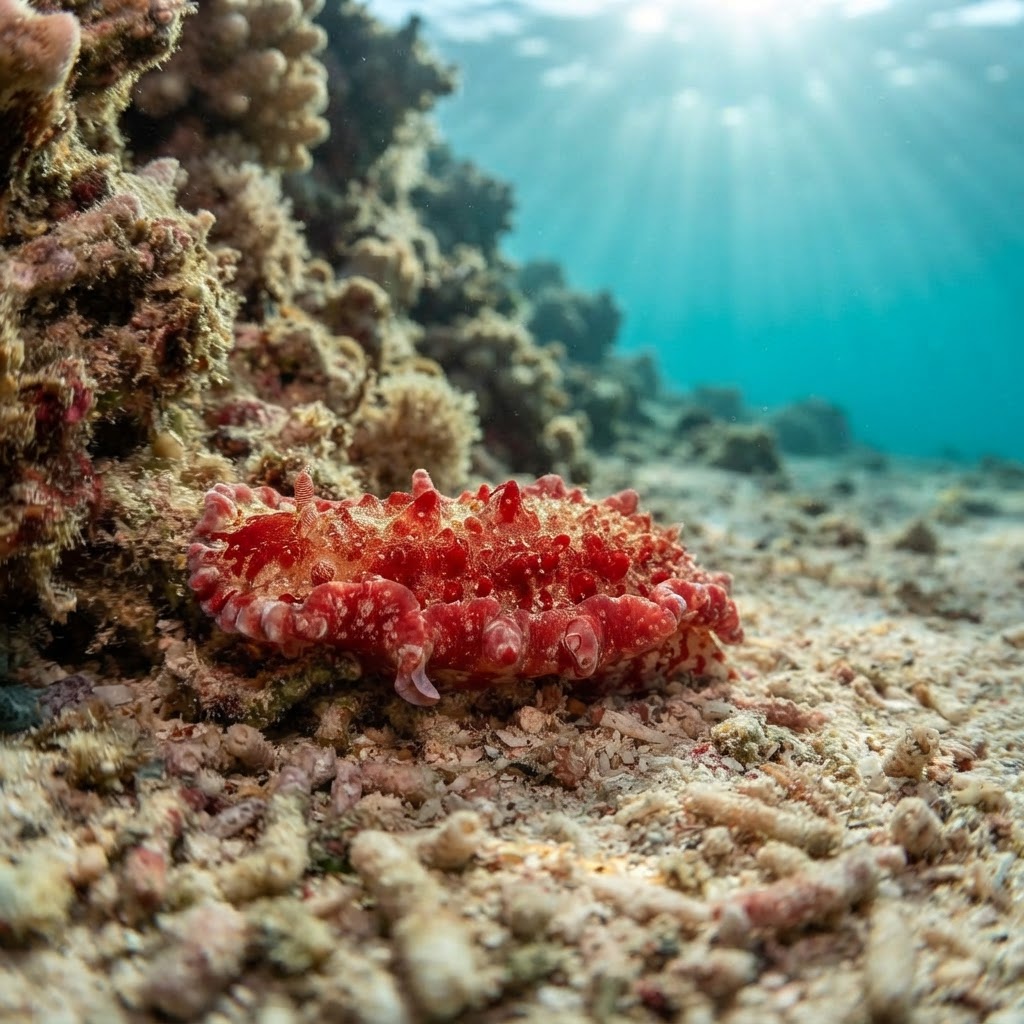
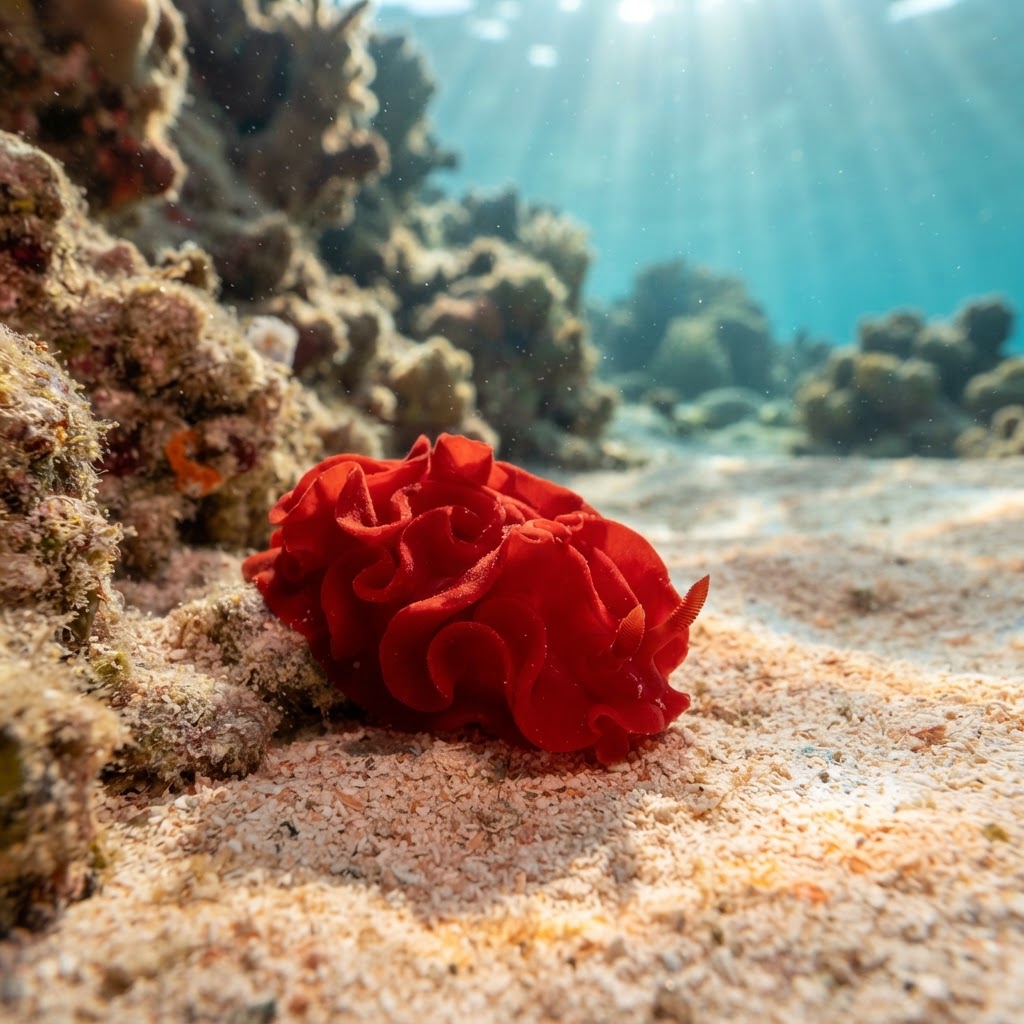
Look for a soft-bodied nudibranch with a broad, frilled mantle rimmed in a gold or yellow edge that stands out against darker body colour. It moves slowly across the reef surface, its gill plumes visible on the back, and it lacks the bright red colouration of its better-known cousin the Spanish Dancer. Size in the water is modest, closer to a hand-span than the larger Spanish Dancer relatives.
Divers typically find it grazing slowly across hard or encrusted substrate, moving at the unhurried pace typical of this family. It shows little concern about divers and will continue crawling and feeding when approached slowly, making it an easy subject for close-focus photography once spotted.
Like other members of the Hexabranchidae, it likely feeds on sponges, and any bright edge colouration probably serves as a warning to predators that it has taken up distasteful compounds from its diet.
Sightings show no detectable seasonal pattern, and with a comfortable range of 22.4 to 28.4 C, Hawaiian reefs stay within its temperature niche year-round. Plan around Hawaii's generally consistent water temperatures rather than chasing a specific month.
Reef neighbours a diver could mistake it for. Use the identification notes above to tell them apart.
Every logged sighting in the data comes from Hawaii, making it the one region divers should target for this species, with sites spread across the islands rather than clustered at a single spot. It shows up as an uncommon find at most of those sites, with a few locations reporting it more reliably as common.
Mapping where Yellow-margined Spanish Dancer is logged…
Hawaii is the region with confirmed sightings, spread across a range of dive sites rather than concentrated in one location. It turns up most often as an uncommon find, with a handful of sites reporting it more reliably.
There's no clear seasonal pattern in the sightings data, so it's considered a year-round find. Hawaiian water stays within its comfortable temperature range of 22.4 to 28.4 C for most of the year.
Check for a soft, frilled-mantled nudibranch with a gold or yellow-edged rim around the body, moving slowly across the reef. It's more subdued in colour than the classic red Spanish Dancer, so the gold edge is the key mark to key on.
No, it poses no danger to divers. It's a slow-moving, soft-bodied nudibranch that can be safely observed and photographed at close range.
Like its relatives, it almost certainly feeds on sponges and may carry defensive compounds from that diet, with its bright mantle edge likely acting as a warning signal to would-be predators.
Site and sighting data is aggregated from diver logs, iNaturalist and GBIF. For taxonomy and conservation status:
Hawaiian Spanish Dancer
9 sites