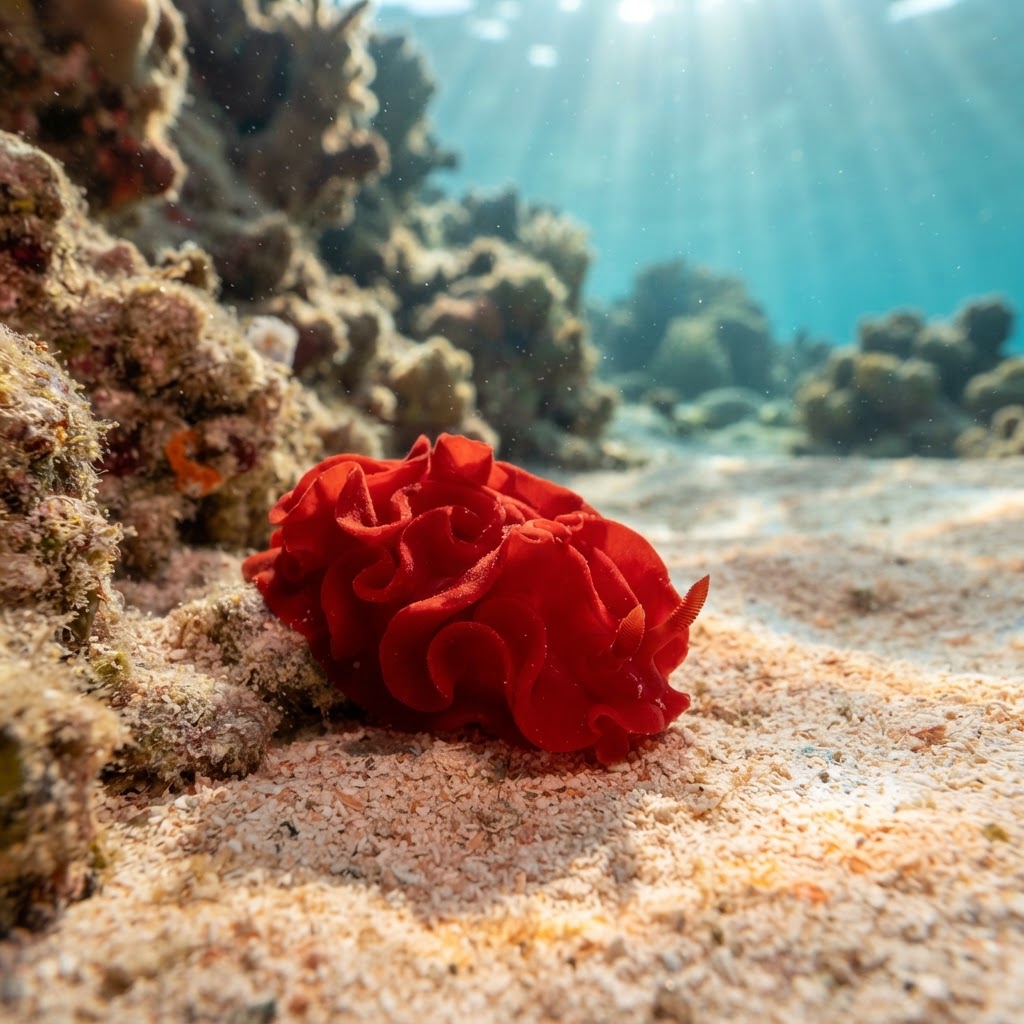
Hexabranchus sandwichensis
Spot this Spanish Dancer nudibranch on Hawaii reefs, an uncommon find in waters between 22 and 28 C, logged year-round.
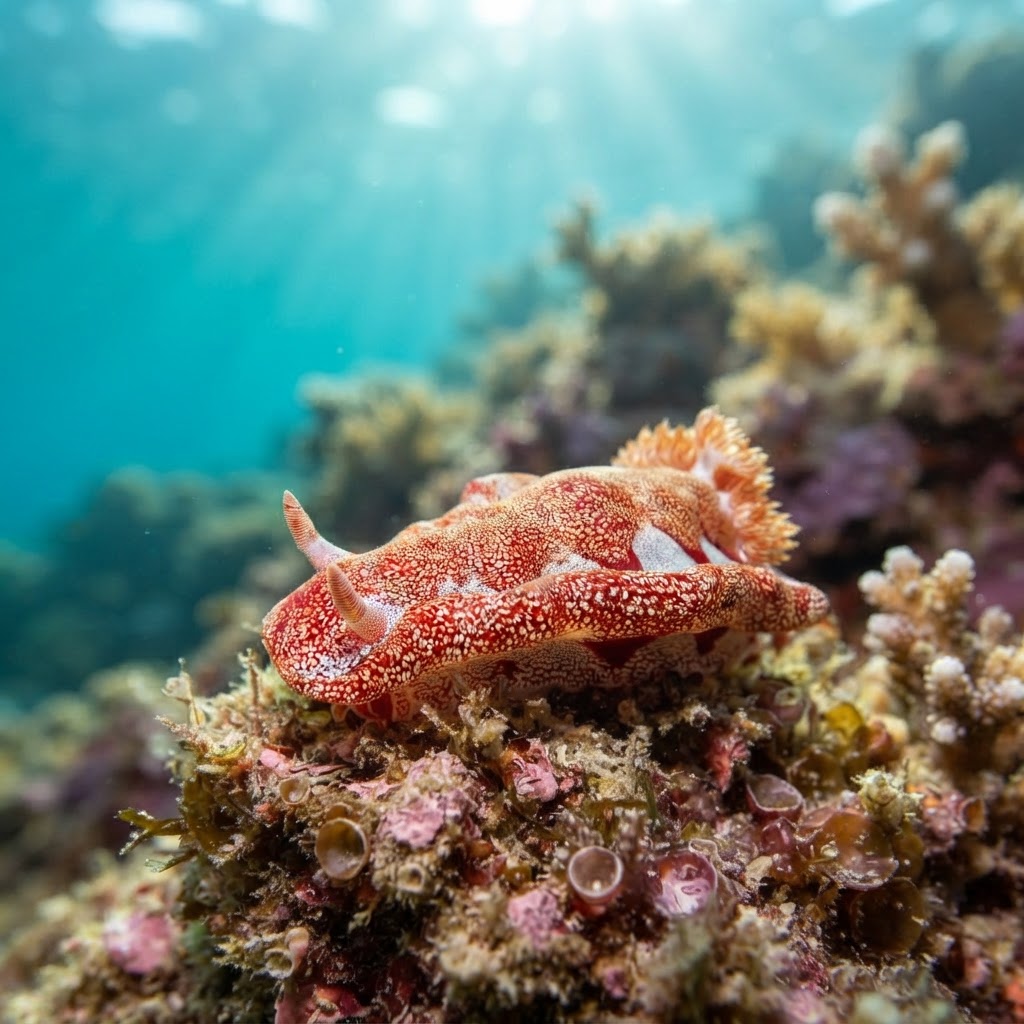
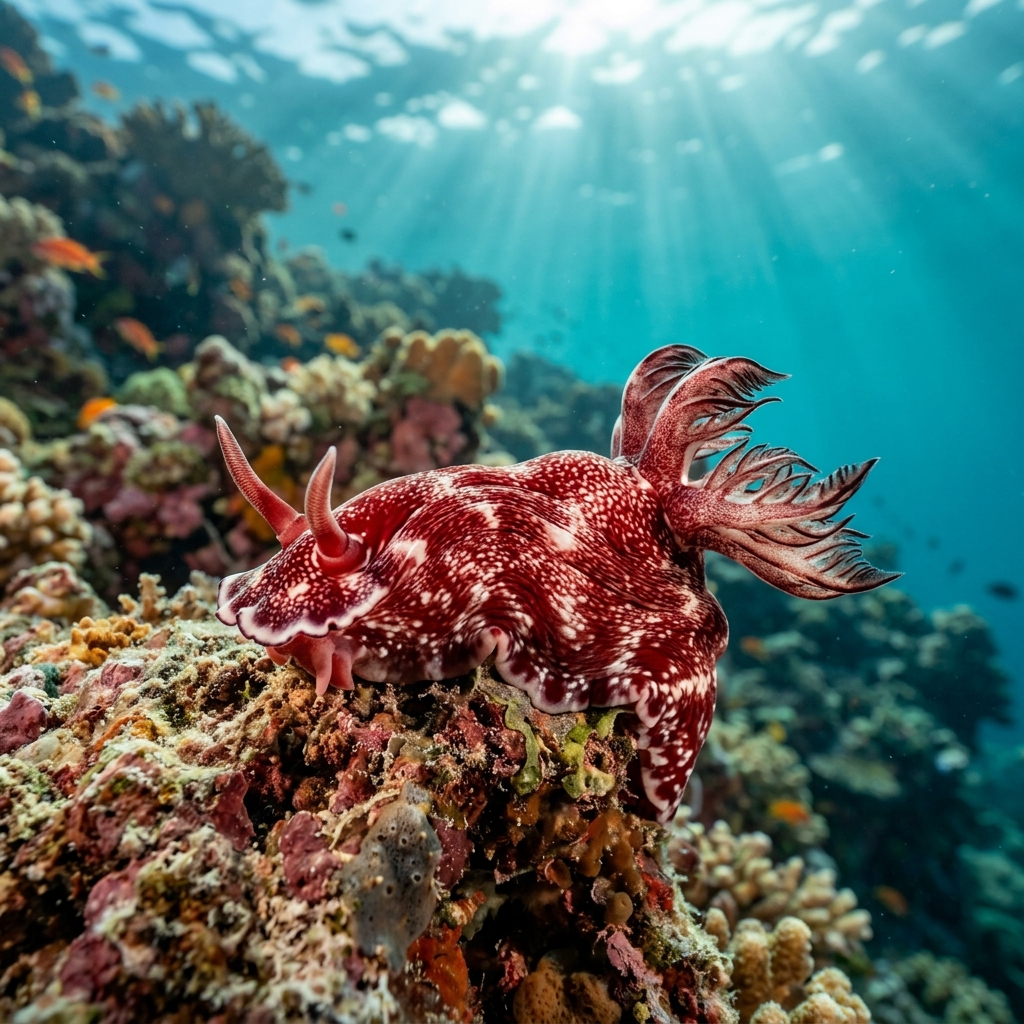
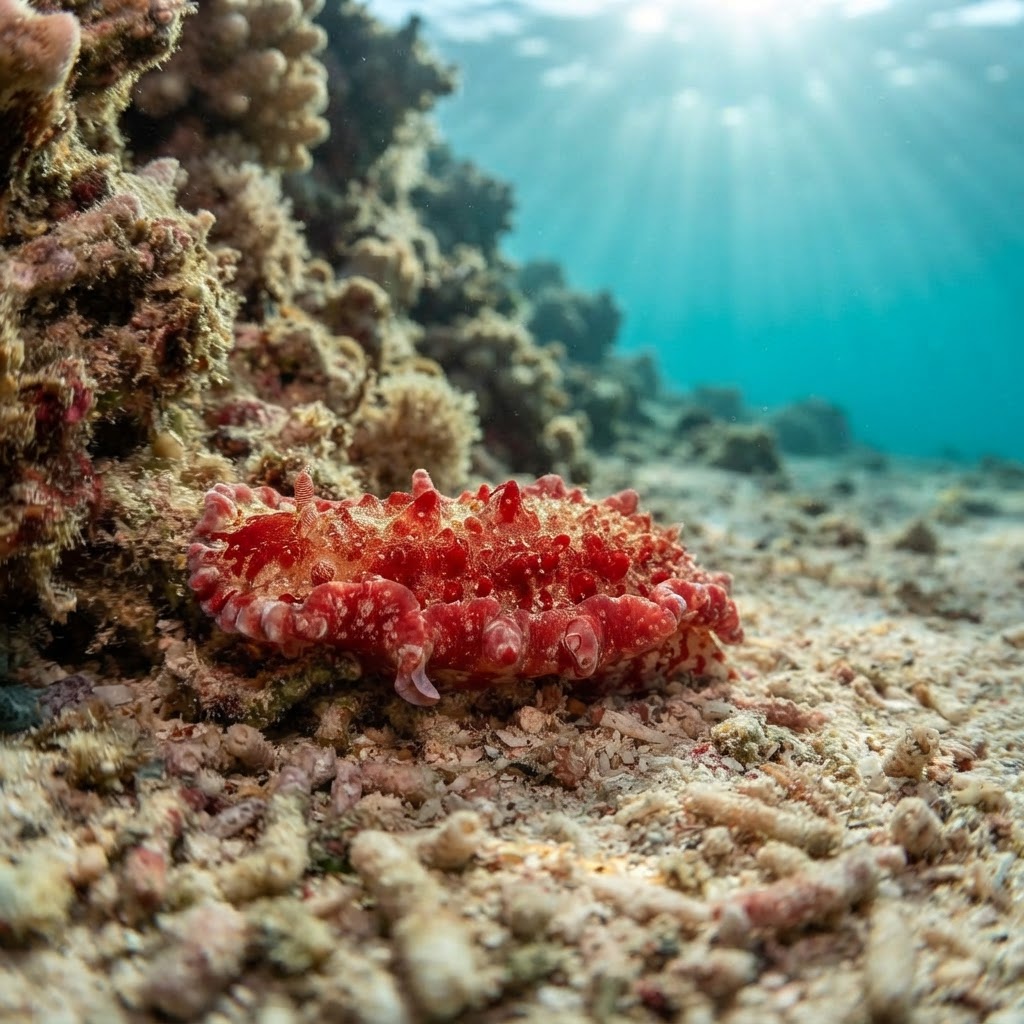
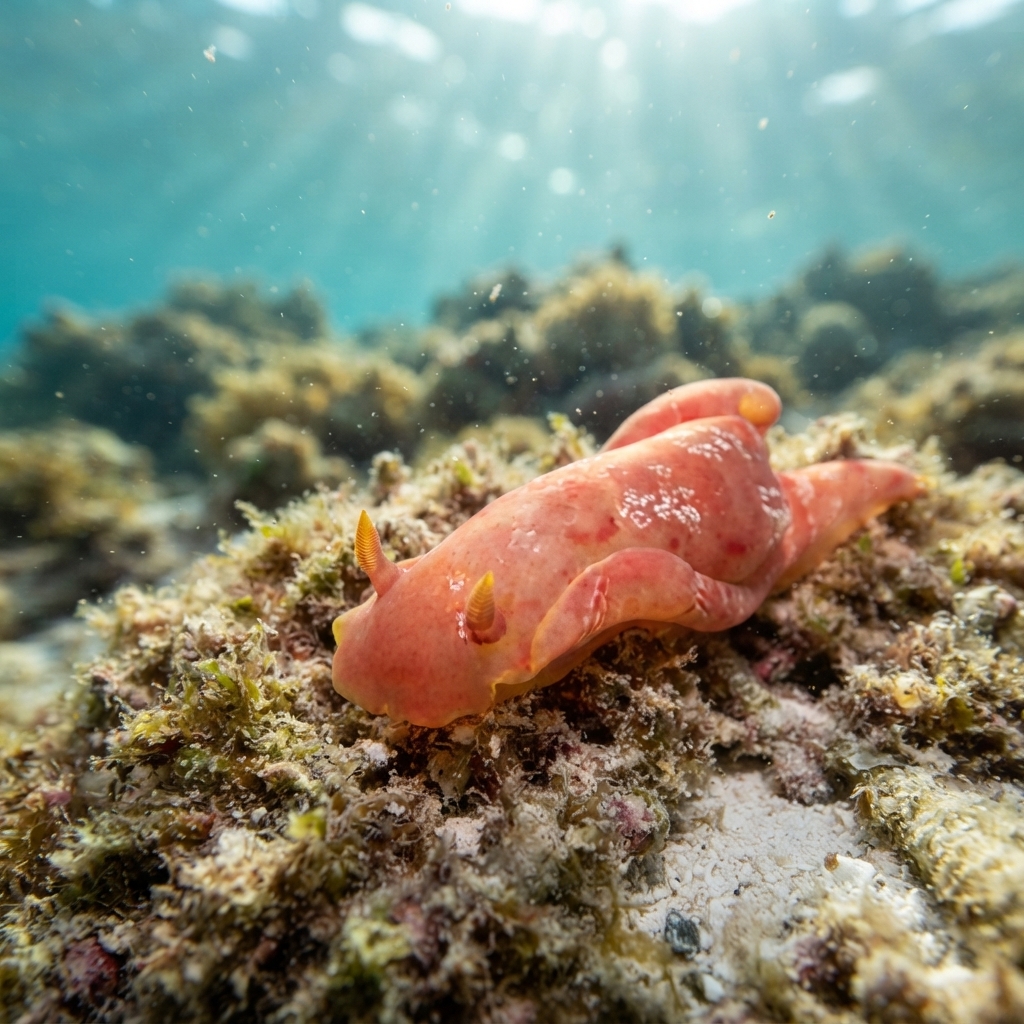
Look for a soft-bodied nudibranch with a broad, frilled mantle that ripples along its edges as it moves, usually seen crawling openly across the reef rather than tucked into crevices. Colouration runs toward mottled reds, oranges and whites typical of the Spanish Dancer group, with exposed feathery gills on the back. Its size and shape underwater make it stand out against plainer reef substrate once you know to check bare rock and rubble patches.
Divers typically find it moving slowly across open reef or rubble in daylight hours, not hiding the way many nudibranchs do. It shows little reaction to divers, continuing to graze as you approach, which makes it an easy subject for a close look or photo once spotted.
Like other Spanish Dancer relatives, its exposed gills and bold colouring are thought to signal a chemical defence picked up from the sponges it feeds on, making it unappealing to most reef predators.
Sightings are spread across the year with no clear seasonal spike in the data, and water temperatures of 22.4 to 28.4 C on Hawaiian reefs stay comfortable for it year-round. Plan around calm reef conditions rather than a specific month.
Reef neighbours a diver could mistake it for. Use the identification notes above to tell them apart.
Every logged sighting so far comes from Hawaii, in the United States, making it the go-to region for finding this species. Within Hawaii it turns up at a spread of sites rather than one hotspot, so it's worth asking local dive operators which reefs have had recent nudibranch sightings.
Mapping where Hawaiian Spanish Dancer is logged…
So far it has only been reliably logged in Hawaii, across a range of dive sites rather than a single hotspot. It's considered an uncommon find at most of those sites, with common sightings at just a couple.
There's no detected seasonal pattern, and it's found in water from 22.4 to 28.4 C, which covers Hawaiian reef conditions most of the year. Treat it as a year-round possibility rather than a seasonal target.
Check for a nudibranch with a frilled, ruffled mantle in mottled red, orange or white tones, crawling openly across the reef rather than hiding. The exposed gill tuft on its back is a key feature to confirm it's a Hexabranchus species.
No, it poses no danger to divers. It has no stinging or biting defence against people and can be observed and photographed safely at close range.
Members of this nudibranch group are named for the way their frilled mantle ripples like a flamenco skirt when they occasionally swim off the substrate. Most of the time, though, divers see them simply crawling across the reef rather than in full dancing display.
Site and sighting data is aggregated from diver logs, iNaturalist and GBIF. For taxonomy and conservation status:
Yellow-margined Spanish Dancer
16 sites