Balaenoptera borealis
One of the fastest baleen whales, sei whales cruise cold to temperate seas between 5-19°C. Here's how to recognise them and what an encounter looks like.
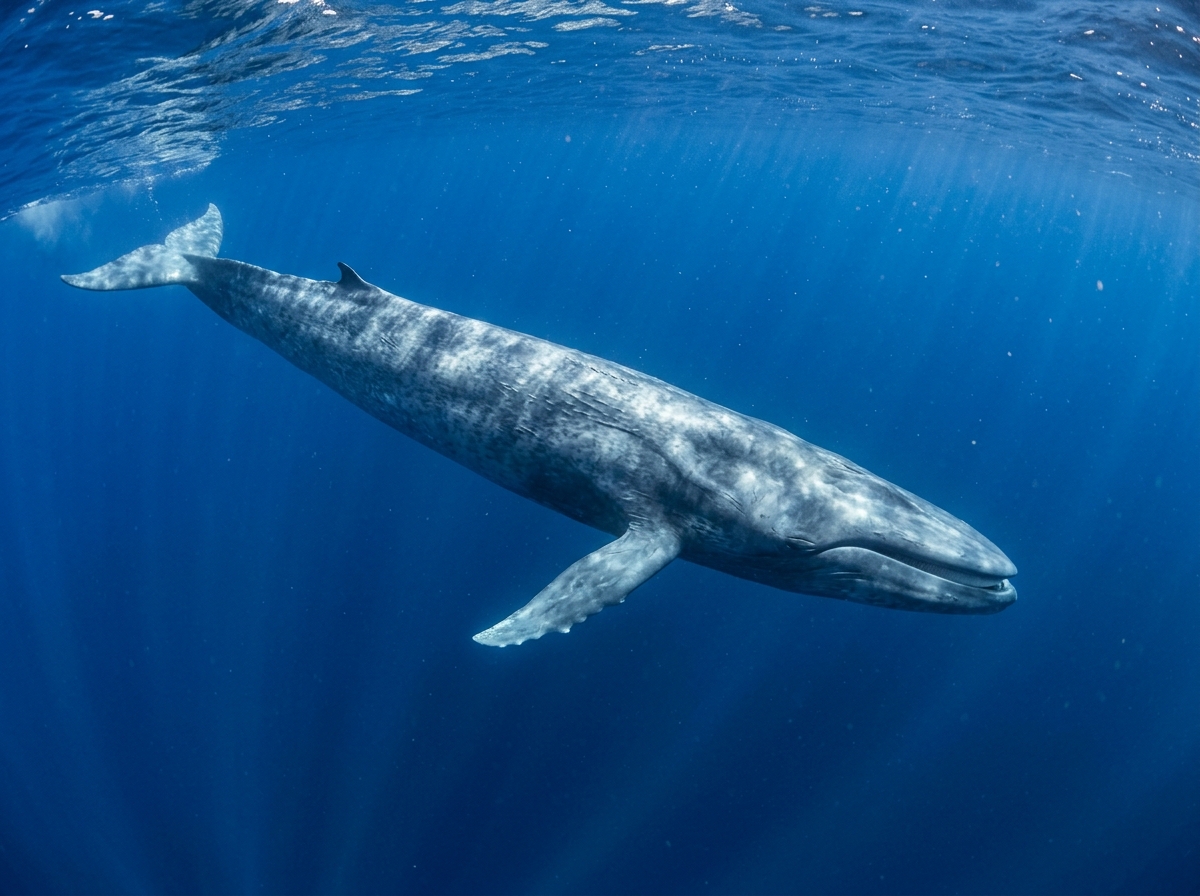
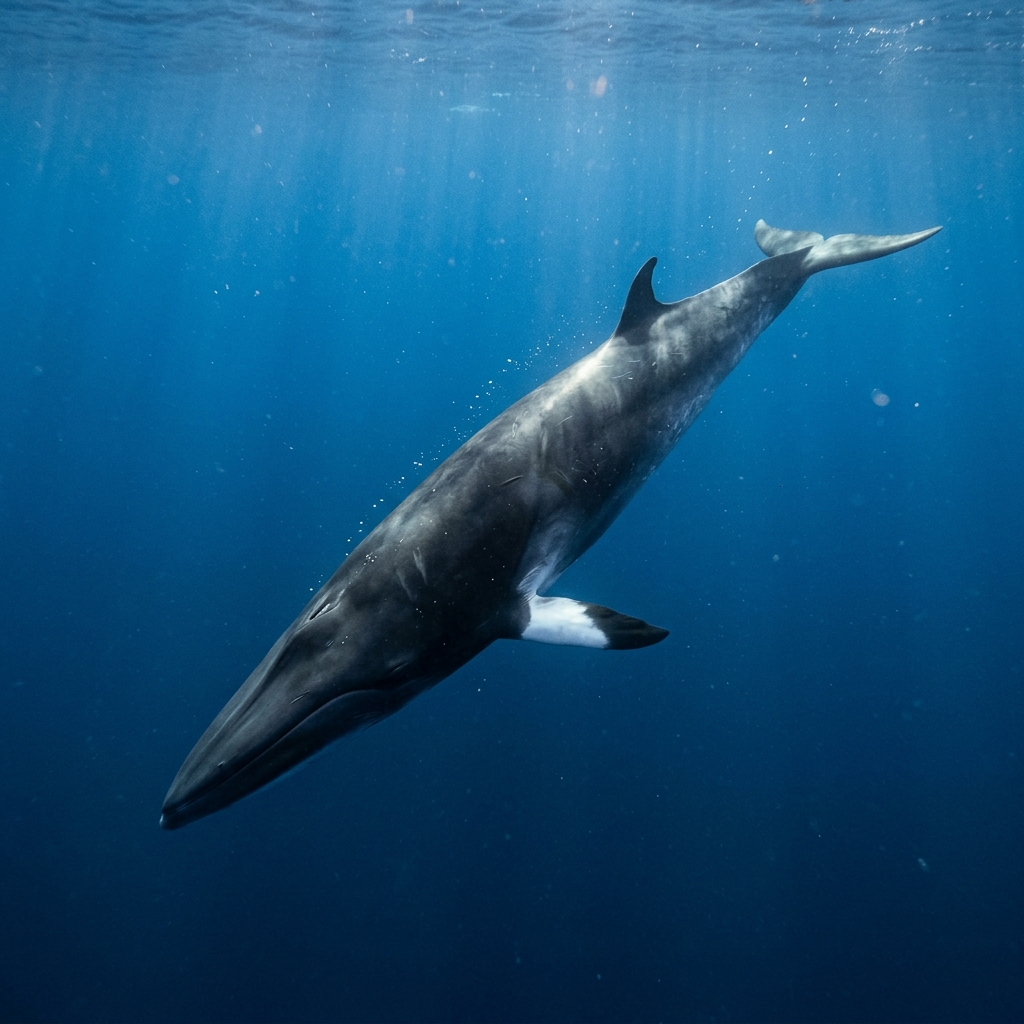
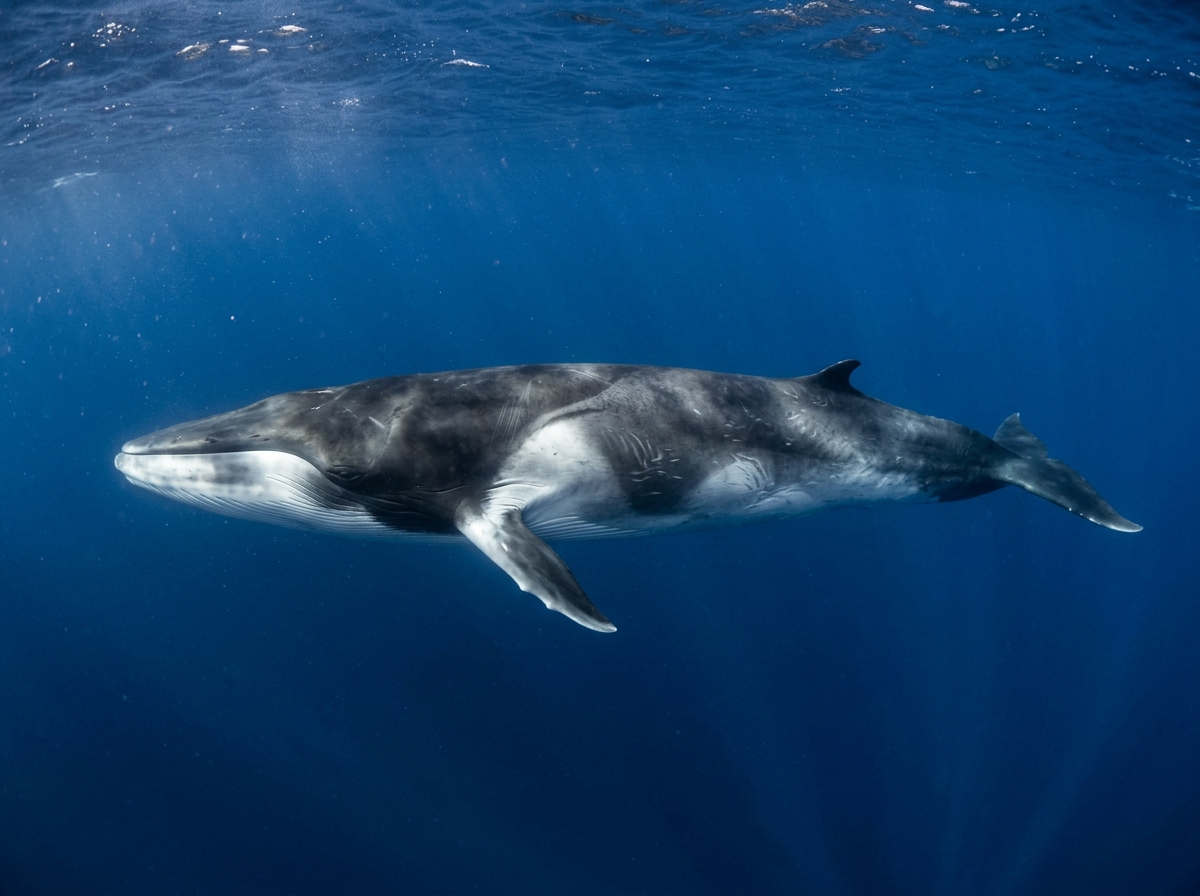
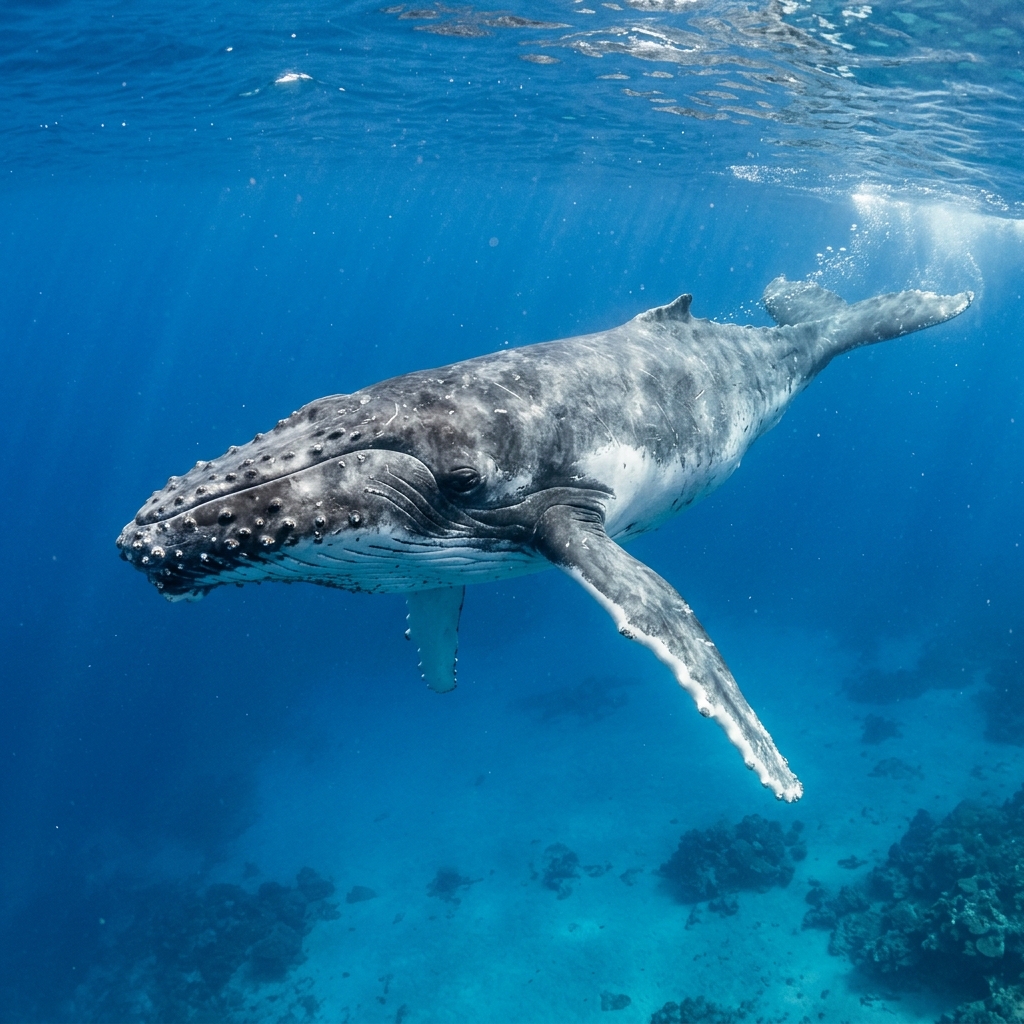
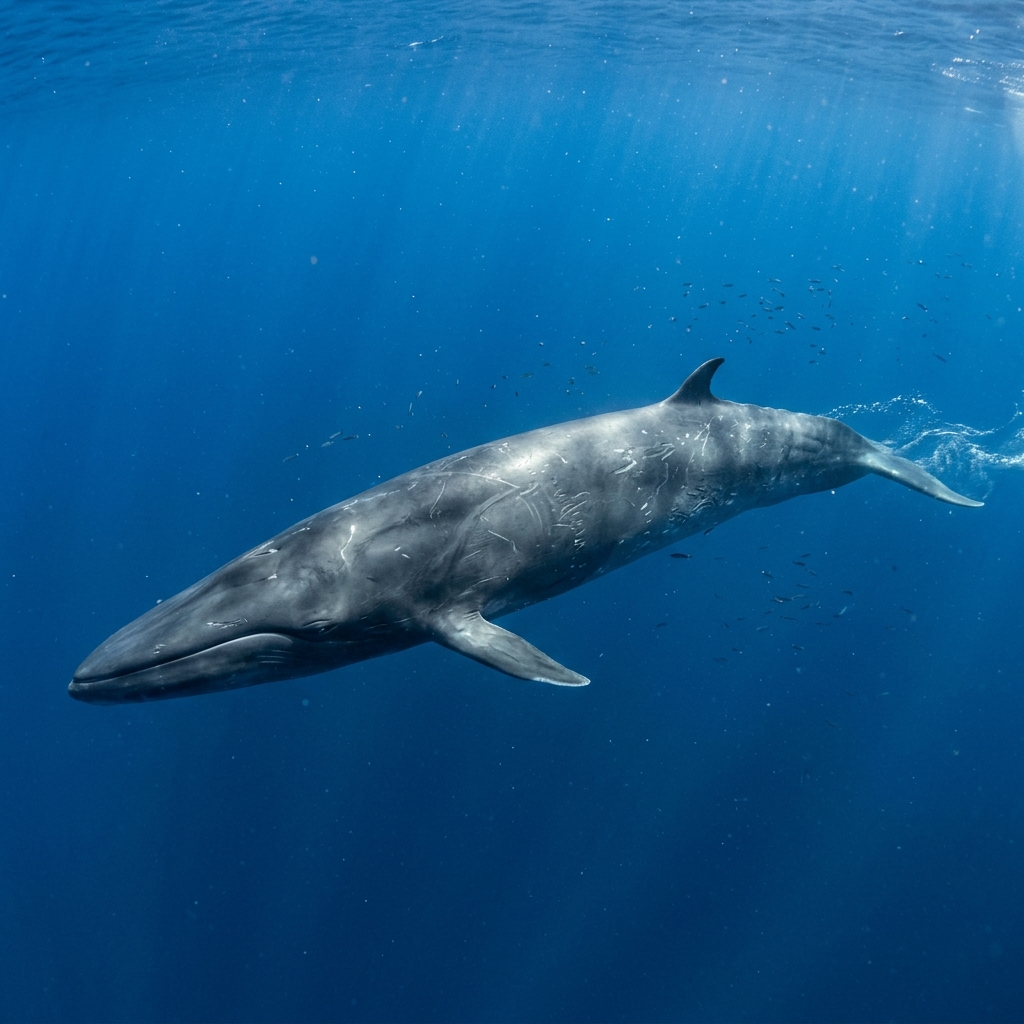
At around 12-14 metres, sei whales are slender and fast, with a uniformly dark blue-grey back and a single, prominent rostral ridge running to the tip of the snout. The dorsal fin sits roughly two-thirds of the way back along the body and curves backwards, looking more upright than a fin whale's but less hooked than a minke's. A pale, irregular blaze often marks the right side of the lower jaw. Unlike humpbacks, they rarely lift their flukes clear of the water on a dive.
Encounters are typically brief and at a distance: a long, low blow, a glimpse of that slate-grey back, and the animal is gone. Sei whales do not seek out boats or divers and rarely perform the acrobatics associated with humpbacks. Your best chance of watching one for more than a few seconds is when it is skim-feeding at the surface, tilting slightly to one side as it filters krill or copepods through its baleen plates.
Sei whales are among the fastest of all cetaceans, capable of short bursts exceeding 50 km/h, which partly explains why encounters are so fleeting. That speed also made them a primary target for whalers once blue and fin whale populations collapsed in the mid-20th century.
No seasonal pattern can be read from current sighting data, so timing a dedicated trip is not yet possible. Their temperature niche of roughly 6-19°C suggests they favour cool temperate and sub-polar seas, which may help narrow a search if you are planning an offshore expedition.
Reef neighbours a diver could mistake it for. Use the identification notes above to tell them apart.
Sei whales have not yet been logged at any dive sites in Fin's database, so there are no confirmed diver hotspots to point you to. By range and biology they are pelagic (open-ocean) animals of cold to temperate waters, and sightings from the water tend to be opportunistic encounters during offshore passages rather than planned dives at known sites.
Mapping where Sei Whale is logged…
No match
There are currently no confirmed dive-site records for sei whales in Fin's database. They are open-ocean animals of cold to temperate seas, and encounters happen opportunistically on offshore passages rather than at specific dive sites. Whale-watching expeditions in the North Atlantic and Southern Ocean offer the best realistic chance.
Look for a large, uniformly dark grey whale with a single sharp ridge along the top of the snout, a moderately tall backward-curving dorsal fin placed well behind the midpoint of the body, and a blow that rises to about 3 metres. Crucially, sei whales rarely fluke up before a dive, which helps separate them from humpbacks.
Adults typically reach 12-14 metres in length and can weigh up to 28 tonnes, making them the third-largest baleen whale species. Females tend to be slightly longer than males, though the difference is hard to judge in the field.
Yes. Sei whales are listed as Endangered by the IUCN. Intensive whaling during the 20th century, particularly after larger species became scarce, reduced global populations dramatically. Numbers are slowly recovering in some areas, but they remain at a fraction of pre-whaling levels.
No reliable seasonal pattern is established from diver sighting data. Sei whales generally favour cool to temperate waters in the 6-19°C range and undertake long migrations between feeding and breeding grounds, so timing varies considerably by region. Offshore expeditions in temperate and sub-polar seas offer the most realistic opportunities.
The Sei Whale is listed as endangered by the IUCN. Observe from a distance, avoid touching or feeding it, and report sightings to local marine research organisations.
Sei whales are listed as Endangered on the IUCN Red List, their populations heavily reduced by 20th-century commercial whaling. If you are fortunate enough to encounter one, maintain a respectful distance and follow any local whale-watching regulations to avoid disturbing the animal.
Site and sighting data is aggregated from diver logs, iNaturalist and GBIF. For taxonomy and conservation status: