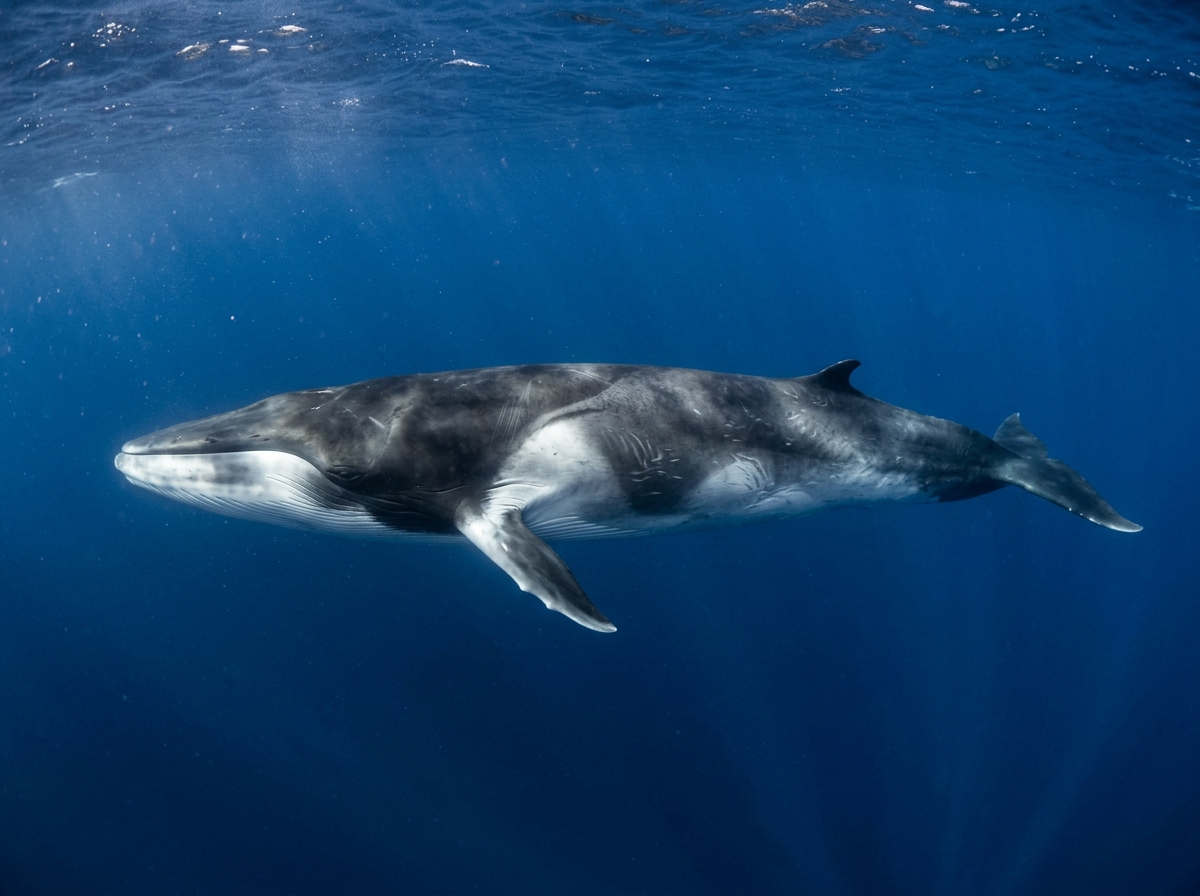
Balaenoptera physalus
One of the largest animals on Earth, fin whales tolerate water from 6.6 to 26.6°C. Here's how to recognise one and where divers encounter them.
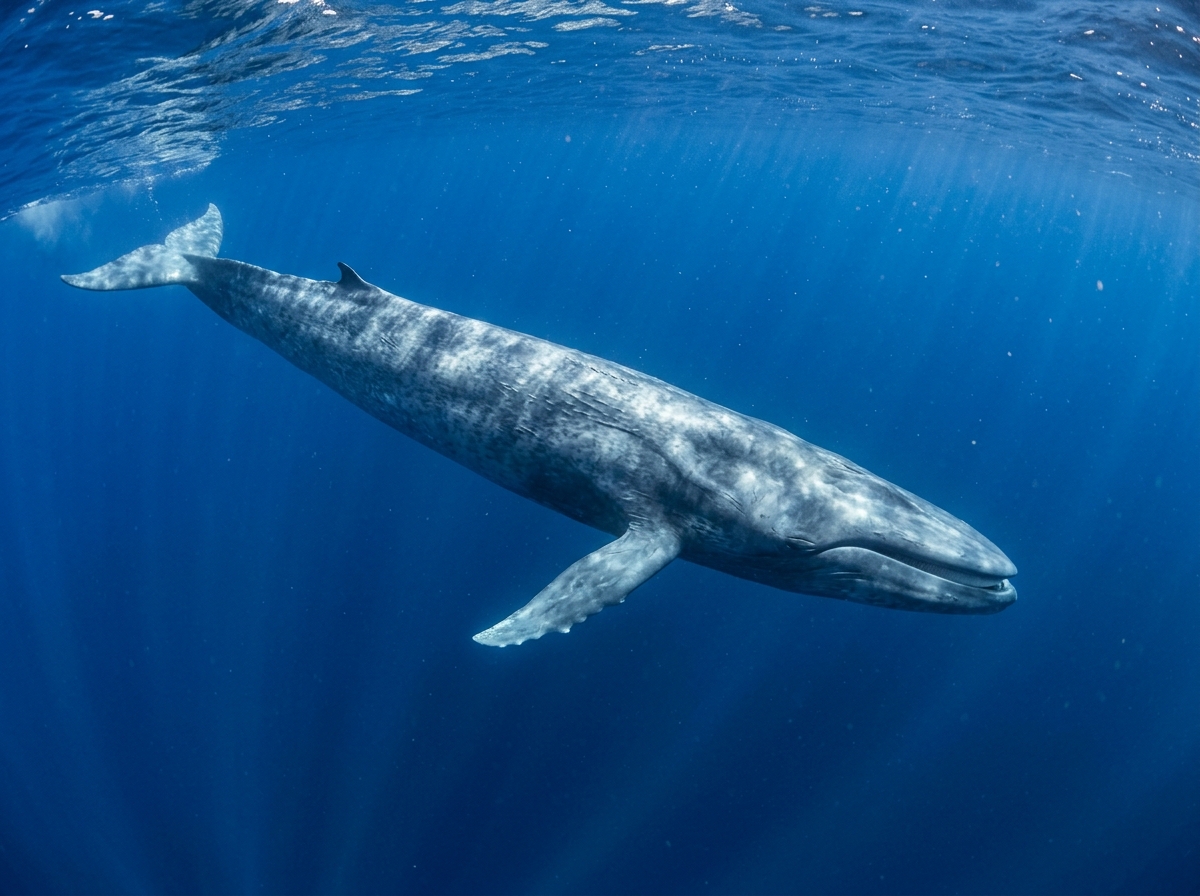
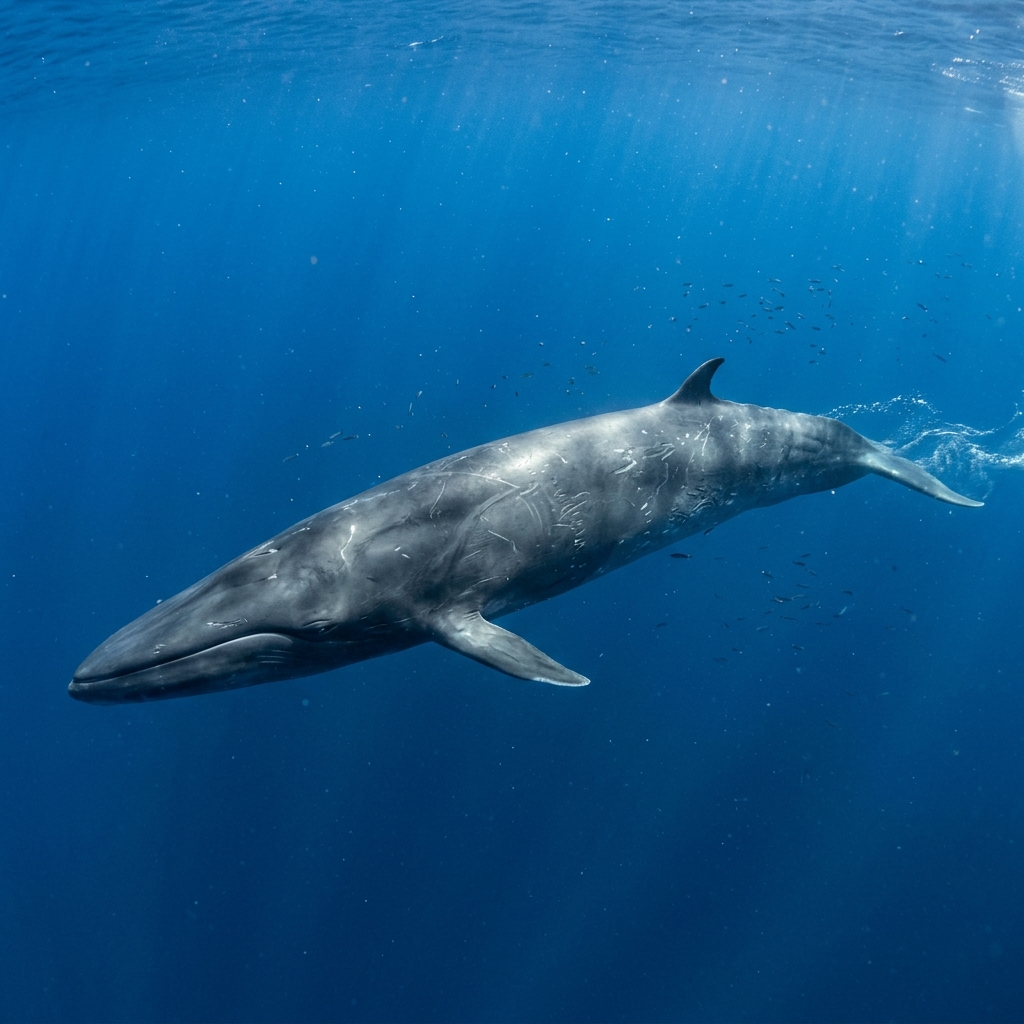
At up to roughly 19 metres, size alone narrows the field considerably, but the key mark is the asymmetric colouring on the jaw: the right lower lip and baleen plates are white, while the left side is dark grey. The back is a deep slate-grey, and the small, swept-back dorsal fin sits far back along the body, appearing only briefly after the blow. Look for a tall, columnar blow reaching six metres before the long back rolls into view.
Fin whales tend to be cautious around boats and divers, often changing course to maintain distance, so close underwater encounters are rare and should never be forced. When feeding, they roll onto their side to lunge through krill or small fish near the surface, a fast, forceful movement that leaves little time for a diver to react. They are usually spotted alone or in small groups, though loose aggregations gather where food concentrations are high.
Fin whales are the second-largest animal ever to have lived on Earth, exceeded only by the blue whale, yet they are capable of sustained speeds around 37 km/h, earning them an old whalers' nickname of 'greyhound of the sea'.
Current sighting data does not show a concentrated season, so encounters should be treated as year-round and opportunistic. Their broad temperature tolerance of roughly 6.6 to 26.6°C means they can turn up in cool temperate and warmer subtropical waters alike.
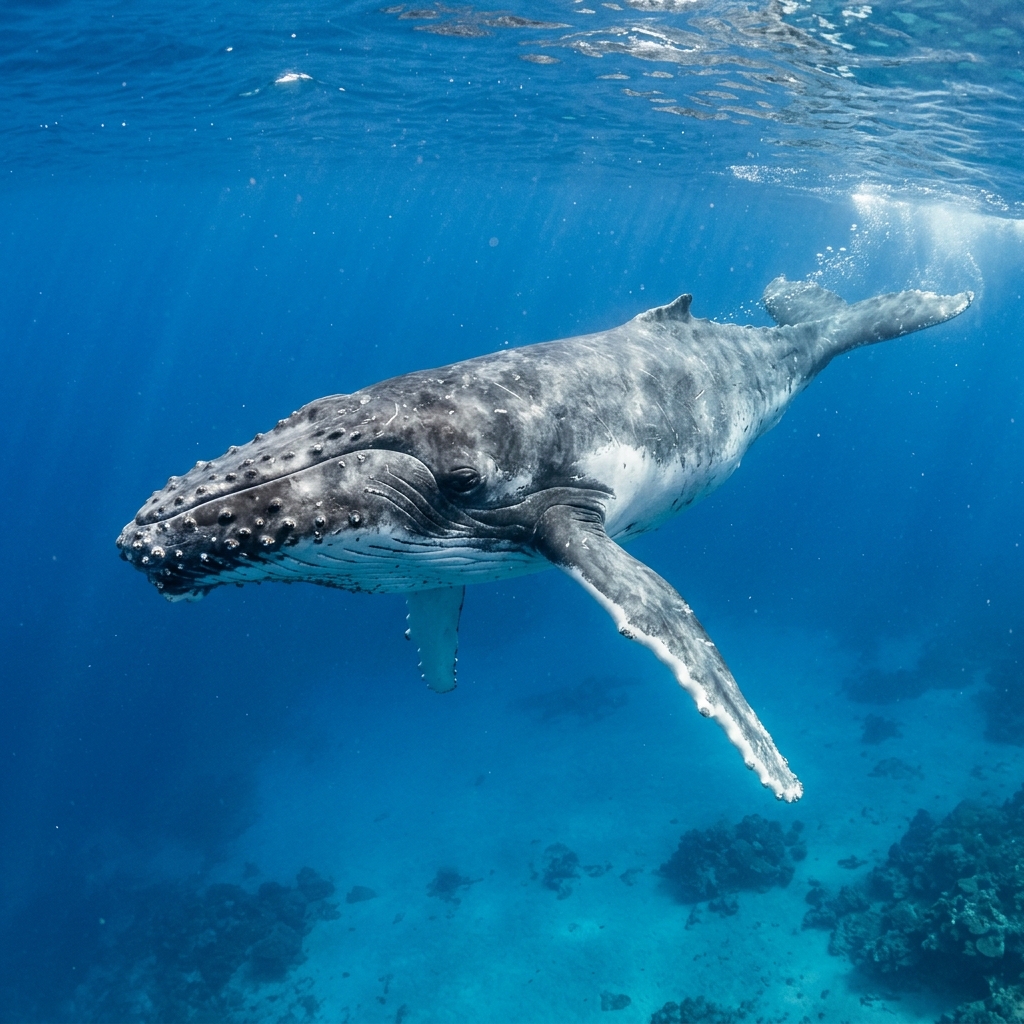
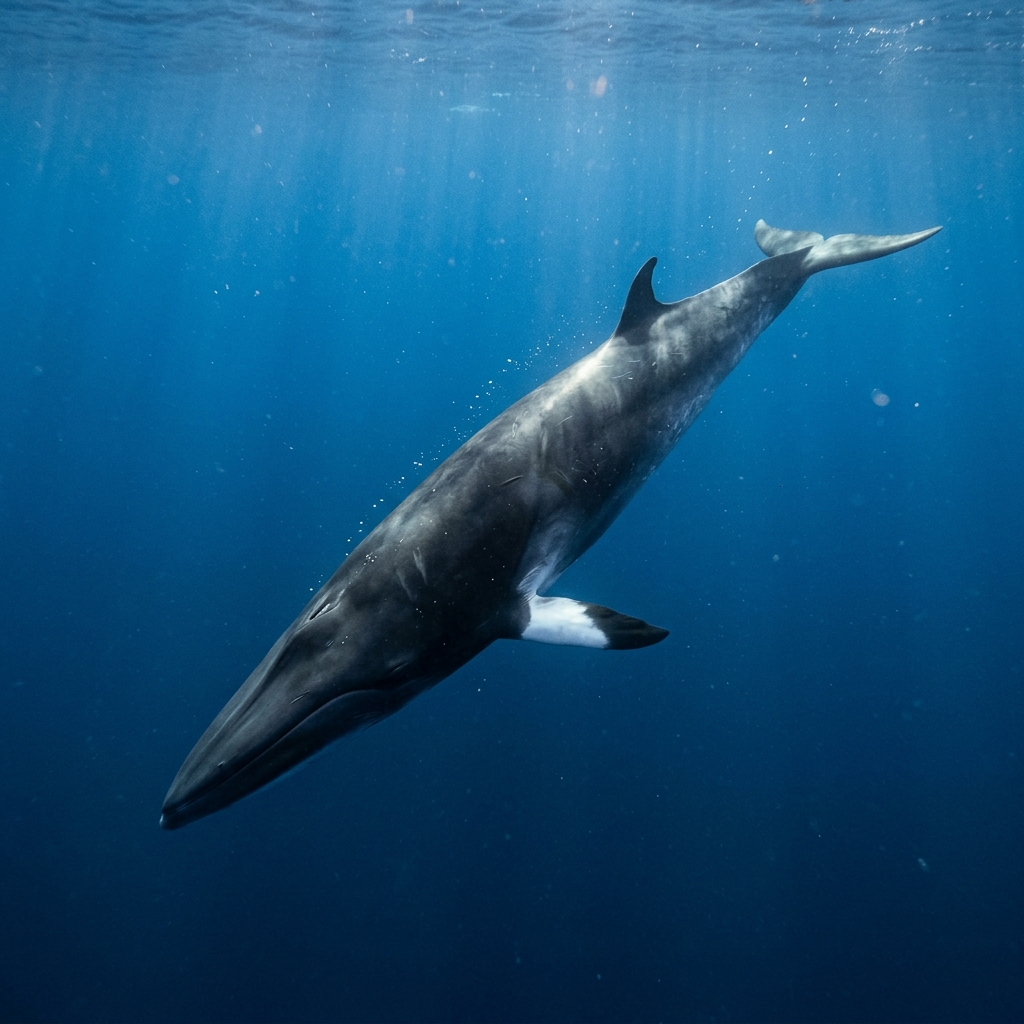
Reef neighbours a diver could mistake it for. Use the identification notes above to tell them apart.
Fin whale sightings have not yet been widely documented through diver logs on Fin, so there are no confirmed hotspot regions to highlight at this stage. They are wide-ranging oceanic animals found across temperate and subpolar seas worldwide, and encounters are opportunistic rather than reliably tied to specific dive sites.
Mapping where Fin Whale is logged…
No match
The most reliable field mark is the asymmetric jaw colouring: the right lower lip and front baleen plates are white, while the left side is dark. Combined with the enormous length, slate-grey back, and a small dorsal fin set far towards the tail, this combination is unique among large whales.
Adults typically reach around 19 to 20 metres in length and can weigh up to 70 tonnes. Females are generally larger than males, as is common in baleen whales. They are the second-largest animal on Earth after the blue whale.
They are currently listed as Vulnerable by the IUCN. Populations were devastated by twentieth-century whaling and are recovering, but slowly. Current threats include ship strikes and ocean noise, which can disrupt their long-distance communication.
There is no single peak season confirmed by diver sighting data. Fin whales are wide-ranging and their movements follow prey, so encounters are opportunistic across the year. Your best approach is to join a dedicated whale-watching or research expedition in known feeding grounds.
The asymmetric colouring is thought to be linked to their feeding strategy. Fin whales often roll onto their right side when lunge-feeding, and the white right jaw may help to startle and herd prey. It is one of the most unusual colour patterns of any large whale.
The Fin Whale is listed as vulnerable by the IUCN. Observe from a distance, avoid touching or feeding it, and report sightings to local marine research organisations.
Fin whales are listed as Vulnerable on the IUCN Red List, recovering slowly from heavy commercial whaling that removed the vast majority of their population in the twentieth century. If you encounter one, keep a respectful distance, never attempt to touch or intercept it, and report sightings to local whale-watch or research programmes.
Site and sighting data is aggregated from diver logs, iNaturalist and GBIF. For taxonomy and conservation status: