Balaenoptera acutorostrata
Spot the smallest baleen whale in temperate and tropical waters from 10-27 °C. Learn how to identify a common minke whale underwater.
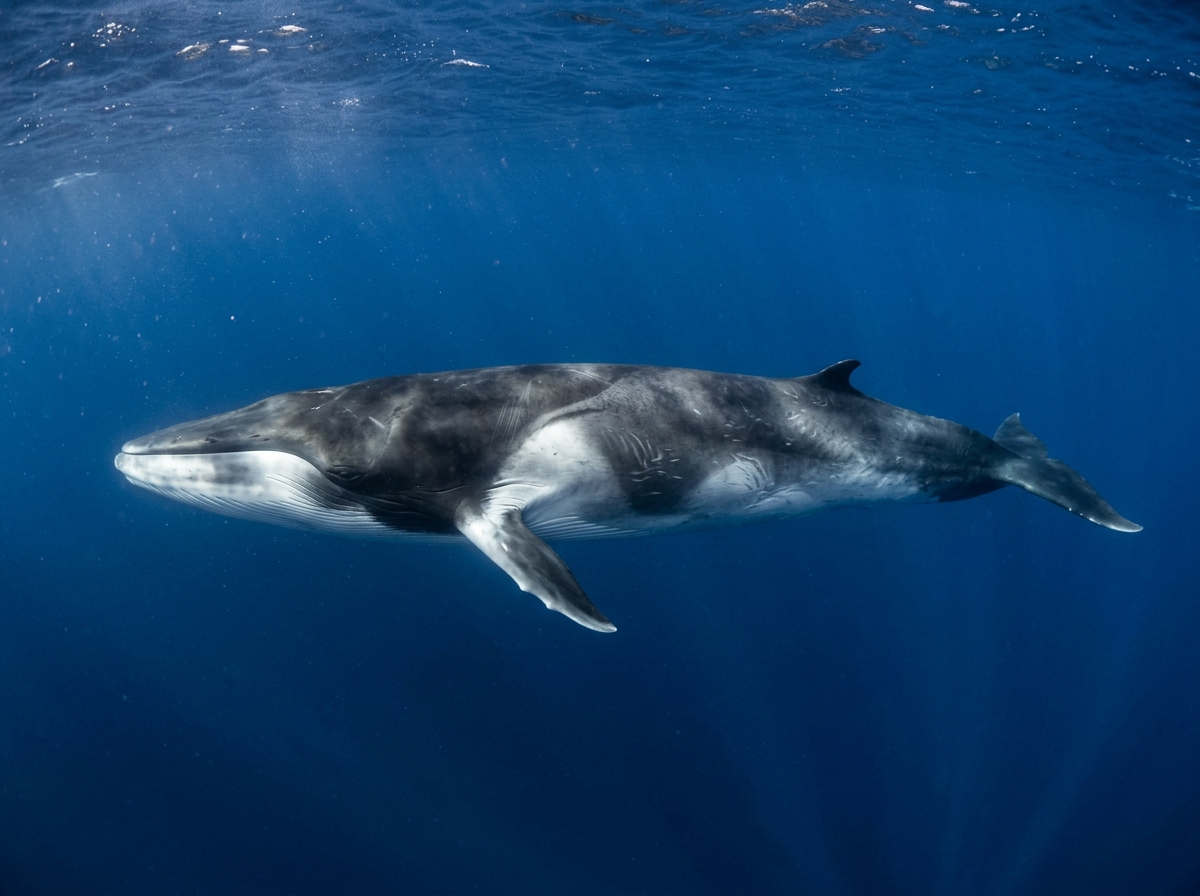
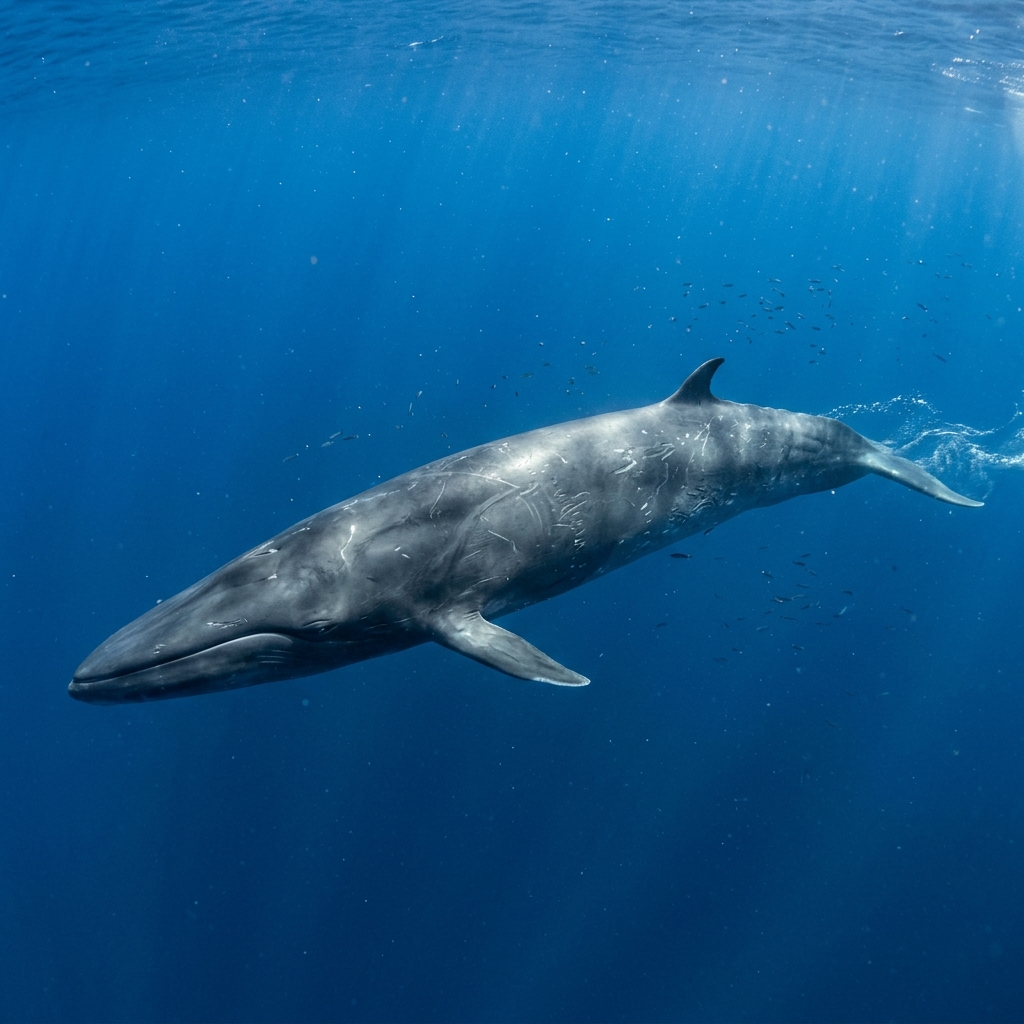
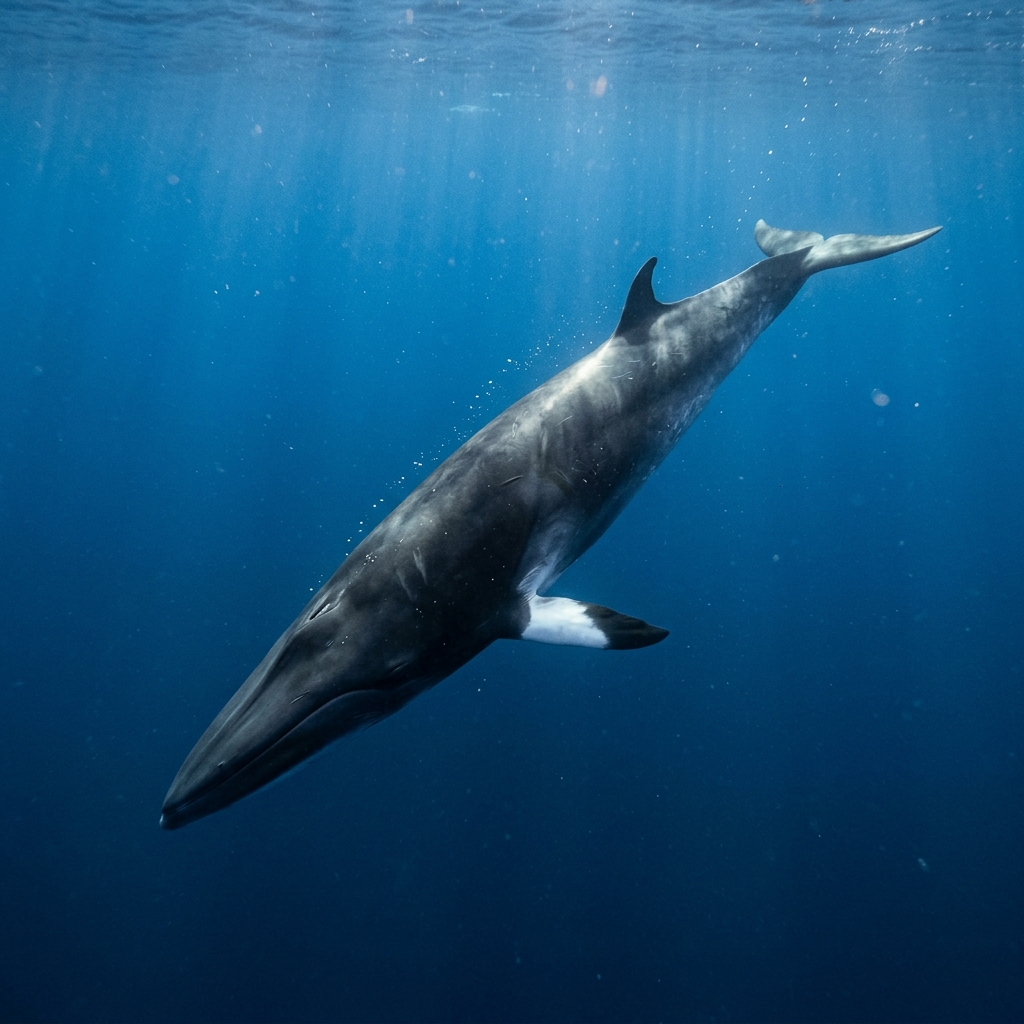
At around 7.5 metres, minke whales are noticeably smaller than most other baleen whales you might encounter, with a sharply pointed, almost triangular rostrum (snout) that is distinctive even from a distance. The body is dark grey to black on top and white underneath, and the single most reliable field mark is a bright white or pale band across each flipper. A tall, curved dorsal fin sits roughly two-thirds of the way down the back and often surfaces just after the blow, which is small and easy to miss. Females run slightly larger than males, but that distinction is difficult to judge in open water.
Minke whales tend to be wary around vessels and divers, surfacing briefly and often disappearing before you can get much of a look. Curious individuals do occasionally linger, but direct approaches to swimmers or divers are uncommon, so most encounters are fleeting and from a distance. Where prey is concentrated near the surface, lunge feeding can sometimes be observed, making productive upwelling areas or bait-ball hotspots your best chance of a sustained sighting.
Unlike the great whales, minke whales produce very little visible blow at the surface, which is one reason they are frequently overlooked even when present in an area.
There is not yet enough monthly sighting data to identify a peak season, so encounters should be treated as possible year-round wherever the species is known to range. The broad temperature tolerance of 10-27 °C suggests it is present in both cold temperate and warmer waters at different times of year.
Reef neighbours a diver could mistake it for. Use the identification notes above to tell them apart.
Sighting records in Fin's database are currently too sparse to point to proven hotspots, so no specific sites or regions can be highlighted yet. As a wide-ranging pelagic species comfortable in water from around 11 to 27 °C, encounters occur across both temperate and warmer seas, but reliable encounter sites remain to be confirmed in the community data.
Mapping where Common Minke Whale is logged…
Look for a relatively small baleen whale around 7-8 metres long with a pointed snout, dark grey back, and white underside. The clearest field mark is a white or pale band across each flipper. The dorsal fin is tall and curved, appearing shortly after the small, low blow at the surface.
Adults typically reach around 7.5 metres in length. Females tend to grow slightly longer than males, though the difference is hard to judge in open water. They are the smallest of the rorqual whales, which makes size a useful starting point when telling them apart from fin or sei whales.
No. Minke whales are not considered dangerous to divers and are generally shy rather than aggressive. The main practical concern is their size: a 7-metre whale surfacing or manoeuvring nearby can cause accidental contact, so maintaining a respectful distance and avoiding sudden movements is good practice.
There is currently not enough logged sighting data to pinpoint a reliable season. Minke whales tolerate a wide temperature range of roughly 11-27 °C, so they occur in both temperate and warmer seas across different months. Checking local operator reports for wherever you plan to dive is the most reliable way to time an encounter.
Common minke whales are currently listed as Least Concern on the IUCN Red List, meaning the global population is not considered under immediate threat of extinction. They remain the most numerous of the baleen whales.
Site and sighting data is aggregated from diver logs, iNaturalist and GBIF. For taxonomy and conservation status: