Balaenoptera musculus
The largest animal on Earth, observed in waters from -0.8 to 20 °C. Find out where divers encounter blue whales and what to expect in the water.
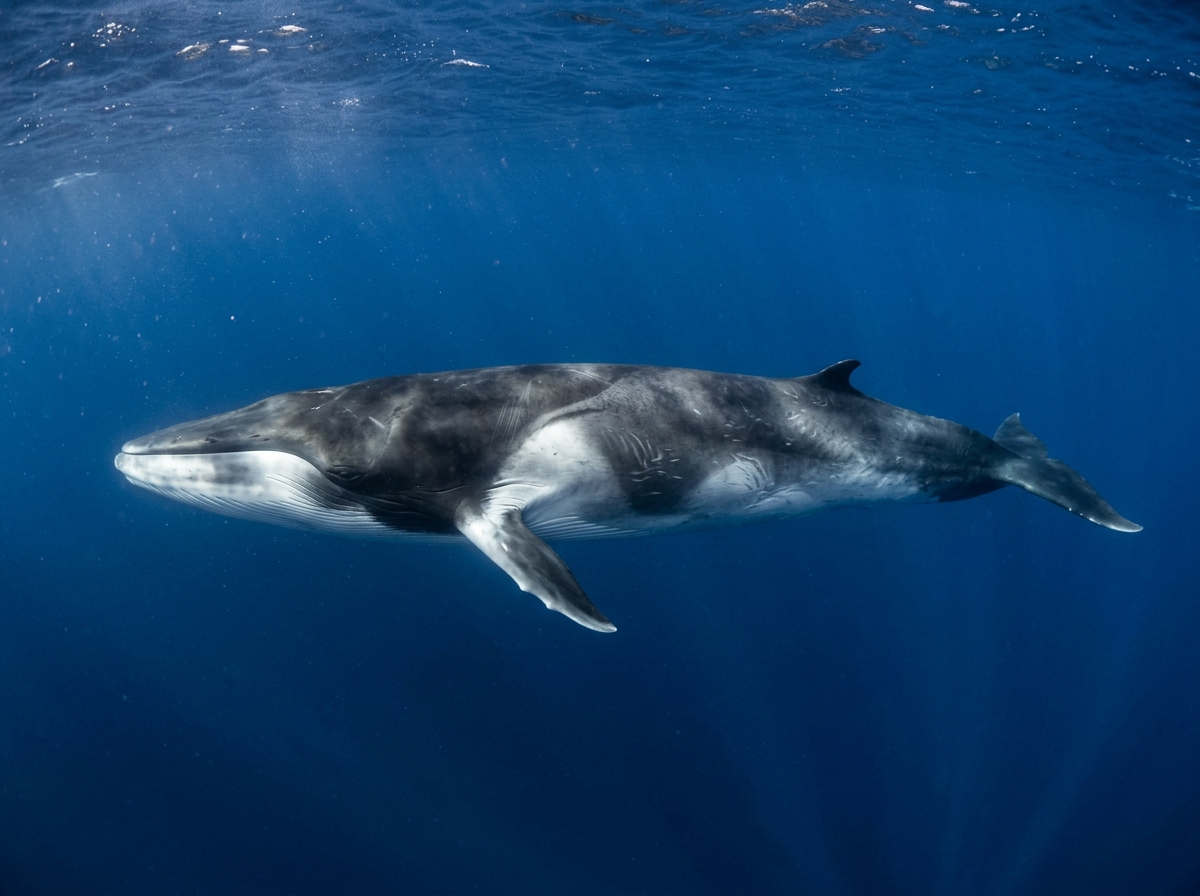
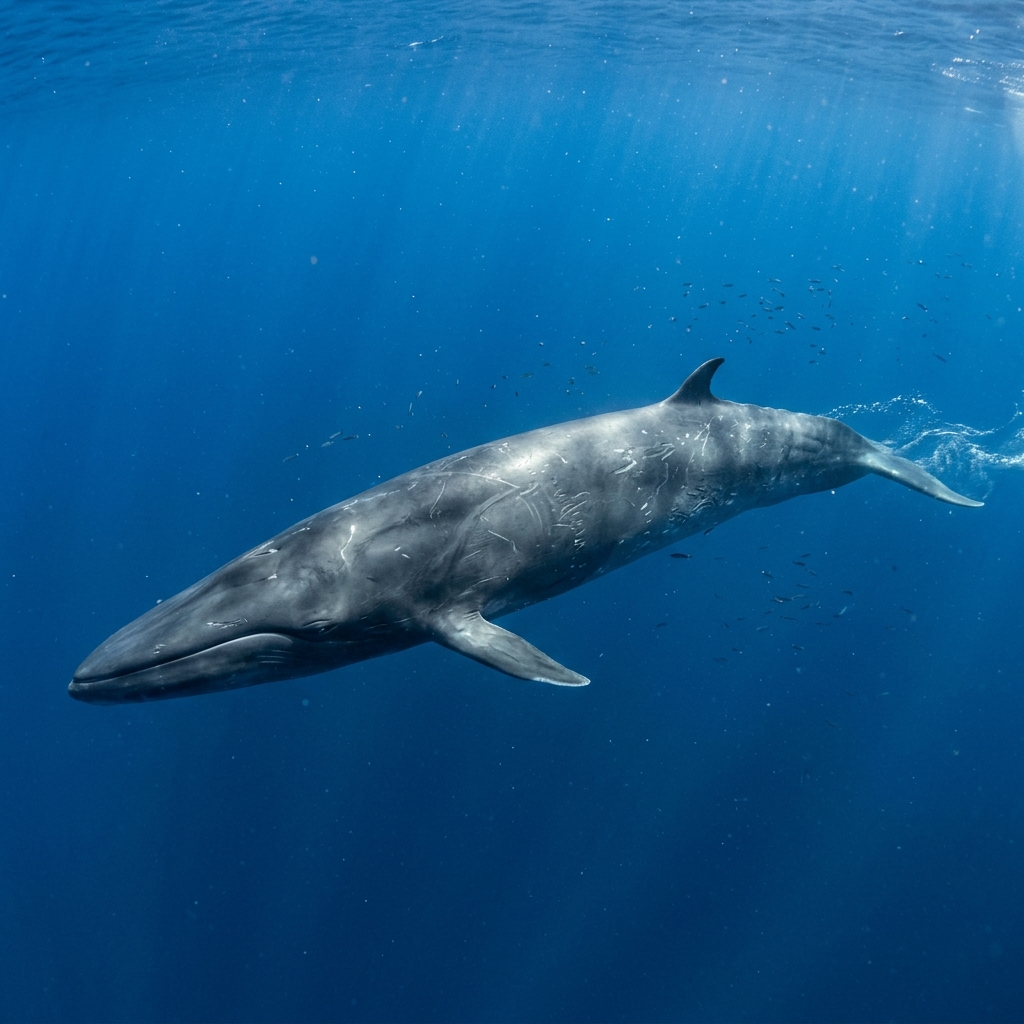
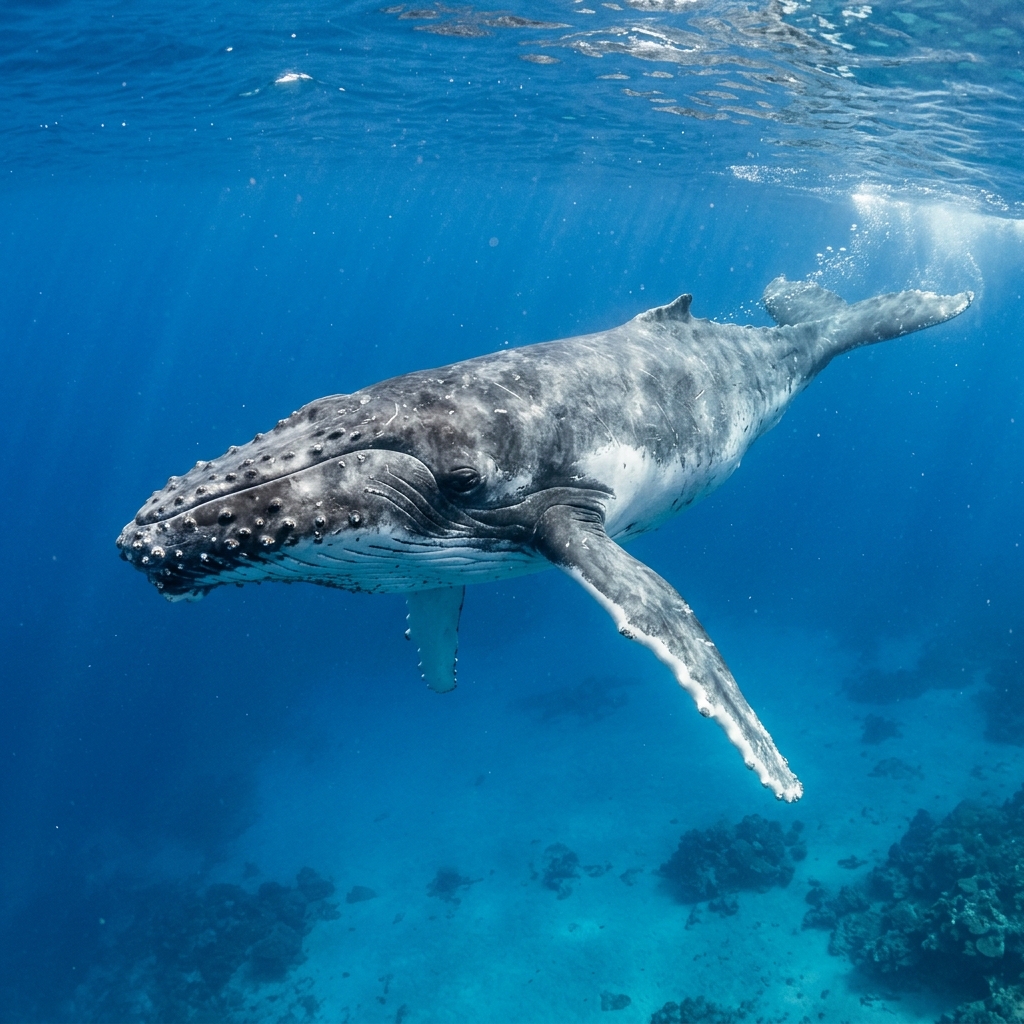
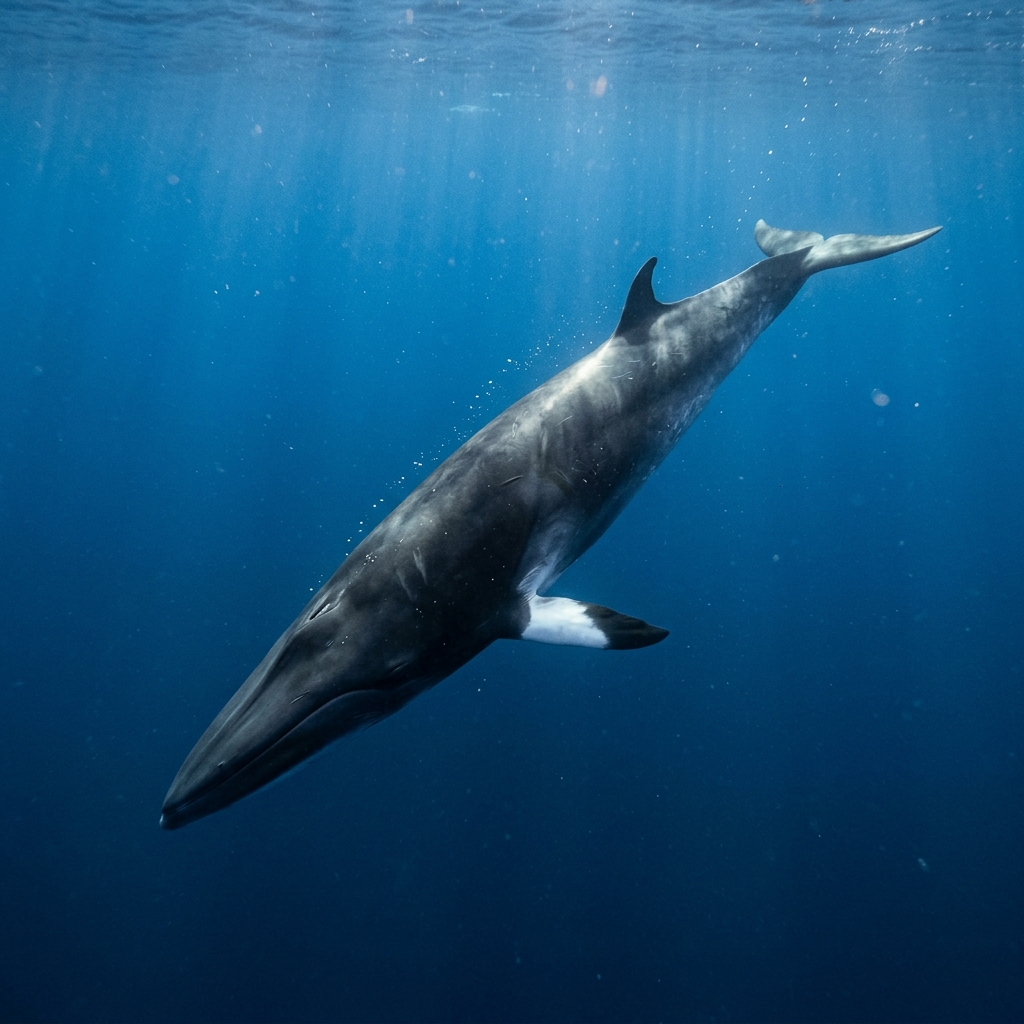
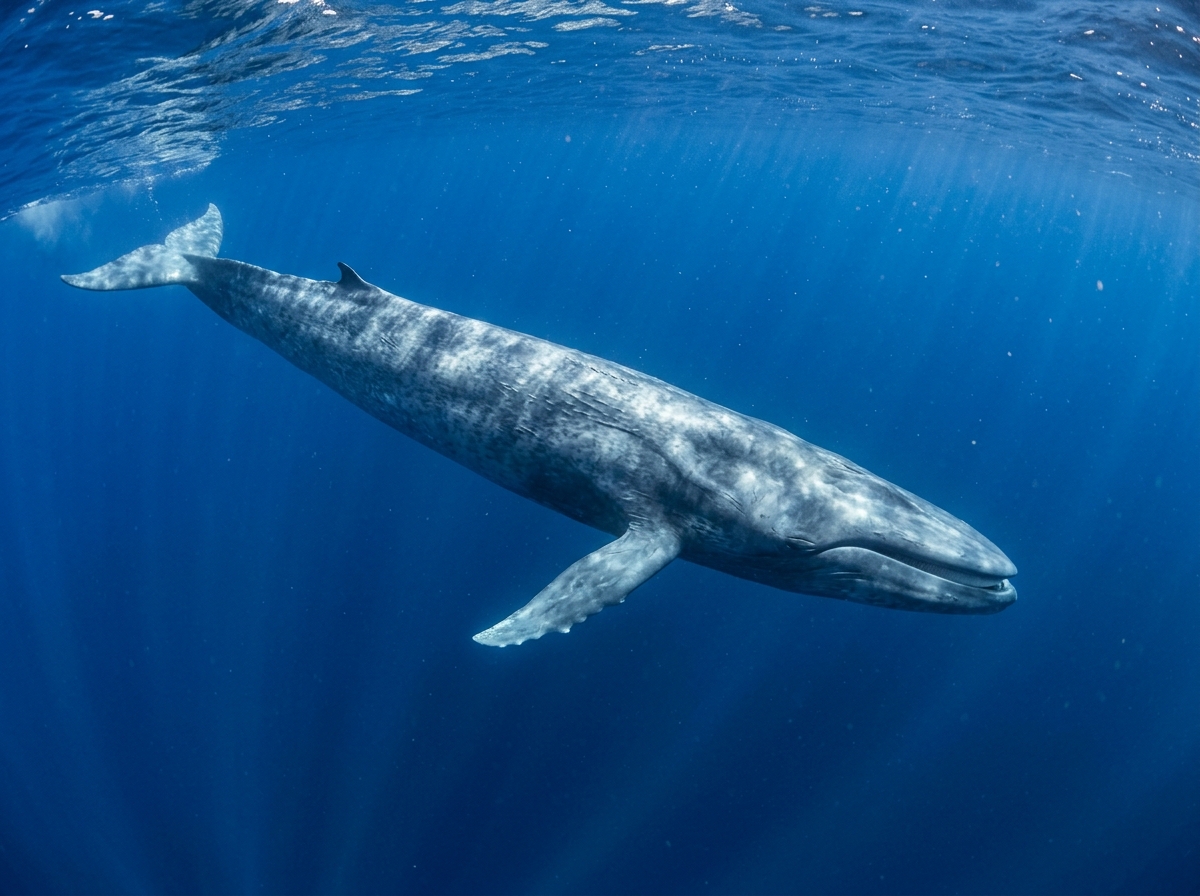
Nothing in the ocean approaches this scale: adults regularly exceed 25 metres, making even a brief, distant pass unmistakable. The skin is a pale, mottled blue-grey, often appearing vivid blue when seen from above through the water column. The head is broad and flat, shaped like a wide U when viewed from above, and the dorsal fin is tiny relative to the body length. The blow is a narrow, vertical column reaching up to 12 metres, which is the first sign you will usually detect before the animal surfaces.
Blue whales are focused on feeding and long-distance migration rather than any interest in boats or divers, so expect a brief, passing encounter rather than a prolonged interaction. They typically surface, take several breaths, and dive again within minutes, often descending to depths well beyond recreational diving range to feed on krill. Maintaining a respectful distance is both legally required in most jurisdictions and practically sensible given the animal's size.
A blue whale's heart is roughly the size of a small car, and its low-frequency calls can travel thousands of kilometres through the ocean, making it one of the loudest animals ever recorded.
There is not enough dive-observation data to identify a peak season, so timing a trip is best based on regional whale-watch records rather than diver logs. Blue whales follow prey along migratory corridors, meaning the best windows vary considerably by location.
Reef neighbours a diver could mistake it for. Use the identification notes above to tell them apart.
No confirmed dive-site records have been logged on Fin for blue whales yet, which reflects how rarely these open-ocean animals are encountered by scuba divers rather than any absence from the world's oceans. Known encounter areas for whale-watch and snorkel operators include the waters off Sri Lanka, the Sea of Cortez in Mexico, and the waters around Iceland and the Azores, all of which sit within the species' known range.
Mapping where Blue Whale is logged…
Blue whales are pelagic, spending most of their time in open ocean well beyond typical dive sites. Snorkel and in-water encounters are occasionally offered in Sri Lanka, the Sea of Cortez (Mexico), and around the Azores, though confirmed scuba encounters are extremely rare. Always check whether local operators hold the required permits for in-water cetacean activities.
Timing depends heavily on the region. In Sri Lanka the peak is roughly March to April; in the Sea of Cortez encounters are most common between February and April. No seasonal dive data exists in Fin's records yet, so consulting local whale-watch operators for up-to-date movement information is the most reliable approach.
Size alone is usually enough: adults exceed 25 metres and nothing else in the ocean comes close. Look for pale, mottled blue-grey skin, a proportionally tiny dorsal fin set far back on the body, and a very broad, flat head. The towering vertical blow visible at the surface before you enter the water is often the first identification clue.
Blue whales are the largest animals known to have ever existed. Females can reach around 30 metres and weigh over 150 tonnes, with males slightly smaller. The 23-metre figure in dive databases represents a typical adult encounter length, but larger individuals are well documented.
Yes, blue whales are listed as Endangered by the IUCN. Global populations were drastically reduced by twentieth-century whaling and have been recovering slowly since the international ban. Current threats include ship strikes, entanglement in fishing gear, and climate-driven shifts in krill availability. Reporting sightings to research programmes contributes useful data to conservation efforts.
The Blue Whale is listed as endangered by the IUCN. Observe from a distance, avoid touching or feeding it, and report sightings to local marine research organisations.
Blue whales are listed as Endangered on the IUCN Red List, with populations still recovering from historical commercial whaling. If you encounter one, observe from a distance, never approach or intercept the animal's path, and report your sighting to local whale research programmes.
Site and sighting data is aggregated from diver logs, iNaturalist and GBIF. For taxonomy and conservation status: