Holothuroidea spp.
Sea cucumbers are logged year-round from the French Riviera to the Philippines. Find out where to spot them and how to tell species apart underwater.
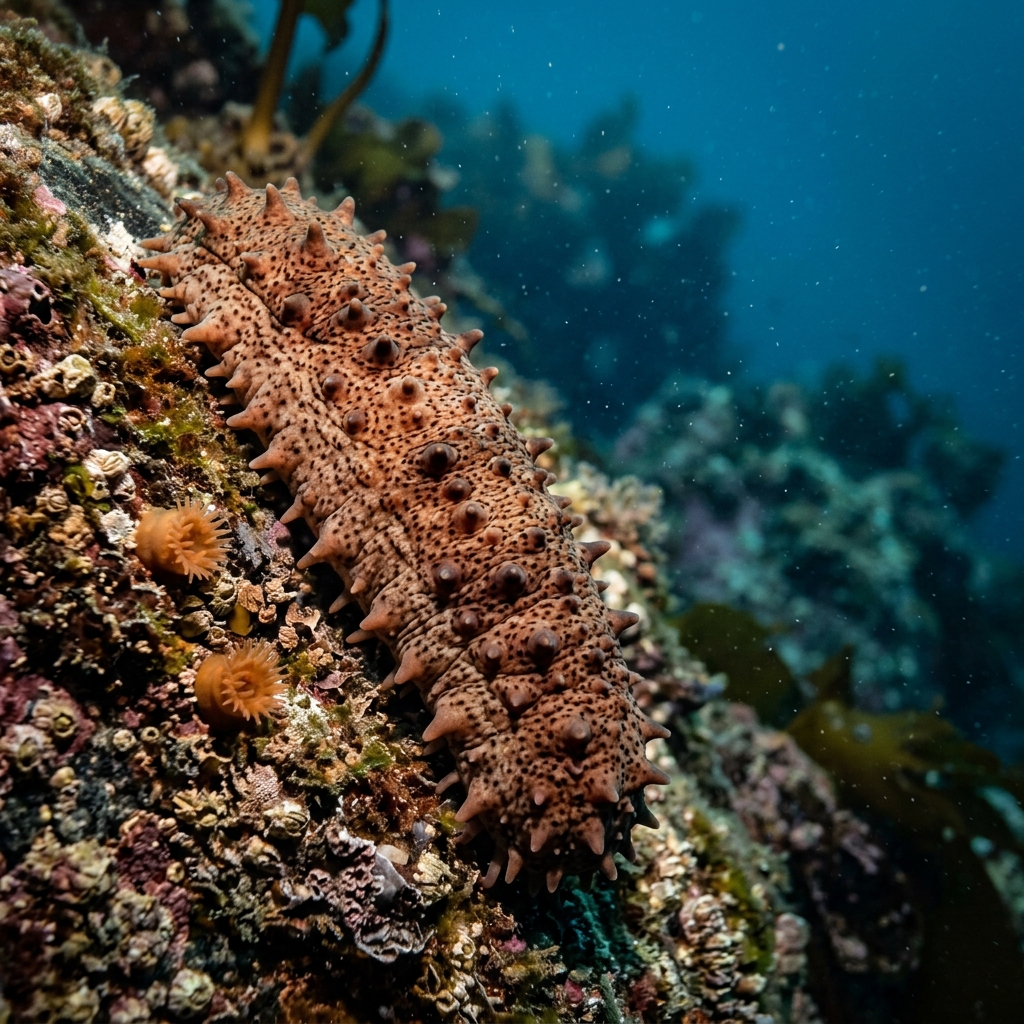
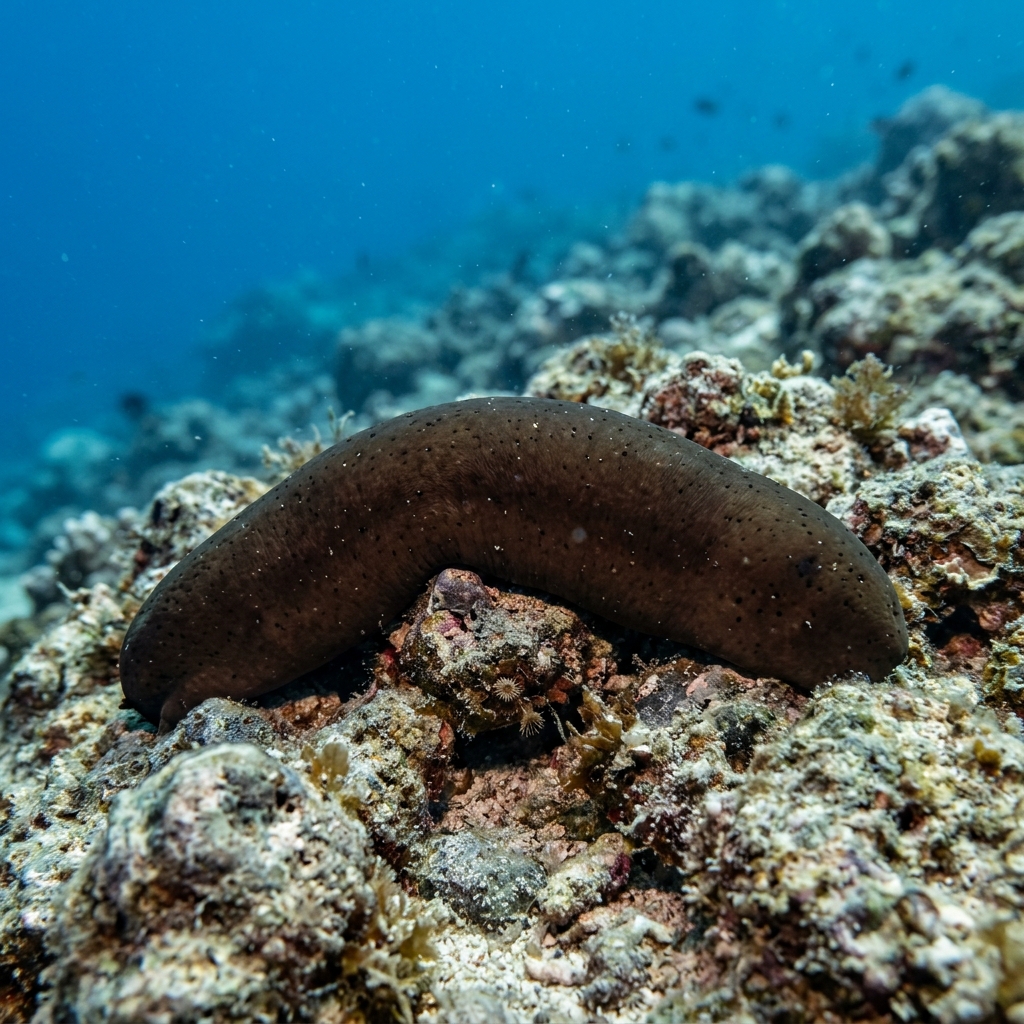
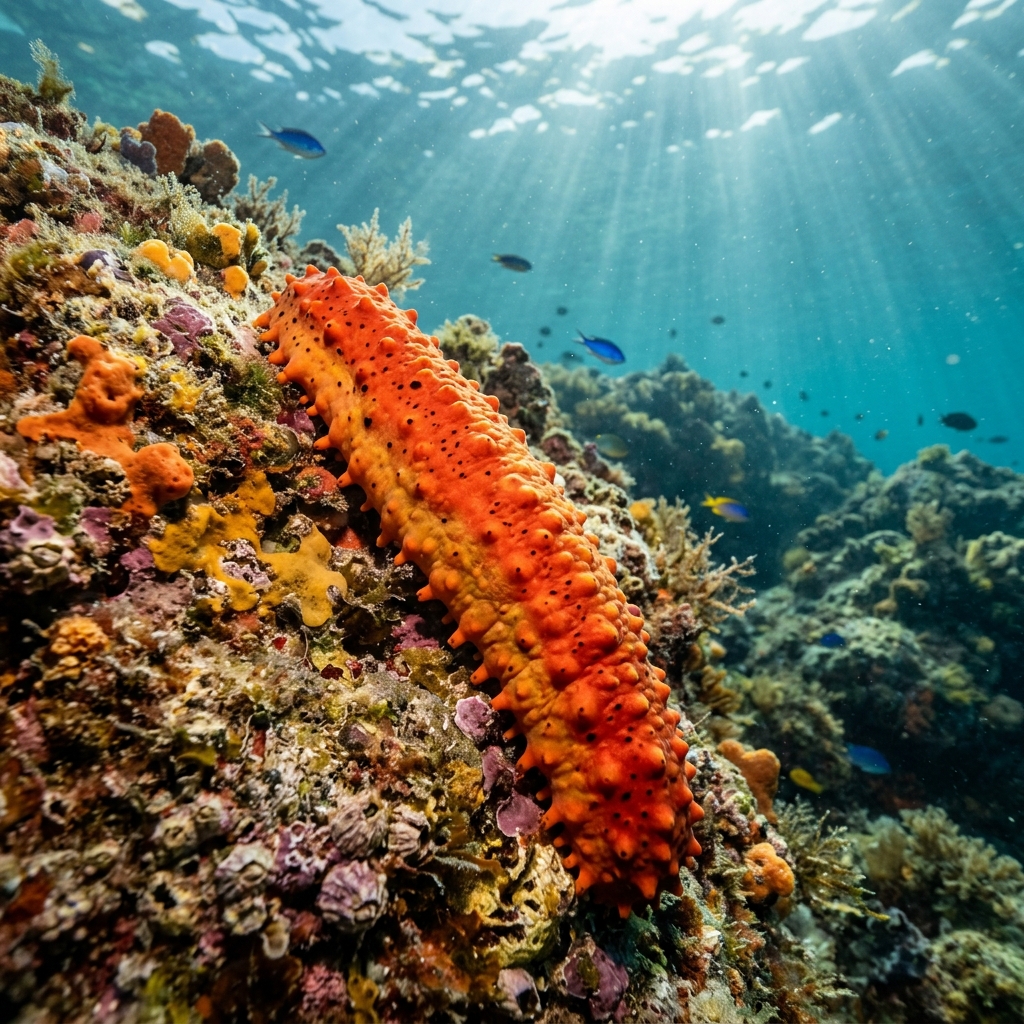
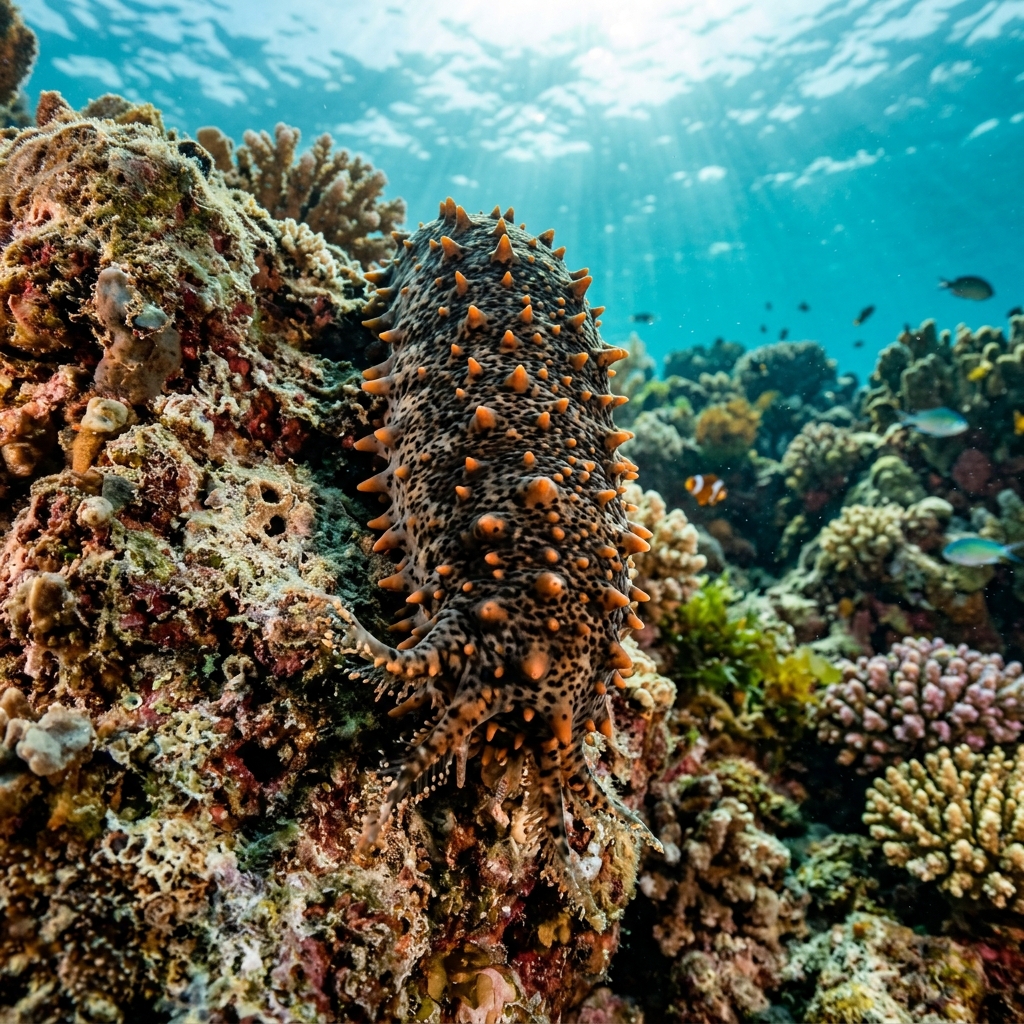
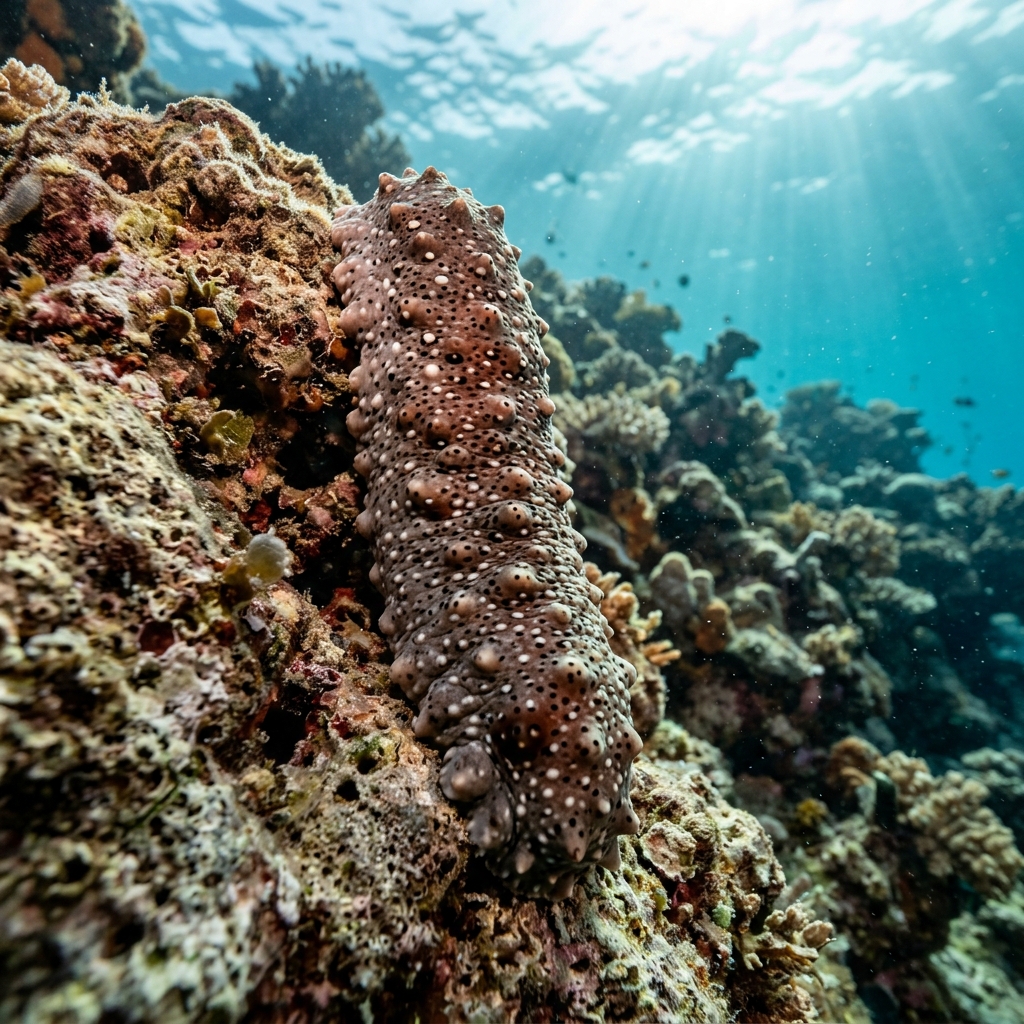
Soft, elongated, and cylindrical, sea cucumbers look like nothing else on the reef floor, the group ranges from finger-length to over half a metre, with leathery skin that may be smooth, warty, or spiny depending on species. Colouration spans black, brown, orange, red, and pale cream, often with patterned papillae (soft tube-like projections) along the body. Look for the crown of feeding tentacles at the mouth end, which many species extend when undisturbed. They typically lie motionless on sand, rubble, or coral, making them easy to overlook but hard to misidentify once you know the body shape.
Most encounters involve a sea cucumber simply sitting still on the seabed, they move slowly using rows of tiny tube feet and spend much of their time ingesting sand or sediment to extract organic matter, which you can sometimes observe as a slow shuffling motion. They show little reaction to divers and are generally unbothered by a close, careful approach. Spotting the extended feeding tentacles at the oral end is the clearest sign of an active, undisturbed animal.
When seriously threatened, some sea cucumber species eject their internal organs, a dramatic defence called evisceration. The organs regenerate over time, and the ejected tissue can be toxic or sticky enough to entangle small predators. It is a compelling reminder that these apparently inert animals have real defences.
Sea cucumbers are present year-round in both hemispheres, with no concentrated season recorded in either. Their tolerance for water temperatures from around 12°C to 29°C means they turn up on temperate and tropical reefs alike, so timing a dive specifically for them is rarely necessary.
Reef neighbours a diver could mistake it for. Use the identification notes above to tell them apart.
Most commonly logged across the Philippines, France, Spain, Indonesia, and Malaysia, with strong populations throughout the Maldives and Mexico as well. Within those countries, the French Riviera and Provence, the Male and Ari Atolls, and the Visayas Central region of the Philippines stand out as particularly reliable areas. They have also been widely recorded in the Yucatán Peninsula, Bali and Lombok, Queensland, and the Perhentian and Redang islands of Malaysia.
Mapping where Sea Cucumber is logged…
Sea cucumbers have been logged at dive sites across a remarkable spread of countries, with the Philippines, France, Spain, Indonesia, and Malaysia leading the records. Strong regional hotspots include the French Riviera, the Male and Ari Atolls in the Maldives, and the central Visayas in the Philippines. They are also reliably seen in the Yucatán Peninsula, Queensland, and around Bali and Lombok.
There is no best season, they are present year-round in both the Northern and Southern hemispheres. Their wide temperature tolerance (observed from roughly 12°C to 29°C) means they inhabit everything from cool Mediterranean reefs to warm tropical shallows, so any dive in a suitable habitat has a fair chance of an encounter.
Look for a soft, elongated, cylindrical animal lying on the sand or rubble with no visible shell or fins. The leathery skin, often warty or bumpy, and the ring of feeding tentacles around the mouth end are the key features. Colour varies widely across the group, black, brown, orange, and cream are all common, so body shape is the most reliable cue.
Size varies considerably across the many species in this group. Small tropical species can be just a few centimetres long, while large species such as the Giant California Sea Cucumber can reach well over half a metre. Most reef encounters involve animals somewhere between a hand and a forearm in length.
No. Sea cucumbers pose no direct threat to divers, they move slowly, have no venomous sting or bite, and generally ignore you entirely. Some species can release a sticky or mildly toxic substance if severely stressed, so the best advice is simply not to handle them.
Some species can expel their internal organs as a defence mechanism, a process called evisceration. The ejected tissue can deter or entangle predators, and the sea cucumber slowly regrows the lost organs over weeks or months. They also play a key role in reef ecosystems by processing sediment and recycling nutrients, functioning much like earthworms do on land.
Site and sighting data is aggregated from diver logs, iNaturalist and GBIF. For taxonomy and conservation status:
Actinopyga varians
Orange Sea Cucumber
195 sites