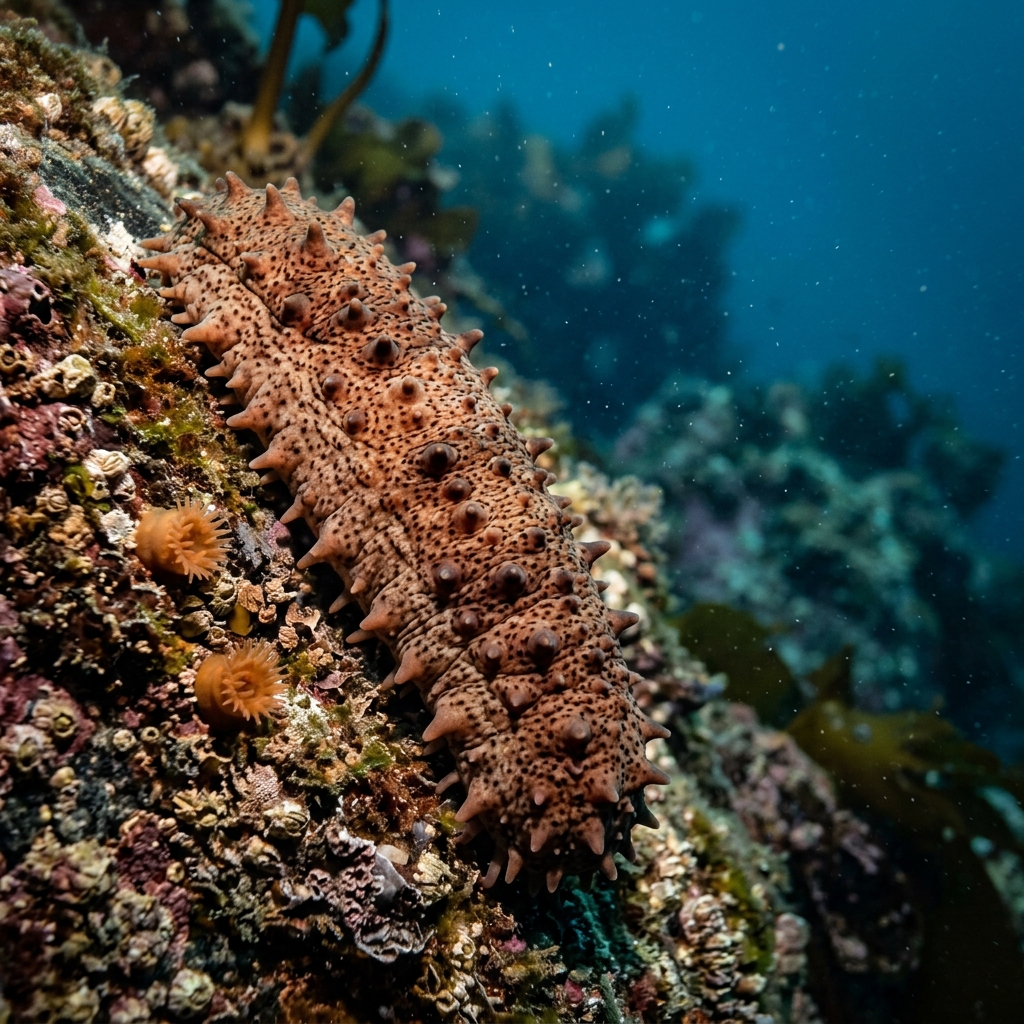
Apostichopus californicus
Spot Giant California Sea Cucumbers along British Columbia and the US Pacific Coast in cool 11-16 °C water. Where to find them and how to ID them.
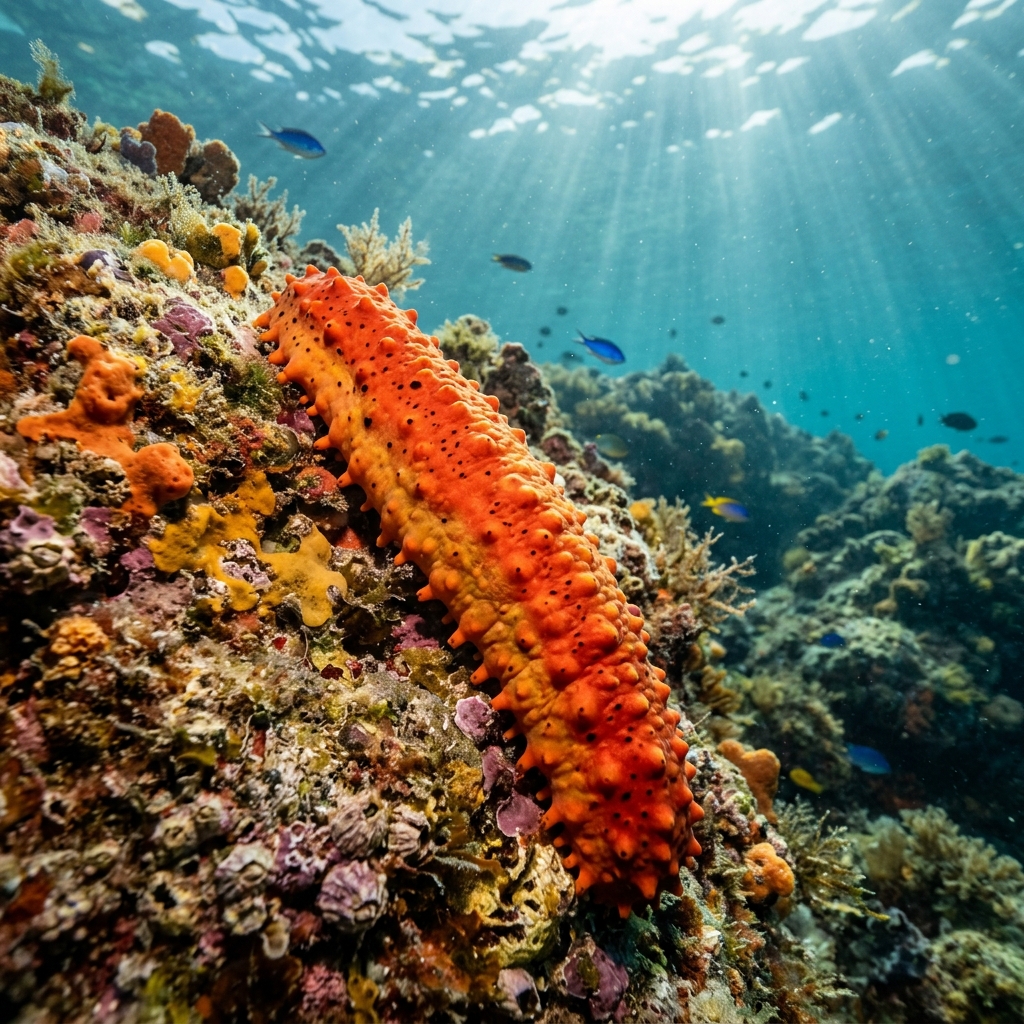
Easily the largest sea cucumber you will encounter on a North Pacific dive, reaching well over 40 cm in the water despite a resting size that understates its bulk. The body is a warm reddish-brown to orange-tan, noticeably soft and leathery, with two distinct rows of pale tube feet (podia) running along the underside and shorter papillae (fleshy projections) covering the upper surface. Body walls are frequently wrinkled and folded at rest, and the animal may elongate considerably when actively moving across the seabed.
You will most often find one lying motionless on rocky or sandy substrate, slowly processing sediment and organic matter with its feeding tentacles around the mouth. These animals pay no attention to divers and will not retreat or react to your approach, so you can observe them as closely as you like without disturbing them. Occasionally you may catch one mid-crawl, inching across the seabed on its tube feet at a pace that makes it easy to overlook as just another lump of substrate.
When seriously threatened, giant California sea cucumbers can expel their internal organs (a defence called evisceration) to distract a predator, then slowly regenerate them over weeks. It is a dramatic response you are very unlikely to trigger simply by diving near one, but it explains why they are worth handling with care.
Sightings have been logged from January through November across Northern Hemisphere sites, making this effectively an all-year target. The species sits comfortably in cool water between roughly 11 and 16 °C, which is a consistent feature of its Pacific Northwest range throughout the year.
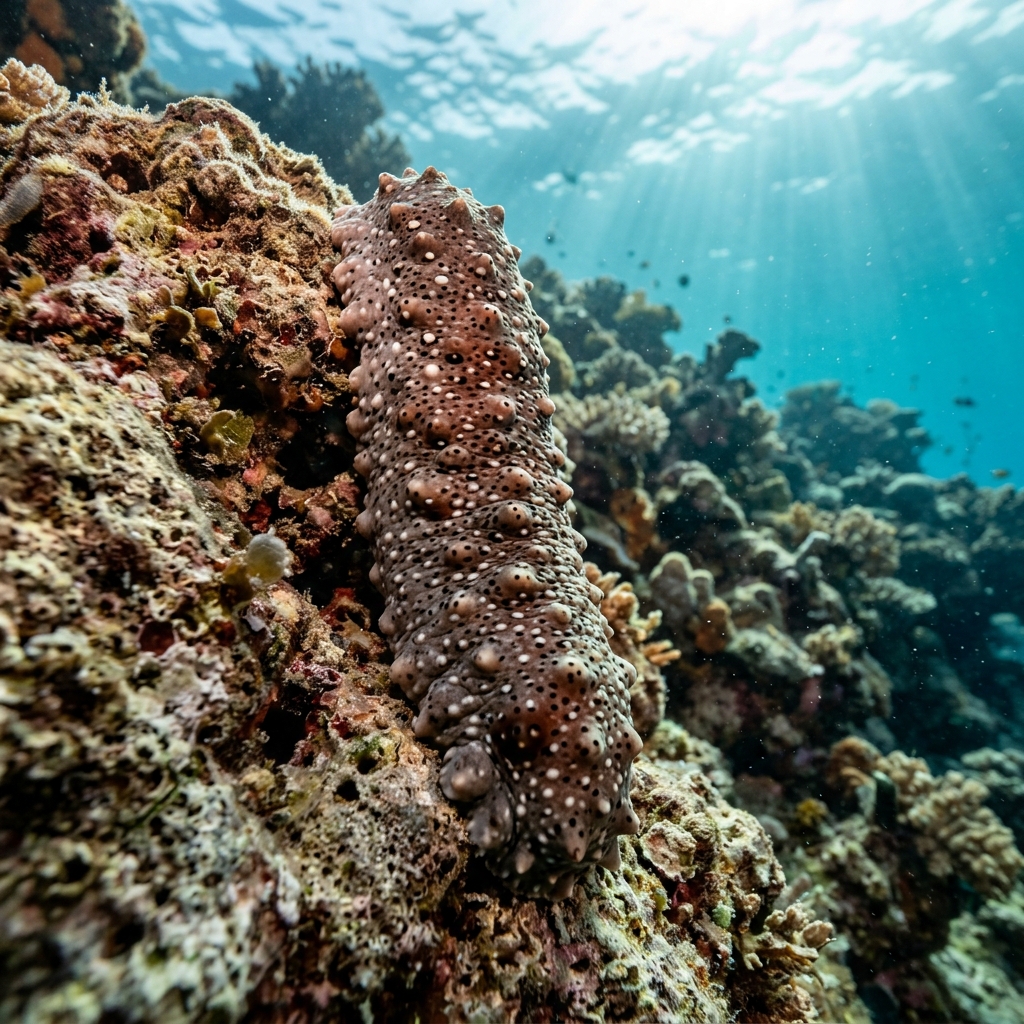
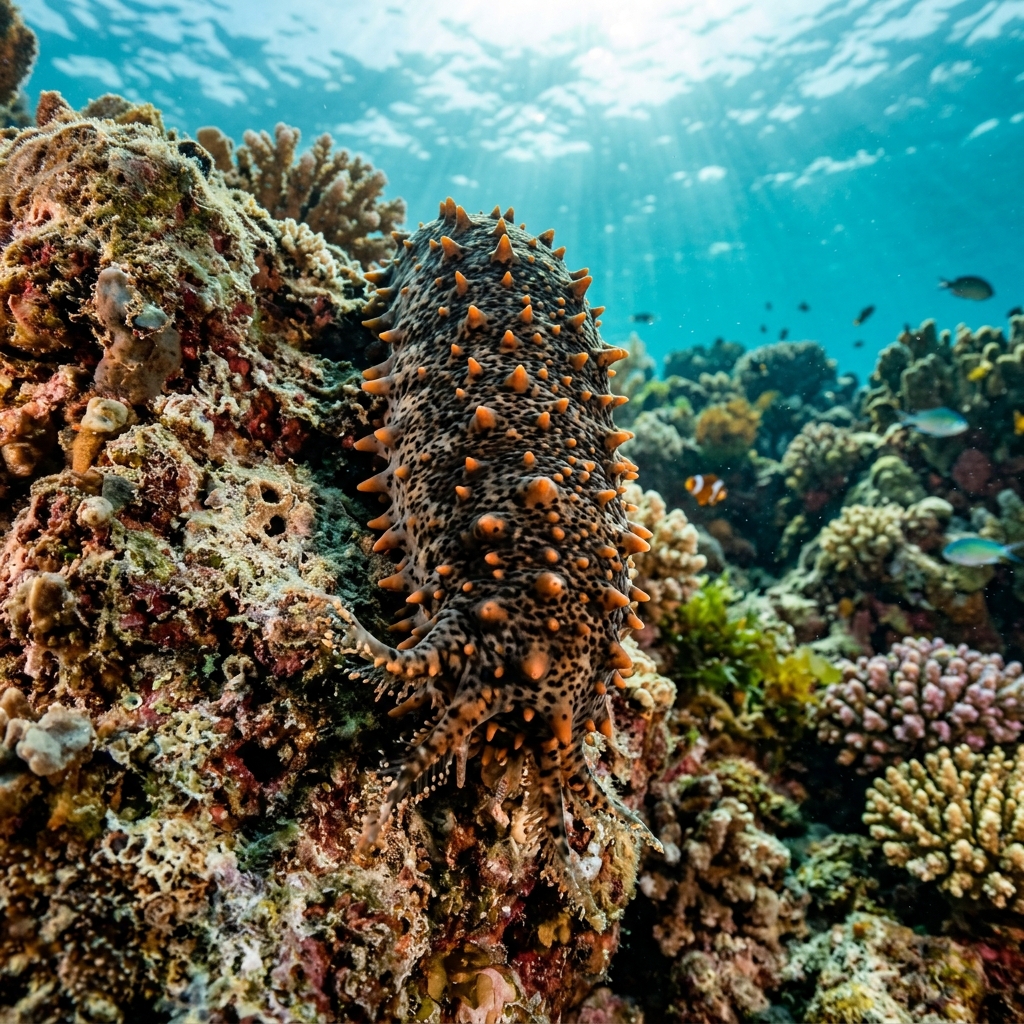
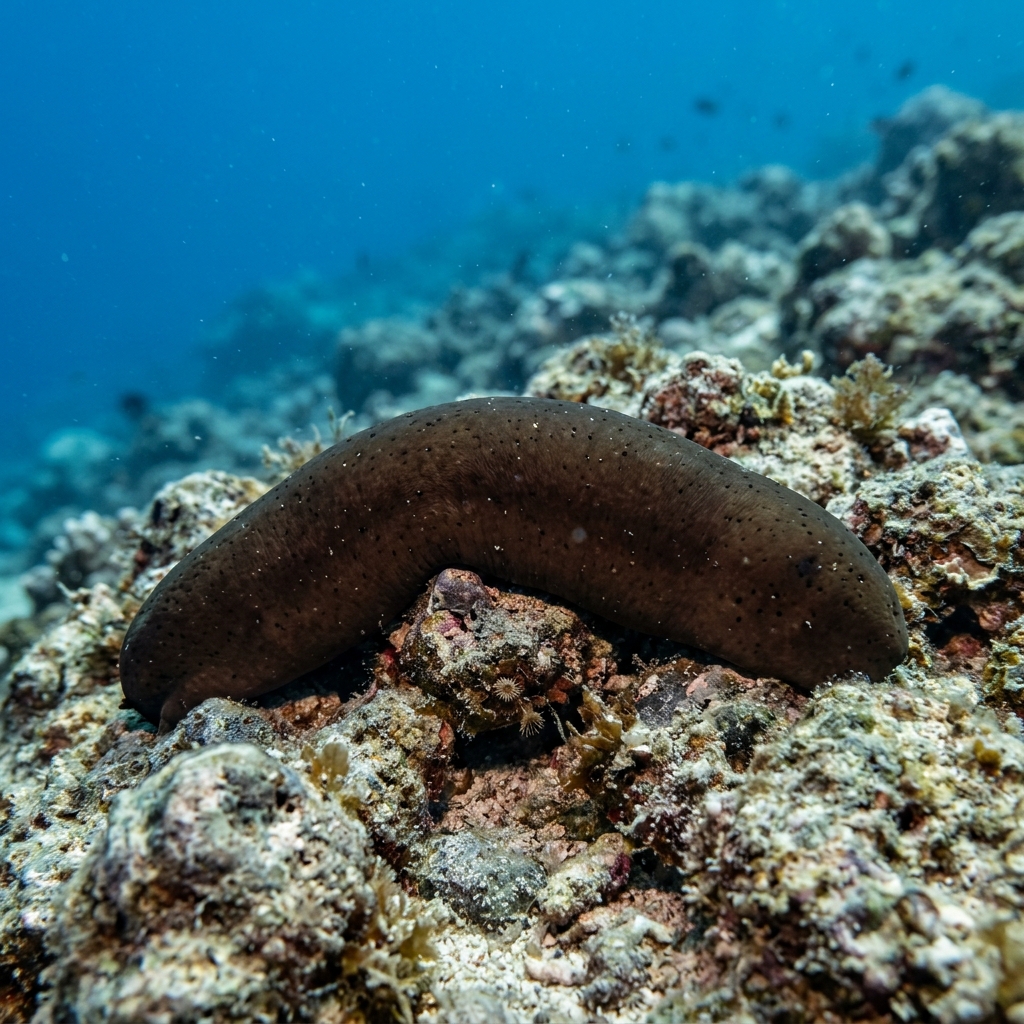
Reef neighbours a diver could mistake it for. Use the identification notes above to tell them apart.
The overwhelming majority of logged sightings come from the British Columbia coast and the US Pacific Coast, making these the most reliable places to look. Within those regions, dive sites stretch from Alaska south through Washington, Oregon, and California. Smaller populations have been recorded in the Sea of Japan off Japan, along South Korea's east coast, and around the Shenzhen and Hong Kong coast.
Mapping where Giant California Sea Cucumber is logged…
British Columbia and the US Pacific Coast account for most logged sightings, so these are your best bets. Smaller populations exist in Japanese waters around the Sea of Japan and the Izu Peninsula, along South Korea's east coast, and around the Shenzhen and Hong Kong area.
They have been recorded across almost every month of the year in the Northern Hemisphere, so there is no narrow season to chase. The species thrives in cold water around 11-16 °C, which is standard on the Pacific Northwest coast year-round.
Look for a very large, reddish-brown or orange-tan elongated body with visible tube feet along the flat underside and soft papillae on top. Its sheer size sets it apart from most other sea cucumbers on Pacific Northwest reefs. A fully extended animal can be surprisingly long compared to what you might expect from a resting specimen.
These are among the largest sea cucumbers in the Pacific, commonly reaching 40-50 cm when extended, with some individuals recorded beyond that. Their relaxed, contracted form at rest looks much smaller, so a seemingly modest lump on the seabed can stretch out to a surprisingly large animal if you watch it for a few minutes.
Yes. Like many sea cucumbers they can eviscerate, expelling internal organs as a defence against predators. The organs are later regenerated. This is an extreme stress response and not something a calm dive encounter would normally provoke, but it is why picking them up or stressing them should be avoided.
Site and sighting data is aggregated from diver logs, iNaturalist and GBIF. For taxonomy and conservation status:
Orange Sea Cucumber
195 sites