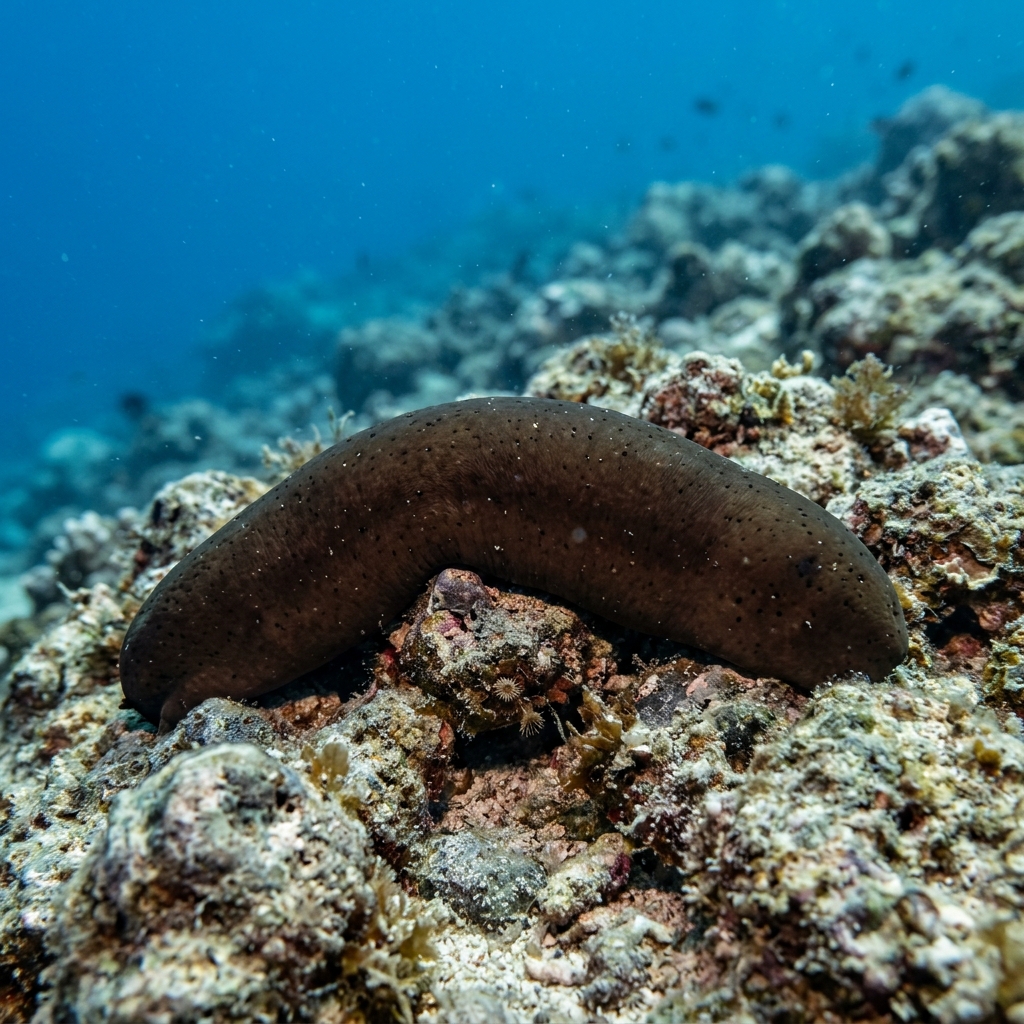
Holothuria atra
Spot lollyfish across warm Indo-Pacific reefs from the Philippines to Hawaii. Black, sausage-shaped, and active by day, here's where and when to find them.
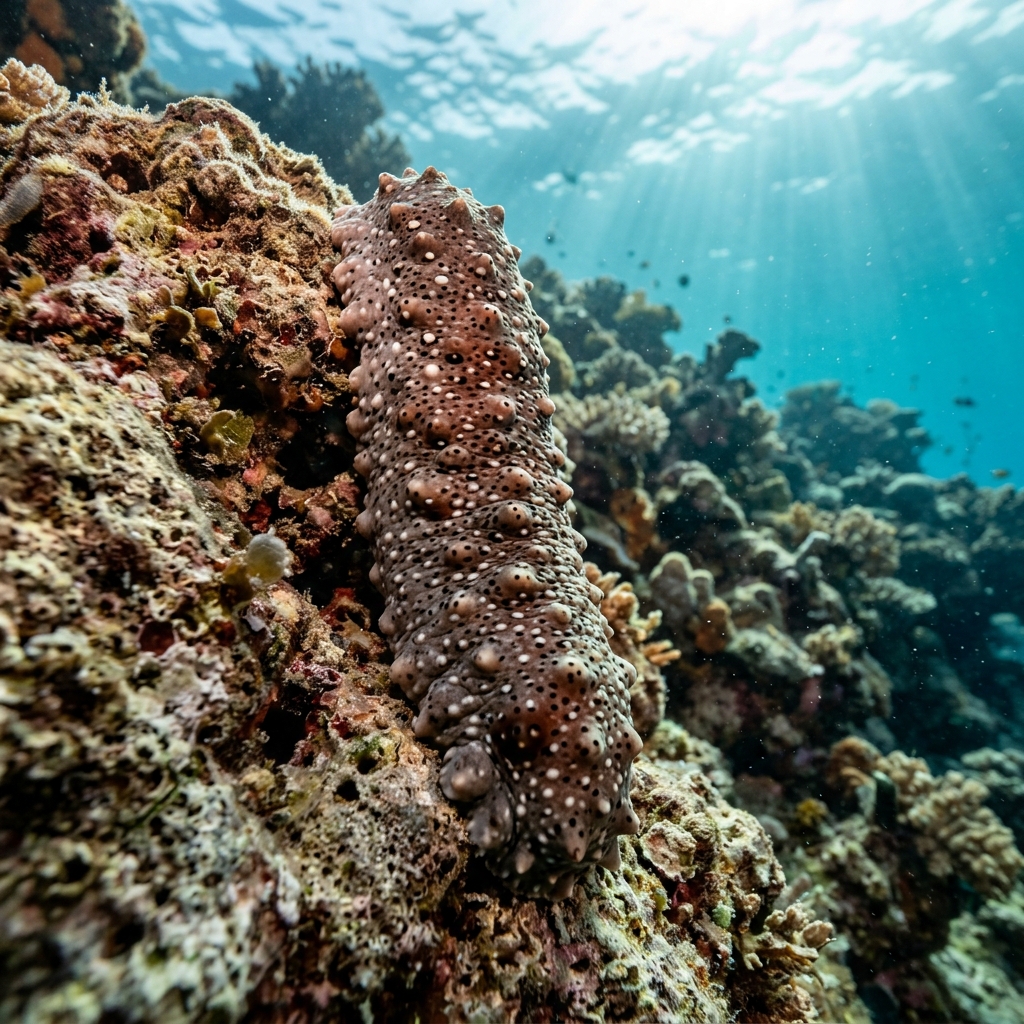
A thick, cylindrical body covered in jet-black skin makes this one of the more straightforward sea cucumbers to pick out on a sandy or rubble seabed. Adults reach roughly 40 cm, giving them a distinctly sausage-like bulk that stands out against pale sediment. One reliable field mark is the frequent dusting of white or pale sand on the upper surface, which sticks to the body as the animal moves and feeds. The underside is typically paler and flattened where it contacts the substrate.
During a dive you will almost always find one slowly ploughing across the seabed, drawing sediment in through its oral tentacles and extracting organic particles as it goes. It pays no attention to divers whatsoever and will carry on feeding right at your fins. In patches of seafloor where food is plentiful, several individuals may be clustered within a few square metres of each other, though they do not interact in any obvious way.
When seriously threatened, lollyfish can expel their internal organs (a defence called evisceration) to distract a predator, then slowly regenerate the lost tissue over the following weeks. This makes them far tougher than they look, and a good reason not to handle or stress them.
In the Southern Hemisphere, lollyfish turn up year-round with no pronounced peak, which matches their warm-water niche of roughly 23 to 29 °C. Northern Hemisphere sightings concentrate between November and July, so that window is the most productive time to target them in places like Thailand, the Philippines, and Hawaii.
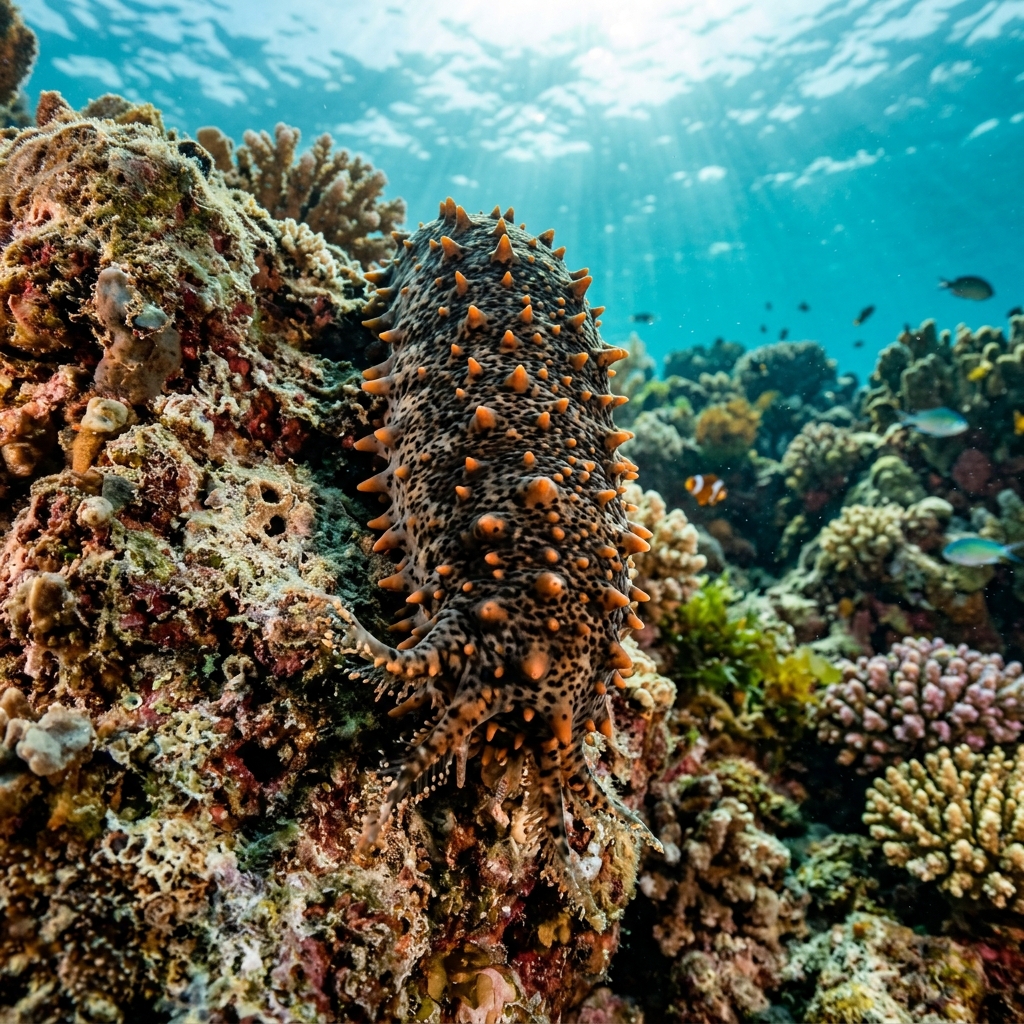
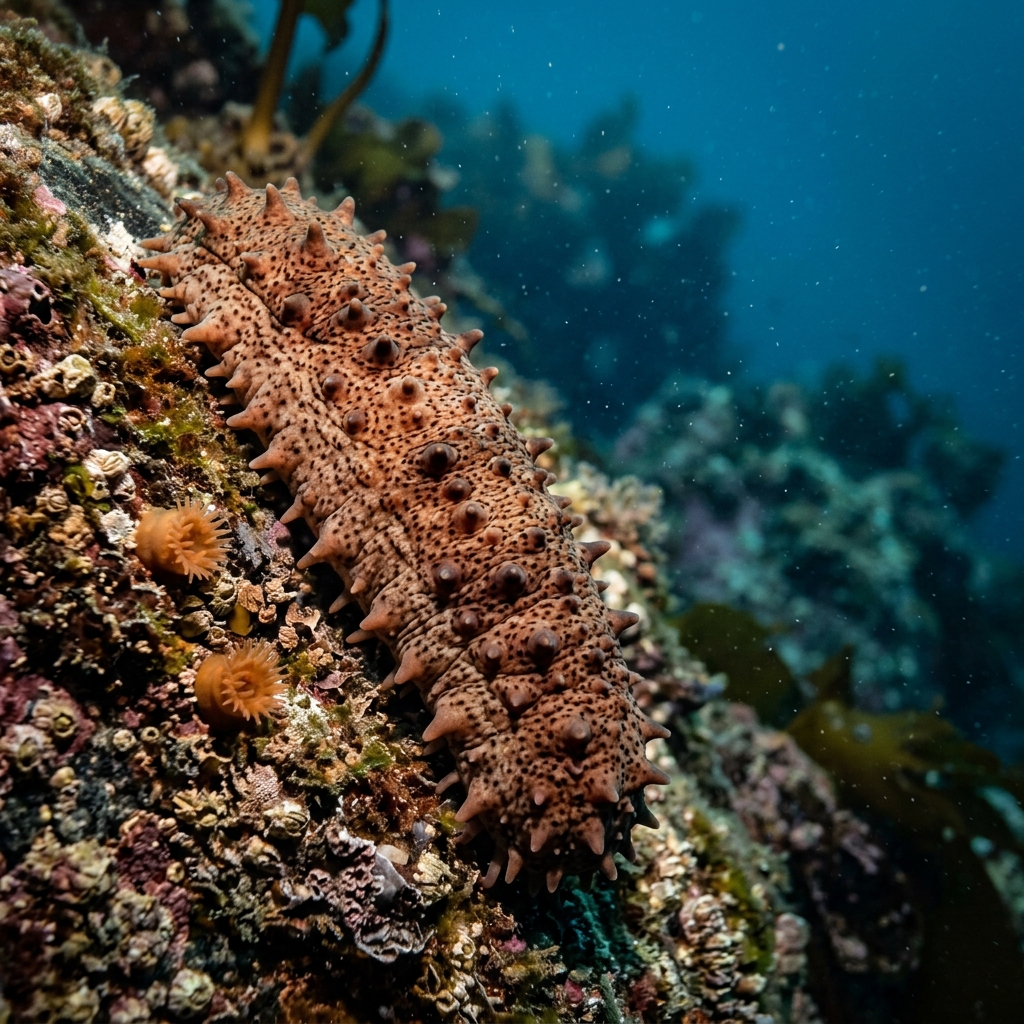
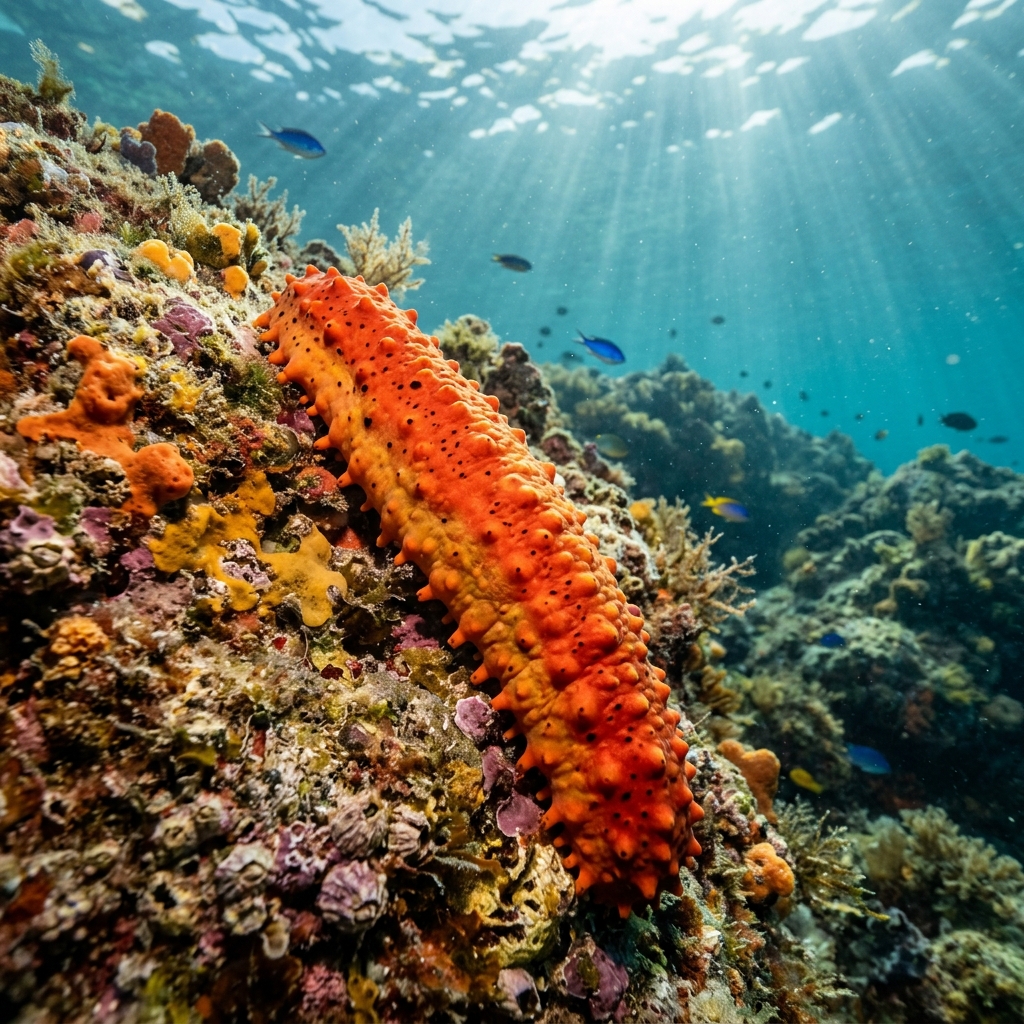
Reef neighbours a diver could mistake it for. Use the identification notes above to tell them apart.
Most commonly logged across the Indo-Pacific, with strong sighting records in the Philippines, Thailand, Indonesia, and Malaysia. In the Pacific, Hawaii produces a reliable run of records, and Queensland in Australia is another well-represented region. French Polynesia and Japan round out a spread that covers warm neritic (shallow coastal) reefs from Southeast Asia to the central Pacific.
Mapping where Lollyfish is logged…
They are most commonly logged in the Philippines, Thailand, Indonesia, and Malaysia, with Hawaii and Queensland also producing strong records. French Polynesia and Japan feature too, so opportunities span a broad swathe of the Indo-Pacific on shallow coastal reefs.
In the Southern Hemisphere, such as Australia, they are present year-round. For Northern Hemisphere destinations like Thailand, the Philippines, and Hawaii, sightings concentrate from November through July, making that the most productive window to look for them.
Look for a large, jet-black cylindrical animal on sandy or rubble seabed, typically around 40 cm long. A common giveaway is pale sand clinging to its upper surface. The similar-looking Pacific white-spotted sea cucumber has distinct white spots, which the lollyfish lacks.
They typically reach around 40 to 45 cm in length, making them one of the larger sea cucumbers you are likely to encounter on a shallow reef. Their bulky, sausage-like shape makes them appear even more substantial on the seabed.
No. They are completely indifferent to divers and pose no threat. They do not bite or sting. It is best not to handle them, however, as stress can trigger evisceration, which harms the animal.
They are sediment feeders, crawling slowly across the seabed and ingesting sand and detritus through their oral tentacles. They extract organic material and microorganisms from the sediment, effectively recycling nutrients and helping keep shallow reef floors healthy.
Site and sighting data is aggregated from diver logs, iNaturalist and GBIF. For taxonomy and conservation status:
Orange Sea Cucumber
195 sites