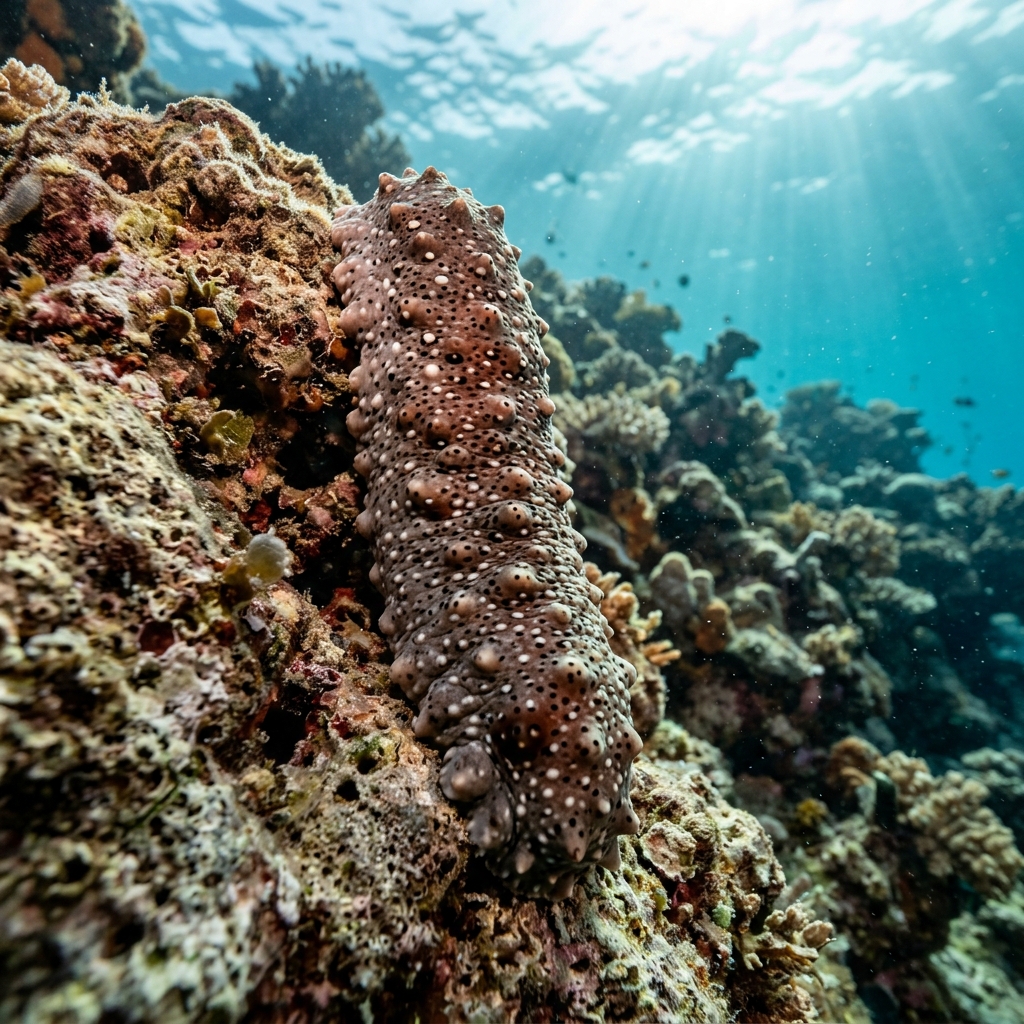
Actinopyga varians
Spot Pacific White-spotted Sea Cucumber on shallow reefs in Hawaii, Micronesia and French Polynesia. Best sightings Nov, Apr in warm 25-29°C water.
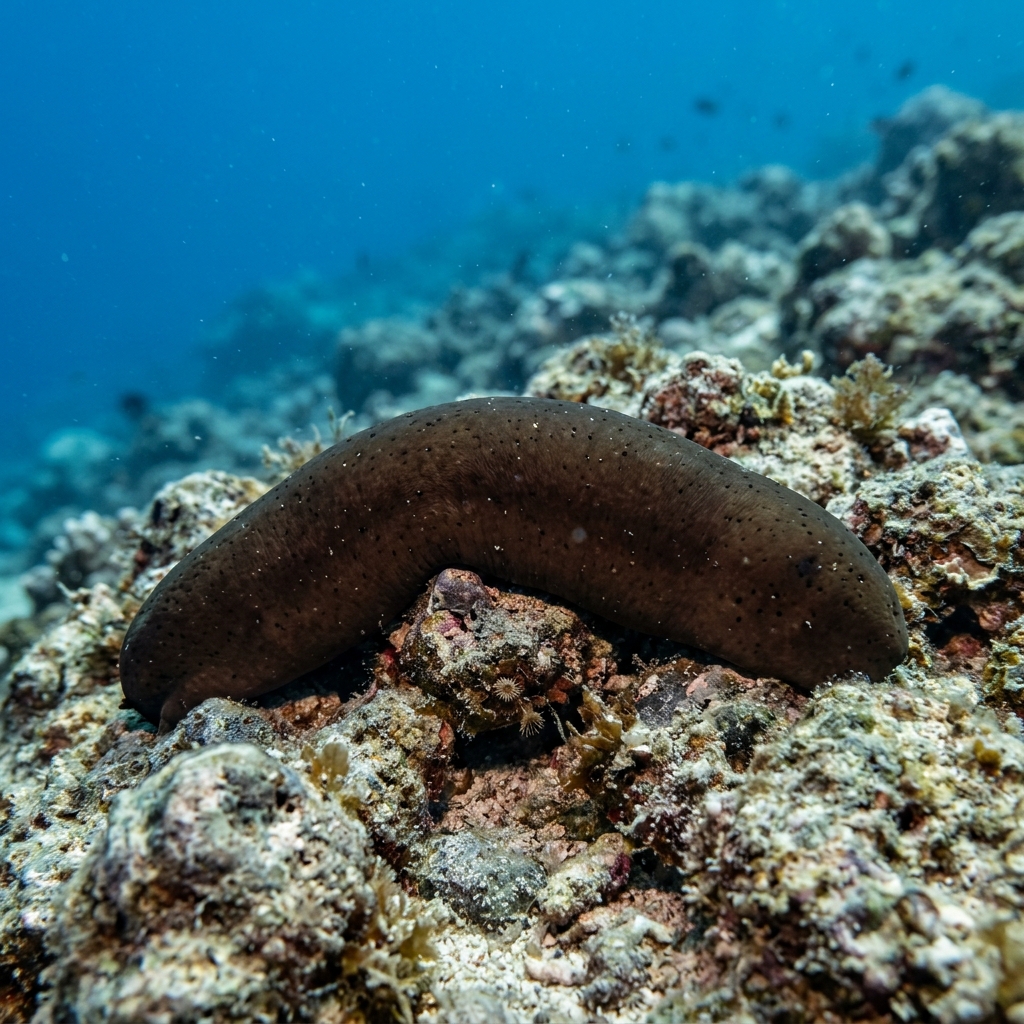
Look for a dark, cylindrical body marked with scattered pale white spots, typically found lying directly on sand or rubble in shallow water no deeper than 25 metres. It moves so slowly it often looks like part of the substrate. The spotted patterning is the key field mark; the body is firm and elongated, blunt at both ends.
Expect to find it sitting motionless or creeping almost imperceptibly across sand and rubble on the seabed, it is about as reactive to divers as a rock. It does not flee, hide, or show any territorial response, so you can take your time observing it up close without disturbing it. Most encounters are straightforward benthic sightings; there is no particular time of day when it is notably more active.
Like other sea cucumbers, it plays a quiet but important role on the reef by processing sediment, ingesting sand, extracting organic material, and excreting cleaned substrate, effectively recycling nutrients across the sea floor.
In the Northern Hemisphere locations such as Hawaii and Micronesia, sightings concentrate between November and April. It lives comfortably in water between 25 and 29°C, so in consistently warm tropical destinations it can turn up at any time of year.
Reef neighbours a diver could mistake it for. Use the identification notes above to tell them apart.
Most reliably logged across the Hawaiian Islands, which account for the large majority of recorded sightings worldwide. Strong populations are also recorded in Yap and Chuuk Lagoon in Micronesia, Rarotonga in the Cook Islands, and Tahiti and Rangiroa in French Polynesia. Queensland, Australia and Viti Levu, Fiji round out the best places to look.
Mapping where Pacific White-spotted Sea Cucumber is logged…
Hawaii is by far the most reliable destination, with sightings logged across a wide spread of sites. Yap and Chuuk Lagoon in Micronesia, Rarotonga in the Cook Islands, and Tahiti and Rangiroa in French Polynesia are also well-documented locations. Fiji and Queensland, Australia have solid records too.
In Hawaii and other Northern Hemisphere locations, sightings peak from November through April. In warm tropical destinations where water temperatures stay between 25 and 29°C year-round, encounters are possible outside those months as well.
Key on the scattered pale white spots against a dark body and the blunt, elongated shape lying flat on sand or rubble. It rarely moves, which makes it easy to confuse with substrate at first glance. The white spotting distinguishes it from uniformly coloured sea cucumbers in the same habitat.
No. They are entirely passive, do not bite or sting, and show no reaction to a diver's presence. Simply avoid handling them, as rough contact can stress the animal.
They act as reef cleaners by ingesting sand and sediment, digesting the organic matter within it, and releasing the processed material back onto the sea floor. This sediment recycling helps cycle nutrients and keeps the substrate healthy.
Site and sighting data is aggregated from diver logs, iNaturalist and GBIF. For taxonomy and conservation status:
Orange Sea Cucumber
195 sites