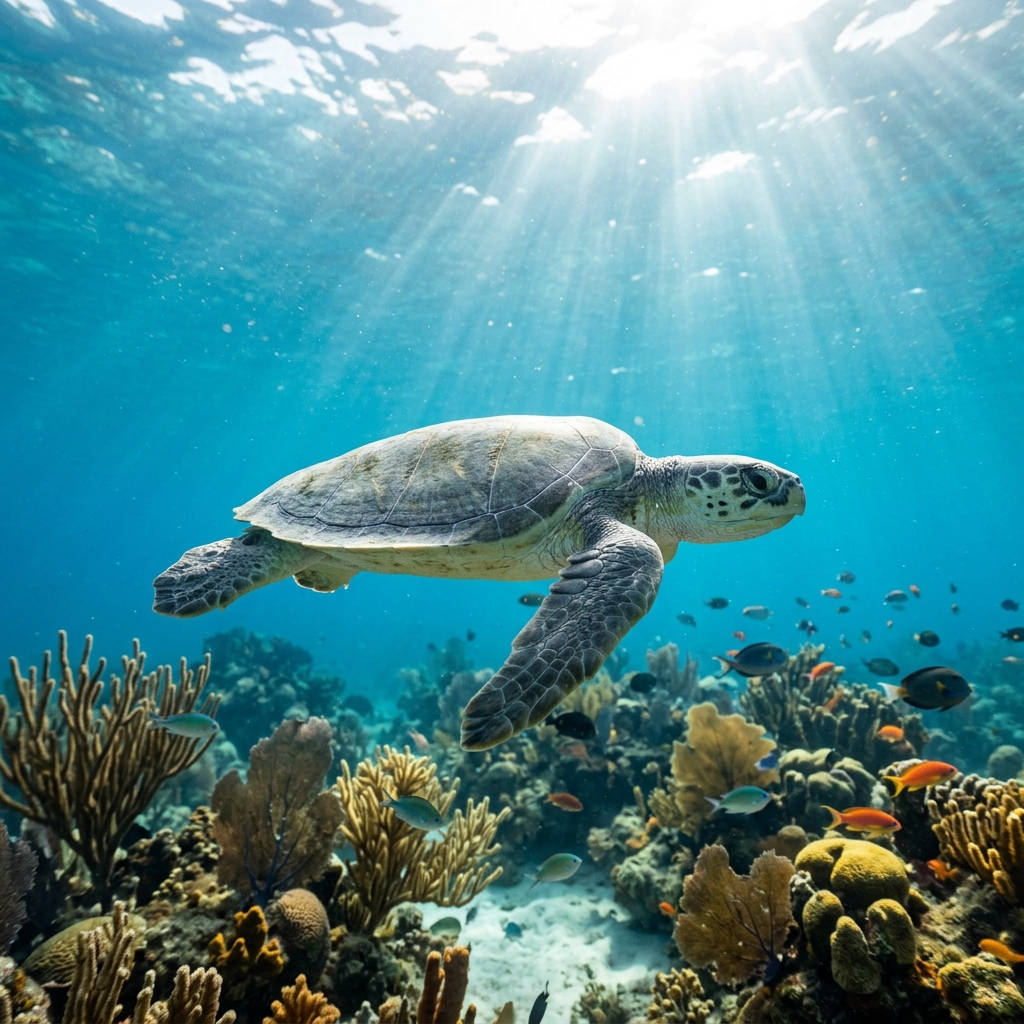
Lepidochelys spp.
Spot a Ridley Turtle diving in Florida, the Maldives or Colombia. Here's how to tell them apart from other sea turtles and what to expect underwater.
Ridley turtles are the smallest sea turtles you're likely to encounter, typically around 50 cm across, with a distinctively rounded, almost circular shell that sets them apart from the longer, more oval shells of loggerheads and greens. Colouration runs from olive-grey to greyish-brown on the carapace (upper shell), often with a slightly domed profile. Look for a relatively broad head and multiple pairs of prefrontal scales on the face, which help distinguish them from look-alikes. Males can be identified by a noticeably long tail that extends well beyond the rear of the shell, whereas females have a short, barely visible tail.
When encountered, Ridley turtles are most often seen foraging close to the seabed in shallow coastal areas, hunting crabs, jellyfish, and other invertebrates. Because sightings are rare, how they typically respond to divers is not well documented, but as with most sea turtles they tend to tolerate calm observers without fleeing immediately. Keep your distance, avoid sudden movements, and let the turtle set the pace of the encounter.
Both Ridley species are famous for mass nesting events called arribadas, where thousands of females crawl ashore on the same beach on the same night, one of the largest synchronised wildlife spectacles on earth.
There is not enough sighting data to point to a specific season, so encounters should be treated as year-round possibilities. Their observed temperature range of roughly 13 to 29°C spans both tropical and temperate diving destinations, meaning they are not restricted to warm water alone.
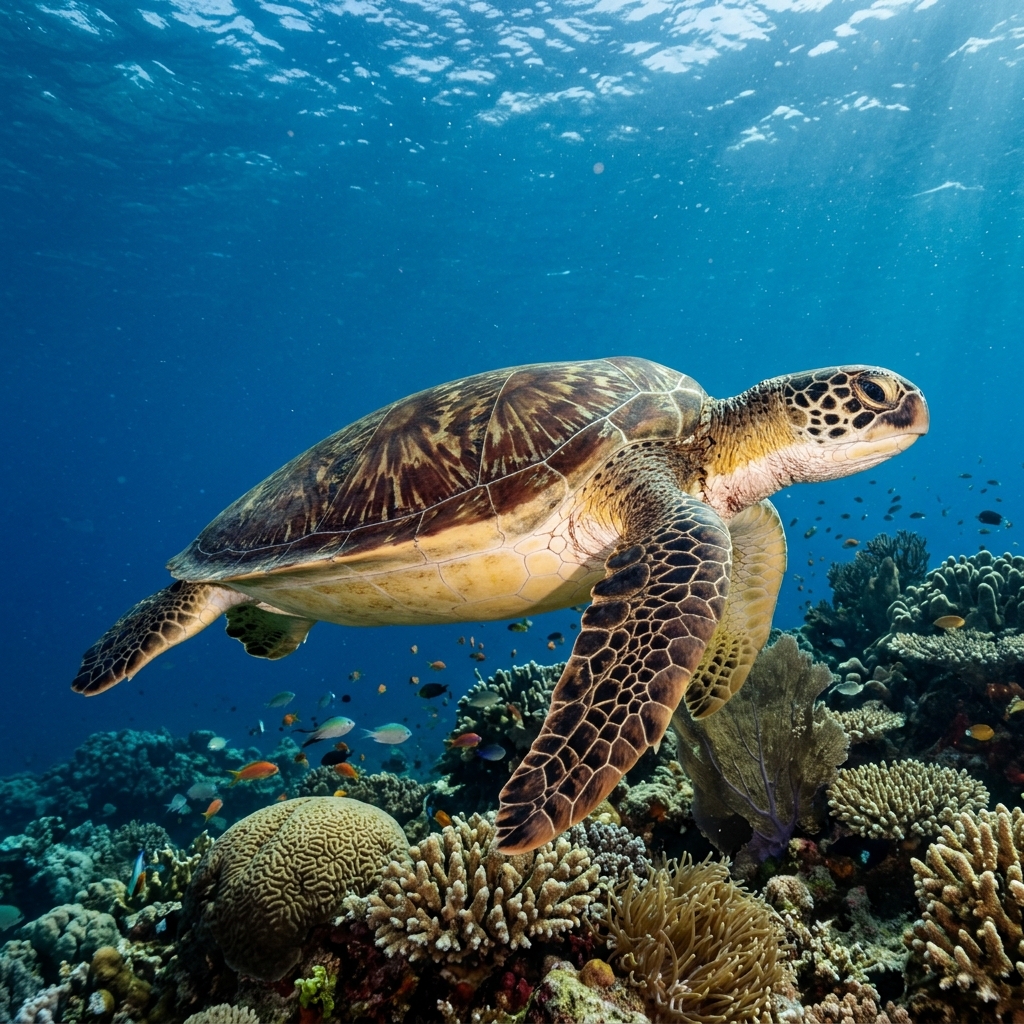
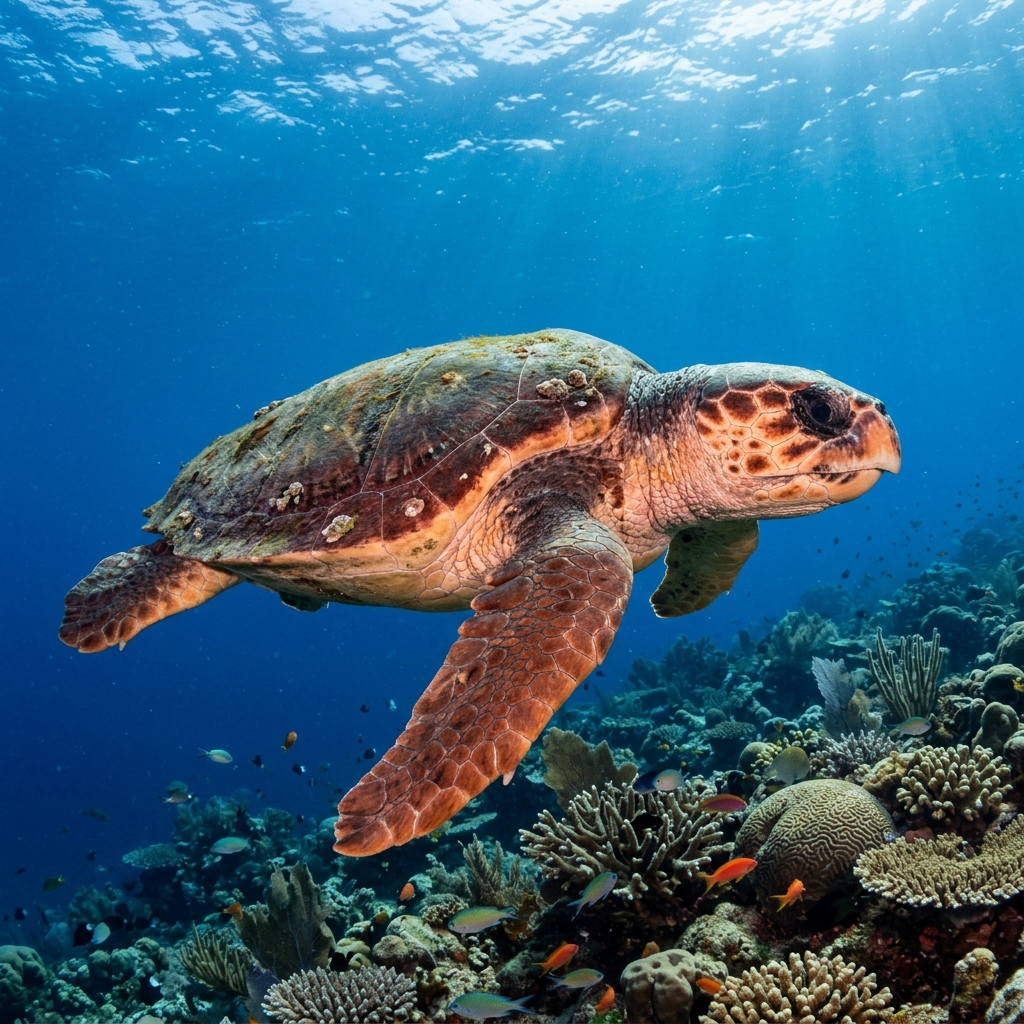
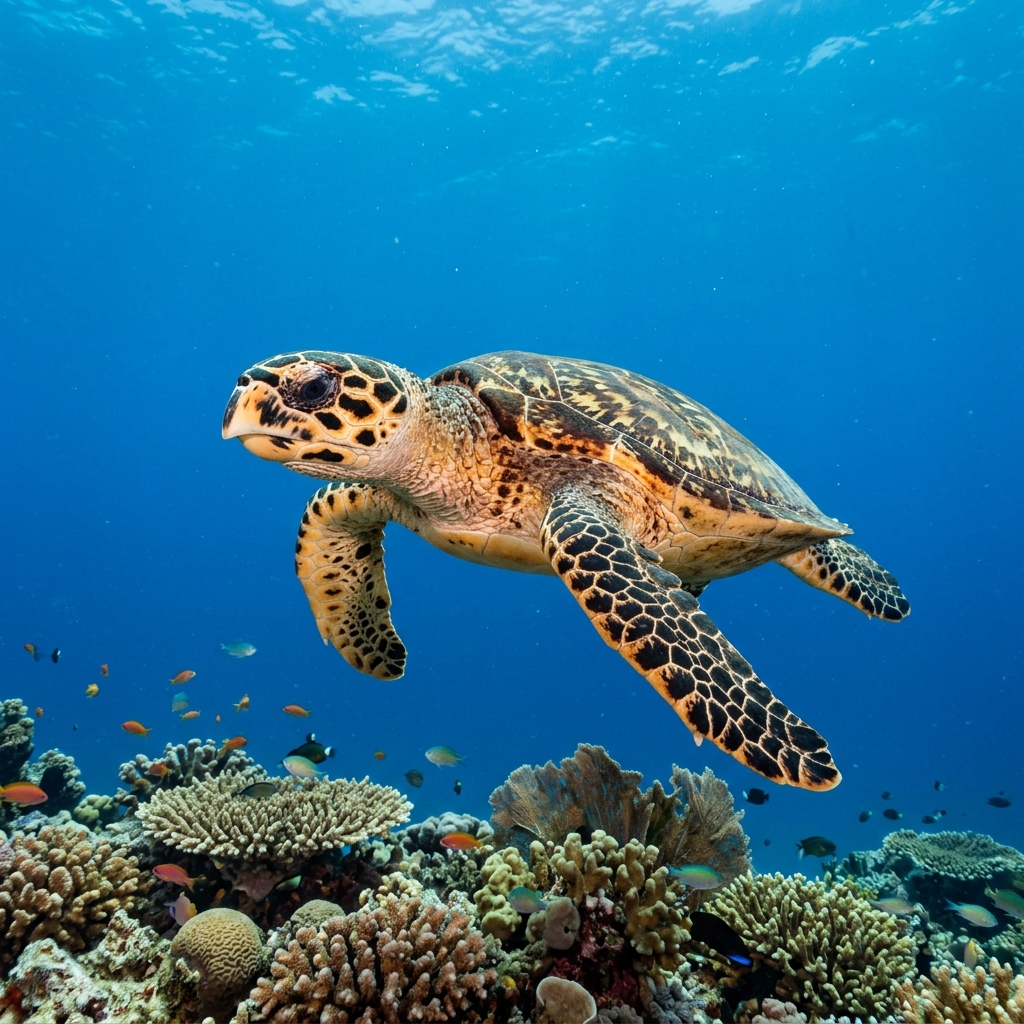
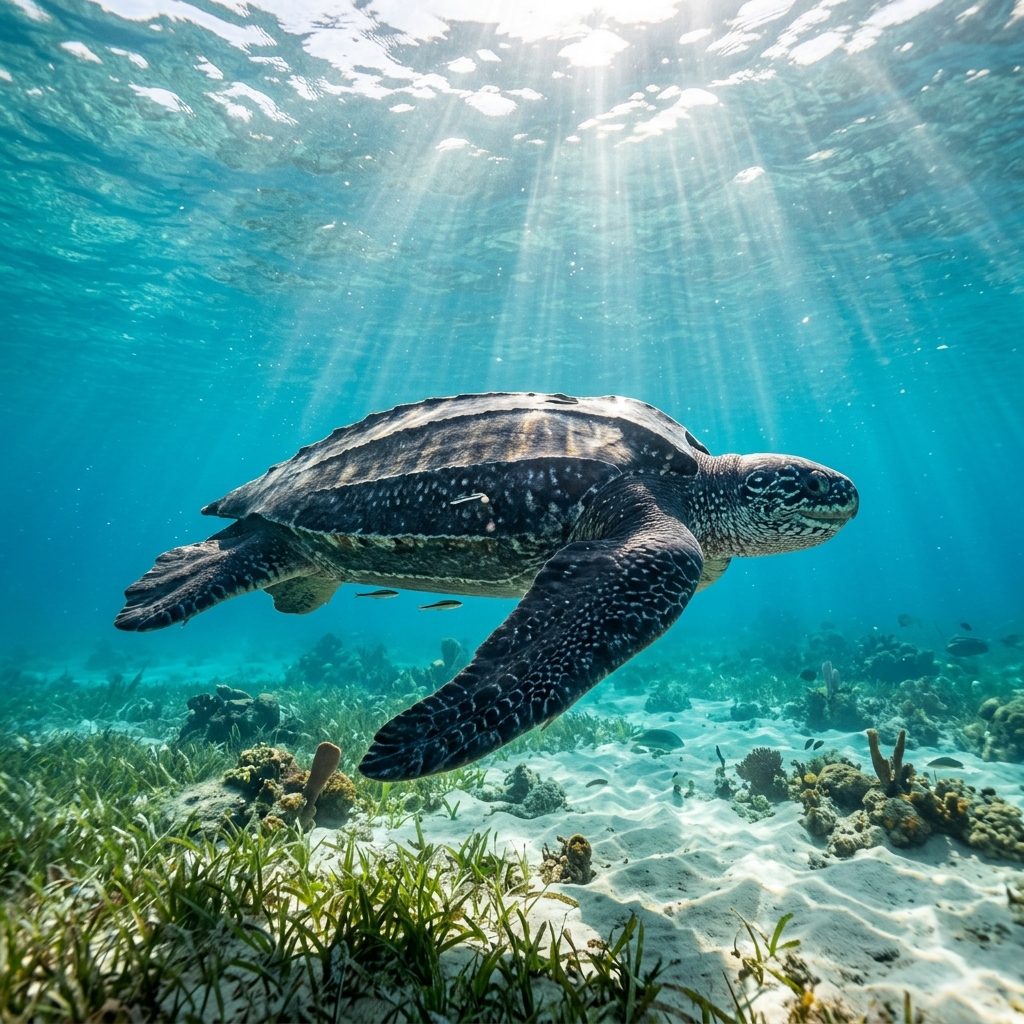
Reef neighbours a diver could mistake it for. Use the identification notes above to tell them apart.
Ridley turtles turn up across a wide range of diving destinations, with the most logged sightings coming from Florida and the broader US Southeast coastline, as well as the Caribbean coast of Colombia. The Maldives, Indonesia, and the Philippines also sit within their modelled range, and there are records from as far afield as Brittany and the south coast of England, where cooler Atlantic waters occasionally bring them inshore.
Mapping where Ridley Turtle is logged…
The best-documented diving encounters come from Florida and the US Southeast coast, and the Caribbean coast of Colombia. They also appear across the Maldives, Indonesia, and the Philippines within their broad oceanic range, and occasional sightings occur in cooler Atlantic waters off France and southern England.
There is no clearly defined season in the sighting data, so encounters are possible year-round wherever they occur. Their comfort across water temperatures from about 13 to 29°C means they are not tied to a single warm-water season.
The rounded, nearly circular shell is the key feature. At around 50 cm, they are noticeably smaller than a loggerhead or green turtle. The carapace is olive to greyish-brown, and the broad head carries multiple pairs of prefrontal scales visible at close range. Males show a long tail extending past the shell; females do not.
Adults typically reach around 50 to 70 cm in shell length, making them the smallest sea turtles in the world. Their compact size and rounded shell make them easy to distinguish from the larger loggerhead or green turtle.
Yes, both Kemp's Ridley and the Olive Ridley are listed as Critically Endangered. Threats include bycatch in fishing gear, coastal development, and nest predation. Underwater, treat every sighting with care: keep distance, stay calm, and never touch them.
The Ridley Turtle is listed as critically endangered by the IUCN. Observe from a distance, avoid touching or feeding it, and report sightings to local marine research organisations.
Ridley turtles are listed as Critically Endangered, making every encounter a noteworthy one. Give them plenty of space underwater, never attempt to touch or ride them, and report sightings to local marine conservation programmes where possible.
Site and sighting data is aggregated from diver logs, iNaturalist and GBIF. For taxonomy and conservation status:
Leatherback
95 sites